






Fiber optic cables serve as the backbone for high-speed internet, telecommunications, data centers, medical imaging, industrial automation, and secure military communications. You rely on their unique ability to transmit vast amounts of data quickly and accurately.
Fiber optic cable supports critical applications such as broadband, HD streaming, and cloud storage.
Medical and industrial sectors use fiber optic cables for precise data transfer and imaging.
Military and aerospace industries benefit from secure, interference-free connections.
|
Cable Type |
Speed (Mbps) |
Maximum Throughput (Gbps) |
|---|---|---|
|
Fiber Optic |
Up to 10,000 |
10 |
|
Copper |
25-300 |
0.3 |
You choose fiber optic cables for superior speed, reliability, and security, making them indispensable in today's digital landscape.
Key Takeaways
- Fiber optic cables provide high-speed internet and telecommunications, supporting applications like HD streaming and cloud storage.
- In healthcare, fiber optics enhance medical imaging and enable minimally invasive procedures, improving patient outcomes.
- Fiber optic cables are essential in data centers for fast data transfer, low latency, and high reliability, making them ideal for cloud services.
- Industries benefit from fiber optics due to their immunity to electromagnetic interference, allowing for reliable communication in noisy environments.
- Using fiber optics in broadcasting ensures high-quality video and audio transmission, crucial for live events and streaming services.
Telecommunications and Networking
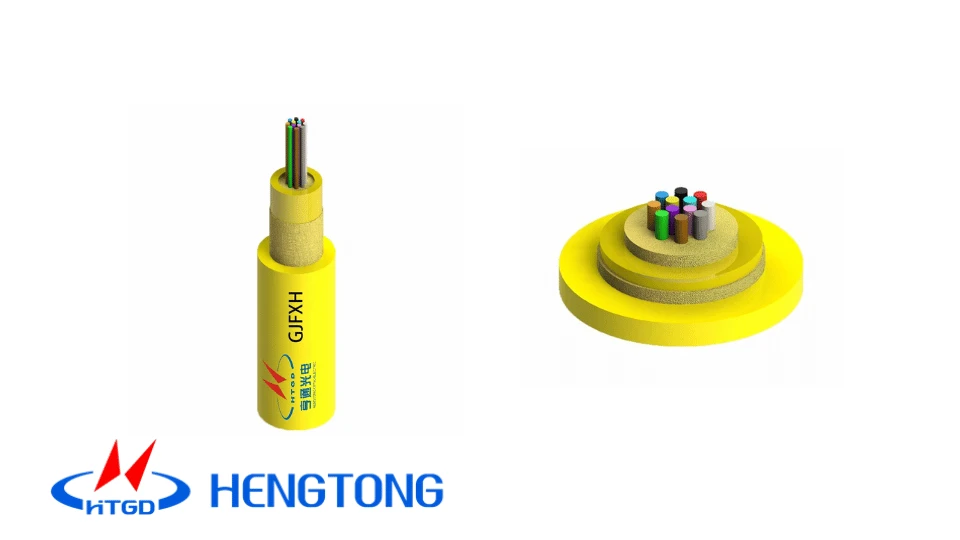
Fiber optic cables have transformed the way you experience telecommunications. These cables carry light to transmit data, making them the preferred choice for high-speed internet, phone services, and cable television. You benefit from their ability to deliver reliable connectivity and support modern applications that demand speed and efficiency.
Internet and Phone Services
You rely on fiber optic cables for fast and stable internet connections. These cables use light pulses to transmit data through thin strands of glass or plastic, allowing you to access information instantly. More than 95% of global internet traffic moves through undersea cables, and undersea fiber-optic cables transmit over 99% of international data traffic. This infrastructure ensures that your online activities, from streaming to video calls, run smoothly.
Tip: If you work or study from home, fiber optic cable provides the bandwidth you need for video conferencing, cloud applications, and real-time collaboration.
Fiber optic cables outperform traditional copper cables in every major category. The table below highlights key differences:
|
Characteristic |
Fiber Optic Cable |
Traditional Copper |
|---|---|---|
|
Maximum Speed |
Up to 100 Gbps |
Up to 300 Mbps |
|
Distance Without Degradation |
200+ kilometers |
Hundreds of feet |
|
Bandwidth Capacity |
Virtually unlimited |
Limited |
You experience reduced latency with fiber optic cables. Light pulses travel much faster than electrical signals, and less contact with the glass inside the cable reduces friction and energy loss. Fiber is immune to electromagnetic interference, so you enjoy efficient data transfer with minimal signal delay. For online gaming, virtual reality, and day trading, low latency is essential. Fiber networks often deliver latency under 10 milliseconds, making real-time applications possible.
Fiber optic cables support large bandwidth capacity, high-speed data transmission, and symmetrical upload/download speeds. You can stream HD videos, participate in video calls, and use cloud-based services without interruptions. The growing demand for high-speed internet, cloud services, and IoT devices drives the adoption of fiber optic cable in telecommunications.
- Government initiatives foster fiber-optic growth.
- Economic factors make fiber optics attractive.
- 5G networks and IoT require high bandwidth and reliable connections.
- Cloud-based services need fast, stable internet.
Cable Television
Fiber optic cables have revolutionized cable television. You receive clearer images and more reliable service because fiber optics can carry enormous volumes of data, ideal for HD and UHD channels. Unlike coaxial cables, fiber optic cables resist electromagnetic interference, so your signal quality remains strong even during storms or in areas with heavy electrical equipment.
|
Advantage |
Fiber Optic Cables |
Coaxial Cables |
|---|---|---|
|
Higher Throughput |
Ideal for HD/UHD channels |
Limited to standard-definition |
|
Quality of Image |
Clearer signals, less interference |
Prone to degradation |
|
Long-Distance Transmission |
No quality loss over kilometers |
Needs amplifiers for long distances |
|
Future-Proofing |
Easy upgrades for higher speeds and bandwidth |
Limited adaptability |
|
Cost-Effective in the Long Run |
Gradual upgrades, lower maintenance |
Requires system overhauls |
You benefit from symmetrical upload and download speeds, fewer outages, and better performance in adverse weather conditions. Fiber optic cable allows you to enjoy high-definition and ultra-high-definition content without pixelation or signal loss. The signal quality stays consistent over long distances, so you can watch your favorite shows without interruptions.
The shift toward digital platforms and internet-based television services increases the need for fiber optic cables. You get access to streaming services, on-demand content, and interactive applications that require fast, reliable connections.
- Fiber optics provide higher speeds and bandwidth capabilities.
- Signal quality remains strong over long distances.
- Fiber is more reliable, with fewer outages and better performance.
Fiber optic cables continue to shape the future of telecommunications. You experience faster speeds, improved reliability, and enhanced security, making these cables essential for modern connectivity.
Fiber Optic Cable in Data Centers
Data centers form the digital core of modern businesses. You depend on them for everything from streaming videos to running cloud-based applications. Fiber optic cables have become the preferred choice for connecting servers, storage systems, and networking equipment in these environments. Their ability to carry light and transmit data at high speeds makes them essential for handling the massive data volumes generated every second.
High-Speed Data Transfer
You need fast, reliable connections in data centers to support real-time operations and large-scale data processing. Fiber optic cables deliver unmatched speed and performance. They can transmit data at rates up to 200 Gbps, far surpassing the capabilities of copper cables. This speed ensures that your applications run smoothly, even during peak demand.
|
Performance Improvement |
Description |
|---|---|
|
Speed |
Fiber optic cables can transmit data at speeds of up to 200 Gbps, significantly faster than copper cables. |
|
Latency |
Fiber optic cables have very low latency, ensuring minimal delay in data transmission. |
|
Reliability |
They are not affected by electromagnetic interference, enhancing connection reliability. |
|
Security |
More secure than copper cables, making unauthorized access difficult. |
|
Bandwidth |
Higher bandwidth allows for more data to be transmitted over longer distances. |
|
Efficiency |
Can transmit data over longer distances without losing signal strength or speed. |
|
Scalability |
Easily scalable to handle higher bandwidths and faster speeds as demands grow. |
You benefit from the high material strength of fiber optic cables. They resist corrosion and withstand harsh environmental conditions inside data centers. This durability reduces maintenance needs and minimizes downtime. The lightweight and compact design of fiber optic cable also helps you maximize space in crowded server rooms.
Note: The global data center optic fiber market was valued at $4.96 billion in 2024. Experts project it will reach $10.79 billion by 2032, with a compound annual growth rate of 10.2% from 2026 to 2032. This rapid growth highlights the increasing adoption of fiber optic cables in data centers worldwide.
When you compare fiber optic cables to copper cables, the advantages become clear:
|
Aspect |
Fiber Optic Cables |
Copper Cables |
|---|---|---|
|
Energy Efficiency |
Higher energy efficiency due to low attenuation |
Lower energy efficiency due to signal loss |
|
Long-Distance Transmission |
Maintains signal integrity over long distances |
Suffers from signal degradation over distance |
|
Maintenance Costs |
Reduced maintenance and replacement needs |
Higher maintenance and replacement costs |
|
Bandwidth Capacity |
Greater bandwidth capacity for high data traffic |
Limited bandwidth capacity |
|
Infrastructure Footprint |
Compact and lightweight, maximizing space utilization |
Bulky, requiring more space and support |
|
Scalability |
Easily scalable for future growth |
Limited scalability |
|
Reliability |
High reliability with minimal downtime |
More prone to failures and downtime |
You see the difference in real-world scenarios. For example, when your business needs to transfer large files between servers or support thousands of simultaneous users, fiber optic cables maintain speed and reliability. Copper cables often struggle with signal loss and interference, especially over long distances.
Cloud and Data Storage
Cloud computing has changed how you store and access information. You expect instant access to your files, applications, and services from anywhere. Fiber optic cables make this possible by providing the backbone for cloud infrastructure. They carry light signals that move data quickly and securely between data centers and users.
|
Aspect |
Description |
|---|---|
|
Speed and Reliability |
Fiber optic networks ensure quick access to cloud applications, enhancing performance for mission-critical applications and improving data synchronization. |
|
Scalability |
Optical fibers support expanding cloud environments and complex applications, allowing for massive increases in data capacity through high-density cables and wavelength division multiplexing. |
|
Protection Against Cybersecurity Threats |
Fiber optics are harder to tap, reducing hacking risks. Encryption and monitoring systems further enhance security, while offsite data centers minimize physical vulnerabilities. |
|
Disaster Resistance |
Fiber optic cables are less corrosive and more resilient to environmental changes, ensuring connectivity during severe events and protecting assets in strategically located data centers. |
|
Improved Quality Control |
Customizable fiber optic systems lead to increased reliability, reduced maintenance costs, and optimized performance for cloud services. |
|
Competitive Advantage |
Higher bandwidth and reduced latency from fiber optics provide businesses with a competitive edge, enabling better user experiences and efficiencies in cloud-based services. |
You gain several advantages when you use fiber optic cables for cloud and data storage:
- Store larger amounts of data because of high bandwidth capacity.
- Restore and access information from the cloud instantly, at any time.
- Upgrade and expand your storage infrastructure without service interruptions.
- Meet the escalating bandwidth demands of cloud services with seamless, high-speed data transfer.
The flexibility of fiber optic cables allows you to scale your cloud environment as your needs grow. You can add more servers or increase storage capacity without sacrificing performance or reliability. This scalability ensures that your business stays competitive and ready for future challenges.
Tip: Fiber optic cables support mission-critical applications by providing secure, high-speed connections. You reduce the risk of data breaches and downtime, keeping your operations running smoothly.
Medical Applications

Fiber optic cables have transformed healthcare by enabling advanced imaging, precise diagnostics, and safer surgical procedures. You benefit from their ability to carry light efficiently, which supports a wide range of medical applications.
Imaging and Lighting
You see fiber optic cable at work in endoscopy devices. These tools use bundles of fibers to transmit light into the body, allowing doctors to visualize organs and tissues with remarkable clarity. This technology leads to more accurate diagnoses and supports minimally invasive procedures. When you undergo an endoscopy, the small incisions mean less pain, faster recovery, and a lower risk of infection.
- Enhanced imaging quality gives doctors a clearer view of internal structures.
- Real-time data transmission allows immediate decision-making during procedures.
- Improved patient monitoring ensures better outcomes.
- Support for minimally invasive procedures reduces complications.
You also find fiber optics in MRI, CT scans, and digital X-rays. These imaging systems rely on high-speed, interference-free data transfer, which fiber optics provide. Compared to traditional lighting or copper-based systems, fiber optics deliver brighter, more focused illumination and maintain signal integrity even in electrically noisy environments.
Note: Fiber optic cables offer high-speed and high-bandwidth transmission, immunity to electromagnetic interference, and enhanced security for sensitive patient data.
Diagnostic and Surgical Tools
You encounter fiber optic sensors in many diagnostic tools. These sensors measure temperature, pressure, and blood flow inside the body with minimal invasiveness. They also monitor oxygen saturation, pH, and gas concentrations, providing precise data for critical decisions.
|
Application Type |
Description |
|---|---|
|
Sensors for temperature, pressure, and flow of blood |
Measure vital parameters inside the body with minimal invasiveness. |
|
Sensors for monitoring oxygen saturation, pH, and gas concentrations |
Enable precise measurement of blood gas levels. |
|
Sensors for immunoassay reactions |
Detect specific antigens through light interaction for accurate diagnostics. |
Surgeons use fiber optic technology in arthroscopy to see inside joints without large incisions. Since the 1970s, the rod-lens arthroscope has improved both diagnosis and treatment of joint problems. You benefit from shorter hospital stays and fewer complications.
High reliability and safety: Fiber optic cables resist electromagnetic interference and transmit data over long distances without loss.
Enhanced effectiveness: Real-time imaging and monitoring improve surgical precision and patient outcomes.
Fiber optic cables continue to set new standards for safety, reliability, and effectiveness in modern medicine.
Industrial and Automotive Uses
Fiber optic cables play a vital role in modern industry and automotive technology. You depend on these data transmitting cables for reliable, high-speed communication in environments where traditional wiring often fails. Their unique properties make them the preferred choice for a wide range of applications.
Industrial Automation
You see fiber optic cables at the heart of advanced industrial automation systems. These cables connect sensors, controllers, and machines across large manufacturing plants. They deliver data signals with high speed and accuracy, even in areas filled with electromagnetic noise from heavy equipment.
|
Benefit |
Description |
|---|---|
|
High-Speed Transmission |
Enables real-time data processing and decision-making |
|
Electromagnetic Immunity |
Ensures consistent performance in noisy environments |
|
Enhanced Security |
Protects data integrity and prevents unauthorized access |
|
Long-Distance Transmission |
Reduces the need for signal repeaters in large facilities |
|
Low Latency |
Minimizes delays in data communication |
You benefit from ruggedized fiber cables that withstand mechanical stress, vibration, and harsh chemicals. Industrial-grade fibers resist corrosion and moisture, making them ideal for factories, refineries, and power plants. Specialty cables, such as SteelFlex Armored Cables, offer extra protection against impact and water, ensuring reliable operation in the toughest conditions.
Note: Fiber optic cables do not conduct electricity, so you can safely use them in flammable or high-voltage environments.
Automotive Data Transmission
You rely on fiber optics for fast, secure data transmission in modern vehicles. These cables support in-vehicle infotainment systems, advanced driver assistance, and real-time diagnostics. As vehicles become more connected and autonomous, the demand for high-performance data networks grows.
- Integration with infotainment systems delivers seamless audio, video, and navigation.
- Flexible and durable optical fibers simplify installation in tight spaces.
- Autonomous and connected vehicles require robust data networks, where fiber optics excel.
You gain improved safety and comfort, as fiber optics transmit data signals without interference from engine noise or electrical systems. Industry standards, such as MOST (Media Oriented Systems Transport), guide the use of fiber optics in automotive networks.
Underground and Pipeline Communication
You depend on fiber optic cables for secure, long-distance communication in underground and pipeline monitoring systems. These cables provide real-time data on pressure, flow, and structural integrity, helping you detect leaks or faults quickly.
Micro-trenching techniques allow you to install cables efficiently, even in challenging environments.
SMCI technology increases productivity, though you must follow proper reinstatement procedures to ensure long-term reliability.
UV-resistant polyethylene and other advanced materials protect cables from extreme temperatures and moisture.
Fiber optic cables reduce environmental disruption because they require less maintenance and resist damage from human interference. Their durability means fewer repairs and less impact on the surrounding area.
Tip: By choosing fiber optic cables for underground and pipeline communication, you ensure stable service quality and minimize environmental risks.
Other Uses of Fiber Optic Cables

Digital Audio Connections
You experience superior sound quality when you use fiber optic cables for digital audio. These cables transmit audio signals as pulses of light, which keeps your music and movies free from interference. Unlike copper cables, fiber optics do not pick up electromagnetic noise from nearby electronics. This immunity ensures that your audio remains crisp and clear, even over long distances.
- You avoid signal loss, so your sound stays consistent from the source to your speakers.
- You enjoy lower latency, which is important for live performances and studio recording.
- You benefit from higher data rates, supporting high-resolution and multichannel audio.
Here are some common digital audio applications and standards that use fiber optics:
|
Application/Standard |
Description |
|---|---|
|
TOSLINK |
Optimized for audio transmission, commonly used in consumer audio devices. |
|
MADI |
Multichannel Audio Digital Interface, used in professional settings to transmit up to 64 channels. |
|
Dante over Fiber |
Protocol for uncompressed, multichannel audio, can operate over fiber for long distances. |
|
AES67 over Fiber |
Standard for audio-over-IP, enabling interoperability between different systems over fiber. |
|
ADAT Lightpipe |
Optical interface for connecting multiple devices, transmitting up to 8 channels of audio. |
Tip: If you set up a home theater or professional studio, fiber optic audio connections help you achieve the best possible sound without interference or degradation.
Broadcasting and Media
You rely on fiber optic cables to deliver high-definition video and audio for broadcasting and media. These cables use total internal reflection to minimize signal loss, which allows you to transmit huge amounts of data at incredible speeds. A single fiber strand can carry hundreds of gigabits per second, and bundled fibers can move terabytes every second. This capacity supports live sports, news, and streaming services that demand flawless quality.
- You get faster broadband speeds and more reliable connections than with copper cables.
- You can transmit signals over long distances without amplifiers or repeaters.
- You reduce the risk of outages and signal degradation, even during major events.
Fiber optic cables also provide strong security advantages:
- You prevent unauthorized access, since tapping a fiber cable requires physical cutting, which triggers immediate alerts.
- You avoid data breaches, as fiber does not conduct electricity and cannot be detected remotely.
- You protect sensitive content, making fiber optics ideal for government, banking, and media industries.
Note: Broadcasters and streaming platforms choose fiber optics to ensure uninterrupted, high-quality service for millions of viewers worldwide.
You see fiber optic cables powering progress in every sector. Their unmatched speed, reliability, and security drive advancements in telecommunications, healthcare, industry, and broadcasting.
|
Sector |
Key Benefits |
|---|---|
|
Telecommunications |
Long-distance communication, high-speed data transmission, supports 5G networks. |
|
Healthcare |
Medical imaging, laser surgeries, efficient data connectivity for patient care. |
|
Industrial |
Immunity to electromagnetic interference, real-time communication, process monitoring capabilities. |
|
Broadcasting |
Supports live broadcasts, video streaming, handles large amounts of data efficiently. |
You benefit from faster internet, smarter cities, and safer medical care because fiber optics connect everything from traffic lights to cloud networks. As new technologies emerge-like AI-driven networks and quantum communication-you will see fiber optic cables play an even greater role in shaping your connected future.
FAQ
Why do you choose fiber optic cables over copper cables for internet?
You select fiber optic cables because they deliver faster speeds, higher bandwidth, and greater reliability. Fiber optics resist electromagnetic interference, so your internet connection stays stable. You experience fewer outages and enjoy seamless streaming, gaming, and cloud access.
Tip: Fiber optic cables future-proof your network for new technologies.
Why do fiber optic cables improve data security?
Fiber optic cables transmit data using light, making them difficult to tap or intercept. You gain enhanced security for sensitive information. Unauthorized access requires physical disruption, which triggers alerts. You protect your business and personal data from cyber threats.
|
Security Feature |
Fiber Optic Cable |
Copper Cable |
|---|---|---|
|
Data Interception |
Very difficult |
Easier |
|
Electromagnetic Leak |
None |
Possible |
Why do hospitals use fiber optic cables for medical imaging?
You see hospitals use fiber optic cables because they provide high-speed, interference-free data transmission. Doctors rely on clear images for accurate diagnosis and safer procedures. Fiber optics support real-time monitoring and minimally invasive surgeries, improving patient outcomes.
Why do industries prefer fiber optic cables for automation?
You benefit from fiber optic cables in industrial automation because they withstand harsh environments and electromagnetic noise. These cables enable real-time data transfer between machines, sensors, and controllers. You achieve higher productivity, safety, and reliability in manufacturing processes.
Why do broadcasters rely on fiber optic cables for live events?
You depend on fiber optic cables for broadcasting because they transmit large volumes of HD video and audio without signal loss. Broadcasters deliver uninterrupted coverage, even during major events. You enjoy clear, reliable content whether you watch sports, news, or streaming services.