







Custom Fiber Optic Patch Cord Solutions
Engineering Excellence in Optical Connectivity
Understanding Hengtong's Fiber Optic Patch Cords

Introduction
A fiber optic cable patch cord represents the critical link in modern telecommunications infrastructure, serving as the precision-engineered bridge between network equipment, transceivers, switches, and distribution panels. Hengtong's patch cords embody the convergence of advanced materials science, precision manufacturing, and rigorous quality control, delivering solutions that exceed industry standards while meeting the demanding requirements of today's high-speed networks.
At its core, a fiber optic cable patch cord consists of optical fiber strands encased in protective jacketing, terminated with precision connectors that ensure minimal signal loss and maximum reliability. These essential components enable the seamless transmission of data at the speed of light, supporting bandwidths from 1 Gbps to 400 Gbps and beyond. In data centers, where every microsecond of latency matters, the quality of patch cords directly impacts overall network performance, making the selection of premium custom solutions critical for operational excellence.

Core Applications
From data centers to industrial environments, Hengtong's fiber optic patch cords provide reliable connectivity across diverse applications requiring high bandwidth and low latency.
Engineering Excellence
Each patch cord represents the perfect blend of advanced materials science, precision manufacturing, and rigorous quality control processes.

Core Applications and Deployment Scenarios
Data Centers
In hyperscale and enterprise data centers, Hengtong's custom solutions provide the backbone for high-density connectivity, supporting spine-leaf architectures and top-of-rack deployments.
FTTx Networks
Fiber-to-the-X deployments demand patch cords that withstand environmental challenges while maintaining pristine optical performance for last-mile applications.
Campus Networks
Educational institutions and corporate campuses require reliable, high-bandwidth connectivity across distributed buildings and departments.
Industrial Environments
Manufacturing facilities and utility plants require solutions with armored constructions and specialized jacketing for extreme conditions.
Fiber Optic Patch Cord Concept Explanation
Fiber Optic Patch Cord is a detachable (active) connection between optical fibers and optical fibers, which precisely docks the two end faces of optical fibers, so that the optical energy output by the transmitting optical fiber can be coupled to the receiving optical fiber to the maximum extent, and the impact on the system due to its involvement in the optical link is minimized.
Main product range
-
![ODVA-MPO Waterproof Fiber Optic Jumper Cable]()
ODVA-MPO Waterproof Fiber Optic Jumper Cable
This high-protection outdoor optical interconnection product is specially designed for harsh outdoor communication scenarios, widely supporting 100G, 200G, 400G and 800G high-speed data transmissionread more -
![MPO Fiber Optic Loopback Cable]()
MPO Fiber Optic Loopback Cable
MPO fiber optic loopback cables are high-precision test and protection components for optical communication links, widely used for 100G, 200G, 400G and 800G high-speed optical port testing, linkread more -
![MPO (1×N) Breakout Fiber Optic Cable Assembly]()
MPO (1×N) Breakout Fiber Optic Cable Assembly
MPO/MTP trunk breakout fiber optic jumper cables are key breakout components for data center optical interconnection systems, widely supporting 100G, 200G, 400G and 800G high-speed dataread more -
![MPO (N×N) Breakout Fiber Optic Cable Assembly]()
MPO (N×N) Breakout Fiber Optic Cable Assembly
MPO breakout fiber optic cable assemblies are core breakout components for multi-user bidirectional optical interconnection scenarios, widely supporting 100G, 200G, 400G and 800G high-speed dataread more -
![MPO Braided Fiber Optic Cable Assembly]()
MPO Braided Fiber Optic Cable Assembly
MPO braided fiber optic cable assemblies are high-reinforcement optical interconnection products, widely used for 100G, 200G, 400G and 800G high-speed data transmission in complex wiringread more -
![Unshielded Cat6 Patch Cord]()
Unshielded Cat6 Patch Cord
Unshielded Cat6 Patch Cord Compliance Standards:ISO/IEC 11801ANSI/TIA-568.2-DYD/T 926.3-2009 Product Features Conductor Gauge:24 AWG Conductor Material:High-purity oxygen-free copper (OFC) Insulationread more -
![Pre-Connectorized Drop Cable]()
Pre-Connectorized Drop Cable
Self-supporting Butterfly Lead-in Fiber Optical Cable is all dielectric drop cable consisting of 1 to 4, The whole optical cable is an 8 shape structure, with three parts: lifting line, sling andread more -
![SC To SC Duplex Cable Assembly]()
SC To SC Duplex Cable Assembly
Fiber optic cable assemblies are the process of connecting and terminating optical fibers to create an optical communication system. This process involves assembling components such as connectors,read more -
![LC To LC Fiber Optic Jumper]()
LC To LC Fiber Optic Jumper
LC to LC fiber optic jumpers find widespread applications in data centers, enterprise networks, telecommunications service provider's optical communication networks, and various connections betweenread more -
![SC To SC Fiber Optic Jumper]()
SC To SC Fiber Optic Jumper
SC to SC fiber optic jumper, also known as a fiber optic patch cable or jumper, is a cable assembly used to connect optical devices, such as transceivers, switches, and routers. It consists of tworead more -
![FC To FC Fiber Optic Jumper]()
FC To FC Fiber Optic Jumper
FC to FC fiber optic jumpers refer to fiber optic cable with connector plugs at both ends, used to achieve the optical path activity connection. It is a passive device to realize the activeread more -
![LC Pigtail]()
LC Pigtail
Patch cord pigtail is in one of the fiber optic cable plus fiber optic connector, the other end of the original state, to achieve the optical network equipment and equipment, equipment and fiberread more


Three Pillars of Excellence
Superior Optical Performance
- Industry-leading insertion loss ≤0.2dB for standard connections
- Premium low-loss variants achieving ≤0.1dB performance
- Return loss exceeding 50dB for UPC and 55dB for APC
- Exceptional performance translating to extended reach
Interface Compatibility
- Extensive selection including LC, SC, FC, and ST connectors
- Specialized solutions like uniboot LC for high-density applications
- Multi-fiber MPO/MTP assemblies for 40G, 100G, and 400G
- Rigorous testing ensuring performance through 500+ mating cycles
Rapid Custom Manufacturing
- Vertically integrated facilities with extensive inventories
- Industry-leading turnaround times for custom orders
- Same-day shipping for standard specifications
- 48-72 hour delivery for most custom configurations
Key Identification Parameters

Fiber Types
- Single-mode OS2
- Multimode OM3
- Multimode OM4
- Multimode OM5
OS2 provides unlimited bandwidth for long-haul applications. OM3/4/5 offer cost-effective solutions for shorter distances with varying bandwidth capabilities.

Connector Polish
- UPC (Ultra Physical Contact)
- APC (Angled Physical Contact)
UPC delivers reliable performance for digital systems. APC provides superior return loss for analog video, RF over fiber, and PON applications.

Cable Structures
- Simplex configurations
- Duplex assemblies
- Bend-insensitive designs
Simplex supports unidirectional transmission. Duplex enables full-duplex communication. Bend-insensitive fibers maintain performance with tight bend radii.
Trust Through Certification
Quality assurance forms the cornerstone of Hengtong's manufacturing philosophy. Every fiber optic cable patch cord undergoes comprehensive testing and certification to international standards.
CE Marking
European Compliance
01
RoHS
Environmental Safety
02
REACH
Chemical Safety
03
UL/ETL
North American Safety
04
CPR
European Fire Safety
05
Hengtong's Comprehensive Patch Cord Portfolio

OS2 Single-Mode Solutions
Engineered for maximum transmission distance and bandwidth capability, our OS2 single-mode patch cords utilize 9/125μm fiber cores optimized for 1310nm and 1550nm wavelengths.
Support transmission distances exceeding 40km
Up to 80km with extended reach optics
Tight dimensional tolerances for consistent performance
Low polarization mode dispersion for high-speed systems

OM3/OM4/OM5 Multimode Options
Our multimode portfolio addresses the diverse needs of enterprise and data center environments with laser-optimized cores supporting various bandwidth requirements.
OM3: 10 Gigabit up to 300 meters
OM4: Extends 10 Gigabit reach to 550 meters
OM5: Supports 40G and 100G using SWDM
Reduces fiber count for high-speed links
Interface Diversity and Innovation
Lorem ipsum dolor sit amet consectetur adipisicing elit.
LC Connectivity
The small form factor of LC connectors makes them ideal for high-density applications where rack space comes at a premium.
Ceramic Ferrules
Push-Pull Boots
Tool-Free
SC Reliability
The robust construction of SC connectors provides exceptional durability for applications requiring frequent mating cycles.
Push-Pull Coupling
Strain Relief
Stable Contact


FC Precision
Threaded FC connectors deliver the mechanical stability required for test and measurement applications and laboratory environments.
Metal Coupling
Vibration Resistance
Keyed Design
ST Versatility
The bayonet-style coupling of ST connectors enables quick installation while providing secure connections resistant to accidental disconnection.
Bayonet Coupling
Metal Construction
Legacy Compatible


End-Face Technology
The quality of connector end-face preparation directly impacts optical performance. Hengtong employs advanced polishing techniques including multi-stage processes utilizing progressively finer polishing films. Our automated polishing systems maintain precise pressure and rotation speeds, ensuring consistent apex offset, radius of curvature, and fiber protrusion measurements across production runs.

UPC Technology
Our Ultra Physical Contact polishing process creates a slightly domed end-face that ensures physical contact between mating fibers while minimizing air gaps that cause reflections.
- Radius of curvature: 7-25mm
- Fiber height controlled to ±50 nanometers
- Excellent for digital transmission systems
APC Excellence
Angled Physical Contact connectors undergo additional polishing steps to achieve the precise 8-degree angle that directs reflected light away from the fiber core.
- 8-degree angle for minimal back reflection
- Essential for CATV and DAS applications
- Meets return loss requirements exceeding -55dB
Structural Variations for Specific Needs

Simplex vs. Duplex Configurations
Single-fiber simplex cables provide economical solutions for unidirectional links or applications utilizing bidirectional transceivers. Duplex assemblies incorporate two fibers in a zip-cord or round cable construction.
- Unidirectional
- Bidirectional
- Full-Duplex
- Polarity Options
Bend-Insensitive Designs
Utilizing ITU-T G.657.A2 bend-insensitive fibers, these patch cords maintain excellent optical performance even when subjected to tight bends with radii as small as 7.5mm.
- G.657.A2
- 7.5mm Bend Radius
- High-Density
- Performance Stability


Armored Protection
For installations in harsh environments or areas with rodent activity, our armored solutions incorporate stainless steel interlocking armor or corrugated steel tape.
- Stainless Steel
- Rodent Protection
- Mechanical Strength
- Flexible Design
Jacket Materials and Fire Ratings
The selection of appropriate jacket materials ensures compliance with local building codes while providing adequate mechanical protection in various environments.
- PVC
- LSZH
- OFNR
- OFNP
- CPR Compliance

Performance Specifications and Comparative Analysis

Insertion Loss (IL)
Insertion Loss represents the optical power loss as light traverses through a mated connector pair, directly impacting the maximum achievable transmission distance and link budget calculations.
- Industry Standard:≤0.75dB
- Hengtong Standard:≤0.3dB
- Hengtong Premium:≤0.15dB
This superior performance translates into extended reach capabilities and increased margin for network expansions.
Return Loss (RL)
Return Loss, also termed reflectance, quantifies the amount of light reflected back toward the source at connection points. High return loss values indicate minimal reflections, critical for protecting laser transmitters.
- Industry Standard (UPC):≥-45dB
- Hengtong UPC:≥-50dB
- Hengtong APC:≥-60dB
Higher negative dB values indicate better performance with less reflected light.

Comprehensive Performance Comparison Tables
When selecting the optimal fiber optic cable patch cord for specific applications, understanding the comparative performance characteristics across different configurations proves essential. Our detailed specifications enable informed decisions based on actual performance data rather than theoretical limits.
Single-Mode OS2 Performance Profile
| Parameter | Specification |
|---|---|
| Connector Type | LC/UPC, SC/UPC, FC/UPC, ST/UPC |
| Structure Options | Simplex, Duplex, Armored variants |
| Typical IL | 0.15-0.25dB (Premium: ≤0.10dB) |
| Minimum RL | -50dB (UPC), -60dB (APC) |
| Static Bend Radius | 15mm (G.652.D), 7.5mm (G.657.A2) |
| Dynamic Bend Radius | 30mm (G.652.D), 15mm (G.657.A2) |
| Operating Temperature | -40°C to +85°C |
| Humidity Range | 0-95% non-condensing |
| Jacket Options | PVC (OFNR), LSZH (OFNP), Armored |
| Color Coding | Yellow (industry standard) |
Multimode OM4 Performance Profile
| Parameter | Specification |
|---|---|
| Connector Type | LC/UPC, SC/UPC, ST/UPC, MT-RJ |
| Structure Options | Simplex, Duplex, High-density Uniboot |
| Typical IL | 0.20-0.30dB (Premium: ≤0.15dB) |
| Minimum RL | -35dB (standard applications) |
| Static Bend Radius | 15mm |
| Dynamic Bend Radius | 30mm |
| Operating Temperature | -20°C to +70°C |
| Bandwidth | 4700 MHz·km @ 850nm |
| Jacket Options | PVC (OFNR), LSZH (OFNP), Armored |
| Color Coding | Aqua (OM3), Aqua/Violet (OM4) |
Advanced Testing and Validation Protocols
Every Hengtong fiber optic cable patch cord undergoes comprehensive testing utilizing state-of-the-art metrology equipment. Our quality assurance protocols exceed industry requirements, incorporating multiple layers of verification.
3D Interferometry Analysis
Automated inspection systems measure critical end-face geometry parameters including apex offset (≤50μm), radius of curvature (10-25mm for PC, 5-12mm for APC), and fiber height (-100 to +50nm). These measurements ensure consistent physical contact between mating fibers.
Insertion Loss and Return Loss Testing
Each assembly undergoes bidirectional IL/RL testing at multiple wavelengths (850/1300nm for multimode, 1310/1550nm for single-mode) using precision light sources and optical power meters. Test data accompanies each shipment.
Environmental Stress Screening
Representative samples from each production batch undergo accelerated aging tests including temperature cycling (-40°C to +85°C), humidity exposure (95% RH at 40°C), and mechanical stress (500 mating cycles, cable retention, and flex testing).
Comprehensive Customization Options
Tailoring Solutions to Exact Requirements
Fiber Type Selection and Advanced Options
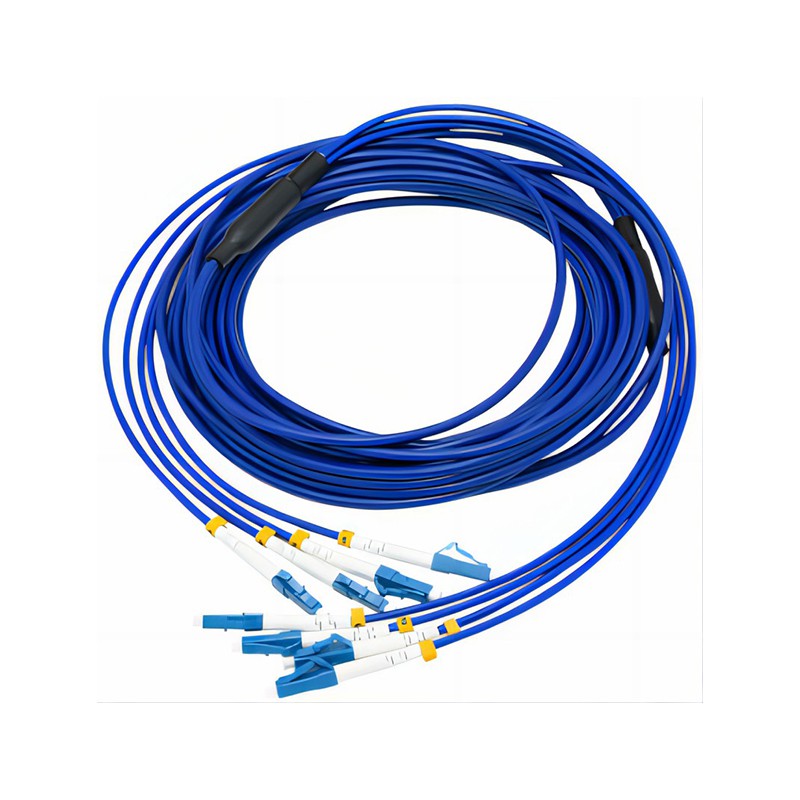
The foundation of any custom fiber optic cable patch cord begins with selecting the appropriate fiber type matched to application requirements. Hengtong maintains extensive fiber inventories from leading manufacturers including Corning, OFS, and Prysmian, ensuring consistent quality and performance.

Standard Single-Mode Options
G.652.D
Standard single-mode fiber for general telecommunications
G.655
Non-zero dispersion-shifted fiber for long-haul DWDM systems
G.657.A1/A2
Bend-insensitive fibers for FTTH and high-density applications
G.657.B3
Ultra-bend-insensitive fiber for challenging installations

Specialty Fiber Solutions
Polarization-Maintaining (PM)
PANDA and Bow-Tie configurations for coherent communication systems
Radiation-Resistant
Specialized fibers for nuclear facilities and space applications
Large Core Multimode
62.5/125μm and 100/140μm for legacy systems and specialty applications
Plastic Optical Fiber (POF)
Cost-effective solutions for short-distance consumer applications
Connector and Termination Flexibility
Connector Customization Parameters
Ferrule Material
请替换当前内容 Located in 27 cities around the world,with 50 delivery centers,7x24 hours delivery capacity,is the best partner for enterprise globalization
Spring Force
Located in 27 cities around the world,with 50 delivery centers,7x24 hours delivery capacity,is the best partner for enterprise globalization
Boot Design
Located in 27 cities around the world,with 50 delivery centers,7x24 hours delivery capacity,is the best partner for enterprise globalization
Color Coding
Located in 27 cities around the world,with 50 delivery centers,7x24 hours delivery capacity,is the best partner for enterprise globalization
Connector and Termination Flexibility
Pre-terminated Assemblies
Factory-terminated and tested for guaranteed performance with complete traceability documentation
Field-Installable Connectors
Fusion splice or mechanical splice options for on-site termination in emergency or unique situations
Hybrid Assemblies
Different connector types on each end for equipment compatibility between varying interface standards
Breakout Configurations
Multi-fiber to simplex fanout assemblies for transitioning between high-density trunk cables and individual connections
Structure and Polarity Management
Modern high-speed networks demand precise polarity control to ensure proper signal routing through complex optical paths. Hengtong's custom solutions address these requirements through various schemes and structural options.
请替换当前内容 As a wholly-owned subsidiary of China Enterprise Power,Zhongqi Gaocheng focuses on providing brand digital upgrading services for the world's top 500,China's top 500 and industry leaders,including high-end website construction,brand system upgrading,corporate publicity videos,SEO optimization,public opinion monitoring,mini programs,apps,H5 and enterprise customized system development.

01
Method A (Straight-Through)
Maintains consistent pin positions end-to-end for simple point-to-point connections
02
Method B (Reversed)
Flips fiber positions for crossover applications between similar equipment types
03
Method C (Pair-Flipped)
Alternates pair positions for specific transceiver requirements in high-density environments
04
Custom Mapping
User-defined fiber routing for proprietary systems with unique connection requirements
Structural Variations
Round Cable
Traditional design offering maximum protection and durability for general applications
Ribbon Cable
High fiber density for trunk applications requiring maximum connectivity in minimal space

Zip-Cord
Easily separable design for duplex applications allowing individual fiber routing
Armored Options
Interlocking armor, corrugated steel, or dielectric armor for protection in harsh environments
Length Specifications and Tolerance Control
Precision length control ensures optimal cable management while minimizing excess slack that can impede airflow or create maintenance challenges. Our manufacturing processes deliver consistent length accuracy.
our casey
Lorem ipsum dolor sit amet consectetur adipisicing elit.

Standard Length Offerings
0.3m
0.5m
1m
2m
3m
5m
10m
15m
20m
30m
50m
Custom Length Capabilities
Any length from 0.3m to 500m with precision tolerances:
- 0-1m:+3/-2cm tolerance
- 1-20m:+10/-5cm tolerance
- 20-50m:±20cm tolerance
- 50-100m:±30cm tolerance
- 100m:+±0.5% of total length
Material Options
Material Options

PVC
Economical general-purpose solution for indoor applications with good mechanical protection

LSZH
Low Smoke Zero Halogen material providing enhanced safety for enclosed spaces and public areas

Polyurethane (PUR)
Superior abrasion resistance for industrial applications with exposure to mechanical stress

Thermoplastic Elastomer (TPE) and Teflon (PTFE)
Flexibility at extreme temperatures making it suitable for harsh environment applications
Environmental Ratings
Indoor
Standard commercial environments with controlled temperature and humidity
01
Indoor/Outdoor
UV-resistant for transition areas between indoor and outdoor installations
02
Outdoor
Full weatherproofing for external installations with exposure to elements
03
Burial-Rated & Aerial
Burial-Rated:Direct burial without conduit protection, resistant to moisture and soil conditions
Aerial:Self-supporting with integrated messenger wire for overhead installations
04
Why Choose Us
Our credentials
It applies to enterprises that carry out the design and development, manufacture, installation and servicing of medical devices or related services.
Global Operation
HENGTONG possesses 70 wholly-owned companies and holding companies, establishes industrial bases in up to 16 provinces of China and in Europe.
Good service
Providing technical support, troubleshooting, and maintenance services.
One-stop Solution
We offer a comprehensive customization solution, tailored to meet the specific needs and requirements of our clients.
Types of Fiber Optic Patch Cables


There are many different types of fiber optic patch cables (also known as optical fiber connectors), which are optical fiber connections attached to optical modules. They cannot be used together. The LC fiber optic connector is used for the SFP module, while the SC fiber optic connector is used for the GBIC . A full overview of some commonly used optical fiber connectors in network engineering is provided below:
FC type fiber optic patch cables: A metal sleeve is used for external strengthening, and a turnbuckle is used for fastening. On the ODF side, it's commonly used (the most used on the patch panel)
SC type fiber optic patch cables: The connector connecting the GBIC optical module has a rectangular shell and a plug-and-pull fastening technique that does not need rotation. (Most commonly found on router switches)
ST-type fiber optic patch cables: The exterior shell is circular, and the attaching method is turnbuckle, which is often used in optical fiber distribution frames. (Standard ST connectors are used for 10Base-F connections.) Fiber optic distribution frames are frequently made of this material.)
LC-type fiber optic patch cables: It's a connector for joining SFP modules that uses an easy-to-use modular jack (RJ) latch mechanism. (This is a term widely used by routers)
According to the connector, it can be divided into FC, ST, SC, LC, MU, MPO/MTP, E2000, MTRJ, SMA, etc. The end-face contact methods include PC, UPC, APC, and the connectors used to connect optical modules are mainly LC. SC. These three kinds of MPO/MTP. Optical fiber jumper connectors are a problem that users must consider when purchasing optical fiber jumpers.
According to the color of the connector, it can be divided into: blue (commonly used for single-mode connectors), beige, and gray (commonly used for multi-mode connectors).
According to the color of the tail cover, it can be divided into: gray, blue, green, white, red, black, turquoise.
According to the number of fiber cores, it can be divided into single-core, double core, 4 cores, 6 cores, 8 cores, 12 cores, 24 cores, 48 cores, and 72 cores or as specified by customers.
According to the diameter of the core, it can be divided into multimode fiber and single-mode fiber. 50μm-65μm is a multi-mode fiber, which refers to a fiber that transmits multiple modes at a given operating wavelength, with large dispersion loss and short transmission distance, and is suitable for short-distance optical fiber communication systems. 9μm is a single-mode fiber, which can only transmit light of one mode, and its intermodal dispersion is very small, which is suitable for long-distance communication.
According to the ITU-T standard, communication fibers are divided into seven categories: G.651, G.652, G.653, G.654, G.655, G.656, and G.657, of which G.651 is a multimode fiber. G.651-G.657 are single-mode fibers. ISO/IEC divides multimode fibers into OM1-OM5. These five types of multimode fibers are mainly used in local area networks (LANs) and data centers (DCNs). The fiber jumpers mentioned above, ETU-LINK ) are available.
The fiber length can be customized according to customer requirements.
According to the cable outer sheath material, it can be divided into ordinary type, ordinary flame-retardant type, low-smoke halogen-free type (LZSH), low-smoke halogen-free flame-retardant type, armoring, etc. The armored jumper is a new type of fiber optic patch cable that can be utilized in the equipment room or in other hazardous situations. Armored patch cables strengthen the protection of stainless steel hoses and have stronger compressive and tensile qualities than standard fiber optic patch cords.
What Is The Difference Between Fiber Optic Patch Cord And Network Cable?
With the development of science and technology, from a few K to Gigabit networks, the network's speed continues to increase. When it comes to internet speed, what is the first thing that comes to your mind?
It's the network cable! The optical network is gradually evolving from the home-level market to the enterprise-level market, and more and more campuses choose all-optical networks. When it comes to optical fiber, the optical fiber jumper is an important component that has to be mentioned. When it comes to the Internet, what is the first thing that comes to your mind? Fiber optic cable? Fiber Jumper? At present, everyone knows that network transmission is nothing more than three methods: coaxial cable, network cable, and optical fiber. Coaxial cables have faded out of people's sight and are eliminated. Network cables and optical fibers have become the two most important carriers in network signal transmission. When we choose, we must sort out the difference between network cables and fiber optic jumpers and choose the right one. Today we will focus on the differences, advantages, and disadvantages of fiber optic patch cords and network cables!
What is the Fiber Optical Patch Cord?
Fiber Optic Patch Cord: (also known as Fiber Jumper) means that both ends of the optical cable are equipped with the connector to realize the active connection of the optical path; one end with the connector is called the Fiber Optic Pigtail.
Fiber optic patch cords are jumpers from equipment to fiber optic cabling links. It has a thicker protective layer and is generally used to connect the optical transceiver and the terminal box.
There is the connector at one end of the pigtail, and the other end is the broken end of the cable core, which is connected to other cable cores by fusion splicing. It is connected to other optical fiber cores by welding. It often appears in optical fiber terminal boxes and is used to connect optical cables and optical fiber transceivers. (Couplers, Fiber Jumpers, etc. are also used between them).
Fiber optic connectors are devices for detachable connections between fiber optic cables. It precisely butts the two end faces of the optical fiber so that the optical energy output by the transmitting optical fiber can be coupled to the receiving optical fiber to the maximum extent. And to minimize the impact on the system due to its intervention in the optical link, this is the basic requirement of the fiber optic connector. To a certain extent, fiber optic connectors also affect the reliability and performance of optical transmission systems.
Optical Fiber Patch Cord is similar to coaxial cable, except that there is no mesh shield. In the center is the glass core for light propagation.
In a multimode fiber, the diameter of the core is 50μm to 62.5μm, roughly equivalent to the thickness of a human hair. The single-mode fiber core has a diameter of 8μm to 10μm. A glass jacket surrounds the core with a lower refractive index than the core to keep the fiber inside the core. On the outside is a thin plastic jacket to protect the envelope.
What is the Network Cable?
Network cables: A network cable is a cable that connects computers to computers, and computers to other network devices. Commonly used network cables include twisted pairs and coaxial cables. Of course, the network cable mentioned in our monitoring project mainly refers to twisted pairs.
Twisted pairs can be divided into unshielded UTP) and shielded STP). The difference between the two lies in whether there is a layer of metal isolation film in the twisted pair. There is a layer of metal isolation film in the twisted pair of STP, which can reduce electromagnetic interference during data transmission, so it has higher stability and is slightly more expensive than UTP twisted pair. The UTP twisted pair does not have this layer of metal isolation film, so its stability is poor, but its price is relatively cheaper.
What is the Difference Between Fiber Optic Patch Cord and Network Cable?
Fiber optic Patch Cords and network cables are two ways of network transmission. The main differences between them are as follows:
Different Functions
The function of the optical fiber patch cable is to speed up better the transmission of different network information of data, while the network cable is used to access the device and improve the data efficiency of the network information transmission between the devices.
Different Application Scenarios
Fiber Optic Patch Cables are mainly used in optical fiber broadband communication, which can bring interactive multimedia information such as video, graphics, communication, and information to customers—for example, work conference video, Internet interactive games, remote video monitoring, etc. The network cable is used to access equipment, mainly for project wiring, network connection, and equipment port system access. For example, switches, hubs, firewalls, and other equipment.
Different Transmission Rate
The Cat7 cable, with the better network cable, has a transmission data frequency of at least 500MHz, which is more than twice that of Cat6 and Cat6e, and the transmission rate reaches 10Gbps. Fiber optic patch cable is the fastest medium for data transmission at this stage, which can reach 40G-100G.
Simplex vs. Duplex Fibre Optic Cable: What's the Difference?

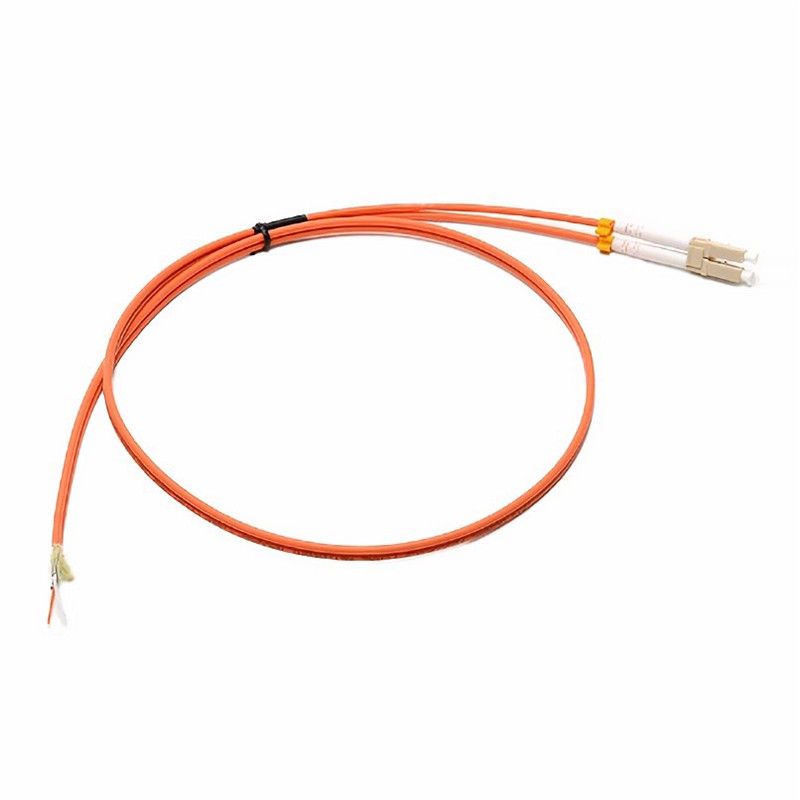


Simplex and duplex are two options for the cables in your fibre optic network. Whether you choose full-duplex vs. half-duplex vs. simplex depends on your application and budget. Learn the differences between simplex and duplex fibre optic cables, their various applications and the advantages of each.
Simplex vs. Duplex Fibre Structure
Simplex and duplex fibre optic cables are both tight-buffered and jacketed with Kevlar strength members. Simplex fibre optic cables, also known as single-strand, have only one fibre. On one end is the transmitter, and the other end has the receiver. These are not reversible.
Duplex fibre optic cables used to have two fibres joined together by a thin web or "zipcord” construction. One strand transmitted from point A to point B and the other from B to A. Both ends had a transmitter and a receiver. The emergence of single-strand fibre transmission has changed the situation. It seemed to be a better alternative for network managers, providing an increased network capacity, higher reliability due to fewer connections and overall cost savings. Single-strand duplex fibre transmission uses a single fibre to send data in both directions, namely bidirectional or BiDi transmission. This technology is based on two wavelengths traveling in opposite directions and is achieved by combining and separating data transmitted over a single fibre based on the wavelengths of the lights (typically around 850, 1300 and 1550 nm). Only some equipment manufacturers are using or moving to a single-strand cable for their connectivity, as the equipment becomes very expensive. It exists for certain applications, but it is not the norm.
Duplex fibre optic cables can be half-duplex or full-duplex. Half-duplex means that data can be transmitted in two directions but not simultaneously. Full-duplex indicates that data transfer can occur in both directions at once.
Simplex vs. Duplex Fibre Applications
Fibre optic simplex offers one-way data transfer. It's a good choice for an application such as an interstate trucking scale that sends weight readings back to a monitoring station. Another example is an oil line monitor that sends data about oil flow back to a central location.
Fibre optic duplex enables bidirectional data transfer. It's a good choice for applications such as telecommunications as well as workstations, Ethernet switches, fibre switches and servers, and backbone ports. Simplex multimode fibre optic cables can also be used for bidirectional data transfer if a multiplex data signal is used.
Simplex vs. Duplex Single-Mode and Multimode Fibre
Both simplex and duplex fibre optic cables come in single-mode or multimode. Single-mode is often better for long distance applications because it carries one ray of light at a time. Multimode has a larger core and can transmit more data at a given time. However, it is better for shorter distances due to high dispersion and attenuation rates. Read more about the differences between multimode and single-mode in our Multimode vs. Single-Mode Fibre Optic Cable article.
Simplex vs. Duplex Fibre Advantages
As simplex and half-duplex fibre optic cables use only one fibre to communicate, they are often less expensive than full-duplex fibre optic cables. They also allow for more incoming data at higher speeds. The primary advantage of a full-duplex fibre optic cable is the capacity for simultaneous bidirectional communication. One potential disadvantage to fibre optic full-duplex is that it only permits two devices to communicate at once, which means you will need enhanced connections to accommodate additional devices.
Our Factory
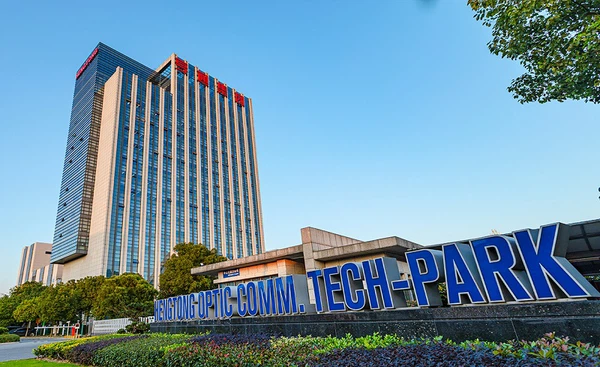
Hengtong has over 70 wholly-owned companies and holding companies (5 of which are listed on the Shanghai, Hong Kong, Shen Zhen and Indonesian stock exchanges respectively), with 12 manufacturing bases in Europe, South America, Africa, South Asia and Southeast Asia. Hengtong operates sales offices in over 40 countries and regions around the world, supplying products to over 150 countries and regions.
FAQ
Q: What is the purpose of a fiber patch cord?
Such as connect switches on different floors or connect routers between different data centers, these can be achieved long distance optical signal transmission, and effectively expand network coverage range.
Q: What is the difference between optical fiber and patch cord?
Q: What is the difference between a patch cable and a regular cable?
Q: What does a fiber cord look like?
Q: What are the advantages of patch cord cable?
Q: What color is fiber optic patch cord?
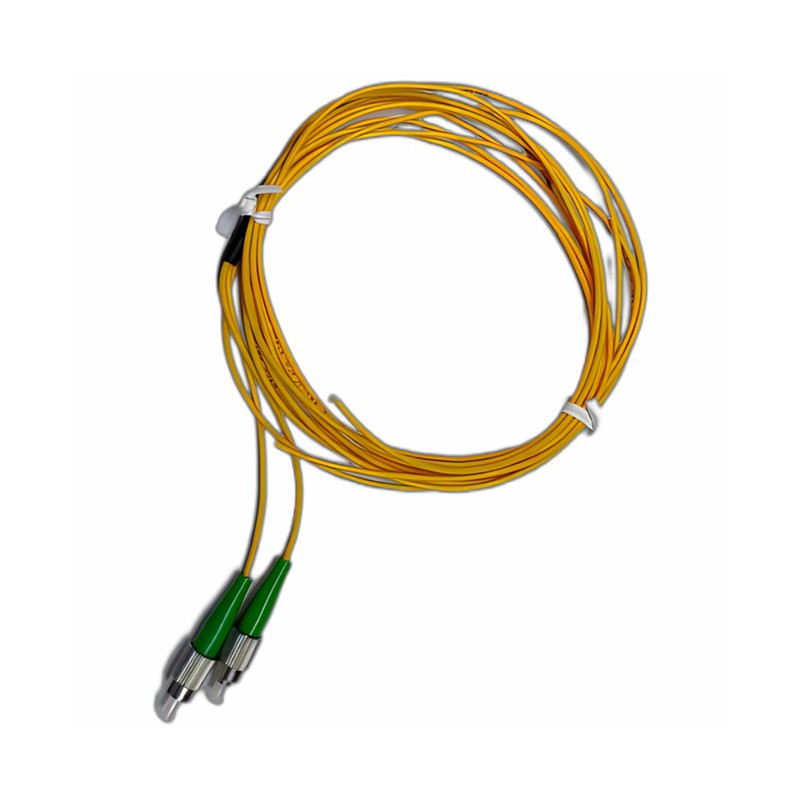
In the center, orange cable means multimode fiber and the beige connector indicates 62.5/125 fiber. On the right, the yellow patchcord indicates singlemode fiber and the blue connector means it is a regular PC polished connector, If it were an APC connector, it would be green.
Q: How fast is a fiber optic patch cord?
Q: Why is it called a patch cable?
Q: What are the two types of patch cables?
Q: How do you identify a patch cable?
Q: Can I use a patch cable to connect to the internet?
Q: Is a patch cable the same as a crossover cable?
Q: What is the most common type of patch cable?
Q: Where does a fiber optic get its signal from?
Q: Do fiber optic cables carry electricity?
Q: How do you know if you have fiber optic cable?
Q: Do I need a patch cable?
Q: What not to do with fiber optic cable?
Q: How thick is a fiber patch cord?
Q: What size are fiber patch cords?
We're professional fiber optic patch cord manufacturers and suppliers in China, specialized in providing high quality products and service. If you're going to wholesale customized fiber optic patch cord, welcome to get quotation from our factory.