






Who Are We?
Hengtong Group is an international enterprise with a diverse range of expertise covering fibre optical communication, power transmission, EPC turnkey service and maintenance, as well as IoT, big data, e-commerce, new materials and new energy.
Why Choose Us
Our credentials
It applies to enterprises that carry out the design and development, manufacture, installation and servicing of medical devices or related services.
Global Operation
HENGTONG possesses 70 wholly-owned companies and holding companies, establishes industrial bases in up to 16 provinces of China and in Europe.
Good service
Providing technical support, troubleshooting, and maintenance services.
One-stop Solution
We offer a comprehensive customization solution, tailored to meet the specific needs and requirements of our clients.

Drop FTTH Fiber Optic Cable is all dielectric fiber optic drop cable consisting of 1 to 4,The indoor optical cable with the access network puts the optical communication unit in the center, placing two parallel metal or non-metal strengthening elements on both sides, and finally, squeezing the black or color low smoke halogen-free sheath into the cable.

Remote Radio Unit RRU Optical Fiber Cable
Remote Radio Unit RRU Optical Fiber Cable is composed of multiple sub-cable and possible non-metallic core reinforcement. The sub-cable is generally composed of tight optical fiber, aramid fiber reinforcement and LSZH sheath.

Armoured Optical Cable For Wireless Remote Radio Unit
Armoured Optical Cable For Wireless Remote Radio Unit is made of multiple tight optical fibers around the central reinforcement parts and coated with aramid to strengthen the cable core,
FTTA Cable, short for Fiber to the Antenna Cable, is a specialized type of fiber optic cable designed for outdoor telecommunications infrastructure. Its primary purpose is to connect remote radio units (RRUs) or antennas to base station equipment in wireless communication networks.
FTTA technology is primarily used in mobile telecommunications infrastructure, such as 4G and 5G networks, where the demand for bandwidth and minimizing latency is critical. In a typical FTTA deployment, the transmit antennas are connected to the base station via fiber optic cables instead of copper wires. This enables faster transmission speeds and significantly enhances network capacity.
Advantages of FTTA Cable Assemblies
FTTA outdoor fiber cable assemblies offer several benefits that contribute to the efficiency, reliability, and performance of fiber-to-the-antenna (FTTA) networks. Some additional benefits include:
Protection against harsh environmental conditions: FTTA outdoor fiber cable assemblies are designed to be weatherproof and can withstand extreme temperatures, moisture, dust, and UV exposure. FTTA fiber patch cable ensures optimal performance and longevity even in challenging outdoor environments.
Easy installation and maintenance: FTTA fiber patch cable are typically pre-terminated with waterproof connectors, making installation quick and straightforward. FTTA fiber patch cable can be easily connected and disconnected, allowing for efficient deployment and maintenance of FTTA networks. This reduces downtime and operational costs.
Enhanced signal transmission: FTTA fiber patch cable utilize fiber optic technology, which offers higher bandwidth and greater immunity to electromagnetic interference compared to traditional copper cabling. This results in improved signal quality, faster data speeds, lower latency, and reduced signal loss over longer distances.
FTTA outdoor fiber cable assemblies play a pivotal role in enabling the deployment of robust, high-performance wireless networks. Their durability, signal quality, flexibility, and cost-efficiency make FTTA fiber patch cable an indispensable component of FTTA infrastructure, driving the advancement of mobile telecommunications and enhancing connectivity for end-users. As the demand for seamless, high-speed wireless communication continues to grow, the importance of FTTA outdoor fiber cable assemblies in shaping the future of telecommunications cannot be overstated.
Types of Fiber and Fiber Optic Cable Construction - FTTA Fundamentals
Types of Fiber
An optical fiber transmits light through a flexible, transparent strand of pure glass not much wider than a human hair. It functions as a waveguide, or "light pipe," to direct the light. On a cell tower, an optical transceiver module inside the towermounted radio converts the optical signal into electrical signals for modulation by the radio.
While many different types of fiber optic cable exist, singlemode fiber (SMF) and multimode fiber (MMF) appear most often in tower installations. In general, SMF can operate at a higher bandwidth than MMF. Both types of fiber meet or exceed the current requirements of both the Common Public Radio Interface (CPRI) and Open Base Station Architecture Initiative (OBSAI) specifications for RRU communications.
SMF and MMF currently cost about the same. However, the cost of the associated optical transceiver module differs greatly. MMF can be used with a low-cost transceiver, while SMF requires a higher precision laser transceiver. While MMF may offer a lower initial cost at installation, the higher data rates, bandwidth and extended distance capacities supported by SMF ensure a more future-safe system.
Fiber Optic Cable Construction
A fiber optic strand consists of a core and a cladding. The core is made of an ultra-pure glass that provides an optical path for the light. The cladding is also made of glass, but it has been iFTTA-Fiber-Optic-Cablententionally polluted to have a different refractive index to prevent light from escaping the core. The cladding essentially acts as the guardrail for the light, continually reflecting it back into the core. The core and cladding are surrounded by a protective plastic coating, which is stripped away prior to splicing or terminating connectors.
Coated fibers may be individually jacketed with a polymer coating, such as PVC. This construction usually incorporates a strength element, such as stranded aramid polymer yarn. Two such jacketed fibers may then be bundled together in a five- to seven-millimeter construction to form a jumper cable. Alternatively, multiple coated fibers can be grouped together in buffer tubes and arranged with a fiberglass central strength member (CSM) to form a multi-fiber feeder cable. In a multi-fiber feeder cable, the coated 900-micron fibers are color coded for easy identification. This color coding follows a standard pattern per the U.S. Energy Information Administration (EIA) specifications.
Fiber to the Antenna (FTTA) Cabling Systems
FTTA, which stands for Fiber To The Antenna, is a communication network technology that has revolutionized the way wireless telecommunication networks are deployed. Essentially, FTTA involves bringing fiber optic directly to the transmission antenna instead of relying on traditional copper connections.
This technology is primarily used in mobile telecommunications infrastructures, such as 4G and 5G networks, where the demand for bandwidth and the need to minimize latency are crucial. In a typical FTTA deployment, transmission antennas are connected to base stations via fiber optic instead of copper wiring. This allows for much faster transmission speeds and considerably enhanced network capacity.
Among the Benefits of FTTA are
Higher speed and bandwidth: Fiber optic enables much higher transmission speeds than copper wiring, resulting in a faster and smoother user experience.
Lower latency: By reducing the distance the signal must travel, FTTA minimizes latency, which is essential for time-sensitive applications such as online gaming and virtual reality.
Improved reliability: Fiber optic is less susceptible to electromagnetic interference and signal degradation, resulting in a more stable and reliable connection.
However, FTTA also presents some drawbacks, including
High initial cost: Implementing FTTA requires a significant investment in fiber optic infrastructure and specialized equipment, which can be costly for telecommunications service providers.
Installation and maintenance difficulties: Fiber optic can be more delicate and challenging to install and maintain compared to traditional copper wiring, which can increase long-term operating costs.
FTTA technology offers numerous advantages in terms of speed, bandwidth, and reliability for wireless communication networks, especially in the context of the increasing demands of 4G and 5G networks. Although its implementation may be costly and require specialized technical skills, its long-term benefits make it an attractive option for telecommunications service providers looking to enhance the quality and efficiency of their networks.
Development and Application of FTTA Optical Access Technology
FTTX is a way to access the networking. In the access network, optical fiber is mainly used to be close to users. The transmission space capacity of optical fiber is huge. As a high-quality transmission method, it also has extremely high reliability; as a main transmission medium, optical fiber access has become a fixed broadband A new direction for access. With the development of technology and the application of commercial scale, the cost of FTTX is also decreasing, which will help the popularization of FTTX technology and further enter our daily life. In the triple play, the application of FTTX technology has played a very important role.
In FTTX technology, passive optical network technology is the most dominant. It uses optical fiber as the medium and can passively split optical transmission throughout the whole process. Especially in terms of management operation and maintenance, comprehensive service provision, etc., its advantages are more significant, making it comparable to other technologies. more prominent than advantage. The passive optical network system can be divided into three parts, namely optical line terminal, optical fiber distribution network and optical network unit. Here, the optical line terminal is the core part of the system, which provides a high-speed interface for the access network and the core network, and can also be used as a point-to-multipoint network interface to provide information to other optical network units by broadcasting. The optical network unit mainly accesses data and voice services and plays a role at the user end. Optical fiber distribution network is an optical fiber distribution network, the main component is passive optical fiber splitter, such an optical fiber transmission broadband can be shared by many optical network units, of course, the premise is that this broadband interface is a passive optical network.
The concept of passive optical network technology was first proposed in 1990. After development and changes, it has been continuously matured and gradually improved, forming two standards, namely the EPON standard and the GPON standard. EPON is based on Ethernet. We all know that passive optical network has a unique network structure advantage, and Ethernet has low cost, and EPON has the advantages of both. The main technology of GPON is ATM encapsulation technology. Under this premise, GEP84 encapsulation is selected, which has higher quality and shows great support for TDM services.
Network technology is constantly developing, and the competition between new technologies is becoming more and more fierce. As the most influential technologies in passive optical network technology, EPON and GPON have always been compared with each other. These two technologies have their own advantages. GPON has significant advantages in terms of uplink and downlink speed, optical splitting ratio, and network management functions. Compared with EPON, GPON launched the standard later, so it is more comprehensive; compared with GPON, EPON's industrial chain It should be more mature and perfect, and the cost is much lower. In addition, the EPON standard is more relaxed than the latter, so that manufacturers have more room to play in product development.
Ten years ago, operators used XPON technology to test FTTX. With the end of this process, market cultivation and related technology preparations began a new stage. Since then, FTTX based on XPON technology has officially started commercialization. A new stage of scale application. Now, the optical network unit is divided into three types, which are single-port optical, multi-port optical and integrated optical network unit. According to the different positions of the optical network unit in the passive optical network access network, there are three types in total, namely fiber-to-the-home, fiber-to-the-building, and fiber-to-the-road, all called FTTX.
FTTH
The optical network unit is usually installed in the user's home in a single-port manner, and the optical line terminal at the central office is installed in the communication room, and the transmission equipment is used as a carrier to connect and transmit relevant information of voice and data networks. The connection between the optical line terminal and the passive fiber optic splitter is mainly done by the trunk fiber optic cable. From the passive fiber optic splitter to the user's house, a leather cable with a small number of cores is placed, and from the user's optical network unit. Five types of lines and twisted pairs, so as to facilitate access to broadband and voice services.
Fiber to the building
This kind of optical network unit is multi-port, generally placed inside the building, and usually has the function of combining the passive optical network and the local area network. Most of the splitters are placed in the module office computer room, and some are in the fiber optic distribution device of the community computer room. The number of multi-port optical network units is calculated by the total number of users per unit in the residential building. At this time, it is generally The optical network unit will be placed in the vertical shaft, and the power box is also included, so that the power supply can be easily introduced. The optical network unit usually uses Category 5 lines to the homeowner's home, and a character-style panel is installed on the wall of the house to connect the computer to the Category 5 line, and to connect the optical modem and the twisted pair interface.
Fiber to the curb
Its optical line terminal is installed in the computer room of the central office, and a passive optical fiber splitter is installed in the office. This kind of network unit with high comprehensive performance, this technology is often used for network transformation and upgrading in areas where users are scattered, and can make full use of the covered area The network has the characteristics of low cost and fast improvement of user perception. The three forms of XPON have their own characteristics. The speed of fiber-to-the-home is very fast and the maintenance is very convenient. However, it is relatively expensive to install an optical network unit device in each home. With the continuous decline in the cost of single-port optical W network units, the cost of optical network unit equipment and optical leather cables, fiber-to-the-home has become the most important application mode.
Through the continuous development of FTTX technology, we can see its development prospects in real life. This technology will also affect the development of network technology and new business expansion in the future; the changing needs of users also promote the continuous evolution of FTTX technology and development, the future FTTX technology will be more comprehensive, more flexible, more practical, and more stable in performance.
Our Factory
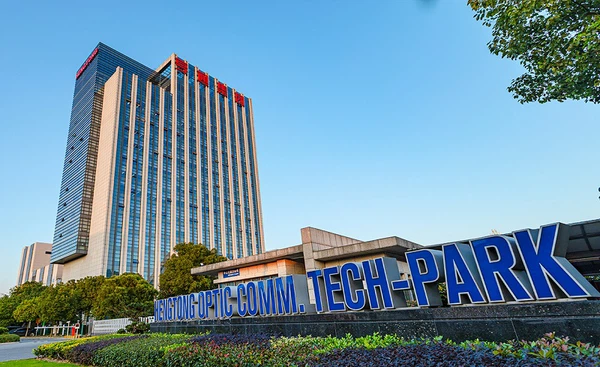
Hengtong has over 70 wholly-owned companies and holding companies (5 of which are listed on the Shanghai, Hong Kong, Shen Zhen and Indonesian stock exchanges respectively), with 12 manufacturing bases in Europe, South America, Africa, South Asia and Southeast Asia. Hengtong operates sales offices in over 40 countries and regions around the world, supplying products to over 150 countries and regions.
Remote Radio Unit (RRU) Optical Fiber Cable

emote Radio Unit (RRU) fiber cable is a dedicated optical cable used for high-speed links between the baseband unit (BBU) and remote radio unit/head (RRU/RRH) in 4G/5G FTTA (Fiber to the Antenna) deployments. By replacing traditional RF feeder cables, rru fiber cable ensures low-loss, stable transmission in modern wireless base stations.
Designed as a tight-buffered, multi-core indoor/outdoor cable with an LSZH sheath, this Remote Radio Unit optical fiber cable combines good fire performance, mechanical strength and bending flexibility. It is ideal for equipment rooms, risers and rooftop transitions in operator base stations.
Available in different fiber types, fiber counts and constructions, our rru fiber cable supports LC, SC, ODVA, PDLC, NSN and other mainstream FTTA connector systems for fast, plug-and-play installation.
RRU Fiber Cable Structure & Design

Tight-Buffered Sub-Cable Construction
The core of the rru fiber cable is a set of tight-buffered sub-cables, each built for easy termination and robust handling in base station environments. A typical sub-cable consists of:
900 μm tight-buffered optical fiber
High-modulus aramid yarn for tensile strength
Approx. 2.0 mm LSZH (Low Smoke Zero Halogen) sub-cable jacket
Multiple 2.0 mm sub-cables are stranded together to form a compact multi-core RRU fiber cable, available in 2, 4, 6 or 12 fibers depending on the number of RRUs and required spares.
Central Strength Member & Stranding
The tight-buffered sub-cables are stranded around a central non-metallic strength member, typically FRP or another dielectric rod, together with suitable fillers to maintain a round profile. This stranded construction:
Keeps the overall cable outer diameter small and uniform
Provides good flexibility and bending performance
Makes the cable easy to route in equipment rooms, risers and cable trays
The result is a compact, lightweight rru fiber cable optimized for BBU–RRU routing in dense base station spaces.


Outer LSZH Sheath and Fire Performance
The stranded core is covered by an LSZH outer sheath that combines mechanical protection with excellent fire behavior. Depending on the final design, the cable can be made to meet typical flame and smoke standards such as IEC 60332, IEC 60754 and IEC 61034 (or equivalent local standards).
This LSZH outer jacket makes the RRU fiber cable suitable for indoor/outdoor transition routes, including base station equipment rooms, risers, corridors and rooftop passages where both safety and durability are required.
Armored and Outdoor RRU Fiber Cable Options
For harsher environments, the rru fiber cable can be supplied in armored and outdoor-rated versions:
Steel tape or other armored RRU fiber cable for enhanced crush and rodent protection
UV-resistant outdoor sheath for exposed runs on towers, rooftops and poles
These options are ideal for wireless base stations where the cable is directly exposed to sunlight, mechanical stress or potential rodent damage.

Technical Specifications – RRU Fiber Cable
The following tables summarize the typical rru fiber cable technical data and key rru fiber cable specification parameters for a G.657.A2 single-mode indoor/outdoor design used in BBU–RRU links,
Optical Specifications
| Item | Specification |
|---|---|
| Fiber type | Single-mode G.657.A2 (optional G.652.D, OMx)telsto-co.com |
| Wavelengths | 1310 nm / 1550 nm |
| Max. attenuation @1310 nm | ≤ 0.40 dB/km Abalone |
| Max. attenuation @1550 nm | ≤ 0.30 dB/km Abalone |
| Available fiber counts | 2 / 4 / 6 / 12 cores YINGDA TECHNOLOGY LIMITED+1 |
Mechanical & Environmental Specifications
| Item | Unit | Typical value | Note |
|---|---|---|---|
| Cable outer diameter | mm | 5.5 – 7.0 | Depends on fiber count & construction |
| Weight | kg/km | ≈ 40 – 45 | ~42.3 kg/km for 2-core 7.0 mm design |
| Min. bending radius (static) | mm | ≥ 10 × OD | Typical FTTA/RRU cable value |
| Min. bending radius (dynamic) | mm | ≥ 20 × OD | Typical FTTA/RRU cable value |
| Tensile load (short term) | N | 400 – 600 | Common 2F FTTA/RRU designs: |
| Tensile load (long term) | N | ≈ 200 | Long-term rating around 200 N |
| Crush resistance (short term) | N/100 mm | 2000 – 2200 | Typical values for FTTA round cable |
| Crush resistance (long term) | N/100 mm | 1000 – 1100 | Typical values for FTTA round cable |
| Operating temperature | °C | −40 ~ +75 | In line with common FTTA cables |
| Storage temperature | °C | −40 ~ +75 | Same range as operating temperature |
Typical mechanical and environmental specifications for G.657.A2 RRU fiber cable; other constructions available on request.
Standards & Compliance
Fiber: ITU-T G.657.A2 (optional G.652.D, OM2/OM3/OM4 etc.) telsto-co.com
Flame retardant: IEC 60332-1 / IEC 60332-3 (or equivalent, per final cable design)nl.prysmian.com
LSZH properties: IEC 60754-2 (halogen acid gas), IEC 61034 (smoke density)nl.prysmian.com
RoHS compliant materials for jacket and fiber components
FAQ
Q: What is FTTA?
Q: What does FTTH mean?
What is FTTH? FTTH stands for "Fibre to the Home." It refers to a type of broadband internet connection technology that uses fibre-optic cables to transmit data. These cables are made of thin strands of glass or plastic that transmit light signals, which allows them to transmit data at very high speeds.
Q: What is the difference between FTTH and FTTx?
Q: What is the difference between OFC and Ethernet cable?
Q: What is the difference between FTTA and FTTB?
Q: What is the purpose and goal of the training FTTA?
This two-year program aims to help seeking Christians grow in the divine life, be constituted with the truths of the Bible, develop their spiritual capacities, and cultivate proper character.
Q: What is the difference between cable and FTTH?
Q: Is FTTH better than cable?
Q: What is the difference between fiber and FTTH?
Q: Is FTTH better than WIFI?
Q: What is faster coaxial or Ethernet?
Q: Do I need a special Ethernet cable for fiber?
Q: What is FTTH vs Docsis?
Q: What is the purpose of training intervention?
Q: Can you get TV through fiber-optic cable?
Q: What is the difference between optical cable and fiber cable?
Q: Which type of fiber optic cable is most widely used?
Q: Are fiber optic cables good or bad?
This makes them much less likely to be damaged by things like heavy traffic or bad weather conditions. In addition, fiber optic cables are also resistant to electromagnetic interference (EMI), which can often cause problems with regular wire cables.
Q: What are the three types of fiber optic cable?
Q: Why would I use an optical cable?
Hot Tags: RRU Fiber Cable, Remote Radio Unit Optical Fiber Cable for 4G/5G FTTA, China RRU Fiber Cable, Remote Radio Unit Optical Fiber Cable for 4G/5G FTTA manufacturers, suppliers, ftta cable for contract, ftta cable for chemical resistant, ftta cable for after sales service, ftta cable for sample, ftta cable for simplex, ftta cable for twisted pair


