







Indoor Fiber Optic Cable Design and Manufacturing
Indoor Fiber Optic Cable has become a core building block of modern telecommunications, complementing backbone systems and extending high-speed connectivity into offices and homes.

Indoor Fiber Optic Cable starts with first-principles engineering—materials, mechanics, and optics working together. Every indoor run needs tight-bend performance, stable attenuation, and clean terminations.
With Hengtong, those basics turn into repeatable results: full-chain production from preform to finished cable, ITU-T G.652/G.657 alignment, and lot-level traceability. The outcome is indoor Fiber Optic Cable that pulls fast in trays and conduits, holds color codes across batches, and offers LSZH options for offices, hospitals, and transport hubs. You get predictable install time, lower rework, and cleaner TCO across building, campus, and metro layers.
Optical Physics
Leveraging light transmission through ultra-pure glass to achieve data rates impossible with traditional copper cables.
Material Science
Developing advanced materials that balance optical clarity, mechanical strength, and environmental resistance.
Precision Manufacturing
Creating microscopically precise components with tolerances measured in nanometers for optimal performance.
Indoor Fiber Optic Cable Types
Indoor fiber optic cable plays a critical role in modern communication and data networks. By choosing the right type of cable for a given installation, organizations can ensure that their data transfer needs are met with speed and reliability.There are several types of indoor optical fiber cable available on the market, each with its own unique properties and benefits. most popular indoor fiber types:
-
![Central Tube Type Round Optical Cable]()
Central Tube Type Round Optical Cable
The optical cable structure is constructed by enclosing multiple optical fibers in a loose tube made of high-modulus plastic and filled with water-blocking composite. Strength members are evenlyread more -
![Easy-to-Strip Flat Light-duty Outdoor Optical Fiber Cable]()
Easy-to-Strip Flat Light-duty Outdoor Optical Fiber Cable
This is a flat-shaped, light-duty outdoor optical cable with single-core tight buffered fiber as the optical unit. It adopts a slotted sheath structure for extremely easy stripping, enabling fast andread more -
![Remote Radio Unit RRU Optical Fiber Cable]()
Remote Radio Unit RRU Optical Fiber Cable
GYFJH refers to an outdoor RF remote optical cable for communication purposes, featuring non-metallic strength members, tight-buffered structure, and low smoke zero halogen (LSZH) sheath (commonlyread more -
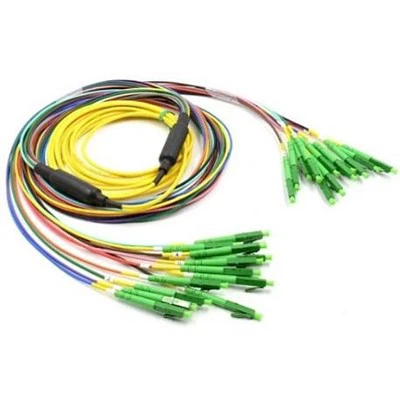
![Simplex Round Indoor Cable(GJFJU)]()
Simplex Round Indoor Cable(GJFJU)
GJFJU (TPU Round Drop Cable): This is an FTTH drop cable with non-metallic strength members, tight-buffered fibers, a round structure, and a TPU (Thermoplastic Polyurethane) jacket, speciallyread more -
![MPO Braided Fiber Cable GJFH(V)]()
MPO Braided Fiber Cable GJFH(V)
Braid-reinforced MPO fiber optic cables are pre-terminated cable assemblies constructed by adding a high-strength braided reinforcing layer made of aramid (Kevlar) and similar materials toread more -
![RRU Fiber Cable, Remote Radio Unit Optical Fiber Cable for 4G/5G FTTA]()
RRU Fiber Cable, Remote Radio Unit Optical Fiber Cable fo...
FTTA Cable, short for Fiber to the Antenna Cable, is a specialized type of fiber optic cable designed for outdoor telecommunications infrastructure. Its primary purpose is to connect remote radioread more -
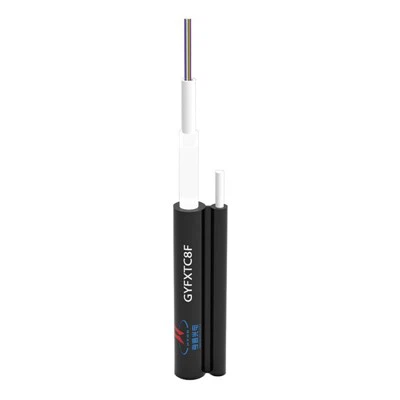
![Self-supporting Butterfly Lead-in Fiber Optical Cable]()
Self-supporting Butterfly Lead-in Fiber Optical Cable
Self-supporting Butterfly Lead-in Fiber Optical Cable is all dielectric drop cable consisting of 1 to 4, The whole optical cable is an 8 shape structure, with three parts: lifting line, sling andread more -
![Drop FTTH Fiber Optic Cable]()
Drop FTTH Fiber Optic Cable
Drop FTTH Fiber Optic Cable is all dielectric fiber optic drop cable consisting of 1 to 4,The indoor optical cable with the access network puts the optical communication unit in the center, placingread more -
![Duct Drop Butterfly Cable]()
Duct Drop Butterfly Cable
The FTTH drop fibre cable is positioned in the centre.The indoor optical cable with the access network puts the optical communication unit in the center and places two parallel metal or non-metalread more -
![Indoor Outdoor Round Drop Cable]()
Indoor Outdoor Round Drop Cable
The FTTH drop cable is positioned in the centre.Indoor Outdoor Round Drop Cable structure is multiple tight or loose optical fiber coated with a layer of aramid reinforcement, after squeezing a layerread more -
![Figure 8 Indoor Optical Cable]()
Figure 8 Indoor Optical Cable
The FTTH drop cable is positioned in the centre.The whole Figure 8 Indoor Optical Cable is an 8 shape structure, with three parts: lifting line, sling and optical cable.Optical cable structure isread more -
![Indoor Multi Core Tight Buffered Fiber Optic Cable]()
Indoor Multi Core Tight Buffered Fiber Optic Cable
Multiple tight sleeve fiber is coated with high strength aramid as reinforcement, and a layer of PVC sheath (or LSZH sheath) is squeezed on the outside of the cable, and ultimately obtain the Indoorread more


Fundamentals of Optical Fiber Strength and Longevity

Understanding Fiber Strength Parameters
The mechanical integrity of optical fibers forms the foundation of reliable communication networks. Every optical fiber undergoes rigorous screening to ensure it meets minimum strength requirements. The screening strength, typically measured in megapascals (MPa) or pounds per square inch (psi), represents the minimum tensile stress that a fiber must withstand during proof testing. This process eliminates weak fibers that might fail prematurely in service.
The relationship between fiber strength and service lifetime follows complex mathematical models based on fracture mechanics. The primary concern is the growth of microscopic flaws on the fiber surface when subjected to tensile stress over extended periods.
The lifetime of a fiber under constant stress depends on the dynamic fatigue parameter (Nd), which characterizes how quickly cracks propagate in the glass under stress. Higher Nd values indicate better resistance to crack growth, translating to longer service life. Modern optical fibers are engineered to achieve Nd values exceeding 20, ensuring decades of reliable operation even under challenging environmental conditions.
Environmental Factors Affecting Fiber Lifetime
Environmental conditions significantly impact fiber longevity. Humidity accelerates stress corrosion, where water molecules attack the silicon-oxygen bonds at crack tips, promoting crack growth. Temperature fluctuations cause thermal expansion and contraction, inducing additional mechanical stress. Understanding these factors is crucial for both outdoor installations and indoor fiber optic cable deployments, where controlled environments might offer different challenges than external installations.

Cable Structure Design Principles
Engineered from the glass outward, each design controls five essentials: optical integrity, strain management, moisture blocking, environmental shielding, and code compliance. We balance loose-tube vs. tight-buffer architectures, specify aramid/FRP strength members, water-swell tapes or gel, and LSZH/HDPE jackets with UV, flame, and abrasion resistance. Test plans follow IEC 60794 and ITU-T G.652–G.657 so indoor Fiber Optic Cable and outdoor variants bend safely, pull cleanly, and stay stable across temperature, humidity, and load. Hengtong then tunes the stack-up to your route, tray, and splice plan.

Central Tube Cable Design
The central tube design represents one of the most straightforward yet effective cable architectures. In this configuration, optical fibers are housed within a single central buffer tube, typically filled with thixotropic gel to provide mechanical cushioning and water blocking. The tube material, often polybutylene terephthalate (PBT) or modified polypropylene, provides primary protection against mechanical stress and environmental factors.
The design calculations for central tube cables involve determining the optimal tube diameter, wall thickness, and fiber count capacity. The excess fiber length (EFL) within the tube, typically 0.1% to 0.3%, accommodates thermal expansion and contraction without inducing stress on the fibers. This careful balance ensures that fibers remain strain-free across the cable's operating temperature range.

Stranded Loose Tube Design
Stranded loose tube cables offer superior flexibility and higher fiber counts compared to central tube designs. Multiple buffer tubes are helically stranded around a central strength member, usually made of fiber-reinforced plastic (FRP) or steel wire. This architecture distributes mechanical loads more evenly and provides redundancy – damage to one tube doesn't affect fibers in other tubes.
The stranding process requires precise control of lay length and tension to achieve optimal mechanical performance. The lay length, defined as the distance required for one complete helical rotation, affects both the cable's flexibility and the fiber strain during bending. Shorter lay lengths improve flexibility but increase fiber length within the cable, potentially inducing microbending losses.

Strength Member Design Calculations
Strength members bear the majority of tensile loads during installation and operation. The design process involves calculating the required cross-sectional area based on maximum expected tensile loads, safety factors, and material properties. For aramid yarn strength members, commonly used in indoor fiber optic cable applications, the calculation considers the yarn's linear density, tensile modulus, and the helical stranding geometry.
Cable Structure Comparison

Central Tube Design
- Simpler construction, lower cost
- Smaller diameter for same fiber count
- Limited fiber count capacity
- Less flexible than stranded designs
Stranded Loose Tube Design
- Higher fiber count capacity
- Superior flexibility
- Better load distribution
- Larger diameter for same fiber count

Types of Indoor Fiber Optic Cable

Plenum-Rated Cables
Designed for installation in plenum spaces – the areas above dropped ceilings and below raised floors used for air circulation.
Must meet stringent fire safety standards, using low-smoke, zero-halogen (LSZH) materials that won't emit toxic fumes when exposed to fire.
Jacket materials typically include fluorinated ethylene propylene (FEP) or polyvinyl chloride (PVC) compounds specifically formulated to meet NFPA 262 or UL 910 standards.

Plenum-Rated Cables
Designed for vertical installations between floors, riser cables must resist flame propagation in vertical shaft applications.
While not requiring the same stringent fire resistance as plenum cables, they must meet UL 1666 or similar standards.
These cables often feature additional strength members to support their own weight in vertical runs.

General Purpose Cables
Used in horizontal installations within a single floor, these cables offer cost-effective solutions for less demanding environments.
They typically meet CM or CMG ratings and are suitable for installation in cable trays, conduits, or other pathways that don't involve plenum or riser spaces.
Classification by Cable Structure

Tight-Buffered Cables
In this design, a polymer coating is applied directly over the fiber's primary coating, increasing the fiber diameter from 250 microns to typically 900 microns. This robust construction makes tight-buffered indoor fiber optic cable ideal for direct termination and provides excellent crush and impact resistance.
The tight buffer eliminates the need for fan-out kits when terminating multi-fiber cables, simplifying installation.
Distribution Cables
These cables combine the benefits of loose tube and tight-buffered designs. Multiple tight-buffered fibers are bundled together within an outer jacket, often with aramid yarn strength members.
Distribution cables are particularly popular for backbone installations in buildings, offering high fiber counts while maintaining ease of termination.

Breakout Cables
Each fiber in a breakout cable is individually reinforced with strength members and jacketed, then combined into a larger cable assembly. This design allows individual fibers to be routed to different locations without additional protection.
While bulkier than distribution cables, breakout cables offer superior protection and are ideal for industrial environments or applications requiring frequent reconfiguration.
Ribbon Cables
Ribbon cables arrange fibers in flat ribbon arrays, typically containing 4, 8, or 12 fibers per ribbon. Multiple ribbons can be stacked to achieve very high fiber densities.
This design is particularly efficient for mass fusion splicing and high-density applications in data centers. Modern rollable ribbon designs offer improved flexibility while maintaining the splicing advantages of traditional flat ribbons.
Classification by Fiber Count and Flexibility
Simplex and Duplex Cables
请替换当前内容 Adopting advanced technology and concepts of the industrial internet, it helps manufacturing enterprises create a unified digital system covering the entire process of production and management.
Multi-Fiber Cables
Adopting advanced technology and concepts of the industrial internet, it helps manufacturing enterprises create a unified digital system covering the entire process of production and management.
Armored Indoor Cables
Adopting advanced technology and concepts of the industrial internet, it helps manufacturing enterprises create a unified digital system covering the entire process of production and management.
Products Description

Ribbon Fiber Manufacturing Equipment
The production of ribbon fibers requires specialized equipment capable of precise fiber alignment and uniform coating application. The manufacturing line typically consists of fiber pay-off units with tension control, precision alignment fixtures, UV-curable acrylate coating application systems, and UV curing ovens.
Modern systems incorporate machine vision for real-time quality monitoring, detecting fiber crossovers, spacing variations, and coating defects.
The critical challenge in ribbon manufacturing is maintaining precise fiber-to-fiber spacing while applying a thin, uniform matrix coating that bonds the fibers without inducing stress. The coating thickness must be optimized to provide adequate mechanical protection while maintaining flexibility for cable routing and splicing operations.
Ribbon Fiber Manufacturing Process
Fiber Pay-off
Controlled tension pay-off units feed individual fibers with precise alignment
Alignment
Precision guides arrange fibers in parallel with consistent spacing (typically 250μm pitch)
Coating Application
UV-curable acrylate matrix applied to bond fibers while maintaining flexibility
UV Curing
Controlled UV exposure to cure the matrix without fiber damage or stress
Quality Inspection
Machine vision systems check for alignment, spacing, and coating defects
Rewinding
Precise winding onto spools with controlled tension to prevent damage
Quality Control Parameters
Quality control in ribbon fiber manufacturing encompasses dimensional, optical, and mechanical parameters. Geometric measurements include ribbon width, thickness, and fiber pitch accuracy. These dimensions must remain consistent to ensure compatibility with mass fusion splicers and connector systems.
For indoor fiber optic cable applications, dimensional stability across temperature extremes is particularly important.

Critical Quality Control Parameters
Building reliable ribbon and indoor Fiber Optic Cable starts with tight, testable controls. Below is the same data from your table, rewritten as buyer-friendly copy with what we hold, how we measure it, and why it matters on site.
Controlling fiber pitch — 250 μm ± 5 μm (optical microscopy)
We lock fiber spacing at 250 μm ± 5 μm, verified under optical microscopy. Consistent pitch keeps splice alignment accurate, reduces insertion loss, and speeds mass-fusion work.
Holding ribbon width — ±10 μm of nominal (laser micrometer)
Ribbon width stays within ±10 μm using non-contact laser micrometers. Tight width control ensures ribbons feed cleanly through guides and mass-fusion holders without snagging or tilt.
Stabilizing ribbon thickness — 300–400 μm (laser micrometer)
We keep thickness in the 300–400 μm window, again measured by laser micrometer. Stable thickness delivers uniform heating during fusion, producing repeatable, low-loss splices.
Eliminating fiber crossovers — none allowed (machine vision)
Automated vision checks reject any crossovers before ribbons leave the line. No crossovers means no hidden stress points, fewer field failures, and smoother ribbon separation.
Setting separation force — 50–300 mN (tensile testing)
Controlled peel force between 50–300 mN balances fast splitting and fiber protection. Techs separate fibers quickly by hand while avoiding coating nicks that raise attenuation.
Limiting added attenuation — < 0.05 dB/km (optical spectrum analyzer)
Process-induced loss is capped at < 0.05 dB/km, verified on an OSA. Low added attenuation preserves system margin, extends reach, and keeps design assumptions intact.
Secondary Coating Processes and Excess Fiber Length Control
Buffer Tube Extrusion Technology
The secondary coating process, where bare fibers receive additional protective layers, represents a critical step in cable manufacturing. For loose tube designs, the extrusion process must create a tube with precise dimensions while maintaining controlled excess fiber length (EFL).
The extrusion line operates on the principle of drawing down molten polymer from a larger die opening to the final tube dimensions, with the draw-down ratio carefully controlled to achieve desired mechanical properties.
Temperature profile management throughout the extrusion process critically affects the final product quality. The polymer must be adequately plasticized in the extruder barrel without degradation, then cooled at a controlled rate to achieve optimal crystallinity and mechanical properties. For PBT materials commonly used in outdoor and indoor fiber optic cable, the melt temperature typically ranges from 240°C to 260°C, with precise control necessary to prevent polymer degradation.


Mechanisms of Excess Length Formation
Two primary methods generate excess fiber length in loose tube cables: thermal contraction and controlled tension differential.
In the thermal method, the tube is extruded at elevated temperature and subsequently cooled, causing longitudinal shrinkage that creates fiber excess length. The shrinkage percentage depends on the polymer type, processing temperatures, and cooling rate.
The tension control method maintains different tensions on the fiber and tube during production. By feeding fiber at a slightly higher rate than the tube advancement, controlled excess length is achieved. This method offers more precise control but requires sophisticated tension monitoring and feedback systems to maintain consistency.
Online Excess Length Measurement
Real-time monitoring of excess fiber length during production ensures consistent cable quality. Modern measurement systems use either optical time-domain reflectometry (OTDR) or phase-shift techniques. These systems compare the optical length of the fiber with the physical length of the cable, calculating the excess length percentage with precision better than 0.01%.

Buffer Tube Extrusion Line — Process Overview & Buyer-Relevant Controls
Architectural design & planning cepteur sint occaecat cupidatat proident

Fiber pay-off with precision tension control
- Function: Feeds coated fibers/ribbons into the line at constant, low tension.
- Controls: closed-loop dancers or servo brakes; setpoints typically 0.2–0.4 N per fiber.
- Why it matters: Prevents microbending and geometry drift before extrusion. Improves attenuation stability and keeps excess-length targets realistic.

Polymer extruder with temperature-controlled barrel
- Function: Melts LSZH/PP/PBT pellets for tube formation.
- Controls: multi-zone barrel temps, melt pressure, screw speed; moisture pre-drying for PBT.
- Why it matters: Correct melt viscosity gives smooth inner bore and uniform wall—key to low friction pull and consistent crush/impact resistance.

Crosshead die for precise tube formation around fibers
- Function: Centers the fiber bundle and forms the tube OD/ID.
- Controls: concentricity adjustment, die land length, vacuum sizing; inline OD/ID laser gauges.
- Why it matters: Concentric tubes reduce localized stress. Correct ID keeps fiber excess length (FEL) in spec without crowding the bundle.

Controlled cooling water bath system
- Function: Quenches the tube to lock dimensions and surface finish.
- Controls: bath temperature, turbulence, dwell time; nozzles designed to avoid ovality.
- Why it matters: Stable cooling delivers roundness and dimensional repeatability, improving ribbon glide and splice tray handling.

Excess length measurement system
- Function: Verifies fiber excess length in real time (e.g., +0.5% to +1.5% depending on spec).
- Controls: dual-encoder or laser length comparison between fiber path and tube path.
- Why it matters: Correct FEL lets fibers “float” during thermal cycles and bends, protecting attenuation over the product lifetime.

Capstan and take-up with synchronized speed control
- Function: Pulls the tube and winds it without deformation.
- Controls: closed-loop line speed, nip pressure, traverse patterns; defect tagging.
- Why it matters: Smooth, mark-free take-up prevents ovality and gel displacement, reducing rework at cabling and coloring steps.
Cable Sheathing and Armoring Technologies
The outer jacket of a fiber optic cable provides environmental protection and mechanical strength. For outdoor applications, black polyethylene (PE) compounds with carbon black UV stabilizers are standard. Indoor fiber optic cable requires different formulations to meet fire safety standards while maintaining flexibility and durability.
LSZH compounds for plenum and riser applications present unique challenges in formulation. These materials must achieve fire resistance without halogenated flame retardants, typically using metal hydroxides like aluminum trihydrate or magnesium hydroxide.
The high loading levels required (often exceeding 60% by weight) can compromise mechanical properties, necessitating careful selection of polymer bases and compatibilizers.

01
Polyethylene (PE)
- Primary Use:Outdoor cables
- Temperature Range:-40°C to +80°C
- UV Resistance:Excellent (with carbon black)
- Water Resistance:Excellent
02
Low-Smoke Zero-Halogen (LSZH)
- Primary Use:Indoor, plenum, riser
- Temperature Range:-20°C to +70°C
- Fire Performance:Low smoke, non-toxic
- Flexibility:Good to excellent
03
Polyvinyl Chloride (PVC)
- Primary Use:Indoor general purpose
- Temperature Range:-10°C to +60°C
- Mechanical Protection:Excellent
- Cost:Economical

Extrusion Process Optimization
Sheath extrusion requires precise control of processing parameters to achieve uniform wall thickness and smooth surface finish. The pressure tooling design must account for the complex rheological behavior of polymer melts, particularly for highly filled LSZH compounds used in indoor fiber optic cable.
Computational fluid dynamics simulations help optimize die geometry to minimize flow irregularities and weld lines.
The cooling process following extrusion significantly impacts the jacket's mechanical properties and dimensional stability. Gradual cooling through multiple water baths at progressively lower temperatures prevents thermal shock while achieving optimal crystallinity. For thick-walled cables, internal cooling using chilled air or water may be necessary to prevent long cooling times that could affect production efficiency.
Water-Blocking Technologies
Modern cables increasingly employ dry water-blocking technologies instead of traditional filling gels. Super-absorbent polymers (SAPs) in tape or yarn form swell upon water contact, blocking water ingress along the cable.
These materials must be compatible with other cable components and maintain effectiveness across the cable's operating temperature range.
For indoor fiber optic cable, water-blocking requirements differ from outdoor applications but remain important in certain environments. Riser and plenum spaces may experience condensation or water from fire suppression systems. Water-blocking tapes must meet the same fire safety standards as other cable components while providing adequate protection against moisture ingress.

Water-Blocking Solutions Comparison
Thixotropic Gel
- Excellent long-term water blocking
- Provides mechanical cushioning
- Messy to handle during installation
- Not suitable for indoor applications
SAP Tapes/Yarns
- Dry handling, clean installation
- Suitable for indoor applications
- Lightweight compared to gel
- Requires proper activation with water

ADSS and OPGW Cable Design Considerations

All-Dielectric Self-Supporting (ADSS) Cable Design
ADSS cables, designed for aerial installation on power transmission towers, require sophisticated engineering to withstand mechanical loads without metallic strength members. The design process begins with analyzing the installation environment, including span lengths, ice and wind loading conditions, and electrical field intensity.
These factors determine the required tensile strength and the selection of aramid yarn strength members.
The aramid yarn quantity calculation considers both short-term installation loads and long-term operational conditions. Safety factors typically range from 2.5 to 4.0, depending on environmental severity and installation practices.
The yarn's creep characteristics must be evaluated to ensure acceptable sag increases over the cable's service life don't violate electrical clearance requirements.
Key ADSS Design Parameters
Maximum Span Length
Up to 600 meters
Operating Temperature
-40°C to +70°C
Ice Loading
0.5-50 mm radial
Wind Loading
Up to 216 km/h
Maximum Tensile Load
10-30 kN
UV Resistance
20+ year service life
Optical Ground Wire (OPGW) Integration
OPGW cables combine the functions of electrical ground wire and optical communication in a single cable. The design must satisfy both electrical and optical requirements while maintaining mechanical reliability.
The optical unit, typically a stainless steel or aluminum tube containing fibers, is stranded with aluminum-clad steel or aluminum alloy wires to achieve required electrical and mechanical properties.
The challenge in OPGW design lies in protecting delicate optical fibers from the extreme temperatures and mechanical stresses experienced during electrical fault conditions. Thermal modeling ensures that short-circuit current capacity doesn't compromise fiber integrity.
The optical unit's position within the cable structure affects both its temperature rise during faults and its mechanical protection.

Key OPGW Design Parameters
Short-Circuit Current
Up to 100 kA (2 seconds)
Operating Temperature
-40°C to +90°C
Lightning Impulse
Up to 200 kA (10 kV/μs)
DC Resistance
0.1-2.0 Ω/km
Breaking Strength
50-300 kN
Fiber Count
2-144 fibers
ADSS vs. OPGW Comparison
| Parameter | ADSS | OPGW |
|---|---|---|
| Electrical Function | None - dielectric | Serves as ground wire |
| Installation | Requires new hardware | Replaces existing ground wire |
| Short-Circuit Protection | Limited | Excellent |
| Lightning Protection | Limited | Excellent |
| Weight | Lighter | Heavier (metallic components) |
| Cost | Lower cable cost, higher installation cost | Higher cable cost, lower installation cost |
| Typical Applications | Retrofit, distribution lines | New construction, transmission lines |
Submarine Cable Engineering
Submarine fiber optic cables represent the pinnacle of cable engineering, designed to operate reliably for 25+ years in the harsh undersea environment. These cables must withstand extreme pressure, temperature variations, mechanical stresses during installation and operation, and potential damage from fishing activities, anchors, and marine life.

Deep-Sea Cable Architecture
Submarine cables represent the pinnacle of fiber optic cable engineering, designed to withstand immense pressures, tension during laying and recovery, and decades of undersea service.
The cable structure progresses from a central optical unit through multiple protective layers, each serving specific functions. The optical unit typically contains fibers in a hermetically sealed metal tube, protecting against hydrogen ingress and water pressure.
Surrounding the optical unit, high-strength steel wires provide tensile strength for deployment and recovery operations. These wires must withstand tensions exceeding 200 kN while maintaining the cable's integrity.
Copper or aluminum conductors may be included for powering submarine repeaters in long-haul systems. Multiple layers of polymer sheaths provide electrical insulation, abrasion resistance, and overall mechanical protection.
Optical Fibers
8-16 single-mode fibers with reduced water peak
Primary Coating
Primary Coating
Hermetic Tube
Nickel-plated copper or aluminum, 1-3mm diameter
Insulation Layer
Polypropylene or HDPE, moisture barrier
Tensile Strength Layer
High-tensile steel wires, 2-4mm diameter
Outer Sheath
Polyethylene, 15-25mm overall diameter
Shallow-Water Armoring Considerations
Cables in shallow water face different challenges than deep-sea installations, including anchor strikes, fishing activity, and stronger currents. Additional armoring layers, typically galvanized steel wires, provide mechanical protection.
The armoring design must balance protection with flexibility – excessive armoring can make cable handling difficult and increase installation costs.
Near-shore segments often include double armoring with interlocking steel wires or tapes to resist damage from anchors and trawling equipment.
Specialized shore-end designs transition from heavily armored near-shore cable to standard deep-sea cable, accommodating the unique stresses of beach and estuary environments.
Environmental Challenges by Water Depth
Shallow Water (0-200m)
- Anchor damage risk
- Fishing activities
- Strong currents
- Marine growth
- Greater temperature variation
- Lightning risk near shore
Deep Water (200m+)
Extreme hydrostatic pressure
Cold temperatures (4°C typical)
Limited repair accessibility
Abyssal plain topography
Statistical Process Control Implementation
Statistical process control (SPC) techniques ensure consistent product quality and identify process variations before they result in defects. Key process indicators are monitored in real-time, with control charts identifying trends requiring intervention.
For critical parameters like fiber attenuation and excess length, automated feedback loops adjust process parameters to maintain specifications.
Benefits of Automated Manufacturing
Improved Quality Consistency
Reduced process variation leads to more consistent product performance
Higher Production Efficiency
Reduced downtime and faster changeover between product types
Enhanced Traceability
Complete product genealogy from raw materials to finished goods
Predictive Maintenance
Early detection of equipment issues before they cause failures
Reduced Scrap Rates
Real-time quality monitoring minimizes waste
Flexible Production
Quick adjustment to changing customer requirements
Integrated Manufacturing Flow
Material Handling & Preparation
Automated storage and retrieval of raw materials with barcode/RFID tracking
01
Fiber Pay-off & Preparation
Precision tension control and fiber conditioning
02
Buffer Tube Extrusion
Real-time monitoring of dimensions and excess fiber length
03
Stranding & Cabling
Automated layering of strength members and buffer tubes
04
Sheathing & Armoring
To provide customers with a range of product services,24 hours online
05
We're professional indoor optical cable manufacturers and suppliers in China, specialized in providing high quality products and service. If you're going to wholesale customized indoor optical cable, welcome to get quotation from our factory.