




Optical Fiber Concept Explanation
Optical fiber is a transmission boundary that is made according to the principle of total reflection of light.
Simple Definition of Fiber Optics :
Optical fiber is a medium that transmits information from one end to the other, and is a piece of glass or plastic fiber that acts as a transmission medium that allows information to pass through.
Main product range
Features of optical fiber
- Large communication capacity
- The transmission distance is long
- Low anti-electromagnetic interference and low signal crosstalk
- Good confidentiality
- The material is abundant, saving a lot of non-ferrous copper and is chemically resistant.
-
![G.657.A1]()
-
![G.657.A1-PLUS]()
G.657.A1-PLUS
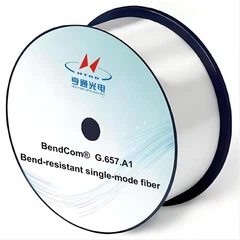
BendCom® Bend-resistant single-mode fiber G.657.A1-plus is the best product for fiber access due to its good bending resistance and extended access network coverage.read more -
![G.657.A2]()
-
![G.657.B3]()
-
![G.652.D]()
-
![LL-G.652.D]()
LL-G.652.D
BoneCom® Low-loss single-mode fiber LL-G.652.D has the excellent characteristics of wide band and low loss, and the wavelengths of 1550nm, 1310nm and 1383nm all have excellent attenuationread more -
![SL-G.652.D]()
SL-G.652.D
BoneCom® SL-G.652.D dramatically improves its intensity and attenuation performance through advanced fabrication techniques, with low loss characteristics in a wide wavelength band, especially atread more -
![G.654.E]()
-
![G.655]()
-
![OM2]()
-
![Multimode fiber om3]()
Multimode fiber om3
MultiCom® Hengtong’s Bending resistant OM3 optical fiber is a new gradient type of data center fiber with a core diameter of 50 μm and a cladding diameter of 125 μm. The fiber is designed for 10Gb/sread more -
![OM3-150]()


Why is Hengtong a reliable fiber optic cable supplier?
We are a company that has passed ISO9001 quality management system certification, ISO14001 environmental management system certification, ISO45001 occupational health and safety management system certification, IECQ hazardous substances process management system certification, which shows that we have the best manufacturing capabilities, correct material certification and advanced Technology. The optical cables produced by Hengtong comply with relevant standard requirements in terms of materials and performance.
|
Advantages of Hengtong? |
Features of optical fiber |
|
● 13+ years of experience in custom solutions ●Professional team and efficient communication channels ●24h online service ●Instant quotes and efficient production ●Excellent product quality and closed-loop after-sales service ●Shipping services cover the world |
●Large communication capacity ●The transmission distance is long ●Low anti-electromagnetic interference and low signal crosstalk ●Good confidentiality ●The material is abundant, saving a lot of non-ferrous copper and is chemically resistant.
|
Structural design of optical fiber
Optical fiber structure: Fiber optic bare fibers are generally divided into three layers: a central high refractive index glass core (core diameter generally 50 or 62.5 μ m) , with a low refractive index silicon glass cladding in the middle (usually with a diameter of 125 μ m) The outermost layer is the coating layer used for reinforcement.
Optical fiber application scenarios
According to different transmission properties of optical fiber, such as high transmission speed and long distance of single-mode optical fiber, it is usually used for long-distance transmission in outdoor optical fiber cables; Multi-mode optical fibers, due to their ability to transmit multiple optical modes and large amounts of data, but with short transmission distances and lower costs, are often used for high-capacity transmission in short distance data centers.
Who Are We?
Hengtong Group is an international enterprise with a diverse range of expertise covering fibre optical communication, power transmission, EPC turnkey service and maintenance, as well as IoT, big data, e-commerce, new materials and new energy.
Why Choose Us
Our credentials
It applies to enterprises that carry out the design and development, manufacture, installation and servicing of medical devices or related services.
Global Operation
HENGTONG possesses 70 wholly-owned companies and holding companies, establishes industrial bases in up to 16 provinces of China and in Europe.
Good service
Providing technical support, troubleshooting, and maintenance services.
One-stop Solution
We offer a comprehensive customization solution, tailored to meet the specific needs and requirements of our clients.
While many of us have heard the term "fiber optics" or "optical fiber" technology to describe a type of cable or a technology using light, few of us really understand what it's all about.
What Is Optical Fiber (Fiber Optics) Technology?
Fiber optics, or optical fibers, are long, thin strands of carefully drawn glass about the diameter of a human hair. These strands are arranged in bundles called fiber optic cables. We rely on them to transmit light signals over long distances.
At the transmitting source, the light signals are encoded with data… the same data you see on the screen of a computer. So, the fiber transmits "data" by light to a receiving end, where the light signal is decoded as data. Therefore, fiber optics is actually a transmission medium – a "pipe" to carry signals over long distances at very high speeds.
What Is Fiber Optics Used For?
Fiber optic cables were originally developed in the 1950s for endoscopes. The purpose was to help doctors view the inside of a human patient without major surgery. In the 1960s, telephone engineers found a way to use the same technology to transmit and receive telephone calls at the "speed of light". That is about 186,000 miles per second in a vacuum, but slows to about two-thirds of this speed in a cable. So, what are fiber optics used for? In a nutshell, for signal transmission, communication and vision (video).
How Does a Fiber Optic Cable Work?
Light travels down a fiber optic cable by bouncing off the walls of the cable repeatedly. Each light particle (photon) bounces down the pipe with continued internal mirror-like reflection.
The light beam travels down the core of the cable. The core is the middle of the cable and the glass structure. The cladding is another layer of glass wrapped around the core. Cladding is there to keep the light signals inside the core.
What are optical fibers used for? You may have seen plastic fibers carrying colored lights in decorative applications. What you may not have seen are the real glass fiber optic cables that are now the foundation of our communication and computer networks. Many thousands of miles of installed fiber optic cable carry many types of information underground, in tunnels, building walls, ceilings, and other places you don't see. For examples of uses of optical fiber in our daily life include applications such as:
- Computer networking
- Broadcasting
- Medical scanning
- Military equipment

Types Of Optical Fibres

The types of optical fibres depend on the refractive index, materials used, and mode of propagation of light. The classification based on the refractive index is as follows:
Step Index Fibres: It consists of a core surrounded by the cladding, which has a single uniform index of refraction.
Graded Index Fibres: The refractive index of the optical fibre decreases as the radial distance from the fibre axis increases.
The classification based on the materials used is as follows:
Plastic Optical Fibres: The polymethylmethacrylate is used as a core material for the transmission of light.
Glass Fibres: It consists of extremely fine glass fibres.
The classification based on the mode of propagation of light is as follows:
Single-Mode Fibres: These fibres are used for long-distance transmission of signals.
Multimode Fibres: These fibres are used for short-distance transmission of signals.
The mode of propagation and refractive index of the core is used to form four combination types of optic fibres as follows:
- Step index-single mode fibres
- Graded index-Single mode fibres
- Step index-Multimode fibres
- Graded index-Multimode fibres
Main Benefits of Fiber Transmission
There are four main advantages that fiber optics have over copper wire based transmission:
- Bigger Bandwidth
- Longer Distance, Faster Speed
- Higher Resistance
- Greater Security
Bigger Bandwidth
Fiber optic cables provide significant bandwidth for signal transmission and can carry much more data than copper cables of the same diameter. The bandwidth-distance product (BDP) of transmission media is used to compare capabilities in this respect, and media with higher BDP will have longer transmission distance when sending the same bandwidth of data. The higher the BDP, the faster uncompressed video can be delivered and over greater distances, while displaying at exactly the same quality as the native signal. For example, the standard BDP for multimode fiber is 500 MHz/km, which means that 1640 feet multimode fiber cable can transmit 1 GHz.
Longer Distance, Faster Speed
In terms of photons versus electrons, the light in fiber optic cables travels at roughly two-thirds the speed of light, while electrons in copper cables barely reach one percent of that speed. This immense speed advantage has an extreme effect on potential distances. While copper cables are mostly limited to a 330 feet standard distance, fiber optic cables can extend large bandwidth content over extremely long distances in a small diameter. Multimode fiber can triple this distance for a 4K HDMI signal, for example, and depending on the kind of cable, the wavelength, and the rest of the network, single-mode fiber can extend the same signal up to 12.4 miles.
Higher Resistance
Unlike copper-based transmission methods, fiber optic cables contain no metallic components. As a result, they are immune to electro-magnetic interference (EMI) and radio frequency interference (RFI). Furthermore, fiber optic cables are immune to extreme changes in temperature and moisture levels, both of which can hinder transmission in copper cables.
Security
As fiber optic cables do not conduct electrical signals, it is impossible to remotely detect any data signal that is being transmitted, and attempts at physical access would be detectable by surveillance. This security makes fiber the transmission method of choice for industries such as government and banks. In terms of safety, fiber optic cables also pose no risk in spark-hazard environments such as chemical plants and oil refineries.
How Do Fiber-Optic Cables Transmit Data?
Fiber-optic cables transmit data via pulses of light.
Optical fibers are very thin strands of glass or plastic less than 1/10 the thickness of a human hair.
Another layer of glass, called "cladding," is wrapped around the central fiber and causes light to repeatedly bounce off the walls of the cable rather than leak out at the edges, so signals travel farther without attenuation.
Fiber-optic technology is now easily available to businesses in cities and states throughout the country, making Internet access via fiber-optic cables a powerful alternative to satellite and copper connections. When considering fiber Internet, the first question most people ask is "How do fiber-optic cables transmit data differently than other Internet alternatives?"
How do fiber-optic cables transmit data?
Fiber-optic cables are comprised of dozens or hundreds of optical fibers – very thin strands of glass or plastic that are less than 1/10 of the thickness of a human hair. Fiber-optic cables transmit data via fast-traveling pulses of light. Another layer of glass, called "cladding," is wrapped around the central fiber and causes light to repeatedly bounce off the walls of the cable rather than leak out at the edges, enabling the single to go farther without attenuation.
How do fiber-optic cables transmit data so quickly?
Because fiber optics uses light rather than electrical signals to transmit data, fiber-optic cable speed is incredibly fast ― close to the speed of light.
How do fiber-optic cables transmit data with greater bandwidth?
Fiber-optic cables have a broader range of frequencies over which data can travel without loss of quality than do copper wire or satellite connections. This enables fiber Internet solutions to offer significantly higher bandwidth capacity than the alternatives.
How do fiber-optic cables transmit data more effectively than copper or satellite?
Offering higher speed and bandwidth than copper or satellite connections, fiber-optic cables enable businesses to download and upload data more quickly.
How do fiber-optic cables transmit data with greater reliability?
Because fiber-optic cables use light rather than electrical signals, fiber connections are far less likely to be affected by power outages and/or electromagnetic interference. Fiber-optic cables are also much stronger than copper wire, making them more impervious to weather, fire and other hazards.
How do fiber-optic cables transmit data with higher security?
Hacking fiber-optic cables is much harder and more costly than intercepting signals on copper or satellite connections, making fiber Internet access much more secure.
Optical fiber cable has gained much momentum in communication networks, and there emerges a dazzling array of vendors competing to manufacture and supply fiber optic cables. When selecting optical fiber, you'd better start with a reliable vendor and then consider the selection criteria. Here's a guide to clarify some of the confusions about choosing fiber optic cable.
Check Manufacturer Qualification
The major optical cable manufacturers should be granted ISO9001 quality system certification, ISO4001 international environment system certification, the ROHS, the relevant national and international institutions certification such as the Ministry of Information Industry, UL certification and etc.
Fiber Mode: Single Mode or Multimode
As illustrated above, single mode fiber is often used for long distances while multimode optical fiber is commonly used for short range. Moreover, the system cost and installation cost change with different fiber modes. You can refer to Single Mode vs Multimode Fiber: What's the Difference? and then decide which fiber mode you need.
Optical Cable Jackets: OFNR, OFNP, or LSZH
The standard jacket type of optical cable is OFNR, which stands for "Optical Fiber Non-conductive Riser". Besides, optical fibers are also available with OFNP, or plenum jackets, which are suitable for use in plenum environments such as drop-ceilings or raised floors. Another jacket option is LSZH. Short for "Low Smoke Zero Halogen", it is made from special compounds which give off very little smoke and no toxic when put on fire. So always refer to the local fire code authority to clarify the installation requirement before choosing the jacket type.
Optical Fiber Internal Construction: Tight Pack or Breakout or Assembly or Loose Tube
Tight pack cables are also known as distribution style cables, features that all buffered fibers under a single jacket with strength members for Enclosure to Enclosure and Conduit under Grade installations. Breakout fiber cable or fan out cable is applicable for Device to Device applications with tough and durable advantages. Assembly or zip cord construction is often used for making optic patch cables and short breakout runs. While loose tube construction is a Telco standard used in the telecommunications industry.
Indoor vs. Outdoor
The choice greatly depends on your application. The major difference between indoor and outdoor fiber cable is water blocking feature. Outdoor cables are designed to protect the fibers from years of exposure to moisture. However, nowadays there have been cables with both dry water-blocked outdoor feature and indoor designs. For example, in a campus environment, you can get cables with two jackets: an outer PE jacket that withstands moisture and an inner PVC jacket that is UL-rated for fire retardancy.
Fiber Count
Both indoor and outdoor fiber cable have a vast option of fiber count ranging from 4-144 fibers. If your fiber demand exceeds this range, you can custom the fiber count for indoor or outdoor optical cable. Unless you are making fiber patch cords or hooking up a simple link with two fibers, it is highly recommended to get some spare fibers.
Our Factory
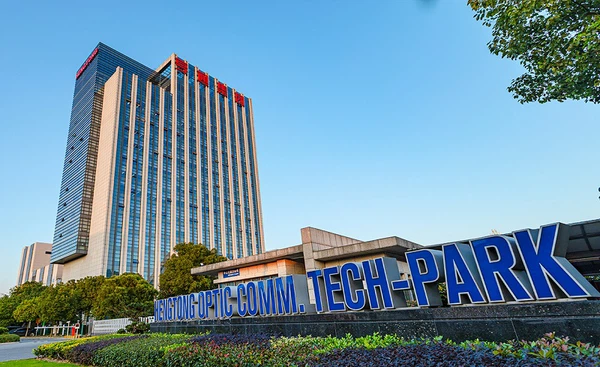
Hengtong has over 70 wholly-owned companies and holding companies (5 of which are listed on the Shanghai, Hong Kong, Shen Zhen and Indonesian stock exchanges respectively), with 12 manufacturing bases in Europe, South America, Africa, South Asia and Southeast Asia. Hengtong operates sales offices in over 40 countries and regions around the world, supplying products to over 150 countries and regions.
FAQ
Q: What is optical fiber in simple words?
Q: What is fiber optic and why is it used?
Q: Is fiber optic same as WIFI?
Q: What is the difference between optical fibre and internet?
Q: How does optic fiber work?
Q: What are the advantages of optical fiber?
Q: What advantages do fiber optics have over other media?
Fiber optic cables have a much greater bandwidth than metal cables. ...
Fiber optic cables are less susceptible than metal cables to interference to electromagnetic radiation.
Fiber optic cables are much thinner and lighter than metal wires.
Q: What is the biggest advantage of fiber optic cabling?
Q: How does fiber internet work?
Q: Is fiber optic expensive?
Q: Is fiber optic for TV or internet?
Q: Where does a fiber optic get its signal from?
Q: Where does fiber optic run?
Q: What does a fiber optic cable look like?
Q: Who connects fiber to the home?
Q: How long does fibre take to install?
Q: How do you tell if you have fiber internet?
Q: What is the basic knowledge of optical fiber?
Q: Can you have fiber and cable internet at the same time?
Q: How many wires does fiber optic have?
Q: Which type of fiber is most widely used?
Q: How does fiber work?
Q: Single mode vs multi-mode Fiber :which should I choose?
When making a decision between single mode and multi-mode fiber cables,the first factor to consider is the fiber distance which you need actually.For example,in a data center, multi-mode fiber cables is enough for the distance of 300-400 meters.While in applications that require distance up to several thousands of meters,the single mode fiber is the best choice.And in applications which can use single mode and multi-mode fiber ,other factors like cost and future upgrade requirements should be taken into consideration for your choice.
Q: What wavelength does Light Source have?
Q: What products is included in the fiber optic test solution?
Q: New installations – What type of multi-mode should I use?
Q: OM3 vs OM4 What is the difference?
Q: What can OM5 do to cover my bandwidth needs?
Q: Why should I use G657 Bend optimized optical fiber?
Q: Can single-mode and multi-mode fiber be used in the same system?
Connecting single-mode fiber directly to multi-mode fiber is not feasible – the difference in core sizes introduces significant signal loss.
We're professional optical fiber manufacturers and suppliers in China, specialized in providing high quality products and service. If you're going to wholesale customized optical fiber, welcome to get quotation from our factory.