







Custom Fiber Optic Cables
A Comprehensive Guide to Modern Optical Communication Infrastructure
In today's interconnected world, speed and uptime win. Custom Fiber Optic Cables from Hengtong turn complex builds into predictable outcomes. We design, manufacture, and deliver under one roof-from optical preform to finished cable and patching. This vertical integration shortens lead times and locks quality. Our global manufacturing and service network adds local support, fast ramp-up, and stable supply for FTTH, 5G, data centers, and even submarine links.
Copper carries electrons; fiber carries light. That's why Custom Fiber Optic Cables unlock massive bandwidth and immunity to interference. Hengtong amplifies this edge with engineered options for every route and environment-ADSS and OPGW for aerial grids, micro-blown and ribbon for high-density ducts, flame-retardant indoor builds, and MPO/MTP trunks for rapid turn-ups. We follow international standards with full-chain testing, so you get lower loss, higher uptime, cleaner installs-and a partner who scales from last-mile to transoceanic.

The Science Behind Fiber Optic Technology

Understanding the physics isn't just academic-it's why Custom Fiber Optic Cables from Hengtong deliver predictable, high-margin performance in the field. By engineering the core/cladding refractive-index profile for total internal reflection and tighter bend radii, our teams lock in low attenuation around curves and stable latency under real-world stress. Result: cleaner links, higher uptime, and faster turn-ups for FTTH, 5G, data centers, and mission-critical backbones-with Hengtong application engineers on call to size your loss budget and acceleration plan.
From glass to grid, Custom Fiber Optic Cables at Hengtong start with in-house preform and fiber drawing-heated to ~2,000 °C and pulled to a consistent 125 µm diameter on automated lines with inline diameter/concentricity control. Primary coatings cure instantly to protect pristine surfaces; every kilometer is proof-tested and OTDR-verified with full traceability. This vertical integration compresses lead time, stabilizes quality across SKUs, and gives you one accountable partner from design to delivery.
Protection stacks matter, so our Custom Fiber Optic Cables use optimized materials and layer designs tuned to the route: PBT loose tubes for dimensional stability, PP or LSZH jackets for safety and compliance, water-blocking yarns/tapes, aramid reinforcements, and flame-retardant compounds for harsh environments. Hengtong validates recipes against IEC/ITU-T/UL targets (UV, salt-fog, temperature cycling, crush, impact), then packages BOM options to hit your certification, install speed, and cost goals-backed by global manufacturing, local service, and clear SLAs from sample to mass production.
Fiber Optic Preform Manufacturing
Preform is the foundation-Hengtong builds it in-house so Custom Fiber Optic Cables start with engineered index profiles, low attenuation, and tight bend performance.
To beat loss from microscopic impurities, we run ISO-controlled environments, strict raw-material screening, and interferometric inspection-delivering Custom Fiber Optic Cables with verified concentricity and full traceability.
Vertical integration + global capacity + clear SLAs mean faster sampling, stable specs across SKUs, and Custom Fiber Optic Cables certified to IEC/ITU/UL for FTTH, 5G, data center, and submarine deployments.

Multi-layer Protection Design
Material stacks decide field uptime. Hengtong engineers layer PBT loose tubes, water-blocking yarn/tape, aramid strength, optional steel/FRP armor, and LSZH/PE jackets to the route and climate-arctic cold or tropical heat-so Custom Fiber Optic Cables stay stable, safe, and easy to install.
We validate the stack, not just the fiber. UV, salt-fog, crush/impact, low-temp bend, and thermal cycling to IEC/ITU/UL targets-plus inline OTDR and full traceability-so your Custom Fiber Optic Cables deliver low loss today and the same numbers after years outdoors.
Speed and scale are built-in. With vertical integration and global capacity, Hengtong samples fast, locks specs across SKUs, and ships Custom Fiber Optic Cables with clear SLAs for design support, certification needs, and on-time delivery.

Structural Design and Engineering Considerations

Cable Architecture Options
The engineering of custom fiber optic cable involves complex decisions about structural design, each tailored to specific application requirements.
- Central tube designs: Offer simplicity and cost-effectiveness for lower fiber counts
- Loose tube stranded configurations: Provide superior protection and flexibility for higher capacity installations
- Design factors: Installation environment, required fiber count, mechanical stress expectations, and long-term reliability
- Ribbon:High-density ribbons enable mass fusion splicing (12F/24F blocks), slashing splice time on metro/backbone builds and data centers.
- Micro-blown :Ultra-light ducts + low-friction sheaths let you add fibers on demand; perfect for congested cities and upgradeable networks.
- Armored / ADSS / OPGW:Steel/FRP armors for rodent/crush and direct-burial; ADSS for utility aerial spans; OPGW for power-line integration.
Loose Tube Technology
In Custom Fiber Optic Cables, loose-tube builds let fibers "float" inside gel-filled PBT tubes, absorbing shock, blocking moisture, and riding out temperature swings without stressing the glass-ideal for OSP routes and long service life.
Why Hengtong for Loose Tube Custom Fiber Optic Cables:
- In-house material R&D and compounding for consistent gel performance
- Tube/jacket options (PE, LSZH), water-blocking yarn/tape, aramid strength members
- Validated against international methods for crush, impact, water penetration, and thermal cycling
- Global manufacturing + lot-level traceability + engineer support from design to delivery
Our thixotropic filling compounds for Custom Fiber Optic Cables are engineered blends of base oils, gelling agents, antioxidants, and hydrogen scavengers. Each recipe is tuned for coating compatibility and aging stability, helping networks keep low attenuation and clean splice results over decades.


Excess Fiber Length (EFL) Concept
Excess Fiber Length (EFL) is the built-in "shock absorber" inside Custom Fiber Optic Cables, giving the glass just enough slack to ride out pulling, bending, and temperature swings-so links turn up clean and stay stable in the field.
For real projects, EFL is tuned to route, climate, and install method. In Custom Fiber Optic Cables, engineers typically target ~0.05%–0.3% of cable length: too little invites fiber strain/breaks under tension; too much can trigger micro-bending loss. We model load cases, then verify with tensile/thermal cycling to lock low attenuation and predictable splicing.
Why Hengtong: tightly controlled SZ stranding, lay-length, and gel/tape systems keep EFL uniform across SKUs; inline measurement and lot-level traceability ensure every reel of Custom Fiber Optic Cables matches spec-reducing install risk, shortening turn-up windows, and protecting lifetime performance.
Key EFL Considerations
Environmental temperature variations
Installation tension parameters
Long-term creep effects
Dynamic stress from wind/vibration
Compatibility with cable structure
Manufacturing Custom Fiber Optic Cables demands exacting control. At Hengtong, secondary-coating lines run profiled temperatures and stabilized line speeds, with inline gauges tracking coating concentricity and outer diameter in real time. This closed-loop process delivers lower loss, cleaner splices, reel-to-reel consistency, and lot-level traceability-so your projects turn up fast and stay stable.

01
Dynamic Fatigue Testing
Validates lifetime reliability under cyclic stress and micro-bending.
For Hengtong Custom Fiber Optic Cables, we run accelerated bend/tension profiles and derive the dynamic fatigue n-value (IEC/ITU) to predict long-term attenuation stability-so your network stays clean from day one to end-of-life.
02
Environmental Cycling Tests
Prove Custom Fiber Optic Cables in real climate. Hengtong runs IEC-grade thermal cycling, humidity-freeze, and thermal-shock in instrumented chambers, then verifies attenuation drift, low-temp bend integrity, jacket/gel stability, and water-blocking effectiveness via pre/post OTDR and mechanical checks-ensuring temperature-extreme reliability with lot-level traceability.
03
Optical Measurements
We verify what matters in service-insertion loss, return loss, and bandwidth. For Hengtong Custom Fiber Optic Cables, calibrated OLTS/OTDR and reflectometry map IL/RL per connector, splice, and along the reel, while spectral/dispersion tests (EMBc λ-sweeps for MMF; CD/PMD for SMF) quantify bandwidth headroom. Results ship with lot-level COAs against IEC/ITU limits, ensuring predictable turn-ups and stable long-haul performance.
04
Automated Testing Systems
Closed-loop automation monitors hundreds of parameters per second-diameter, concentricity, tension, cure state, gel fill, SZ lay length-while OLTS/OTDR verify optics inline, ensuring Hengtong Custom Fiber Optic Cables stay within spec reel-to-reel. SPC rules trigger instant micro-corrections on the line, cutting variability, protecting attenuation targets, and accelerating clean turn-ups on site.
Armor Layer Integration
The application of armor layers in certain cable designs adds another dimension of manufacturing complexity. Steel tape, corrugated steel, or aramid yarn reinforcements must be applied with precise tension control to provide mechanical protection without inducing harmful stress on the optical fibers.
The integration of these strength members requires careful consideration of differential thermal expansion, as metallic and non-metallic components respond differently to temperature changes.
Fiber Optic Cable Manufacturing Process
Preform Manufacturing
Ultra-pure glass starts the performance curve. Hengtong formulates and builds preforms in-house, locking the core/cladding index profile for low loss and tight bends. This control is the foundation of our Custom Fiber Optic Cables-predictable attenuation, stable latency, faster approvals.

Fiber Drawing
We heat the preform to ~2,000 °C and draw uniform 125 μm fiber on automated lines. Inline gauges watch diameter, concentricity, and coating cure in real time. The result: pristine glass and clean primary coatings that help your Custom Fiber Optic Cables splice faster and run longer.

Buffering and Stranding
PBT loose tubes, tuned EFL (excess fiber length), SZ stranding, and thixotropic gels protect the glass from shock, moisture, and temperature swings. Water-blocking yarn/tape and aramid strength members add durability. This architecture keeps Custom Fiber Optic Cables stable across duct, aerial, and direct-burial routes.

Jacketing and Armor
Route-specific jackets and armors-PE/LSZH for safety and UV, steel/FRP for rodent and crush, corrugated steel for direct burial, ADSS/OPGW options for utility spans. We match standards and climate to the build so your Custom Fiber Optic Cables install cleanly and pass inspections the first time.

Testing and Certification
Optical. Mechanical. Environmental. We verify IL/RL, CD/PMD, crush/impact, water penetration, and thermal cycling against IEC/ITU/UL. COAs ship with lot-level traceability. That's how Hengtong Custom Fiber Optic Cables deliver day-one turn-up speed and lifetime reliability-backed by global capacity and clear SLAs.

The versatility of fiber optic technology has led to the development of specialized cable designs for specific applications
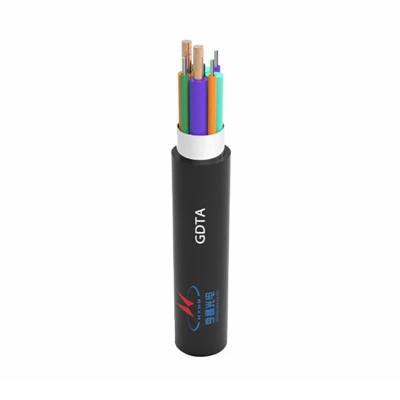
ADSS Cables
All-dielectric self-supporting (ADSS) builds let utilities add capacity on existing towers without outages or grounding risks. These aerial Custom Fiber Optic Cables ride the power corridor safely-no metallic elements, no induced-current hazards-and keep links stable through wind, ice, and lightning environments.
Hengtong engineers ADSS Custom Fiber Optic Cables with high-strength aramid yarns as the primary load path, tuned EFL for strain relief, water-blocking tubes/tapes, and UV/track-resistant AT jackets for high-voltage fields. The result is long-span reliability, clean splice windows, and tidy trays at hand-off points.
Key Engineering Considerations:
• Sag-tension relationships
• Galloping behavior in wind
• Electrical field stress in high-voltage environments
• Temperature cycling effects
Why Hengtong: we deliver end-to-end ADSS solutions-route modeling, sag-tension tables, vibration control, and matched hardware kits-plus type testing to international standards and global manufacturing for fast, consistent supply of Custom Fiber Optic Cables.

Submarine Cables
Built for the seabed, Hengtong submarine Custom Fiber Optic Cables pair multi-layer steel wire armoring with integrated copper power conductors to survive pressure, abrasion, and currents-while maintaining low loss and stable handling on ploughs and cable-lay vessels.
We balance strength and flexibility by tuning armor (single/double), sheath (PE/PP), water-blocking elements, and lay-up to the route-so your submarine Custom Fiber Optic Cables load, pay out, recover, and re-terminate cleanly during installation and maintenance windows.
Unique Challenges:
• Hydrogen generation from metallic corrosion
• Pressure resistance (up to 8,000 psi)
• Protection against marine life
• Deep-sea repair capabilities
Why Hengtong: marine route engineering, burial risk assessment, factory and sea-trial testing, and 24/7 project support-backed by global capacity and lot-level traceability-so your submarine Custom Fiber Optic Cables hit performance targets and timelines with less operational risk.

Ribbon Fiber Cables
Ribbon architectures pack more glass into less space. By arranging fibers in flat 12F/24F arrays, ribbon Custom Fiber Optic Cables enable true mass fusion splicing, compressing splice windows, keeping trays tidy, and maximizing duct and rack density for metro backbones and data centers.
Design Features:
• Exceptional geometric precision requirements
• Intermittent adhesive patterns for splitting capability
• Mass fusion splicing compatibility
• High fiber count in minimal cross-section
Why Hengtong ribbon Custom Fiber Optic Cables
- Engineered flat or rollable ribbons (200/250 µm) with uniform planarity for consistent, low-loss mass splices
- Pre-terminated MPO/MTP trunk options and cassette systems for rapid turn-ups and clean cable management
- Bend-insensitive fiber options and route-matched jackets to balance density with real-world handling and reliability
- Factory test data and lot-level traceability so high-capacity builds move from design to go-live with fewer surprises
Material Science and Environmental Considerations
Field life starts with materials. For Hengtong Custom Fiber Optic Cables, we specify jacket compounds to the route and risk profile-resisting UV, moisture, chemicals, and biological attack while staying flexible across operating temperatures.
We build Custom Fiber Optic Cables with PE/HDPE or LSZH jackets, optional TPU/PUR for abrasion, plus UV stabilizers, anti-rodent/termite additives, water-blocking yarns/tapes, and corrosion-tolerant armors-balancing mechanical strength, handling, and long-term aging stability for your environment.

Common Jacket Materials
Polyethylene (PE)
Outdoor workhorse for Custom Fiber Optic Cables: UV-stabilized HDPE jackets resist weathering, moisture, and chemicals while maintaining low duct friction for easier pulls.
Hengtong tunes PE blends (carbon-black UV packages, optional anti-rodent/termite additives) and validates to IEC 60794 (water-penetration/UV/impact/crush) so your Custom Fiber Optic Cables install cleanly and last longer.
Polyvinyl Chloride (PVC)
Indoor-ready jacket for Custom Fiber Optic Cables-flexible, abrasion-resistant, cost-efficient, and easy to process. Ideal for premise/riser runs (e.g., UL CM/CMR) where low-smoke mandates don't apply; when plenum or halogen-free is required, Hengtong switches to LSZH blends.
We tune PVC durometer/plasticizers for bend & strip performance and validate cold-bend and flame (UL 1581 VW-1 / IEC 60332-1), so your Custom Fiber Optic Cables install cleanly and stay reliable indoors.
Low Smoke Zero Halogen (LSZH)
Fire-safe jackets for Custom Fiber Optic Cables in public venues, data centers, transit hubs, tunnels, and ships-low smoke, zero halogens to protect people, electronics, and structures.
Hengtong engineers halogen-free compounds to meet IEC 60754-1/-2 (acid gas), IEC 61034 (smoke density), and IEC 60332-1/-3 (flame) and can tune UV-stabilized LSZH for select indoor/outdoor routes. Result: cleaner evacuation visibility, reduced corrosion risk, and reliable handling-delivered with lot-level COAs so your Custom Fiber Optic Cables pass safety audits the first time.
Fluoropolymers (PTFE, FEP)
For specialized industrial Custom Fiber Optic Cables, PTFE/FEP jackets or liners provide high-temperature stability, exceptional chemical inertness, low friction, and consistent dielectric performance-ideal for refineries, chemical plants, and cleanrooms.
Hengtong selects fluoropolymer grades and wall thickness by route, validates pull/abrasion and thermal cycling, and flags code trade-offs (fluoropolymers contain halogens-use LSZH where halogen-free is mandated) so your Custom Fiber Optic Cables stay compliant, durable, and easy to install.

Dry Core Cable Technology
Dry cores replace messy gels with water-swellable tapes/yarns, cutting weight, simplifying termination, and easing recycling-ideal for field speed and sustainability in Custom Fiber Optic Cables. Hengtong tunes dry constructions for duct, aerial, and direct-burial routes so crews splice faster with cleaner trays.
How It Works?
Superabsorbent polymers expand on contact to block longitudinal ingress without flooding the tube. In Custom Fiber Optic Cables, we balance swelling kinetics and pressure to stop water fast while protecting fibers from micro-bending-coordinated with EFL, SZ lay, and tube geometry for stable attenuation.
Why Hengtong Dry-Core Custom Fiber Optic Cables?
Validated to IEC 60794 water-penetration and thermal cycling, with route-matched tapes/yarns, low-temp handling, and lot-level COAs. Result: quicker prep, no gel disposal, lighter reels, and repeatable field performance-backed by our vertically integrated supply for dry-core Custom Fiber Optic Cables at scale.
Low Smoke Zero Halogen (LSZH) Technology
Fire safety starts at the jacket. For Custom Fiber Optic Cables, LSZH compounds use mineral fillers (ATH/Mg(OH)₂) that release bound water under heat, suppressing flame spread and cutting smoke/acid gases-ideal for public venues, data centers, transit, and tunnels. Hengtong engineers halogen-free recipes to meet strict smoke and corrosivity targets while keeping installs clean and compliant.
High filler loads can stiffen plastics, so we tune LSZH for real-world handling on Custom Fiber Optic Cables: optimized particle size distributions, silane-based coupling agents for polymer–filler bonding, and elastomer modifiers for impact and cold-bend. Twin-screw compounding and rheology control deliver jackets that strip cleanly, flex in tight spaces, and survive temperature cycling.
For assurance, Hengtong Custom Fiber Optic Cables ship with test data against IEC 60754-1/-2 (acid gas), IEC 61034 (smoke density), and IEC 60332-1/-3 (flame). On request, we align to additional sectors (e.g., EN 45545 for rail). You get fire-safe performance without sacrificing mechanical reliability, backed by lot-level COAs and stable global supply.


Material Performance Comparison
For Custom Fiber Optic Cables, use this quick jacket guide by environment and code:
- PE (HDPE) - Best UV/chemical/temperature resistance and lowest cost; ideal for OSP ducts, aerial spans, and direct-burial.
- PVC - Highest flexibility with solid flame performance; common for indoor riser runs and patching (use LSZH where halogen-free is required).
- LSZH - Low-smoke, zero-halogen for people-dense or regulated spaces (data centers, transit, tunnels); stiffer and higher cost but safest for compliance.
Match the pick to IEC 60332/60754/61034 and UL OFNR/OFNP/LSZH requirements, then verify project pull-tension and bend-radius limits. Hengtong validates and certifies each build so your Custom Fiber Optic Cables ship with COAs and install cleanly.
Material Performance Comparison
| Metric | Polyethylene (PE) | PVC | LSZH |
| Temperature Resistance | 90 | 70 | 80 |
| Chemical Resistance | 90 | 60 | 65 |
| Flexibility | 85 | 90 | 65 |
| Flame Retardancy | 30 | 70 | 95 |
| UV Resistance | 85 | 55 | 70 |
| Cost-Effectiveness | 95 | 85 | 60 |
Installation, Testing, and Maintenance Protocols
Installation Guidelines
Successful deployment of Custom Fiber Optic Cables requires disciplined installation to prevent damage and ensure peak performance-Hengtong supplies route-specific guidelines and onsite support.
Tension Control
Installation tensions must be carefully controlled to prevent fiber strain, with typical limits ranging from 600 to 2,700 Newtons depending on cable construction.
Bend Radius Requirements
Bend radius limitations, typically specified as multiples of the cable outer diameter, must be observed to prevent both immediate damage and long-term reliability degradation.
Environmental Protection
Proper sealing and protection against moisture, temperature extremes, and physical damage during and after installation.
Handling Procedures
Careful handling to avoid microbending, crushing, or other mechanical stresses that can degrade performance.
Testing Technologies
Comprehensive testing ensures Custom Fiber Optic Cables meet performance specs and deliver reliable service over their lifetime-Hengtong verifies every reel and installed link against project targets.
OTDR Testing
Optical Time Domain Reflectometry provides detailed characterization of installed cable performance, detecting splice losses, connector reflections, and distributed losses.
Insertion Loss Testing
Direct measurement of signal loss through the entire link using calibrated light sources and power meters.
Polarization Mode Dispersion
Critical for high-speed transmission systems, measuring differential propagation delays between polarization modes.
Optical Return Loss
Measurement of light reflected back toward the source, which can cause signal degradation in high-speed systems.
Maintenance Programs
Planned care keeps Custom Fiber Optic Cables in spec for decades. Hengtong supplies route-specific playbooks, training, and spare kits so teams spot risks early and maintain uptime with less truck-roll.
Periodic Inspections
Regular inspection of cable routes, splice enclosures, and termination points for signs of damage or degradation.
Environmental Monitoring
Detection of conditions that may accelerate aging, such as excessive temperature cycling or moisture ingress.
Continuous Monitoring
For critical infrastructure, systems using distributed temperature and strain sensing provide real-time detection of potential problems.
Proactive Maintenance
Addressing potential issues before they cause service disruption, including cleaning of connectors and re-termination when necessary.

OTDR Testing Capabilities
OTDR pinpoints what matters in service for Custom Fiber Optic Cables-splice loss, connector reflections, and distributed attenuation along the route. Hengtong uses high-dynamic-range OTDRs with launch/receive fibers to see past dead zones and spot subtle backscatter shifts early, delivering clean link maps and actionable alarms before interruptions occur.
Testing follows a tiered standard: Tier 1 (OLTS) validates total insertion loss; Tier 2 (OTDR) adds event-level location and characterization on Custom Fiber Optic Cables. We run bi-directional averages, templated pass/fail per spec, and ship time-stamped traces with COAs-so handover is faster and long-term performance stays predictable.
Additional Critical Aspects of Custom Fiber Optic Cable Systems
Fiber Optic Cable Color Coding Standards
TIA-598-C gives a uniform scheme for identifying fibers, buffered units, and groups-critical when deploying and servicing Custom Fiber Optic Cables at scale. Hengtong builds to TIA/IEC conventions and supplies matching prints, legends, and documentation so large crews speak the same "color language" from install to SLA handover.
Standardized color coding lets technicians locate the right strand fast during installation, maintenance, and troubleshooting-cutting splice time and errors on Custom Fiber Optic Cables. We provide drum labels, fiber maps, and repeater/closure schedules aligned to your route, plus bi-directional OTDR traces to lock in as-built records.
Jacket colors also signal cable type in Custom Fiber Optic Cables: orange typically for MMF OM1/OM2, aqua for laser-optimized MMF OM3/OM4, lime green for OM5, and yellow for single-mode. (Special environments may use other colors for ratings or ownership.) Inside the cable, the common 12-fiber sequence-blue, orange, green, brown, slate, white, red, black, yellow, violet, rose, aqua-repeats with tracers as counts rise. Hengtong can mirror TIA-598-C or regional specs (ISO/IEC, EN) across sites to keep global builds consistent.

Advanced Connector Polishing Techniques
Connector finish decides link quality. For Custom Fiber Optic Cables assemblies, PC and UPC use non-angled, domed end faces; UPC tightens the surface finish and geometry over PC to cut loss and reflections in everyday enterprise and OSP builds.
Performance steps up again with APC: an angled end face that minimizes back-reflection for high-speed, DWDM, and analog/RF-over-fiber routes. In Custom Fiber Optic Cables jumpers and trunks, choosing APC where reflection budgets are tight preserves SNR and transmitter stability.
Why Hengtong?
We control connector geometry with interferometric 3D metrology (radius, apex offset, fiber height) and inspect to IEC cleanliness-all documented with COAs-so your Custom Fiber Optic Cables ship with repeatable IL/RL, faster turn-ups, and fewer truck rolls.
Return Loss Performance Comparison
PC Polishing:-40dB
UPC Polishing:-55dB
APC Polishing: -60dB

Removing Excess Epoxy
Rough polishing using diamond films of 30μm to remove excess epoxy
Refining the Surface
Intermediate stages with 9μm diamond film to refine surface
Achieving Final Finish
Finishing with sub-micron polishing films to achieve desired surface quality
Optimizing MPO/MTP Performance
Specialized slurries for MTP/MPO connectors ensuring optimal performance
Fusion and Mechanical Splicing Technologies

Fusion Splicing
Preferred in modern networks because it delivers the lowest-loss, lowest-reflection joints on Custom Fiber Optic Cables. An electric arc melts and fuses the glass ends into a single, continuous strand for a seamless connection.
- Typical loss: as low as ~0.02 dB per splice
- Advantages: low loss, high reliability, minimal reflection, excellent long-term stability
Why Hengtong?
Ribbon and single-fiber fusion expertise (12F/24F mass splicing), calibrated arc profiles by fiber type, IEC-grade cleave/clean protocols, and bi-directional OTDR/IL verification with COAs-so your Custom Fiber Optic Cables turn up faster and stay in spec over their service life.

Mechanical Splicing
Mechanical splicing aligns and clamps fiber ends inside a precision sleeve-no arc, no power-so crews can restore Custom Fiber Optic Cables quickly in the field. It's ideal for emergency repairs, low-count drops, or sites without fusion gear, but it carries higher loss/reflectance than fusion and isn't suited to long-haul trunks.
- Typical loss: ~0.05–0.20 dB per splice (higher ORL than fusion)
- Advantages: no power required, fast restoration, lower equipment cost, minimal tooling
Why Hengtong
Pre-terminated restoration kits, alignment-grade components, and IL/RL verification workflows matched to your Custom Fiber Optic Cables-so temporary fixes stay clean until scheduled fusion rework.
Modern fusion splicers incorporate sophisticated alignment systems, including core alignment technology that uses multiple cameras to inspect and align fibers automatically. These advanced systems can store multiple splice programs optimized for different fiber types, ensuring consistent, high-quality splices across various custom fiber optic cable configurations. While mechanical splices typically exhibit higher losses than fusion splices, they offer advantages in specific scenarios, such as emergency repairs or installations in challenging environments where fusion splicing equipment cannot be easily deployed.
Critical Bend Radius Specifications
Protect performance and lifespan by enforcing bend rules on Custom Fiber Optic Cables: during pull (under tension) keep the minimum bend radius ≥ 20× OD; after installation, maintain ≥ 10× OD. Hengtong publishes route-specific limits on each build and provides field guides/training so crews hit spec the first time.
Bend-insensitive fiber has unlocked tighter spaces for Custom Fiber Optic Cables and patch cords. Using a refractive-index "trench" around the core, it reflects otherwise lost light back into the waveguide, keeping attenuation low even when bends approach (or momentarily exceed) nominal limits-ideal for racks, FTTH drops, and congested ducts.

Bend Radius Comparison
Standard Single-Mode Fiber
- Installation (under tension):30 mm minimum
- Long-term (no tension):15 mm minimum
Bend-Insensitive Single-Mode Fiber
- Installation (under tension):15 mm minimum
- Long-term (no tension):5 mm minimum
Multimode Fiber
- Installation (under tension):50 mm minimum
- Long-term (no tension):25 mm minimum
Quality Assurance and Manufacturing Standards
The production of custom fiber optic cable involves adherence to numerous international standards and certifications. Telcordia GR-326 is a set of standardized quality requirements for the production of fiber optic connectorized assemblies, ensuring long-term reliability and performance.
The distinction between compliance and certification is crucial-certification requires passing all mechanical, environmental, and long-term reliability tests, not merely meeting specifications at the time of manufacture.
Key Industry Standards

01
Telcordia GR-326
Quality requirements for fiber optic connectorized assemblies
02
TL 9000 & AS9100D
Quality management system standards
03
OFNP (Plenum Rated)
NEC 770 compliance for fire safety in plenum spaces
04
EIA-455-171 & IEC 61280-4-5
Testing standards for fiber optic components
Custom fiber optic cable technology continues to evolve in response to emerging applications. The deployment of 5G networks requires fiber infrastructure capable of supporting massive increases in data traffic and reduced latency requirements.
The Internet of Things (IoT) and smart city initiatives create new requirements for fiber deployment, including integration with power systems, environmental monitoring capabilities, and enhanced durability for diverse installation environments. Custom fiber optic cable designs increasingly incorporate these considerations, with hybrid cables that combine optical fibers with copper conductors for power delivery and specialized jackets resistant to rodent damage, chemical exposure, and extreme weather conditions.

Data Center Evolution
Ultra-high-density solutions with ribbon cables enabling thousands of connections in limited spaces

5G and Beyond
Supporting massive MIMO, network slicing, and ultra-reliable low-latency communications

Smart Cities
Integration with IoT sensors, traffic management, and public safety systems

Industrial Automation
High-reliability connections for manufacturing, energy, and transportation systems