

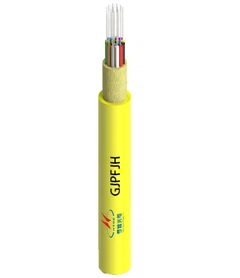


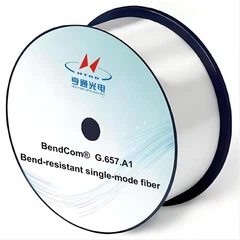


Hengtong Riser Fiber Optic Cable
Building Infrastructure That Keeps Up With Your Network Demands

Product – Strong Vertical Backbone, Zero Downtime
Hengtong offers riser and backbone optical cables with LSZH / riser / plenum jackets, high-fiber-count trunks and MPO/MTP pre-terminated assemblies, all designed for tight shafts and risers. Your vertical links stop being the bottleneck and start carrying cloud, 4K video and multi-tenant traffic with ease.
Customization – Built Around Your Building
From fiber count and cable diameter to connector type and length, Hengtong customizes vertical trunks to fit existing risers, conduits and floor layouts. Clear labeling and pre-terminated ends cut installation time, reduce on-site work and minimize disruption to tenants.
Certification – Performance You Can Prove
Hengtong vertical cables are tested and certified to major fire, safety and optical performance standards, with full factory test reports available. You get a backbone that passes inspections smoothly and gives IT, facility managers and CFOs solid, documentable assurance.
This is where riser-rated fiber optic cable makes the difference between network infrastructure that adapts to growth and infrastructure that constrains it.
Hengtong Riser Fiber Optic Cable Products
What You're Actually Getting
Riser fiber optic cable is vertical-run cabling designed specifically for inter-floor connections in multi-story buildings. Unlike plenum cable (required in air-handling spaces) or general-purpose cable (limited to single-floor runs), riser cable meets fire safety requirements for vertical pathways while maintaining the performance characteristics that modern networks demand.

What we use in production
Backbone connections
Between IDFs (Intermediate Distribution Frames) on different floors
Campus network architectures
Vertical links spanning multiple buildings
High-density environments
Where copper cabling reaches distance or bandwidth limitations
Long service life
Building infrastructure designed for 15-20 year service life
The value proposition is straightforward: deploy cable today that won't force a costly replacement when bandwidth requirements double in five years. Typical installations support 10G to 100G transmission rates depending on fiber type, with upgrade paths to 400G using the same physical cable-just different terminal equipment.
Technical Specifications That Matter
Here's what differentiates riser fiber from alternatives:
| Parameter | Specification | Why It Matters |
|---|---|---|
| Fire Rating | OFNR (UL 1666) | Passes vertical flame test; required by code for riser applications without conduit |
| Fiber Count | 6 to 144 fibers | Right-size for current needs with expansion capacity; 12-24 fiber most common for typical buildings |
| Attenuation | ≤0.35 dB/km @1310nm (SM) | Signal loss over distance; determines maximum span without repeaters (typically 2km+ for building applications) |
| Operating Temperature | -20°C to +70°C | Maintains performance in uncontrolled riser environments |
| Crush Resistance | 220 lbf/in (short-term) | Withstands installation stress and building settling over time |
Available configurations:

Singlemode (OS2)
Long spans, higher bandwidth, standard for new installations

Multimode (OM3/OM4)
Shorter spans, lower cost transceivers, common in existing infrastructures

Tight-buffered
Individual fiber protection, easier termination

Armored options
Mechanical protection in exposed or high-traffic areas
The 100-meter rule you know from copper doesn't apply here. Even multimode fiber routinely handles 300-550 meter vertical runs-which means most buildings connect top to bottom without intermediate electronics. For singlemode, you're looking at 2+ kilometer capability before needing signal regeneration, effectively unlimited for building applications.
Core Capabilities: Where This Solves Real Problems
Future-Proof Bandwidth Scaling

The physical cable you install supports transmission rates determined by the electronics at each end, not the fiber itself. Deploy it today for 10G connectivity; upgrade to 40G or 100G tomorrow by swapping transceivers-the cable infrastructure remains untouched.
Practical impact: A regional headquarters deployed 24-fiber riser cable connecting six floors in 2018 at 10G. When they consolidated three satellite offices in 2023, they scaled to 40G between critical floors by changing $800 worth of optics per connection. The alternative-pulling new cable through occupied building space-would have cost $45,000+ and required weekend work to avoid disruption.
This isn't about installing capacity you might never use; it's about avoiding installation costs that recur every time demand increases.
Minimal Footprint, Maximum Density
Standard CAT6A copper riser cable delivers 10G, but at 0.35" diameter, running 48 copper pairs (24 connections) requires roughly 9 square inches of riser space. A 48-fiber cable delivering the same connection count measures 0.45" diameter-0.16 square inches.
In riser shafts competing with HVAC, electrical, and plumbing, that 56:1 space efficiency matters. It's the difference between fitting additional network runs in existing infrastructure versus engineering new pathways or limiting network growth.
One property management firm handles 23 mid-rise commercial buildings. Their standard practice: specify 50% more fiber than current tenant needs require. The incremental cost averages $1,200 per building. The value? When tenants expand or new ones move in with different connectivity requirements, they provision capacity from existing infrastructure. Over five years, this has avoided 14 emergency cable pulls that would have averaged $8,000 each.

Installation Reliability

Copper terminations fail. Not often, but when you're crimping 48 or 96 connections across multiple floors, statistical reality catches up. Field termination of copper requires precision, proper tools, and testing at each endpoint. Fiber terminations use either pre-terminated assemblies (essentially plug-and-play) or fusion splicing that creates permanent connections testing verifies before you close up the riser.
Failure rates tell the story: properly installed fiber terminations see less than 0.1% failure rates in the first year. Copper field terminations, even by experienced technicians, run 2-4%. In a 72-connection deployment, that's the difference between maybe one remedial visit versus multiple callbacks.
Environmental Tolerance
Building riser environments aren't controlled space. Temperature swings, humidity, and physical stress from building movement all affect cable performance. Copper performance degrades measurably above 50°C; fiber maintains specifications to 70°C. In summer months, southern-exposure riser shafts routinely exceed 50°C.
A data center provider connecting three adjacent buildings via underground conduit initially spec'd copper based on 80-meter distances. After two summers of intermittent errors during afternoon heat, they replaced the runs with singlemode fiber. Problem solved permanently-fiber doesn't care about temperature-induced impedance changes because there's no electrical signal to degrade.

Riser Fiber Optic Cable Products Applications
team introduction
Lorem ipsum dolor sit amet, consectetur adipiscing slit. Nunc blandit dui eget ipsum pulvinar tempor. In laoreet elit sodales, finibs lorem nec, rutrum ipsum.

Mid-Rise Office Building
The building had CAT5e vertical runs installed in 2005. In 2023, primary tenant needed 10G uplinks between floors for private cloud infrastructure. Existing copper maxed at 1G, and replacement would require drilling new riser openings through fire-rated floors.
Solution:
Installed 12-fiber singlemode riser cable through existing pathways. Provisioned six connections at 10G, left six dark for future expansion.
the technical team
Healthcare environment required reliable connections between buildings for electronic health records, medical imaging, and real-time patient monitoring. Existing copper suffered intermittent issues from electrical interference.
Solution:
Deployed armored 24-fiber riser cable through underground conduit connecting buildings. Eliminated 94% of connectivity issues within first quarter.


Manufacturing Facility
Factory floor demanded increasing network capacity for IoT sensors, automated quality control systems, and real-time production monitoring. Original design used copper backbone with 300% bandwidth growth in three years.
Solution
Installed 48-fiber riser cable creating dual backbone paths with redundancy. Supports 100G uplinks with 400G upgrade path.
Educational Institution
University building housed mix of classrooms, research labs, and administrative offices with varying network demands from high bandwidth research to standard business applications.
Solution
Deployed 36-fiber backbone with strategic distribution: 12 fibers to research, 12 to classrooms, 12 to administrative areas with appropriate bandwidth allocations.

Installation and Integration
Deployment options
Direct riser installation
Cable runs vertically through dedicated shafts, secured every 4-5 feet per code requirements. Typical for new construction or buildings with accessible riser spaces.
Conduit installation
Cable pulled through existing or new conduit systems. Preferred when cable needs physical protection or building code requires it.
Plenum-to-riser transition
Common in buildings where horizontal distribution uses plenum spaces but vertical runs go through riser shafts. Requires transition boxes at each floor.
Maintenance reality:

Once installed and tested, fiber infrastructure essentially runs until physically damaged or you decommission the building. There are no active components in the cable itself-just glass carrying light. Standard practice: visual inspection every 2-3 years, cleaning connectors if accessible, documentation updates when you activate additional fibers.
Actual maintenance time: 1-2 hours annually for typical building installation. Compare that to copper systems requiring regular testing, port cleaning, and periodic re-termination due to contact degradation.
Comparative Advantages
Versus copper backbone:
| Factor | Riser Fiber | Copper (CAT6A/7) |
|---|---|---|
| Maximum bandwidth | 100G+ (upgrade path to 400G) | 10G practical limit |
| Maximum distance | 2000m+ (singlemode) | 100m |
| EMI susceptibility | Immune | Susceptible; requires careful routing |
| Installation size | 0.35-0.50" diameter typical | 0.35" (24 connections) vs 0.45" (48 connections) |
| Useful lifespan | 20-25+ years | 10-15 years (limited by bandwidth obsolescence) |
Versus wireless solutions:
Wireless serves horizontal distribution well; fiber handles vertical backbone. These aren't competing solutions-they're complementary. Your wireless access points connect back to wired infrastructure, and in multi-floor buildings, that backbone determines overall network capacity. Robust wireless deployment requires robust wired backbone.

Versus plenum-rated fiber:

Plenum cable (OFNP rating) costs 30-40% more than riser cable and provides identical performance-the difference is fire rating for air-handling spaces. Use plenum where code requires it; use riser everywhere else. Many buildings use plenum for horizontal runs in dropped ceilings and riser for vertical shafts, optimizing cost without compromising safety or performance.

Riser Cable (OFNR)
- Designed for vertical riser shafts
- Meets UL 1666 vertical flame test
- Lower cost (30-40% less than plenum)
- Not approved for air-handling spaces
Plenum Cable (OFNP)
- Approved for air-handling spaces
- Meets stricter fire safety standards
- Can be used in riser applications
- Higher cost (30-40% more than riser)
Technical Support and Warranty

Standard warranty
20-25 years on cable and components against manufacturing defects. Most manufacturers provide lifetime warranty on fiber infrastructure-they can afford to because properly installed fiber essentially doesn't fail.

Technical support
Typically covers installation questions, testing methodology, and troubleshooting. Since fiber infrastructure is passive (no active components), support calls are rare-usually limited to questions about activating dark fibers or adding capacity.

Post-installation support
Includes documentation package: fiber map showing connection points, test results for each fiber showing insertion loss and continuity, and as-built drawings. This documentation proves critical when you need to activate additional fibers years after initial installation.

Expected service life
20-30+ years for the physical cable infrastructure. You'll upgrade endpoint equipment multiple times during cable lifespan, but the fiber itself remains viable across multiple technology generations.
The Bottom Line
Riser fiber optic cable delivers three concrete advantages: bandwidth capacity that scales with your equipment rather than requiring infrastructure replacement, space efficiency that matters when riser pathways are constrained, and operational reliability that reduces IT troubleshooting burden.

industry applications

This makes sense for:
Multi-floor buildings with current or planned network capacity beyond 1G between floors
Organizations where network downtime carries significant business cost
Properties where riser access is difficult or expensive
Long-term infrastructure planning (10+ year horizon)

Consider alternatives if:
Single-floor facility (horizontal fiber or copper both work)
Very limited budget requiring absolute minimum first cost
Building planned for demolition/major renovation within 5 years
We're professional riser fiber optic cable manufacturers and suppliers in China, specialized in providing high quality products and service. If you're going to wholesale customized riser fiber optic cable, welcome to get quotation from our factory.