







Hengtong-Underground Fibre Optic Cable
The Complete Professional Guide to Superior Connectivity Solutions
In today's hyperconnected world, reliable high-speed data transmission has become the lifeblood of businesses, governments, and communities worldwide. At the heart of this digital revolution lies underground fibre optic cable—a technological marvel that enables lightning-fast internet connectivity, seamless telecommunications, and robust data center interconnections. As global demand for bandwidth continues to surge with 5G deployment, cloud computing expansion, and IoT proliferation, the strategic importance of underground fibre optic cable infrastructure has never been more critical.
Unlike traditional copper-based systems or vulnerable aerial installations, underground fibre optic cable represents the gold standard in telecommunications infrastructure. Protected from environmental hazards, immune to electromagnetic interference, and engineered for decades of reliable service, these sophisticated cable systems form the invisible backbone that powers our digital economy. This comprehensive guide explores every facet of underground fibre optic cable technology, from advanced manufacturing processes to real-world applications, demonstrating why industry-leading solutions deliver unparalleled value for telecommunications operators, enterprises, and infrastructure developers.

Underground Fibre Optic Cable Products
-
![Non Metallic Double Jacket Cable]()
Non Metallic Double Jacket Cable
The capabilities of underground fiber optic cables extend far beyond high-speed internet. In the realm of telecommunications, they enable the backbone of the internet, known as the 'backhaul',read more -
![Multi Tube Single Jacket Metal Tape Armored Duct Cable]()
Multi Tube Single Jacket Metal Tape Armored Duct Cable
Multi tube Single Jacket Metal Tape Armored Duct Cable as a whole is a loose sleeve layer stranded structure, and the cable core is armored with aluminum tape (steel tape) and extruded polyethyleneread more -
![FRP Strength Member Multitube Single Jacket Duct Cable]()
FRP Strength Member Multitube Single Jacket Duct Cable
FRP Strength Member Multitube Single Jacket Duct Cable as a whole has a loose sheath structure, and the extruded polyethylene sheath outside the cable core provides comprehensive protection for theread more -
![Multi Tube Double Jacket and Armored Direct Buried Cable]()
Multi Tube Double Jacket and Armored Direct Buried Cable
The overall structure of the Multi tube Double Jacket and Armored Direct Buried Cable is double sheathed loose sheathed lamination structure. The cable core is longitudinally wrapped with aluminumread more


Understanding Underground Fibre Optic Cable Technology
Core Architecture and Design Principles

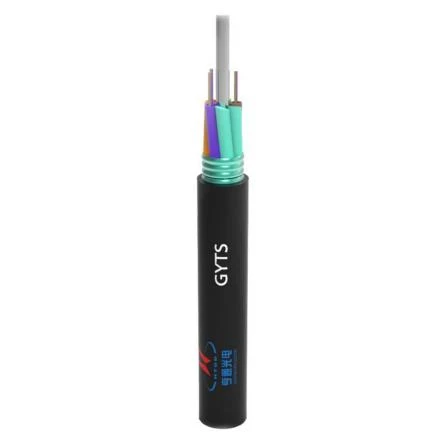
Underground fibre optic cable systems employ sophisticated engineering to ensure optimal performance in challenging subterranean environments. The fundamental architecture consists of multiple precisely manufactured components working in harmony. At the core, ultra-pure glass or plastic optical fibres—each thinner than a human hair—transmit data as pulses of light at speeds approaching 70% of light speed in vacuum. These delicate fibres are protected within loose tube structures filled with water-blocking gel compounds, providing essential moisture protection while allowing thermal expansion without signal degradation.
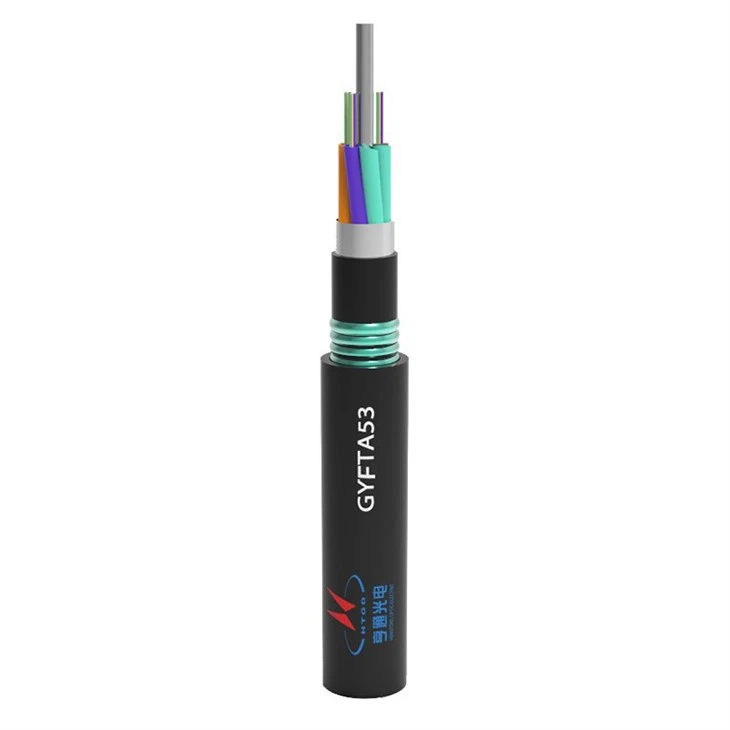
The cable's outer construction features multiple protective layers engineered for specific environmental challenges. High-density polyethylene (HDPE) or polyvinyl chloride (PVC) jacketing provides the first line of defence against soil chemicals and moisture ingress. For direct burial applications in harsh environments, corrugated steel armoring or aramid yarn reinforcement delivers exceptional crush resistance and protection against aggressive rodents. Advanced underground fibre optic cable designs incorporate flame-retardant materials meeting stringent international safety standards, ensuring compliance with regulatory requirements across diverse geographical markets.


Modern cable architecture also addresses installation efficiency through innovations like central strength members made from fiberglass-reinforced plastic (FRP) rods or steel wire, which bear mechanical loads during cable pulling operations. The strategic placement of rip cords facilitates rapid sheath removal during termination, while color-coded buffer tubes and systematic fibre identification schemes streamline splicing operations—critical factors that reduce installation time and associated labour costs for large-scale network deployments.
Vivamus tortor risus,pharetra ut venenatis ac,rutrum eget anten fusce convallis nibh felis,eget hendrerit diam rhoncus rana miss dictum lacus eleifend nisl efficitur venenatis.
Aliquam eros justo,posuere loborti viverra laoreet matti ullamcper posuere viverra .Aliquam s justo,posuere so lobortis non,viverra laoreet posuere loborti Aliquam eros justo,posuere loborti viverra laoreet matti ullamcorper posuere viverra .Aliquam s justo,posuere so lobortis non,viverra laoreet posuere loborti

Key Cable Components
Ultra-pure glass or plastic optical fibres
Loose tube structures with water-blocking gel
Corrugated steel or aramid reinforcement
Central strength members (FRP or steel)
Flame-retardant materials (where required)
The Science Behind Superior Signal Transmission
Financial Big Data
The performance advantages of underground fibre optic cable stem from fundamental physics principles that differentiate optical transmission from electrical conductors.
Unlike copper cables that suffer from signal attenuation due to electrical resistance and electromagnetic interference, optical fibres guide light signals through total internal reflection within the fibre core.
This phenomenon enables underground fibre optic cable to maintain signal integrity over distances exceeding 100 kilometers without active amplification—a capability impossible with traditional copper infrastructure.
Retail Big Data
Advanced manufacturing processes utilizing Plasma Chemical Vapor Deposition (PCVD) or Modified Chemical Vapor Deposition (MCVD) technology create optical fibre preforms with precisely controlled refractive index profiles.
This precision engineering ensures minimal insertion loss—typically below 0.35 dB/km at 1310nm wavelength for single-mode fibres—enabling telecommunications operators to maximize transmission distances while minimizing costly repeater installations.
The inherent immunity to electromagnetic interference (EMI) and radio frequency interference (RFI) means underground fibre optic cable delivers consistent performance even when routed alongside high-voltage power lines or through industrial environments saturated with electrical noise.
Industrial Big Data
Contemporary underground fibre optic cable designs also incorporate bend-insensitive fibre technology, allowing tighter installation radius without compromising optical performance.
This innovation proves particularly valuable in congested urban environments where underground duct infrastructure presents space constraints.
The ability to navigate complex pathways while maintaining low-loss characteristics represents a significant advancement that reduces installation complexity and enhances network flexibility for future expansion requirements.
Comprehensive Application Scenarios for Underground Fibre Optic Cable

Metropolitan Area Networks and Smart City Infrastructure
The explosive growth of smart city initiatives worldwide has positioned underground fibre optic cable as the essential infrastructure enabler for urban digital transformation. Metropolitan area networks demand high-capacity backbone connections capable of supporting thousands of simultaneous services—from municipal WiFi systems and intelligent traffic management to public safety surveillance networks and environmental monitoring stations.
In smart city deployments, underground fibre optic cable serves as the central nervous system connecting distributed sensor networks, IoT devices, and edge computing nodes. The cables' ability to deliver symmetrical gigabit speeds with minimal latency enables real-time data collection and analysis essential for traffic optimization, energy management, and emergency response coordination.

5G Network Backhaul and Fronthaul Connectivity
The global rollout of 5G wireless networks has created unprecedented demand for high-capacity underground fibre optic cable infrastructure. Unlike previous cellular generations, 5G architecture requires dense small cell deployments with sophisticated backhaul and fronthaul connections to deliver promised performance benefits. Each 5G small cell site demands multi-gigabit fibre connections to handle aggregate traffic from hundreds of simultaneous users.
In 5G deployments utilizing Cloud Radio Access Network (C-RAN) architectures, underground fibre optic cable provides the low-latency fronthaul connections between distributed radio units and centralized baseband processing facilities. These connections must maintain strict latency budgets—often below 100 microseconds—to support real-time radio signal processing.

Data Center Interconnection and Cloud Infrastructure
Modern data center operations increasingly depend on robust underground fibre optic cable connections for inter-facility replication, disaster recovery, and distributed computing architectures. Hyperscale data center operators require multi-terabit capacity between facilities to support real-time data synchronization, load balancing, and seamless failover capabilities.
In metro data center ecosystems, underground fibre optic cable enables the creation of campus-area networks linking colocation facilities, cloud on-ramps, and network peering exchanges. These dedicated fibre connections support 100G and 400G optical transceivers delivering aggregate capacities measured in petabits per second—performance levels utterly unattainable with any alternative transmission technology.

Fiber-to-the-Home (FTTH) and Broadband Access Networks
The residential broadband revolution has made underground fibre optic cable the preferred access technology for delivering gigabit internet services directly to homes and businesses. FTTH deployments eliminate the bandwidth bottlenecks inherent in hybrid fibre-coaxial or copper-based DSL systems, providing symmetrical multi-gigabit speeds that support bandwidth-intensive applications like 4K video streaming, cloud gaming, remote work, and smart home ecosystems.
Network operators implementing Gigabit Passive Optical Network (GPON) or XGS-PON architectures rely on sophisticated underground fibre optic cable distribution networks featuring point-to-multipoint topologies. These systems utilize passive optical splitters to serve multiple subscriber premises from shared feeder cables, optimizing infrastructure costs while maintaining dedicated bandwidth allocation for each connection.
Industrial and Enterprise Campus Networks

Manufacturing facilities, university campuses, healthcare complexes, and corporate headquarters increasingly depend on underground fibre optic cable infrastructure for mission-critical operations. Industrial environments present unique challenges including exposure to chemical contaminants, mechanical vibration, extreme temperatures, and electromagnetic interference from heavy machinery—conditions where traditional copper cabling proves unreliable or entirely unsuitable.
In Industry 4.0 manufacturing environments, underground fibre optic cable networks interconnect distributed control systems, machine vision inspection stations, automated guided vehicles, and real-time quality monitoring systems. The deterministic low-latency performance of fibre optic transmission enables precise synchronization of production line equipment, supporting just-in-time manufacturing processes where millisecond timing differences can impact product quality.


Enterprise campus networks leverage underground fibre optic cable to create high-bandwidth backbones connecting distributed buildings without the visual clutter and maintenance burden of aerial installations. These backbone connections support converged network architectures carrying data, voice, video surveillance, building automation, and physical security systems across unified infrastructure.
Key Performance Advantages and Pain Points Addressed

Unmatched Reliability and Weather Resistance
Infrastructure operators consistently cite reliability as the paramount consideration when selecting telecommunications cabling solutions. Underground fibre optic cable delivers exceptional availability through inherent design advantages that eliminate common failure modes plaguing alternative technologies. Protected from ice storms, high winds, tree contact, and lightning strikes that routinely damage aerial cable plants, underground installations achieve operational reliability rates 10 times superior to above-ground alternatives.
The environmental protection provided by subsurface installation extends well beyond weather immunity. Underground fibre optic cable systems remain unaffected by ultraviolet radiation degradation that progressively damages aerial cable jacketing, leading to moisture ingress and eventual failure. The stable temperature environment below the frost line prevents the thermal cycling stresses that fatigue cable components in exposed installations.
Superior Bandwidth and Future-Proof Scalability
Network planners face the perpetual challenge of infrastructure investments that must serve evolving technology requirements over multi-decade timespans. Underground fibre optic cable addresses this fundamental pain point through inherent bandwidth scalability that no alternative technology can match. A single fibre strand can theoretically support transmission capacities exceeding 100 Terabits per second through Dense Wavelength Division Multiplexing (DWDM) techniques—bandwidth sufficient to simultaneously stream ultra-high-definition video to tens of thousands of users.
The practical implications of this bandwidth scalability prove transformative for network economics. Organizations implementing underground fibre optic cable infrastructure realize that their initial installation investment purchases not merely current connectivity requirements but decades of future capacity expansion. As service demands grow, operators can seamlessly upgrade transmission speeds through terminal equipment changes alone—without costly excavation or service disruptions.

Enhanced Physical Security and Vandalism Protection
In an era of increasing infrastructure security concerns, underground fibre optic cable installations offer substantial advantages over exposed aerial alternatives. The concealed nature of subsurface cable routes provides inherent physical security, making unauthorized access, tampering, or sabotage significantly more difficult compared to readily accessible overhead cables. This security advantage proves particularly valuable for critical infrastructure applications supporting financial services, healthcare facilities, government operations, and military installations.
The challenge of cable theft—particularly prevalent with copper infrastructure containing valuable metallic content—is virtually eliminated with underground fibre optic cable. Unlike copper cables that attract thieves seeking scrap metal value, optical fibre possesses minimal intrinsic material value while proving extremely difficult to remove from underground installations without specialized equipment and extensive time exposure.
Reduced Electromagnetic Interference and Signal Quality
Electrical engineers responsible for maintaining reliable data transmission face continuous challenges from electromagnetic interference (EMI) sources ubiquitous in modern environments. Industrial machinery, high-voltage power distribution systems, radio frequency transmitters, and even adjacent data cables generate electromagnetic fields that induce noise in traditional copper cabling, degrading signal quality and limiting transmission speeds.
This EMI immunity proves transformative for network reliability in challenging environments. Manufacturing facilities deploying underground fibre optic cable can route cables directly alongside heavy machinery, welding equipment, and motor drives without concern for interference-induced communication errors. Data centers can install high-density fibre connections without the crosstalk limitations that plague copper cabling in tightly packed equipment racks.

Advanced Manufacturing Technologies and Quality Assurance
Precision Optical Fibre Production Processes

The performance of underground fibre optic cable systems fundamentally depends on the quality of constituent optical fibres—making manufacturing excellence a critical differentiator among suppliers. Leading manufacturers employ advanced Plasma Chemical Vapor Deposition (PCVD) technology to create optical fibre preforms with precisely controlled refractive index profiles.
This sophisticated process deposits ultra-pure silica glass layers with dopant concentrations accurate to parts-per-billion levels, achieving the precise core-cladding refractive index difference essential for low-loss light guidance. The resulting preforms undergo careful drawing processes at temperatures exceeding 2000°C, producing continuous fibre strands with diameter tolerances measured in fractions of micrometers.
Quality control during fibre production incorporates real-time monitoring systems that detect microscopic defects or dimensional variations before they compromise cable performance. Automated optical testing evaluates attenuation characteristics at multiple wavelengths, ensuring compliance with stringent international standards including ITU-T G.652.D for standard single-mode fibre and ITU-T G.657.A for bend-insensitive variants.
Sophisticated Cable Construction Methodologies
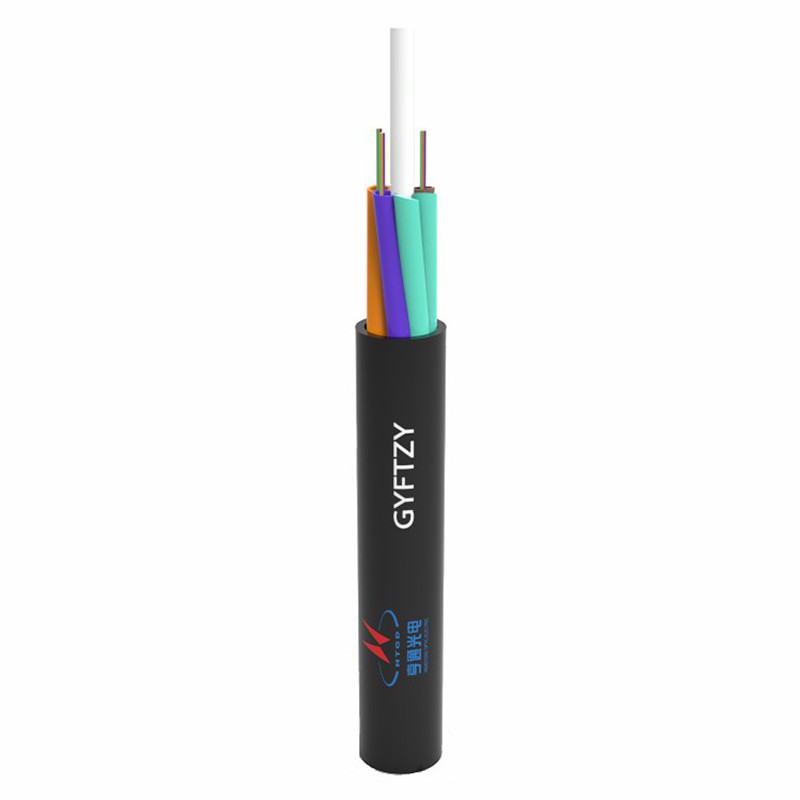
Transforming individual optical fibres into robust underground fibre optic cable structures requires sophisticated manufacturing processes that balance mechanical protection with installation flexibility. Modern cable designs employ loose tube construction where multiple fibres reside within oversized buffer tubes filled with water-blocking gel compounds.
This architecture allows fibres to move freely within tubes during cable bending and thermal expansion, preventing mechanical stress that could induce signal-degrading microbending losses. The buffer tubes themselves utilize high-quality HDPE materials selected for moisture barrier properties, mechanical toughness, and long-term thermal stability across temperature ranges from -40°C to +70°C.
Strategic placement of strength members within cable cross-sections ensures proper load distribution during installation pulling operations. Central fiberglass-reinforced plastic rods or steel wire strands bear the majority of pulling tension, preventing force transmission to delicate optical fibres.
Comprehensive Testing and Certification Standards
Quality assurance for underground fibre optic cable extends far beyond manufacturing process controls, encompassing comprehensive testing protocols that verify performance under simulated field conditions. Manufacturers subject production cables to battery of standardized tests specified by international standards organizations including the International Telecommunication Union (ITU-T), International Electrotechnical Commission (IEC), and Telcordia Technologies.

Optical Performance Testing
- Attenuation measurement at multiple wavelengths
- Chromatic dispersion analysis
- Polarization mode dispersion testing
- Optical return loss verification

Environmental Testing
- Temperature cycling (-40°C to +70°C)
- Humidity exposure testing
- Water immersion and pressure testing
- UV radiation resistance testing

Mechanical Testing
- Crush resistance verification
- Impact tolerance assessment
- Tensile strength measurement
- Bend performance evaluation
International Certification Standards

ISO 9001 Quality Management
ISO 14001 Environmental Management
OHSAS 18001 Safety Standards
ITU-T G.652, G.655, G.657
IEC 60794 Series Standards
Professional Installation Best Practices and Methodologies
Pre-Installation Planning and Site Preparation
Detailed site surveys with GIS mapping
Utility locating and coordination
Soil analysis and condition assessment
Permitting and regulatory compliance
Future expansion capacity planning

Successful underground fibre optic cable deployment begins long before trenching equipment arrives on site. Comprehensive pre-installation planning addresses the myriad factors that influence installation quality, project timeline, and long-term system reliability. The planning process commences with detailed site surveys utilizing geographic information systems (GIS) to map proposed cable routes while identifying existing underground utilities, geological conditions, and regulatory jurisdictions.
Coordination with utility locating services prevents costly and dangerous strikes against buried power cables, natural gas pipelines, water mains, and telecommunications infrastructure—hazards that can trigger service disruptions, safety incidents, and substantial financial liabilities.
Network design optimization during planning phases considers not only immediate connectivity requirements but future expansion capabilities. Oversizing underground conduit systems—installing 4-inch conduit where 2-inch might suffice for initial cables—provides economical pathway capacity for subsequent circuit additions without disruptive excavation. Strategic placement of hand-holes, splice enclosures, and service pedestals at logical network nodes facilitates future lateral connections and maintenance access.
Products Description
Open-cut trenching with proper depth
Directional boring for obstacle crossings
Horizontal directional drilling (HDD)
Proper conduit bedding and backfill
Conduit jointing and protection methods
The physical installation of underground fibre optic cable infrastructure employs various excavation methodologies selected based on distance, terrain, urban density, and budget considerations. Traditional open-cut trenching remains the most common approach for extended underground runs, utilizing trenching machines to excavate continuous channels 18-48 inches deep depending on local frost depth requirements and utility standards.
Directional boring technology provides trenchless installation alternatives particularly valuable for obstacle crossings and congested urban environments. Horizontal directional drilling (HDD) utilizes steerable boring equipment to create underground pathways beneath roadways, waterways, and existing structures without surface disruption. This methodology proves economically attractive when comparing direct costs against expenses associated with pavement restoration, traffic control, and business disruption from open-cut trenching.
Conduit installation within prepared trenches follows specified bedding and backfill practices ensuring long-term physical protection. Fine sand or select excavated material creates smooth bedding free from rocks or debris that could damage conduit or cable. Conduit joints utilize appropriate coupling methods—solvent welding for PVC or mechanical couplers for HDPE—ensuring continuous protection throughout the installation.

Cable Pulling and Placement Procedures
Calibrated tension monitoring equipment
Proper pulling grip selection and installation
Approved cable lubrication techniques
Air-assisted blown fibre installation
Figure-eight cable storage for stress relief

The actual placement of underground fibre optic cable within prepared conduit infrastructure demands meticulous attention to installation parameters that protect delicate optical fibres from damage. Professional installation teams utilize calibrated pulling equipment monitoring real-time tension to ensure forces remain within manufacturer specifications—typically 600 pounds maximum for standard cables, though specific limits vary with cable design.
Excessive pulling tension can permanently elongate cable components, inducing microbending losses that degrade optical performance. Specialized pulling grips distribute load across cable strength members rather than optical fibre components, while swivel assemblies prevent torque transmission that could twist and damage cable internals.
Alternative installation methodologies including blown fibre techniques offer advantages for specific applications. Air-assisted cable installation utilizes compressed air flow within microduct systems to propel specialized underground fibre optic cable designs over extended distances. This approach proves particularly effective for campus environments and residential developments where underground microduct infrastructure can be installed initially, with fibre cables provisioned incrementally as circuits are activated.
Splicing and Termination Excellence
Fusion splicing with arc technology
Mechanical splicing for rapid deployment
Pre-terminated cable assembly options
OTDR testing and documentation
Environmental protection of splices
The transformation of continuous cable lengths into functional network connections requires precision splicing and termination procedures that maintain the optical quality achieved during cable manufacturing. Fusion splicing—utilizing electric arc technology to literally melt and fuse fibre ends together—creates permanent low-loss connections with typical splice losses below 0.05 dB. Modern fusion splicers incorporate automated alignment systems using digital imaging to position fibre cores with submicron accuracy before fusion, while integrated splice loss estimation provides immediate quality verification.
Mechanical splicing alternatives provide field-installable connections without fusion equipment requirements, trading slightly higher loss characteristics (typically 0.1-0.3 dB) for rapid installation and reusability advantages. Mechanical splice designs utilize precision alignment features and index-matching gel to optimize optical coupling between fibre ends held in mechanical retention.
Comprehensive testing following splicing operations verifies that installations meet design specifications before network activation. Optical time-domain reflectometer (OTDR) testing injects laser pulses into completed fibre spans, analyzing backscattered light to identify splices, bends, or faults with meter-level resolution. OTDR traces provide permanent documentation of installed cable performance serving as baseline references for future troubleshooting activities.

Strategic Advantages Delivered by Industry-Leading Solutions
Comprehensive Product Portfolio Addressing Diverse Requirements
Network operators and infrastructure developers benefit substantially from partnering with manufacturers offering complete underground fibre optic cable product ranges rather than limited specialist offerings. Comprehensive product portfolios enable customers to standardize on single-source solutions while accessing appropriate cable designs for every application within network architectures.
Specialized cable variants address unique environmental challenges that general-purpose designs cannot accommodate. Armored cables with corrugated steel or interlocked aluminum protection survive direct burial in rocky soil or beneath vehicular traffic. All-dielectric self-supporting (ADSS) designs eliminate metallic components for installations near high-voltage power lines.
Technical Support and Engineering Collaboration
The complexity of modern underground fibre optic cable deployments demands more than merely supplying cable products—successful projects require comprehensive technical support throughout planning, installation, and commissioning phases. Industry-leading manufacturers distinguish themselves through dedicated engineering teams providing application-specific design consultation.
Pre-project engineering support includes detailed cable routing analysis identifying potential installation challenges before construction mobilization. Engineers evaluate proposed pathways for bend radius compliance, pulling tension calculations, and splice location optimization. This proactive analysis prevents mid-project surprises that trigger schedule delays and budget overruns.
Quality Certifications and Manufacturing Excellence
Procurement decisions for mission-critical underground fibre optic cable infrastructure increasingly emphasize supplier quality credentials beyond basic product specifications. Manufacturers maintaining comprehensive ISO certifications demonstrate organizational commitment to quality management systems, environmental stewardship, and occupational safety—factors directly influencing product consistency and corporate reliability.
Product-specific certifications and testing laboratory approvals provide additional quality assurance beyond manufacturer self-certification claims. Listings from Underwriters Laboratories (UL), Canadian Standards Association (CSA), and similar internationally recognized testing organizations verify that underground fibre optic cable products have undergone rigorous independent evaluation.
Global Manufacturing Footprint and Supply Chain Reliability
Large-scale infrastructure projects demand suppliers capable of delivering substantial cable quantities within compressed timeframes while maintaining consistent quality across production runs. Manufacturers operating multiple production facilities across different geographic regions provide supply chain reliability that single-plant operations cannot match.
Established global logistics networks further enhance supply chain reliability for international projects. Manufacturers with experience navigating international shipping, customs procedures, and import regulations streamline product delivery to remote project locations. Understanding of proper cable packaging, reel specifications, and transportation handling requirements prevents damage during intercontinental shipping.
Main Products
Multi tube Single Jacket Metal Tape Armored Duct Cable


FRP Strength Member Multitube Single Jacket Duct Cable

1-Optical fiber
2-Central strength member
3-Tube Filling Compound
4-Loose Tube
5-Cable Filling Compound
6-Outer sheath
7-Filler rod
Multi tube Double Jacket and Armored Direct Buried Cable

1-Central Strength Member
2-Loose Tube
3-Tube Filling Compound
4-Cable Filling Compound
5-Aluminum Tape
6-Fiber
7-Inner Sheath
8-Gorrugated Steel Tape
9-Outer Sheath
10-Filler Rod
Why Hengtong is the top optical cable supplier?

Company capability
We are a company that has passed ISO9001 quality management system certification, ISO14001 environmental management system certification, ISO45001 occupational health and safety management system certification, IECQ hazardous substances process management system certification, which shows that we have the best manufacturing capabilities, correct material certification and advanced Technology. The optical cables produced by Hengtong comply with relevant standard requirements in terms of materials and performance.

33 Years Of Experience In Custom Solutions.
We Are A Famous Fiber Optic Cable Manufacturer.
We Are A Famous Fiber Optic Cable Manufacturer.Since its establishment in 1991, Hengtong has become one of the leading optical cable manufacturers, committed toproviding the highest quality customized optical cables to users around theworld. Over the years, we have accumulated rich experience as a manufacturerand supplier in the fiber optic cable industry.

Professional fiber optic cable manufacturer
Hengtong is a professional optical cable manufacturer, supplier and OEM. Our technology center covers the fields of optical cable material technology, optical cable structural design technology, optical cable production technology, product testing and quality control.

Fast delivery time
By providing instant quotes and optimizing our production process, Hengtong ensures swift delivery times for your convenience. Leveraging our vast technical expertise and proficiency, we expedite our operations efficiently to meet your deadlines effectively.
We're professional underground fibre optic cable manufacturers and suppliers in China, specialized in providing high quality products and service. If you're going to wholesale customized underground fibre optic cable, welcome to get quotation from our factory.
underground fibre optic cable, fibre optic cable for underground demand, fibre optic cable for underground cavity