





Hengtong Duct Fiber Optic Cable MPO-24 OS2 Trunk, Jetting & Pulling Dual-Rated

Duct Fiber Optic Cable

Hengtong Duct Fiber Optic Cable
Hengtong Solution for Modern Network Infrastructure

Duct Fiber Optic Cable – Built for Future-Ready Networks
Hengtong Duct Fiber Optic Cable is engineered for high-capacity backbone, metro, campus and access networks running in existing or new duct systems. With compact outer diameters, optimized sheath designs and low-friction surfaces, these cables support both cable blowing and traditional pulling, helping operators deploy long reaches quickly while maximizing duct utilization for 5G, FTTx, smart city and data center interconnection projects.
Customized to Your Duct, Route and Application
Every duct network is different, so Hengtong tailors duct cable designs to your project: fiber type and count (G.652D, G.657 or mixed), loose-tube or micro-module structures, single or double sheaths, and options for rodent-resistant or anti-termite constructions. Jacket materials and markings can be customized for HDPE ducts, microduct bundles or mixed metro routes, ensuring smooth installation, clear identification and easy operation and maintenance over the cable’s lifetime.
Certified Performance and Documented Quality
Hengtong duct fiber optic cables are designed and tested according to relevant IEC/ITU and regional standards, including mechanical tests for blowing/pulling, crush, impact and temperature cycling, as well as optical performance verification. Complete factory test reports, type-test certificates and quality system documentation are available to support bidding, design approval and acceptance, giving operators solid evidence of long-term reliability in demanding underground and metro environments.
5G network expansion requiring high-density fiber backhaul
Cloud computing growth driving data center interconnect demand
Smart city initiatives requiring robust underground infrastructure
FTTH (Fiber-to-the-Home) deployments for gigabit broadband access
Industrial IoT applications demanding reliable connectivity
Duct Fiber Optic Cable Products

Hengtong Duct Fiber Optic Cable OS2 G.652D 24F Low-Friction PE, Jetting-Optimized

Hengtong Duct Fiber Optic Cable OS2 G.657A2 12F Bend-Insensitive, LSZH Indoor

Hengtong Duct Fiber Optic Cable OM4 24F Data Center–Campus Duct Grade

Hengtong Duct Fiber Optic Cable OS2 48F MicroDuct 7/10 mm Compatible, Dry Core

Hengtong Duct Fiber Optic Cable OS2 96F Sub-Duct Ready, High Pull-Tension Rating

Hengtong Duct Fiber Optic Cable OM3 12F LSZH/PE Dual Sheath for Building-to-Duct Transitions
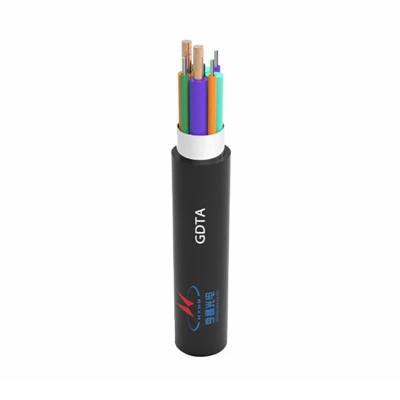
Hengtong Duct Fiber Optic Cable OS2 8F Duct Drop, Pre-Connectorized SC/APC
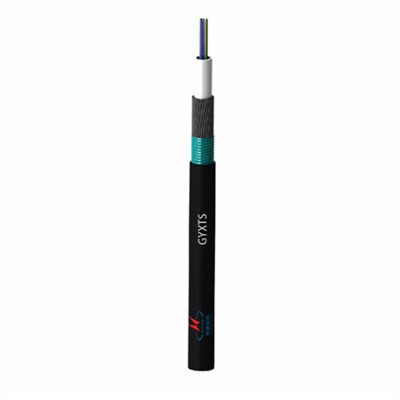
Hengtong Duct Fiber Optic Cable OS2 24F CST Rodent-Resistant for Shared Ducts

-
![Flat- Dry Loose Tube Single Jacket Cable]()
Flat- Dry Loose Tube Single Jacket Cable
The optical fiber is wrapped in LSZH blue tight sleeve and placed together with two waterproof yarns in a loose sleeve to form a dry sleeve. Place two glass fiber reinforced plastic (FRP) rodsread more

Understanding Duct Fiber Optic Cable: Definition and Core Advantages

Duct fiber optic cable refers to specialized optical fiber cables engineered specifically for installation within pre-existing underground or above-ground ducts (conduits). Unlike direct burial cables or aerial fiber solutions, these cables are designed to navigate protective pathways that shield them from environmental hazards while providing unprecedented flexibility for network expansion and maintenance.
The fundamental advantage of duct fiber optic cable lies in its installation methodology. Rather than being exposed directly to soil, moisture, and physical stress, these cables enjoy the protective environment of HDPE (High-Density Polyethylene), concrete, or steel conduits. This strategic approach transforms network deployment from a risky, inflexible endeavor into a scalable, maintainable infrastructure investment.
Key Advantages: Solving Industry Pain Points
Superior Cable Protection: Eliminating Downtime and Replacement Costs

One of the most significant challenges facing network operators is cable damage from external factors. Traditional burial methods expose cables to moisture infiltration, rodent damage, ground movement, and accidental excavation. Duct fiber optic cable systems eliminate these vulnerabilities through multi-layered protection:
Environmental Shielding
The duct structure provides a barrier against water ingress, even in flood-prone regions or areas with high water tables. This protection ensures consistent signal quality and extends cable lifespan by 50-100% compared to direct burial alternatives.
view more
Physical Damage Prevention
Construction activities, agricultural operations, and natural ground settlement pose constant threats to buried cables. By housing cables within rigid or semi-rigid ducts, operators dramatically reduce the risk of accidental severing or crushing. This translates to fewer service interruptions and significant savings on emergency repairs.
view more
Rodent and Pest Resistance
Armored duct fiber optic cable variants feature steel tape or aluminum barriers that make them virtually impervious to rodent gnawing-a common failure mode in rural and agricultural areas. This protection alone can reduce maintenance calls by up to 70% in high-risk zones.
view more
Simplified Maintenance and Future-Proof Scalability
Network infrastructure must accommodate not just today's bandwidth requirements but tomorrow's unpredictable demands. Duct fiber optic cable systems excel in this dimension by offering unprecedented flexibility:
Easy Cable Replacement
When technology upgrades or capacity expansions become necessary, duct systems allow operators to pull out existing cables and install new ones without excavation or aerial work. This "swap-out" capability reduces upgrade costs by 60-80% compared to complete infrastructure replacement.
Incremental Deployment Strategy
Many operators employ a "build-once, deploy-gradually" approach using air-blown fiber (ABF) technology. Microducts are installed during initial construction, but fiber microcables are blown in only as demand materializes. This strategy defers capital expenditure while ensuring readiness for rapid activation.
Multiple Cable Pathways
Advanced duct systems support microduct bundles that subdivide internal space, allowing simultaneous routing of different service providers' cables or segregation of commercial and municipal networks. This multi-tenant capability maximizes infrastructure utilization and creates new revenue opportunities.
Installation Efficiency: Reducing Time, Labor, and Disruption
Traditional cable installation methods-whether aerial stringing or direct trenching-are labor-intensive, time-consuming, and disruptive to communities and businesses. Duct fiber optic cable deployment leverages advanced techniques that dramatically improve project economics:
| Installation Method | Typical Time | Labor Requirements | Disruption Level |
|---|---|---|---|
| Aerial Installation | 8-12 hours | 4-6 workers | Medium |
| Direct Burial | 24-48 hours | 6-8 workers | High |
| Duct Installation (New Ducts) | 12-20 hours | 4-5 workers | Medium |
| Duct Installation (Existing Ducts) | 2-4 hours | 2-3 workers | Low |
Enhanced Network Reliability: Meeting SLA Requirements
Service Level Agreements (SLAs) for telecommunications and data center interconnect applications demand 99.99% or higher uptime. Duct fiber optic cable systems help operators meet these stringent requirements through multiple reliability enhancements:

Environmental Stability
Temperature fluctuations, UV radiation, and precipitation cycles all affect cable performance over time. Duct environments moderate these extremes, maintaining consistent transmission characteristics across seasons and weather conditions.
view more

Mechanical Stability
Aerial cables sway in wind, creating micro-stress on fibers. Direct burial cables shift with frost heaves and soil settlement. Duct fiber optic cable installations eliminate these dynamic stresses, resulting in more stable optical parameters.
view more

Faster Fault Isolation
When problems do occur, duct-based systems allow technicians to segment the network logically, testing and isolating faults without extensive excavation or aerial lift equipment. This accelerates mean time to repair (MTTR) significantly.
view more
Application Scenarios: Where Duct Fiber Optic Cable Excels

Metropolitan Area Networks (MANs)
Urban fiber networks face unique challenges: dense underground utilities, frequent road work, and the need to connect thousands of buildings and cell towers.
- High-density configurations up to 288 fibers
- Rapid deployment cycles within days
- Shared duct systems reduce street cuts

Data Center Interconnects
As cloud computing and distributed applications proliferate, data centers require ultra-high-bandwidth, low-latency connections.
- Ultra-low loss performance below 0.18 dB/km
- Ribbon cable configurations up to 864 fibers
- Redundant path diversity for continuous operation

Fiber-to-the-Home (FTTH)
The global push toward gigabit broadband access relies heavily on efficient last-mile deployment.
- Microduct architecture eliminates dark fiber waste
- Pre-connectorized drop solutions reduce installation time
- Scalability without disrupting existing subscribers

Smart City Infrastructure
Modern cities deploy vast sensor networks, surveillance systems, and intelligent transportation infrastructure.
- Long service life with armored cables
- Lightning protection with non-metallic variants
- Easy network evolution as applications grow

Industrial & Campus Networks
Manufacturing facilities, universities, hospitals, and corporate campuses need reliable internal fiber networks.
- Fire safety compliance with LSZH jackets
- Chemical resistance for industrial settings
- Organized cable management simplifies change
Technical Specifications: Choosing the Right Duct Fiber Optic Cable

GYTS (Steel Tape Armored)
The workhorse of duct applications, featuring corrugated steel tape armor.
- Exceptional crush resistance (up to 3000 N/cm)
- Superior rodent protection
- Ideal for industrial zones and high-risk areas
read more

GYTA (Aluminum Tape Armored)
Lighter than GYTS while maintaining excellent moisture resistance.
Reduced weight compared to steel armor
- Enhanced lightning grounding capabilities
- Suitable for long duct runs where weight matters
read more
GYFTY (Non-Metallic)
For installations near high-voltage power lines or lightning-prone regions.
- Eliminates induction and ground loop concerns
- Lightning-resistant design
- FRP strength members for mechanical support
read more
Ribbon Cable Designs
When fiber counts exceed 144 cores or mass-fusion splicing efficiency matters.
- High density in compact form factor
- Rollable ribbon technology for flexibility
- Enables mass fusion splicing efficiency
read more
Fiber Types and Performance
| Fiber Type | Attenuation @ 1550nm | Key Characteristics | Typical Applications |
|---|---|---|---|
| G.652D Single-Mode | 0.20-0.25 dB/km |
Excellent chromatic dispersion Standard for telecom applications Compatible with DWDM systems |
Long-haul networks, metro rings, cellular backhaul |
| G.657A Bend-Insensitive | < 0.22 dB/km |
Low loss at tight bends (<0.1 dB @7.5mm) Improved macrobend performance Backward compatible with G.652D |
FTTH, indoor-outdoor transitions, tight routing |
| OM3 Multimode | < 0.8 dB/km @850nm |
50/125μm core/cladding Optimized for VCSEL lasers 300m reach at 10Gb/s |
Data centers, campus networks, short-reach links |
| OM4 Multimode | < 0.7 dB/km @850nm |
Enhanced bandwidth over OM3 400m reach at 10Gb/s 100m reach at 40/100Gb/s |
High-speed data centers, enterprise backbones |
Cable Capacity Options
2-24 Fibers
Ideal for small business connections, cellular backhaul links, and access network distribution points where bandwidth requirements are moderate.
01
48-144 Fibers
Suitable for metropolitan distribution rings, enterprise campus backbones, and mid-sized data center connections requiring higher bandwidth.
02
144-288 Fibers
Designed for high-capacity trunk routes, regional network aggregation points, and connecting multiple data centers in a campus environment.
03
288-864 Fibers
Used for data center interconnects, ultra-high-capacity core networks, and backbone routes supporting massive bandwidth demands from multiple service providers.
04
Industry-Leading Solutions: Why Leading Manufacturers Matter
When selecting duct fiber optic cable suppliers, partnership with established manufacturers provides critical advantages beyond product specifications. Leading global manufacturers bring:

Vertically Integrated Manufacturing
Top-tier manufacturers control the entire production chain-from optical fiber preform production through cable assembly and testing.
Consistent quality through tight process control
Supply chain reliability with reduced lead times
Deep technical support across all production stages
Extensive R&D Investment
The fiber optics industry evolves rapidly, with new fiber types, cable designs, and installation techniques emerging continuously.
Next-generation fiber technology development
Advanced cable construction innovations
Installation technique optimization

Global Certification
International projects and carrier networks require cables meeting multiple regional standards simultaneously.
ISO 9001:2015 quality management
Telcordia GR-20-CORE compliance
IEC 60794 and UL/ETL listings

Customization Capabilities
Standard catalog products serve many applications well, but unique environments often demand custom solutions.
Specialized jacket formulations for unique environments
Non-standard fiber counts optimized for specific needs
Hybrid cable designs and rapid prototyping
About Our Solutions
As a globally recognized leader in fiber optic technology with complete vertical integration from preform production through finished cable assembly, we deliver duct fiber optic cable solutions that exceed the most demanding performance, reliability, and quality standards. Our comprehensive product portfolio spans applications from FTTH access networks to intercontinental transmission systems, backed by ISO 9001/14001 certification, extensive global testing compliance, and decades of telecommunications infrastructure expertise. Contact our engineering team to discuss how our duct fiber optic cable solutions can optimize your next network deployment project.
learn more

FAQ
Q: What is a duct fiber optic cable and when should I choose it?
A: A duct fiber optic cable is designed to be installed inside conduits rather than direct-buried or aerial. Choose it when you want easy future upgrades/pulls and added mechanical and moisture protection-Hengtong supplies PE/LSZH jacketed duct cables optimized for pulling or jetting.
Q: How do I size a duct for fiber optic cable (duct for fiber optic cable)?
A: Target a cable OD-to-duct ID fill of ~40–60% for pulling and ~50–80% for air-blowing with a low-friction inner liner. Hengtong provides recommended duct IDs (e.g., 32/40/50 mm) against each cable OD to hit the right fill factor.
Q: What defines a duct optical fiber cable versus indoor or direct-bury types?
A: Duct optical fiber cables emphasize smooth, low-friction sheaths, pull/jet ratings, and water-blocking rather than heavy armor. Hengtong's duct series adds dry-core blocking and ripcords to speed splicing and restoration.
Q: What is a fiber optic cable duct and what properties matter most?
A: It's the conduit system (main duct or sub-duct) that houses the cable; key specs are ID, SDR/pressure rating, UV stability, and inner-wall friction. Hengtong matches cable sheath compounds to ducts with micro-ribbed or silicon-lined interiors for longer jetting distances.
Q: When should I use a sub-duct for fiber optic cable (sub duct fiber optic cable)?
A: Use sub-ducts to partition a larger duct, protect specific fibers, and allow multiple future pulls without excavation. Hengtong supports 10–25 mm sub-duct pairings with its mini/micro cable ODs for high-density corridors.
Q: What is a duct drop fiber optic cable and where is it used?
A: It's a smaller, more flexible cable for the final leg from hand-hole/duct to building or cabinet. Hengtong offers bend-insensitive OS2/OM drop variants with LSZH outer jackets to meet campus/FTTx safety codes.
Q: How do I select a fiber optic cable duct type (fiber optic cable duct type) for blowing vs. pulling?
A: For pulling, choose standard HDPE with smooth inner wall and use approved lubricant; for blowing, pick low-friction lined ducts or micro-duct bundles rated for pressure. Hengtong rates each cable for max pull tension and jetting speed, and provides method statements.
Q: What is GJYXHA duct drop fiber optic cable?
A: GJYXHA generally denotes an outdoor flat drop cable with non-metallic strength members and LSZH sheath, suitable for ducted drops and tight bends. Hengtong's GJYXHA options add dry water-blocking and pre-connectorized tails on request.
Q: What are best practices for pulling fiber optic cable through ducts (pulling fiber optic cable through ducts)?
A: Keep dynamic bend ≥20×OD, use calibrated pullers with tension monitoring, apply approved lubricant, and stage intermediate pulls at chambers. Hengtong specifies max tensile/crush ratings per model and can supply swivel connectors and pulling eyes.
Q: How do I plan and size a sub-duct for fiber optic cable (sub-duct for fiber optic cable)?
A: Choose sub-duct ID to keep 40–60% fill with your chosen cable and verify jetting compatibility if blowing. Hengtong provides OD/ID pairing tables and can pre-bundle micro-ducts for multi-tenant expansions.
We're professional duct fiber optic cable manufacturers and suppliers in China, specialized in providing high quality products and service. If you're going to wholesale customized duct fiber optic cable, welcome to get quotation from our factory.