








Understanding optic cable technology is fundamental for telecommunications professionals, network engineers, and anyone involved in fiber optic infrastructure deployment. This comprehensive FAQ guide addresses common questions about optical cable types, design principles, manufacturing processes, and applications.
Understanding Optical Cable Basics
What is the fundamental difference between optical fiber and optical cable?
Optical fiber is the glass transmission medium itself, consisting of a core, cladding, and protective coating layers. An optical cable, however, is a complete protective assembly that houses one or more optical fibers along with strength members, buffer tubes, water-blocking materials, and outer jackets. The cable structure protects fibers from environmental hazards, mechanical stress, moisture, and temperature extremes during installation and operation. Proper cable design ensures that fibers within the optic cable structure remain protected and maintain their optical performance throughout their service life.

What are the main structural components of an optical cable?

A typical optical cable comprises several essential elements working together. The core contains optical fibers, either individually buffered or grouped in loose tubes or ribbons. Strength members provide tensile strength and may include aramid yarns, fiberglass rods, or steel wires positioned centrally or helically. Water-blocking elements prevent moisture ingress using gels or superabsorbent materials. Buffer tubes or tight buffer coatings protect individual fibers. The central member or core wrap provides structural support, while the outer jacket shields everything from environmental damage. Each component is engineered to work harmoniously within the overall optic cable design.
How do loose tube and tight-buffered cable designs differ?
Loose tube cables contain fibers within oversized tubes (typically 2-3 mm diameter) filled with water-blocking compound, allowing fibers to move freely and remain isolated from external stresses. This design excels in outdoor environments and long-distance applications. Tight-buffered cables apply a thick protective coating (900 μm) directly onto each fiber, creating a more robust individual fiber unit suitable for indoor environments, shorter runs, and termination-intensive applications. The choice between these optic cable structures depends on installation environment, distance requirements, and handling considerations during installation and maintenance.

What determines fiber count in optical cable designs?

Fiber count selection depends on current bandwidth requirements, future expansion needs, and application specifics. Common counts range from 2 to 864 fibers or more in high-density designs. Indoor cables typically contain 2-144 fibers, while outdoor cables may house 12-288 fibers in standard configurations. High-fiber-count cables exceeding 432 fibers use ribbon structures to maximize density. The optic cable design must accommodate the specified fiber count while maintaining acceptable cable diameter, weight, and installation characteristics. Network planners typically provision 30-50% additional fibers beyond immediate needs for future growth.
Indoor Optical Cable Types
What are distribution cables and where are they used?

Distribution cables feature tight-buffered fibers designed for indoor routing within buildings, data centers, and campuses. These cables typically contain 4-144 fibers with 900 μm tight buffers, aramid yarn strength members, and flame-retardant jackets rated for plenum, riser, or general-purpose spaces. The robust fiber buffering allows direct connector termination without splice enclosures. Distribution cables handle well in tight routing spaces, support frequent handling during installation, and meet building code requirements. They represent the workhorse optic cable type for structured cabling systems and premise network infrastructure.
What makes breakout cables unique?
Breakout cables contain multiple tight-buffered fibers, each with its individual sub-jacket, all bundled within an outer jacket. This construction allows individual fibers to break out and route separately to different locations without requiring a splice point. Breakout designs simplify installations in equipment rooms and data centers where individual fibers terminate at different panels or devices. The trade-off for this flexibility is larger overall cable diameter and higher cost compared to distribution cables. Breakout optic cable assemblies work particularly well for shorter interconnections requiring flexibility in fiber routing.

What are plenum-rated cables and why are they required?

Plenum-rated cables use special low-smoke, flame-retardant materials that meet stringent fire safety standards for installation in air-handling spaces. These cables must pass rigorous testing per UL 910 or NFPA 262, demonstrating limited flame spread and reduced smoke generation. Jacket materials typically include fluoropolymers (FEP, PVDF) or specially formulated low-smoke compounds. Building codes mandate plenum ratings for cables installed in spaces used for environmental air circulation. While more expensive than riser-rated alternatives, plenum optic cable provides essential safety protection in occupied buildings by minimizing toxic smoke hazards during fire events.
Outdoor Optical Cable Varieties
What are the characteristics of direct burial optical cables?
Direct burial cables feature rugged construction designed for underground installation without conduit protection. These cables incorporate multiple protective layers including gel-filled loose tubes, corrugated steel or aluminum armor, heavy-duty polyethylene jackets, and often flooding compounds throughout the structure. The armor protects against rodent damage, ground movement, and digging accidents. Enhanced moisture barriers prevent water ingress over decades of underground exposure. Direct burial optic cable designs must withstand soil pressure, freeze-thaw cycles, and potential mechanical impacts while maintaining fiber integrity. These cables represent the most robust outdoor optical cable construction.

How do aerial optical cables differ from other outdoor types?

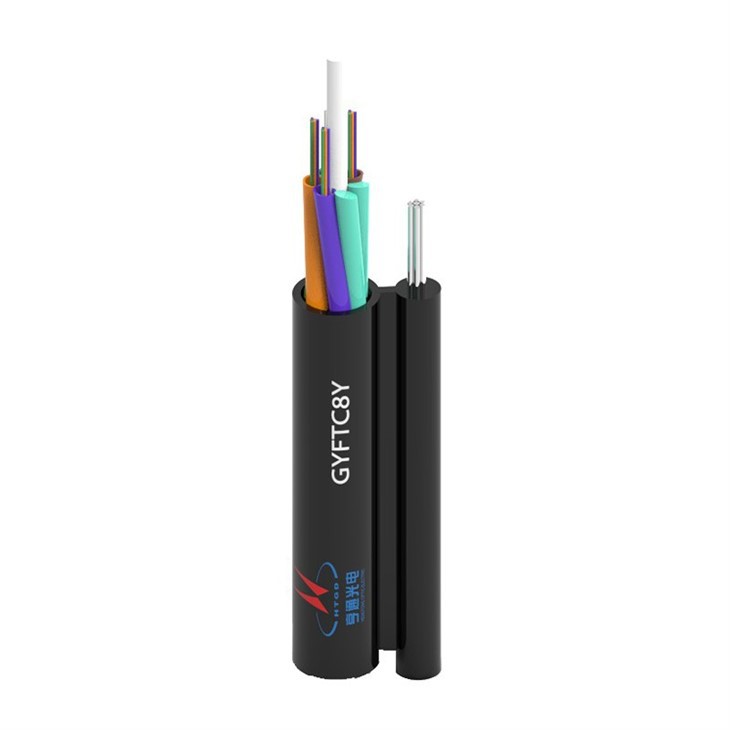
Aerial cables designed for pole-mounted installation feature lightweight construction balanced with adequate strength for span requirements. Self-supporting designs incorporate high-strength dielectric members (aramid or fiberglass), while lashed aerial cables use lighter construction since messenger wires provide support. Figure-8 designs combine the optic cable with an integrated messenger wire. UV-resistant jackets protect against sunlight degradation. Aerial optic cable must withstand wind loading, ice accumulation, temperature extremes from -40°C to +70°C, and potential lightning-induced surges. Design considerations include sag-tension calculations, maximum span length, and attachment hardware compatibility.
What makes duct cables optimized for conduit installation?
Duct cables feature smooth, hard outer jackets with low coefficients of friction to facilitate pulling through conduit systems. The relatively compact, round construction reduces pulling tension and enables longer pull distances. These cables use gel-filled or dry designs with appropriate water-blocking protection. Medium-density polyethylene jackets provide excellent durability and abrasion resistance during installation. Duct optic cable designs balance cable diameter (minimizing conduit fill) with adequate protection levels. Proper installation includes pre-lubrication, tension monitoring during pulls, and adherence to maximum pulling tension specifications to prevent fiber damage.

What are armored optical cables and when are they necessary?

Armored cables incorporate metal protective layers-typically corrugated steel tape, interlocked aluminum armor, or steel wire armor-surrounding the cable core. This construction provides superior mechanical protection against crushing forces, impact damage, and rodent attacks. Armored optic cable types serve applications including direct burial in difficult soil conditions, industrial facilities with heavy machinery, areas with high rodent populations, and locations prone to vandalism. The armor adds weight, reduces flexibility, and increases cost, but delivers unmatched mechanical protection. Installation requires special grounding considerations for metallic components in telecommunications applications.
Outdoor Optical Cable Comparison
| Cable Type | Primary Use | Key Protection Features | Installation Considerations |
|---|---|---|---|
| Direct Burial | Underground without conduit | Steel/aluminum armor, heavy-duty jackets | Requires trenching equipment |
| Aerial | Pole-mounted installations | UV-resistant jackets, strength members | Requires pole access, sag calculations |
| Duct | Conduit systems | Smooth jackets, water-blocking | Requires pulling equipment, lubrication |
| Armored | High-risk environments | Metal armor layers | Requires grounding, special handling |
Specialized Optical Cable Applications
What defines ADSS optical cable design?
All-Dielectric Self-Supporting cables contain no metallic components, using high-strength aramid yarns to achieve tensile ratings from 10 kN to 30 kN for aerial spans without messenger support. The completely dielectric construction eliminates electrical grounding requirements and permits installation on high-voltage transmission structures. ADSS optic cable design involves complex engineering considering span length, conductor clearances, wind/ice loading, aeolian vibration, and electrical stress in high-voltage environments. Specialized jackets resist electrical tracking. These cables serve utilities and other applications requiring long aerial spans near energized conductors where conventional metallic cables create safety hazards.
How does OPGW optical cable serve dual purposes?

Optical Ground Wire cables function simultaneously as overhead ground wires for lightning protection and communication pathways. The construction features a central stainless steel tube protecting optical fibers, surrounded by aluminum-clad steel or aluminum alloy strands providing mechanical strength and electrical conductivity. OPGW optic cable must meet both telecommunications performance specifications and electrical/mechanical requirements for ground wire duty. Applications focus on electric utility networks where transmission towers already exist, eliminating separate communication infrastructure. Design balances fiber protection, electrical grounding effectiveness, mechanical strength, and lightning surge resistance.
What are the unique requirements for submarine optical cables?
Submarine cables face extraordinary environmental challenges requiring specialized designs. Deep-water cables use lightweight construction with steel wire strength members, copper power conductors for repeater feeding, and multiple polymer layers providing pressure resistance and water blocking. Shore-approach sections require heavy double-armored construction protecting against anchors, fishing gear, and surf zone conditions. Submarine optic cable designs address hydrostatic pressure exceeding 800 bar, abrasion from seabed movement, marine borer protection, and hydrogen generation over multi-decade lifespans. Manufacturing includes pressure testing, extensive mechanical testing, and hermetic sealing verification before deployment.

What are tactical optical cables?

Tactical cables serve military, emergency response, and temporary network applications requiring rapid deployment and retrieval. These specialized optic cable designs emphasize extreme flexibility, high strength-to-weight ratio, and resistance to repeated handling abuse. Construction typically features ruggedized tight-buffered fibers, high-strength aramid reinforcement, and ultra-flexible jacket compounds maintaining performance to -50°C. Tactical cables wind onto reels for quick deployment, withstand vehicle traffic, and survive harsh field conditions. Specialized variants include cables with integrated pull cords, retrieval-optimized designs, and military-specification environmental performance for demanding operational scenarios.
Optical Cable Manufacturing Processes
How are loose tube structures manufactured in optical cable production?
Loose tube extrusion processes apply modified polypropylene or other polymer materials around fiber groups using specialized extrusion equipment. Fibers feed through the tube die with controlled tension and excess length (typically 0.3-0.6%) to ensure slack within the finished tube. Tube diameter precisely controls to accommodate specified fiber counts while maintaining minimum bend radius requirements. Following extrusion and cooling, tubes pass through filling stations applying water-blocking gel. Quality monitoring includes tube diameter measurement, fiber positioning verification, and excess length validation. Multiple tubes may be stranded around a central member during subsequent optic cable assembly operations.

What happens during the cable stranding process?

Cable stranding combines multiple buffer tubes, strength members, and filler rods around a central member using planetary stranding equipment. The process applies controlled tension to each element while rotating the stranding head to create helical lay patterns. Stranding parameters including lay length, direction, and tension affect cable flexibility, strength distribution, and dimensional stability. Some designs incorporate counter-helical layers for improved balance. The stranded core may receive tape wrapping, water-blocking materials, or binder applications before jacketing. Precise control throughout stranding ensures the finished optic cable meets specifications for diameter, flexibility, and mechanical performance.
How are optical cable jackets applied and tested?
Jacket extrusion applies the final protective layer using crosshead dies that center the cable core within the extruded polymer stream. Polyethylene compounds are most common, with formulations selected for specific environmental requirements. The extrusion process controls jacket thickness, concentricity, and surface quality while maintaining line speed coordination with upstream processes. Following extrusion, jackets cool in water troughs before final dimensional inspection. Quality testing includes thickness measurement at multiple angles, eccentricity verification, spark testing for jacket integrity, and surface quality assessment. Print coding applies during or after jacketing to provide permanent optic cable identification.

Fiber preparation and testing
Buffer tube extrusion or tight buffering
Cable stranding and core assembly
Jacket extrusion and curing
Final testing and certification
Installation and Performance Considerations
What are maximum pulling tensions for different optical cable types?

Maximum pulling tension varies significantly based on optic cable construction and strength member design. Indoor distribution cables typically allow 100-200 N per fiber, while outdoor cables with robust strength members may support 2,000-6,000 N. Armored cables often permit higher tensions of 3,000-8,000 N. Critical installation practice maintains pulling tension below 80% of the rated maximum to preserve safety margins. Tension monitoring equipment should be used for long or complex pulls. Excessive pulling force can cause fiber strain, strength member elongation, or jacket damage. Proper installation procedures including pre-lubrication, intermediate pulling points, and figure-eight layouts help control tension levels.
How does temperature affect optical cable performance?
Temperature variations create multiple effects in optic cable systems. Thermal expansion and contraction of cable components generates forces that can strain fibers if excess fiber length is inadequate. Low temperatures reduce jacket flexibility and may cause gel thickening in gel-filled designs. High temperatures accelerate aging in polymeric materials and may affect fiber attenuation. Proper cable design incorporates sufficient excess fiber length (typically 0.3-0.6%) to accommodate thermal contraction without fiber strain. Installation practices must account for temperature at installation versus operating temperature range. The optic cable specification defines operational temperature limits, typically -40°C to +70°C for outdoor cables.

What factors determine optical cable bend radius specifications?

Minimum bend radius limits prevent fiber damage from excessive bending. During installation (under tension), cables typically require bend radii of 15-20 times cable diameter. After installation (no tension), this reduces to 10-15 times diameter for most designs. Tighter bend radius specifications require special fiber designs (G.657 bend-insensitive fibers) or cable constructions with enhanced protection. Bending beyond specifications causes increased attenuation, potential fiber breakage, and long-term reliability degradation. Installation design must accommodate specified bend radii at all routing transitions, splice enclosures, and termination points. Proper optic cable handling during installation preserves fiber integrity and ensures long-term performance.
How is optical cable tested for quality assurance?
Comprehensive testing validates optic cable performance before deployment. Optical testing includes attenuation measurement at operational wavelengths, optical return loss verification, and PMD characterization for long-haul applications. Mechanical testing evaluates tensile strength, crush resistance, impact resistance, and bend performance. Environmental testing subjects samples to temperature cycling, moisture resistance, and aging simulation. During manufacturing, inline testing monitors dimensional parameters, while finished cable undergoes proof testing applying controlled tension to verify strength member integrity. OTDR testing on completed cables identifies any fiber breaks or excessive splice losses, ensuring every optic cable reel meets specifications.