





At cable level, every fiber optic cable structure is built from a few basic building blocks that can be combined in different ways to match the installation environment. Around the 250 μm coated fibers you will typically find tight buffers or loose tubes, which either make individual fibers easy to handle (indoor) or allow them to float and stay protected with water-blocking compounds (outdoor). These are supported by central strength members and fillers to keep the cable round and carry tensile loads, plus outer strength members such as aramid yarn, glass yarn or steel for extra pull, crush and rodent resistance. Finally, one or more outer sheaths/jackets and optional fire-protection layers define how well the cable resists UV, moisture, flame and smoke, turning a bundle of glass fibers into a robust, application-ready product.
Basic Concepts: From Fiber to Fiber Optic Cable structure
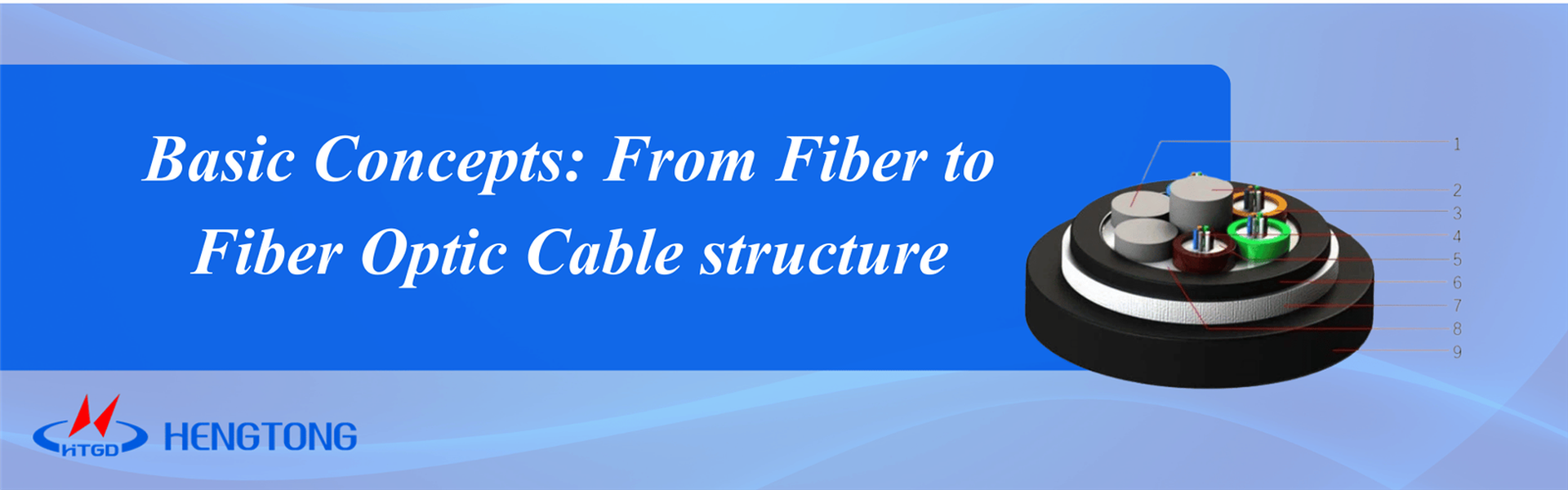
What is the difference between an optical fiber and a fiber optic cable structure?
Optical fiber (fiber / optical fiber)
A very thin glass strand that carries the light signal. It has its own micro-structure (core, cladding, coating) and defines the optical performance: single-mode or multimode, attenuation, bandwidth, etc.
Fiber optic cable
A complete product that combines, protects and reinforces one or more optical fibers. A typical fiber optic cable structure adds tight buffers or loose tubes, strength members, fillers and outer sheaths so the fibers can survive pulling, bending, moisture and fire in real installations.
Typical mistakes in projects
Treating fiber type (single-mode / multimode) as if it already defined the cable structure.
Looking only at fiber count (e.g. 24 cores) and ignoring whether you need an indoor, outdoor, armored or aerial fiber optic cable structure.
How does fiber optic cable structure appear in an end-to-end optical link?
From one transceiver to the other, a real link is built from several different elements, not a single cable type. A simplified structure chain looks like this:
Connector → Patch cord → Distribution cable → Trunk cable → Outdoor backbone cable
- Patch cord: short, flexible, tight-buffer cable for equipment connection.
- Distribution cable: indoor multi-fiber cable for risers and rooms.
- Trunk cable: higher-fiber-count cable for data halls or campus runs.
- Outdoor backbone cable: loose-tube or armored fiber optic cable structure for ducts, poles or direct burial.
Each step uses a different structure for its role and environment, which is why planning the structure path is a key part of fiber optic cable design.
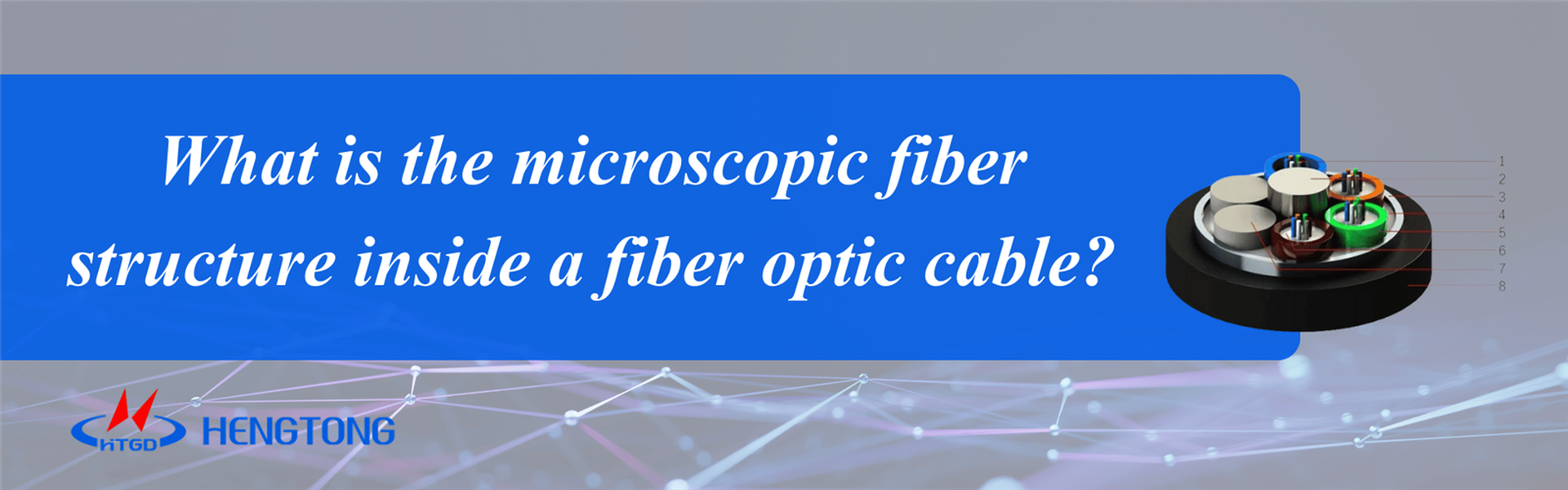
What is the microscopic fiber structure inside a fiber optic cable?
Even though a fiber optic cable can look very different on the outside, the microscopic fiber structure inside is surprisingly standard. A single communication fiber is built up in three main layers: core, cladding and primary coating. Understanding these layers makes it much easier to read specifications like 9/125 single-mode fiber or 50/125 multimode fiber and to choose the right product for your link.
What Is The Fiber Core And Why Do 9 μm / 50 μm / 62.5 μm Matter?
The core is the central glass region that carries the light and is the heart of the fiber optic core structure.
It guides light by total internal reflection at the core–cladding boundary.
Its diameter and index profile define:
Number of modes
Attenuation and dispersion
Bandwidth–distance performance
Typical core sizes:
9 μm – in 9/125 single-mode fiber (SMF)
50 μm – in 50/125 multimode fiber (MMF)
62.5 μm – in 62.5/125 multimode fiber (legacy LAN)
In "9/125", "50/125", "62.5/125", the first number is core, the second is cladding diameter (μm).
Refractive index & NA:
The core has slightly higher refractive index than the cladding, defining the numerical aperture (NA).
50/125 multimode fiber has higher NA, easier coupling and more tolerance to alignment.
9/125 single-mode has lower NA, supports one mode, and enables very long, high-bandwidth links.
What Does The Cladding Do And Why Is It Always 125 μm?
The cladding is a glass layer around the core with slightly lower refractive index.
It creates the index step for total internal reflection, keeping light in the core.
It defines the optical boundary: inside 125 μm is optical fiber structure, outside is protection.
125 μm cladding is standard for telecom/LAN fibers (9/125, 50/125, 62.5/125) and ensures:
Compatibility between different fiber types
Standard connectors, ferrules and splicing tools
High-yield fusion splicing across brands and grades
Bending loss (qualitative):
Tight bends let light leak from core into cladding, causing bending loss.
Smaller bend radius → higher loss.
Bend-insensitive fibers modify the cladding region to cut bending loss, crucial in high-density fiber optic cable structures (data centers, FTTH).
What Is The Primary Coating And Why Is 250 μm So Common?
Outside the cladding, the glass is protected by the primary coating.
Usually a dual-layer UV-cured acrylate: softer near glass, harder outside.
Main functions:
Micro-bend protection – cushions tiny stresses
Abrasion resistance – protects the glass surface
Moisture resistance – basic barrier before cabling
Typical outer diameter: 250 μm
Standard coated fiber is about 250 μm, used in most loose-tube cable structures and as a reference size for splicing hardware.
In many indoor and patch-cord designs, an extra tight buffer takes it up to 900 μm, making fibers easier to handle and terminate where density is less critical.
How Do Single-Mode And Multimode Fiber Structures Differ In Practice?
All standard fibers share 125 μm cladding and ~250 μm coating. The key structural difference is the core diameter and index profile:
Geometry & notation
9/125 SMF – ~9 μm core, 125 μm cladding
50/125 MMF – 50 μm core, 125 μm cladding
62.5/125 MMF – 62.5 μm core, 125 μm cladding
Bandwidth & distance
9/125 single-mode – very high bandwidth over tens/hundreds of km; used in long-haul, metro, access and many modern data center backbones.
50/125 multimode (OM3/OM4/OM5) – high bandwidth over shorter distances (e.g. 10G/40G/100G up to a few hundred meters), ideal for data halls and campus backbones.
62.5/125 multimode (OM1) – common in older LANs, suitable for legacy 1G and short links.
Typical applications
Single-mode 9/125:
Carrier & telecom networks
Building-to-building and campus backbones
Spine–leaf data center interconnects
50/125 multimode:
Short-reach high-speed links in data centers
High-density MPO/MTP patching
62.5/125 multimode:
Legacy enterprise cabling
Lower-speed links on existing infrastructure
In summary
All common fibers use 125 μm cladding and similar UV-cured coatings. The core size and index profile determine single-mode vs multimode behaviour, which then drives bandwidth, distance and transceiver choice. When designing a link or selecting a fiber optic cable structure, always match the fiber type (9/125, 50/125, 62.5/125) to the required distance, data rate and existing plant.
Basic Components of an Optical Cable Structure
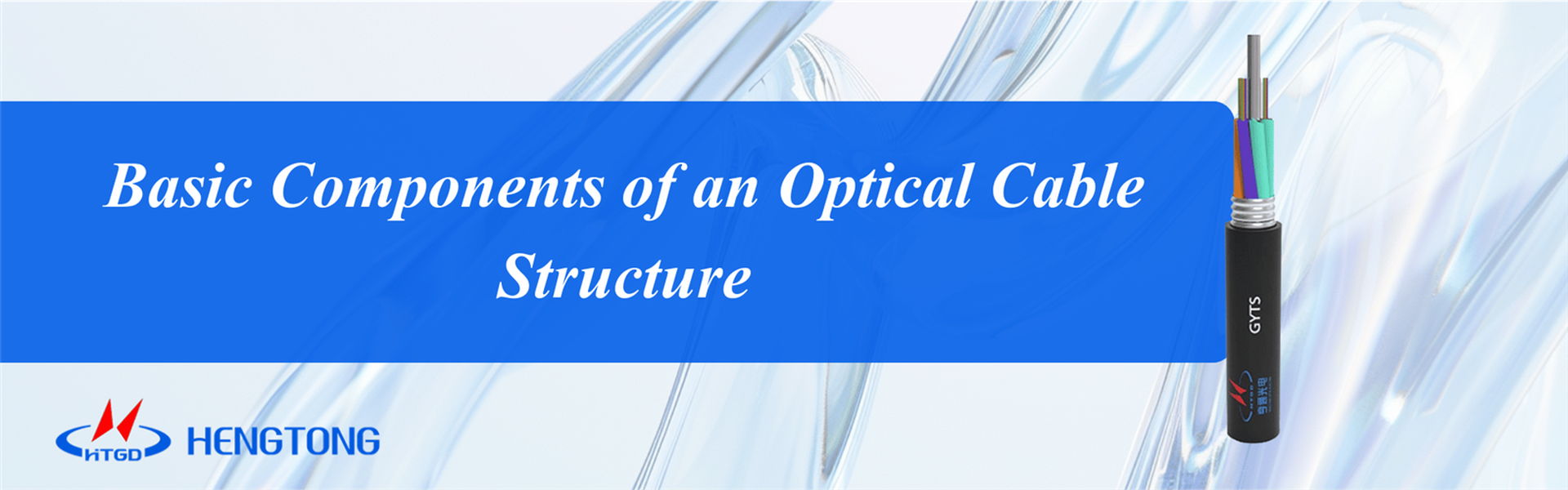
What is a buffer / tight-buffer layer in a fiber optic cable?
Definition & position
The buffer or tight buffer is a polymer layer applied directly over the 250 μm coated fiber, increasing the diameter to typically 900 μm. It is the first cable-level layer in many tight-buffer fiber optic cable structures.
Typical materials
PVC
LSZH (Low Smoke Zero Halogen) for indoor, fire-safe applications
Key advantages
Easy to fan out, branch and terminate individual fibers
Very convenient for indoor cabling, pigtails and patch cords where flexible handling is more important than maximum packing density
Main limitations
Not ideal for long outdoor routes or harsh environments
Usually used in short-to-medium indoor runs rather than long-distance outside plant cables
What is a loose tube in a fiber optic cable structure?
Structure form
In a loose-tube fiber optic cable structure, multiple 250 μm fibers are placed inside a PBT plastic tube. The tube may be:
Gel-filled (water-blocking gel)
Dry (water-swellable yarns or powders)
Main functions
Allows fibers to move freely inside the tube, decoupling them from external mechanical stress (tension, bending, temperature changes)
Provides an efficient way to implement water-blocking and moisture protection in outdoor cables
Gel-filled vs dry loose tube (key differences)
Gel-filled loose tube
Excellent long-term water-blocking
More cleaning work during splicing and termination
Dry loose tube
Cleaner and faster installation and splicing
Better handling at low temperatures, but requires careful design of dry water-blocking elements
What are fillers and central strength members (FRP / steel wire)?
Central strength member
Located in the center of many stranded loose-tube cable structures, typically made of:
FRP (Fiber Reinforced Plastic): dielectric, corrosion resistant, ideal where electrical insulation is needed
Steel wire or stranded steel: very high tensile strength, used where extra pulling capacity is required
Its role is to carry tensile loads and stabilize the cable geometry.
Fillers (ropes/rods)
Non-optical elements placed between loose tubes in a stranded design to:
Maintain roundness of the cable
Improve crush resistance
Support a consistent fiber optic cable structure for easier installation
Effect on multi-tube stranded designs
A well-designed combination of central strength member and fillers:
Keeps the cable cross-section round and stable
Improves bending performance and helps control minimum bend radius
What are outer strength members in a fiber optic cable?
Besides the central strength member, many cables use outer strength members to handle additional mechanical and environmental loads.
Aramid yarn (Kevlar® type)
High tensile strength, low weight
Often used in indoor tight-buffer cables, patch cords and pigtails
Helps protect fibers against pulling and can offer some rodent resistance
Glass fiber yarn
Provides tensile strength and rodent resistance
Naturally non-metallic and flame retardant, useful in fire-rated fiber optic cable structures
Steel wires / steel tapes
Strong protection against mechanical impact and rodent attacks
Used in steel wire armored or steel tape armored outdoor cables, especially for direct burial
Influence electrical characteristics of the cable, which must be considered in aerial or power-line environments (earthing, lightning, induced currents)
What is the outer sheath / jacket and why is it important?
The outer sheath (or jacket) is the visible outer layer of the fiber optic cable structure. It protects all internal components from the environment and provides identification.
Common materials and typical use
PE (Polyethylene):
Excellent weathering and UV resistance
Widely used in outdoor fiber optic cables (duct, direct buried, aerial)
PVC:
Low cost, easy processing
Often used in general-purpose indoor cables
LSZH (Low Smoke Zero Halogen):
Low smoke, halogen-free, enhanced fire safety
Used in indoor and indoor–outdoor cables where people and equipment protection is critical
Sheath thickness, color and marking
Thickness affects mechanical protection (crush, impact) and lifetime
Color helps differentiate cable types (e.g. yellow for single-mode, aqua for multimode in many data center practices)
Printed markings (manufacturer, fiber count, cable type, meter marks) are essential for identification and installation control
How does cable structure support fire performance and standards?
Fire performance of a fiber optic cable structure is not only about the material itself, but also about how the layers are combined.
Typical fire performance references
IEC and UL flame tests for riser, plenum and general-purpose cables
Local building codes specifying which fire-rated fiber optic cables can be used in risers, plenums, tunnels or public areas
How structure helps achieve fire performance
Selecting suitable jacket materials (e.g. LSZH, special flame-retardant compounds)
Using flame-retardant fillers, tapes and yarns inside the cable
Designing the overall structure so that it limits flame spread and smoke generation while still meeting mechanical and optical requirements
In practice, the choice of buffer, loose tube, strength members, fillers and sheath materials all work together to meet both functional needs and the required fire performance level for a given installation.
the main indoor fiber optic cable structures

What are the main indoor fiber optic cable structures?
Indoor networks usually rely on three basic indoor fiber optic cable structures: simplex/duplex tight-buffer cables, distribution cables and breakout cables. They use similar materials, but their core designs and typical applications are quite different.
What is a simplex / duplex tight-buffer indoor fiber optic cable?
A simplex or duplex tight-buffer cable has 1 or 2 tight-buffered fibers, each built up from a 250 μm coated fiber plus a 900 μm tight buffer, strength yarn (often aramid) and a small outer jacket. This compact tight-buffer indoor fiber optic cable structure is highly flexible and easy to connectorize.
Typical applications include:
Patch cords between equipment ports and patch panels
Pigtails for splicing inside ODFs or distribution boxes
Short equipment-to-equipment connections inside racks or cabinets
Because it is light, flexible and easy to handle, it is not intended for long backbone runs or harsh mechanical conditions.
What is a distribution indoor fiber optic cable?
A distribution cable groups multiple tight-buffer fibers (e.g. 6, 12, 24 cores) inside a single outer jacket, usually with aramid yarn strength members around the bundle. This creates a compact, easy-to-route indoor distribution fiber optic cable structure.
Typical scenarios include:
Floor-to-floor riser cabling in office or commercial buildings
Telecom rooms and weak-current shafts, where several fibers must be pulled together
Intra-room backbones in data centers and equipment rooms
Fibers can be directly terminated with connectors after fan-out, or spliced via pigtails, making this structure a standard choice for building backbone and horizontal cabling.
What is a breakout indoor fiber optic cable?
A breakout cable consists of multiple individually jacketed subunits (each similar to a small simplex cable) gathered under a common outer jacket. In other words, each fiber has its own mini cable, then all subunits are bundled together, forming a very robust indoor breakout fiber optic cable structure.
This design is suitable for:
Installations where fibers need to be frequently fanned out and directly terminated as individual patch cords
Routes with higher pulling forces or more demanding mechanical conditions
Industrial or enterprise environments where a "plug-and-play" style of fiber distribution is preferred
Because each subunit is mechanically strong, breakout cables can simplify installation and reduce the need for additional fan-out kits, at the cost of a larger overall diameter and higher material usage.
What are the main outdoor fiber optic cable structures?
What is a central tube outdoor fiber optic cable?
A central tube cable uses one large loose tube that holds all fibers together, usually with water-blocking gel or dry elements around them. This simple outdoor fiber optic cable structure keeps the design compact and cost-effective.
It is well suited to short and medium-distance duct installations, access networks and cost-sensitive projects, where moderate fiber counts and standard pulling forces are expected.
What is a stranded loose tube fiber optic cable?
A stranded loose tube cable arranges multiple smaller loose tubes helically around a central strength member (FRP or steel). Each tube contains a group of fibers, with fillers used to keep a round cable profile and improve crush resistance.
This stranded loose tube fiber optic cable structure is ideal for long-distance backbone routes and difficult terrains. It offers:
High fiber-count scalability (hundreds of fibers)
Very good tensile and crush performance, suitable for long pulls in ducts and varied outdoor environments
What is an armored outdoor fiber optic cable structure?
An armored cable adds a layer of steel tape or steel wire armor outside the core cable structure. The armor protects against mechanical impact, stones, construction damage and rodent attacks.
Typical applications include direct-buried fiber optic cables, heavy-duty ducts, industrial plants and roadside or yard sections where external forces are higher. When using steel tape armored or steel wire armored fiber optic cable, designers must pay attention to:
Minimum bend radius, which is larger than for non-armored cables
Earthing and bonding requirements, especially where metallic elements are present in long outdoor routes
What are the main aerial and special fiber optic cable structures?
What is an ADSS all-dielectric self-supporting cable?
ADSS (All-Dielectric Self-Supporting) cable is an aerial fiber optic cable structure designed to be self-supporting between poles or towers without any metal messenger wire. It uses high-strength non-metallic strength members and a specially engineered jacket.
Key features of ADSS cable include:
Fully non-metallic design, immune to induced currents near power lines
Strong strength members to handle span length, wind and ice loading
Typical applications are power line corridors, long-span routes in hilly or mountainous areas, and utility networks where the fiber must share the same route as overhead conductors.
What is a figure-8 aerial fiber optic cable?
A figure-8 fiber optic cable combines a standard communication cable with a separate steel messenger strand in one "8"-shaped cross-section. The messenger carries the mechanical load, while the fiber cable part focuses on optical and environmental protection.
This figure-8 aerial fiber optic cable structure is widely used for municipal roads, access networks and short- to medium-span aerial routes, where installation is done along poles or building facades and a simple, low-cost support solution is needed.
What is a fire-resistant or fire-survival fiber optic cable?
A fire-resistant (fire-survival) fiber optic cable is designed to maintain circuit integrity under fire conditions for a specified time. Structurally, it may use mica tapes, ceramic-forming layers or special fire-resistant compounds wrapped around the fibers or core, combined with flame-retardant sheaths.
These fire-resistant fiber optic cable structures are used in tunnels, metro systems, mines, evacuation routes and critical fire alarm or emergency communication systems, where the cable must continue to operate long enough to support safe shutdown and evacuation.
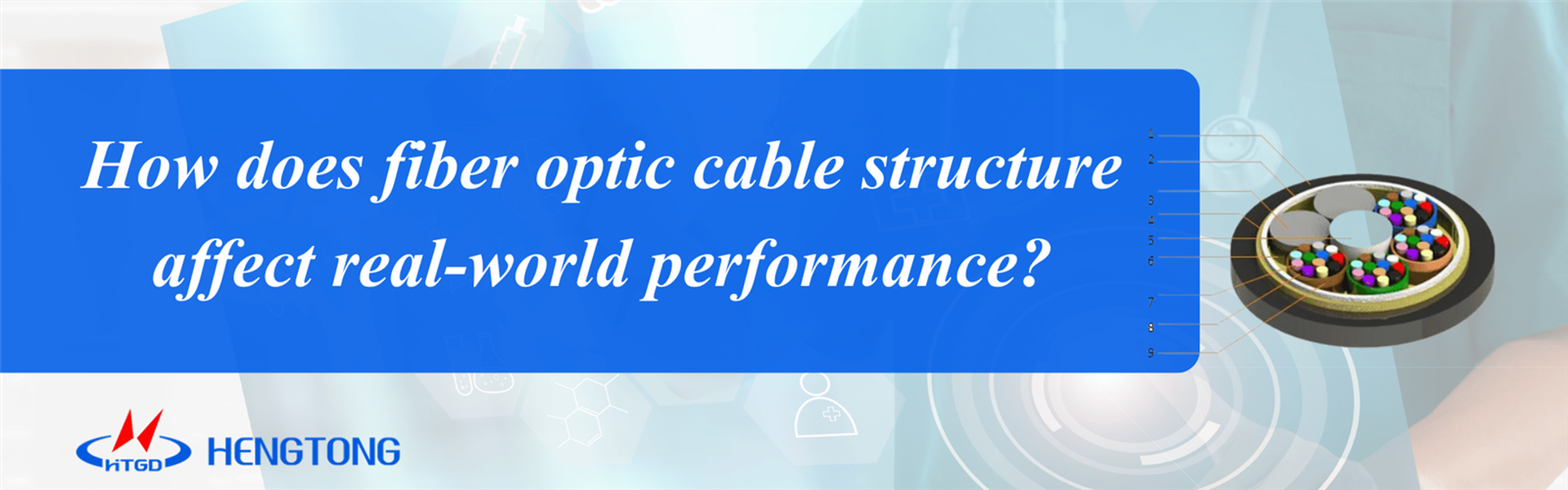
How does fiber optic cable structure affect real-world performance?
A fiber optic cable never works on "cross-section beauty" alone. The fiber optic cable structure directly controls how the link behaves optically, mechanically, environmentally and in terms of safety and compliance over its entire service life.
How Does Cable Structure Influence Optical Performance?
The fiber defines basic attenuation and bandwidth, but the cable structure decides how stable that performance is in the field.
Bending loss (micro-bend / macro-bend)
Poor core design, hard fillers or over-tight tubes create micro-bends, increasing loss even when the cable looks straight. Tight routing in trays and panels creates macro-bends, where light leaks from the core. Good structures use soft cushions, controlled tube lay and suitable materials to minimize both types of bending loss.
Temperature dependence
Different materials expand and shrink differently with temperature. A robust cable lets fibers "float" in loose tubes or buffered layers, so thermal movement doesn't turn into stress on the glass, keeping attenuation and OTDR traces stable across the rated temperature range.
Example: bend-insensitive fibers in high-density cabling
In data centers and FTTH, tight bends and compact routing are unavoidable. Using bend-insensitive single-mode or multimode fibers inside appropriate high-density cable structures cuts extra bending loss and allows smaller panels and trays without killing the link budget.
How Does Structure Determine Mechanical Performance?
Mechanical performance is almost entirely a function of how strength members, tubes, fillers, armor and sheaths are arranged.
Tensile, crush and impact resistance
The type and position of central strength members, aramid / glass yarns and armor set the pulling tension and crush/impact ratings. Outdoor and backbone cables use heavier structures and higher ratings than light indoor cords.
Bend radius vs. structure type
Tight-buffer vs. loose-tube: indoor tight-buffer cables are flexible and easy to route, but fibers sit closer to mechanical stress, so bend radius must be respected. Loose-tube cables protect fibers better, but larger diameters and stiffer layers increase minimum bend radius.
Armored vs. non-armored: armored fiber optic cables resist crush and impact very well, but are stiffer and tolerate larger bends only. Non-armored designs are lighter and easier to route, but not suitable for direct burial or very harsh conditions.
In short, tension, crush strength and bend radius all come from the cross-section layout of the fiber optic cable structure.
How Does Cable Structure Support Environmental Performance?
Environmental performance shows how well a cable deals with water, rodents, UV, temperature and aging.
Water and moisture protection
Gel-filled loose tubes, dry water-swellable yarns/powders and moisture barriers work together to stop water from entering and migrating. Outdoor structures usually combine tube filling, core filling and swellable elements.
Rodent and mechanical protection
Steel armor, glass yarns or rodent-resistant jackets protect against gnawing and external damage. The choice depends on whether a metallic design is acceptable or a fully dielectric cable is required.
UV and weathering resistance
PE jackets with stabilizers protect the cable against sunlight and outdoor weather. This is critical for aerial and exposed duct runs over many years.
Temperature range and aging
Tube, filler and sheath materials must stay flexible and strong over the specified temperature range. A good outdoor fiber optic cable structure minimizes shrinkage, embrittlement and long-term stress on fibers.
How Does Structure Relate To Safety And Compliance?
Safety and code compliance are directly linked to the materials and layering inside the cable.
Flame-retardant and fire-resistant designs
Riser, plenum, tunnel and public-area cables must meet flame-spread and smoke limits. This is achieved with LSZH or special flame-retardant jackets, plus flame-retardant fillers, tapes and strength members. Fire-survival designs add mica tapes or ceramic-forming layers so circuits can keep working during a fire.
Low-smoke and halogen-free requirements
Modern building and data-center standards often demand low-smoke, zero-halogen (LSZH) materials to reduce toxic fumes and equipment damage. This drives both jacket and internal material choices and therefore the entire fiber optic cable structure.
So, choosing the right fiber optic cable structure is never just about optical and mechanical performance; it is also about meeting all relevant fire, safety and environmental regulations for the specific installation.
Engineering examples: how fiber optic cable structure works in real projects

Case 1 – How optimizing campus backbone fiber optic cable structure cut maintenance work
Project background
A medium-size campus with several office buildings and one central equipment room. Over the years, different contractors installed different types of fiber cables between buildings and floors.
Original situation and issues
Mixed indoor and outdoor fiber optic cable structures in the same duct routes
Different armor types, sheath colors and fiber counts with poor documentation
Difficult fault location and very hard to plan capacity or reuse spare fibers
Optimization strategy
Standardize a single outdoor backbone loose-tube structure for all building-to-building routes (duct or direct-buried)
Standardize one indoor riser cable structure for all vertical shafts and floor backbones inside buildings
Result
Fewer cable types and clearer labeling reduced maintenance time and error risk
Easier planning for future expansion, because every new link uses the same backbone and riser fiber optic cable structures
Spare fibers can be reused more confidently, with better visibility of the overall campus fiber plant
Case 2 – Choosing the right indoor fiber optic cable structure for a high-density data center
Background
A high-density data center with multiple data halls and several equipment rooms needed to support rapid growth from 10G to 40G and 100G links, with strict space and routing constraints.
Structure strategy
Between buildings / equipment rooms:
Use outdoor loose-tube backbone cables in ducts for all building-to-building and room-to-room runs. This provides high fiber counts, good tensile and crush performance, and easy future pulls.
Inside data halls:
Use bend-insensitive fibers in high-density indoor cable structures (riser/distribution + MPO/MTP trunks) to support tight routing, small bend radii and dense patch panels.
Benefits
Simplified installation, because each segment (inter-building vs in-hall) has a clearly defined fiber optic cable structure
Easier upgrades from 10G to 40G/100G by re-using the same high-density indoor cabling and simply changing transceivers and patching schemes
Faster fault location, since backbone and in-hall cabling are standardized and well-documented, with consistent structure and labeling across all halls and rooms
FAQ: Common questions about fiber optic cable structure
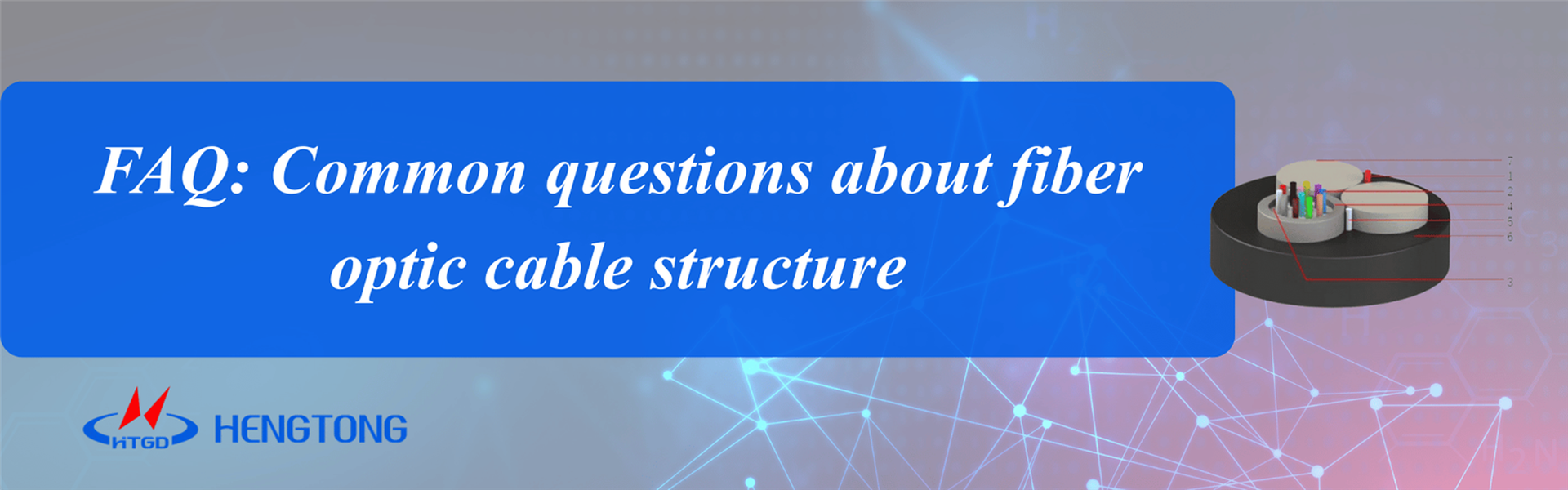
What is the difference between fiber type (single-mode / multimode) and fiber optic cable structure?
Fiber type (single-mode or multimode, e.g. 9/125 or 50/125) describes the glass fiber itself and determines optical performance such as bandwidth and distance. Fiber optic cable structure describes how one or more fibers are built into a cable: loose tube or tight buffer, strength members, armor, sheath materials, etc. In short, fiber type = optical behaviour; cable structure = mechanical and environmental behaviour.
Why can't I simply use an indoor fiber optic cable for outdoor direct burial?
Indoor fiber optic cables are designed around fire performance, flexibility and easy termination, not long-term contact with water, soil, UV or heavy external loads. They usually lack loose tubes, water-blocking elements, robust jackets and armor that an outdoor fiber optic cable structure requires. Direct-burying an indoor cable risks water ingress, jacket cracking and early failure.
Is an armored fiber optic cable always better? When is it over-designed?
An armored fiber optic cable structure (steel tape or steel wire) is essential for direct burial, rocky ducts, industrial yards or areas with severe rodent attack. However, in clean indoor environments, in trays or inside building risers, armor adds cost, weight and stiffness without real benefit. In those cases, a non-armored indoor or indoor–outdoor structure is usually more economical and easier to install.
What is the structural difference between LSZH and PVC cable jackets?
PVC jackets are low-cost and easy to process, but they contain halogens and can generate dense smoke and corrosive gases in a fire. LSZH fiber optic cable jackets use special halogen-free, flame-retardant compounds that limit flame spread and drastically reduce smoke and toxic emissions. Structurally, this means different sheath materials and often additional flame-retardant fillers or tapes inside the cable to meet building and data-center fire codes.
How are high-fiber-count cables (e.g. 288 or 432 cores) usually built?
High-fiber-count designs like 288-core or 432-core fiber optic cables are typically based on stranded loose-tube or ribbon structures around a central strength member. Multiple tubes (or fiber ribbons) are helically laid with fillers to keep a round profile and protect fibers from stress. This high-density fiber optic cable structure provides scalability for backbone routes while keeping tensile and crush performance within specification.
Can one fiber optic cable structure be used both indoors and outdoors?
Yes, some indoor–outdoor fiber optic cable structures are specifically designed to meet outdoor environmental needs (UV, moisture) while also satisfying indoor fire ratings (e.g. LSZH). They often use loose tubes and water blocking like an outdoor cable, combined with a fire-rated jacket. This is useful for building entrances and campus links where a single cable passes from outside directly into risers or equipment rooms.
How does cable structure affect minimum bend radius and handling?
The stiffer and more layered the fiber optic cable structure (large diameter, armor, thick jackets), the larger the minimum bend radius will be. Lightweight indoor distribution or patch cables allow tighter routing around panels and trays, while armored or large loose-tube backbones must be bent more gently to avoid additional loss or damage. Always check the manufacturer's recommended bend radius for each specific structure.
When should I choose bend-insensitive fibers and high-density indoor structures?
You should consider bend-insensitive single-mode or multimode fibers when you know the installation will involve tight spaces, dense patching or small-radius routing-typical in data centers, FTTH splitters and high-density racks. In these scenarios, pairing bend-insensitive fibers with a suitable high-density indoor fiber optic cable structure helps protect your loss budget, even when cables are coiled or routed around sharp corners.
Related products


