





The OPGW tensile strength test is a critical assessment used to verify both the mechanical reliability and optical performance of Optical Ground Wire (OPGW) when subjected to tension. As OPGW cables serve dual roles-providing grounding for power transmission lines while carrying communication fibers-their ability to withstand long-term mechanical loads is essential for safe operation. Through controlled loading steps expressed as percentages of the Rated Tensile Strength (RTS), this test evaluates fiber attenuation stability, cable elongation, and strain behavior under real operating conditions. Ensuring compliance with standards such as GB/T 1179 and DL/T 832, the tensile strength test provides the foundational data required for line design, installation safety, and long-term cable performance.
What is the OPGW Tensile Strength Test?

The OPGW tensile strength test is a type test and factory acceptance test used to evaluate how an optical ground wire (OPGW) behaves when it is pulled by tension.
In the test, a full-length OPGW sample (typically ≥100 m) is mounted on a horizontal tensile testing machine. Tension is gradually increased to specified levels expressed as a percentage of the Rated Tensile Strength (RTS).
While the cable is being pulled, instruments such as an OTDR and optical power meter continuously measure:
Optical attenuation of the fibers
Fiber strain
Cable strain
By plotting stress–strain curves and attenuation–stress curves, the test determines:
The stress level at which the fibers start to strain
The maximum allowable strain and elongation
The relationship between cable load and optical performance
The ultimate breaking strength of the cable
Why do we perform the OPGW Tensile Strength Test?
Verify optical performance under mechanical load
Power lines subject the OPGW to tension from self-weight, wind, ice, and line angle. The test confirms that fiber attenuation does not increase and that no permanent fiber strain occurs at service loads (EDS, MAT, UOS).
Check mechanical safety margins
By loading the cable up to high percentages of RTS and finally to breaking, the test verifies that the real breaking strength meets or exceeds the design RTS and that there is enough safety margin between everyday operating tension and ultimate strength.
Confirm fiber excess length design
From the stress–strain curve, we can find the point where fibers begin to follow the cable strain. This verifies whether the fiber excess length is correctly designed so that, under normal operation, the cable stretches but fibers remain almost strain-free.
Validate compliance with standards
The test demonstrates that the OPGW meets the requirements of standards such as GB/T 1179 and DL/T 832, which specify limits for fiber strain, additional loss, and mechanical loads at different tension levels.
Reduce installation and operation risk
Knowing how the cable behaves at each load step helps engineers set safe stringing tensions and sag-tension charts, reducing the risk of fiber damage during installation and long-term operation.
How to Conduct the OPGW Tensile Strength Test & Stress–Strain Test?
Tensile Strength Test Purpose
The tensile strength and stress–strain test is used to determine the optical characteristics (changes in optical attenuation) of the optical unit under tensile load, as well as several mechanical characteristics such as the stress limit. The tensile strength and stress–strain test shall be carried out according to GB/T 1179-2017 and DL/T 832-2016.
Tensile Strength Test Equipment
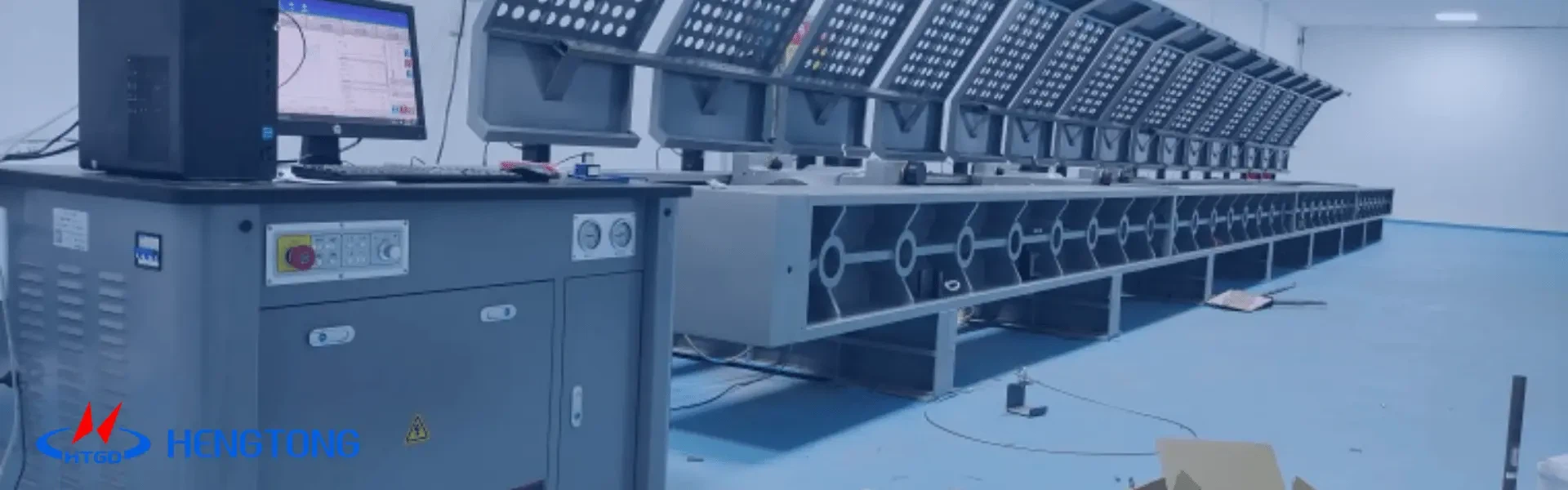
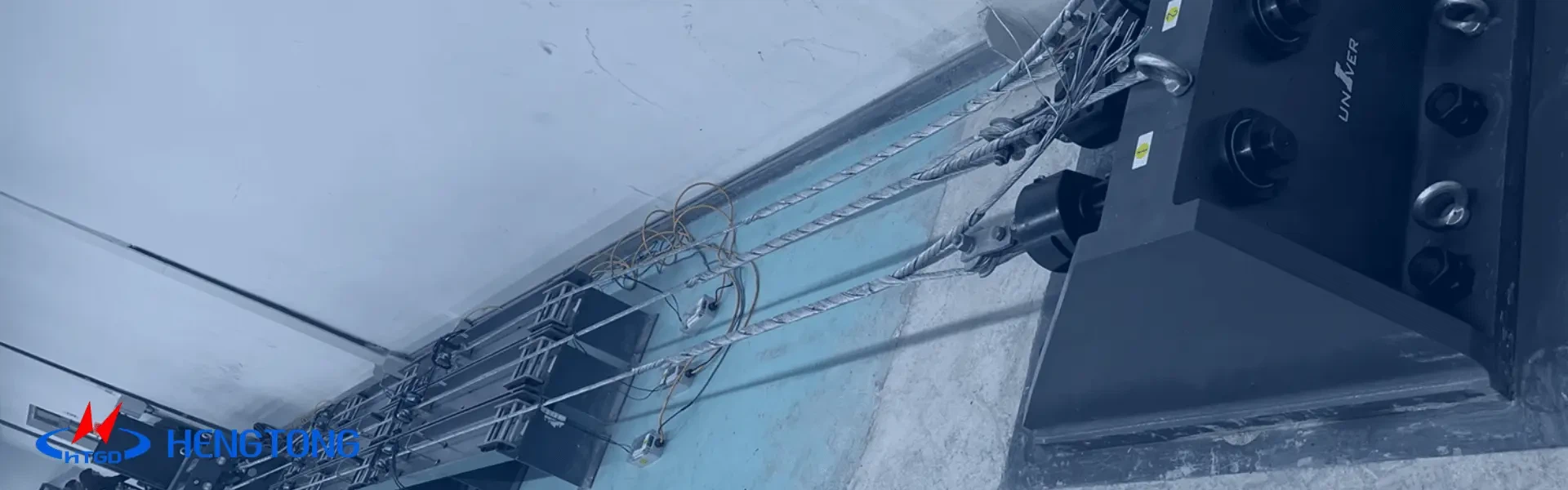
The tensile strength and stress–strain test device consists of a horizontal tensile testing machine (as shown in Figure 1-1), an optical fiber dispersion tester, and an optical time-domain reflectometer (OTDR), forming an integrated optical fiber test system (as shown in Figure 1-2). During optical fiber attenuation measurement, the optical source and the optical power meter shall be installed at both ends of the tested optical fiber. Before applying the load, both ends of the test sample shall be fixed with engineering anchoring clamps to ensure that no relative displacement occurs between the optical unit and the optical cable.
Tensile Strength Test Methods
During the test, the optical fiber length shall not be less than 100 m. Install the optical cable sample on the tensile testing machine, splice the optical fibers into a single loop, and measure the loss of the optical fiber at the wavelength of 1550 nm when different loads are applied. Before and after applying the load, the optical fiber shall be relaxed to the initial load. During measurement, the cable load, optical fiber loss, optical fiber strain, and cable strain shall be monitored at a sampling frequency of 1 Hz. The operating steps are as follows:
Increase the initial load to 2% of the rated tensile strength (RTS), straighten the cable, then remove the load, and install the strain gauges under no-load conditions.
Increase the load to 30% RTS, maintain for 30 min, take readings at 5 min, 10 min, 15 min, and 30 min, then unload to the initial load.
Reapply the load to 50% RTS, maintain for 1 h, take readings at 5 min, 10 min, 15 min, 30 min, 45 min, and 60 min, then unload to the initial load.
Reapply the load to 70% RTS, maintain for 1 h, take readings at 5 min, 10 min, 15 min, 30 min, 45 min, and 60 min, then unload to the initial load.
Reapply the load to 85% RTS, maintain for 1 h, take readings at 5 min, 10 min, 15 min, 30 min, 45 min, and 60 min, then unload to the initial load.
Reapply the load until the cable breaks. Before the load evenly increases to 85% RTS, take readings of the tensile force and elongation at specified intervals.
During the test period, the load shall be applied uniformly at a constant rate, reaching 30% RTS within 1–2 min.
The test measurement obtains the optical fiber attenuation change, optical fiber strain, and strain limit data as shown in Figure 1-3.
FAQ – OPGW Tensile Strength Test
What parameters are typically controlled during the test?
Main parameters include applied tension (as % RTS), cable elongation, fiber strain, optical attenuation at a specified wavelength (often 1550 nm), loading rate, and holding time at each load level.
What do EDS, MAT, UOS, and RTS mean?
RTS (Rated Tensile Strength): The reference maximum tensile strength of the OPGW, based on its metallic cross-section.
EDS (Everyday Stress): Typical long-term operating tension, usually 18–25% RTS.
MAT (Maximum Allowable Tension): Maximum tension that may occur under severe but allowable conditions (e.g., heavy ice), often around 40% RTS.
UOS (Ultimate Operation Strength): Upper limit of operating tension (e.g., 60% RTS) beyond which service is not allowed.
How long should the OPGW sample be for the test?
According to typical procedures, the fiber length should not be less than 100 m, ensuring the measurement is representative and that the OTDR/attenuation readings are accurate.
How is failure defined in the tensile strength test?
Typical failure criteria include:
Fiber strain exceeding specified limits at EDS/MAT/UOS levels
Additional optical loss exceeding the specified value and not recovering after unloading
Premature breaking of any cable component (aluminum-clad steel, aluminum alloy wires, fiber unit) below the required percentage of RTS
Relative slip between cable, fiber unit, and fibers.
What is the difference between a simple tensile test and a stress–strain test?
A simple tensile test may only determine the breaking strength at one continuous pull. The stress–strain test uses multiple load and unload steps at different %RTS, records strain and attenuation, and provides the full load–elongation and load–attenuation curves, giving much more design information.
Why are multiple hold periods (5 min, 10 min, 30 min, etc.) needed?
Holding the load for different times simulates short-term and medium-term loading and allows observation of time-dependent effects such as creep, relaxation, and delayed fiber attenuation changes.
How are the results used in line design?
Engineers use the stress–strain curves and verified limits to:
Calculate sag and tension under various weather conditions
Set maximum stringing tension during installation
Check that, in all design cases, the operating point stays within the allowed strain and attenuation limits.
Is the tensile strength test done for every production length?
Full type tests are usually done for new designs or major design changes. For routine factory acceptance, selected production lengths are tested according to the contract and standards to confirm consistency of mechanical and optical performance.
Related Articles
Related products


