

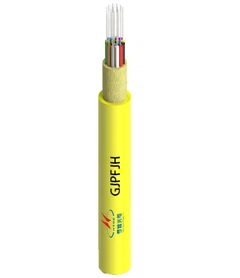




Most buried fiber runs on flat, low-traffic ground sit around 0.8 m (about 24 inches) deep, but there is no single universal number. Depth is driven by soil type, surface activity, frost conditions, traffic load, and local code. As a rough working guide, plan for roughly 0.8 m in normal idle ground, 1.0 m or more under farmland, 1.0–1.2 m with conduit under roads and driveways, and at least 0.3 m below the local frost line in cold regions. The rest of this guide breaks each scenario down, explains the difference between minimum and recommended depth, and covers the protection steps that matter as much as depth itself.
Burial Depth Summary Table
| Installation environment | Typical depth (metric) | Typical depth (US practice) | Key protection |
|---|---|---|---|
| Normal / idle soil, foot traffic only | ~0.8 m | ~24 in (0.6 m) minimum | Sand bedding + warning tape |
| Suburban / rural open ground | ~0.7–0.8 m | 18–24 in | Warning tape + route markers |
| Farmland / paddy / cultivated land | ≥1.0 m | 24–36 in or deeper | Armored cable, deeper trench |
| Road, driveway, or rail crossing | 1.0–1.2 m | 30–48 in | Conduit / duct required |
| Rocky, gravel, or sandy soil | 0.8–1.0 m | per local code | Sand bedding, armored or ducted |
| Cold / frozen regions | ≥0.3 m below frost line (often 1.5–2.0 m total in severe zones) | below local frost line (often 36 in+) | Anti-frost trench design |

Why Burial Depth Matters
The purpose of a correctly chosen depth is simple: keep the cable clear of mechanical damage, frost heave, farming activity, construction disturbance, and surface erosion. Optical fiber is not more "fragile" than power cable in every sense, but the glass is more sensitive to bending, crushing, and microbending loss, and a broken fiber core usually means permanent signal loss and a splice-based repair rather than a quick patch. Depth is therefore a design decision, not just a trench detail-and it is the foundation of a reliable underground fiber optic cable route.
Going too shallow invites repeated damage and outages; going deeper than needed wastes labor, materials, and budget. The goal is the right depth for the conditions, backed by proper bedding and marking.
How Deep Should Fiber Optic Cable Be Buried in Normal Soil?
For ordinary and hard soil that only sees foot traffic, a burial depth of about 0.8 m is a common, safe default. In suburban, rural, and residential open areas with pedestrian-only use, some codes permit roughly 0.7 m, but 0.8 m remains the safer working target because it leaves more margin against future landscaping or accidental digging. In US practice, the widely cited minimum for direct burial is around 24 inches (0.6 m), with local rules and the 811 process taking precedence.
Burial Depth for Farmland and Cultivated Land
Farmland, paddy fields, and cultivated ground call for deeper placement-typically 1.0 m or more. Plowing, tilling, irrigation work, and machinery routinely disturb the top 0.6–0.8 m of soil, so a shallow cable is much more likely to be struck during planting or harvesting. In agricultural corridors it is common to combine extra depth with a ruggedized or direct burial fiber optic cable so the jacket and armor can absorb soil movement and incidental contact.
Fiber Optic Cable Burial Depth Under Roads and Driveways
Crossings under roads, highways, rural vehicle lanes, driveways, and railways are among the highest-risk points on any route. Here, plan for 1.0–1.2 m of cover and install the cable inside protective conduit rather than direct-buried. Wheel loads, road rolling, and future resurfacing or repair work are common causes of sudden outages at crossings, so a duct fiber optic cable in HDPE or PVC conduit is the standard approach. Conduit also lets you pull replacement or additional fibers later without re-trenching the crossing.

How the Frost Line Affects Burial Depth in Cold Regions
In cold climates, the frost line matters more than a fixed number. A widely used rule is to lay the cable at least 0.3 m below the local frost line so that frost heave and thaw settlement do not stretch or strain the fiber. In severe-cold zones this can push total depth to 1.5–2.0 m, depending on local frost-depth data and municipal code. Because frost penetration varies widely by region, always design against measured local frost data rather than a single assumed value.
Burial Depth in Rocky, Gravel, and Sandy Soil
Loose, rocky, gravelly, or sandy ground puts extra strain on the cable jacket and increases puncture risk, so depth should generally stay in the 0.8–1.0 m range even where the surface looks low-risk. In these conditions, a proper sand or fine-soil bed is essential, and a loose tube fiber optic cable or an armored construction is often preferred for its tolerance to soil movement and mechanical stress.
Minimum Depth vs Recommended Depth
Search terms often ask for the "minimum depth," but on real projects it helps to separate two ideas. Minimum depth is the code floor-the least cover a standard permits for a given scenario. Recommended depth is the design target engineers actually build to, adding margin for future surface activity, resurfacing, or landscaping. Building only to the minimum leaves little room for error, which is why most designs sit above the floor for the relevant environment.
Direct Burial vs Conduit (Duct) Installation
There are two main ways to place fiber underground, and depth interacts with both:
- Direct burial – a ruggedized, usually armored cable is laid straight into the trench. It saves conduit cost and works well on open ground, farmland, and long rural runs where future re-pulls are unlikely.
- Conduit / duct installation – the cable is pulled through HDPE or PVC pipe (or a duct bank at crossings). It adds mechanical protection, isolates the cable from soil and moisture, and makes future maintenance and upgrades far easier.
A common pattern is direct burial along the route with ducted sections under roads, driveways, and other obstacles. For a fuller walkthrough of trenching, bedding, and pulling, see our guide on how fiber optic cable is installed underground.

Depth Is Not Enough: Protection Measures That Prevent Failures
On real job sites, depth is only part of the story. The combination of trench depth, backfill quality, and clear marking is what actually protects the fiber-a shallow trench with clean backfill and good markers is often safer than a deep trench full of rubble and no warning tape. Standard safeguards include:
- Sand bedding: lay roughly 10–15 cm of fine sand or soft soil at the trench bottom (and over the cable) so sharp stones cannot puncture the jacket during backfilling.
- Warning tape: place detectable warning tape above the cable, commonly around 20–40 cm below the surface, so future excavators can see the line before their tools reach it.
- Route markers: install marker posts at turns, joints, and road crossings, and keep accurate as-built records of depth changes and splice locations.
- Clean backfill: avoid backfilling directly against the cable with stones or construction debris.
Choosing the Right Underground Cable
Depth protects the route; the cable construction protects the fiber. Match the cable to the environment:
- Armored cable for direct burial, farmland, and rocky ground, where a steel-tape or steel-wire layer resists crushing and soil movement. See how to select the right build in our overview of armored fiber optic cable options.
- Anti-rodent cable where gnawing animals are a known risk; an anti-rodent fiber optic cable adds a hardened barrier that plain jackets do not provide.
- Duct cable for conduit and crossing sections, optimized for pulling through pipe.
- Loose tube cable for moisture resistance and temperature stability on long outdoor runs.
Standards and Local Code Compliance
Always design to the governing local telecom, road, municipal, and utility codes first-there is no genuinely universal "one-size-fits-all" depth. In China, the current reference is YD/T 5102-2024 (Technical specifications for telecommunication line engineering), which took effect on 1 April 2025 and replaced the older YD 5102-2010 and YD 5121-2010; its status and scope are listed on the national standards registry. GB 51171-2016 is the corresponding acceptance code (验收规范), used to verify completed line engineering rather than as a standalone design manual.
For international engineering practice, the Fiber Optic Association's outside-plant construction reference is a useful educational source on underground methods, and in the United States you should always request a free utility locate through 811 before you dig so existing lines are marked before excavation begins.
Common Mistakes in Underground Fiber Installation
- Using indoor or non-armored cable for direct burial.
- Skipping sand bedding in rocky or stony soil.
- Omitting warning tape or route markers, which raises the risk of accidental excavator cuts.
- Running a road or driveway crossing without conduit.
- Ignoring local frost-line data in cold regions.
- Building to the bare minimum depth with no margin for future surface work.
Field Engineer's Note
On agricultural jobs, the most frequent avoidable cut we see is a farmland run placed at "normal-ground" depth of around 0.8 m: it clears foot traffic but sits right in the zone that deep plowing disturbs, so the extra step down to 1.0 m or more pays for itself the first harvest season. Similarly, at road crossings the failures rarely happen on day one-they show up years later during resurfacing, which is exactly why the conduit and the extra cover depth are worth the up-front cost.
FAQ
Can fiber optic cable be buried directly in the ground?
Yes, when you use a cable rated for direct burial-typically an armored construction with a steel-tape or steel-wire layer and water-blocking. Standard indoor or non-armored cable should not be direct-buried, because its jacket is not designed for soil pressure, moisture, and rodents.
How deep should fiber optic cable be buried under a driveway?
Treat a driveway like a light road crossing: aim for roughly 1.0–1.2 m (about 30–48 inches in US practice) and run the cable inside conduit so wheel loads and future repaving do not damage it.
Does direct burial fiber need conduit?
Not everywhere. A proper armored direct-burial cable can go straight into open-ground trenches without conduit. Conduit is recommended at crossings and wherever you want easier future maintenance or the option to pull additional fibers later.
What happens if fiber optic cable is buried too shallow?
Shallow cable is far more exposed to plowing, digging, vehicle loads, and frost heave. The likely results are repeated faults, service outages, and splice-based repairs-usually more disruptive and costly than getting the depth right the first time.
Is there a single minimum burial depth for fiber optic cable?
No. The minimum depends on the environment and the governing code. Common reference points are around 0.6–0.8 m for low-traffic ground and 1.0–1.2 m with conduit at crossings, but the local standard-and, in the US, the 811 locate process-always takes precedence.
Key Takeaways
About 0.8 m for normal idle ground, 1.0 m or more for farmland and busy suburbs, 1.0–1.2 m with conduit for roads and driveways, and well below the frost line in cold regions-then back the depth with sand bedding, warning tape, and route markers. Correct burial depth is not about digging deeper; it is about digging to the conditions. For any specific project, confirm the final depth against your local telecom, road, municipal, and utility codes.