






Yes, you can splice fiber optic cable. Splicing means joining two fiber optic cables to create a continuous path for data. You might need to splice when restoring a damaged connection or extending a network. This process plays a crucial role as more governments and telecom companies invest in fiber infrastructure. With over 5.3 billion internet users worldwide and growing demand for reliable broadband, fiber optic cable splicing ensures fast, stable communication.
Key Takeaways
- Splicing fiber optic cables creates a continuous data path, essential for high-speed communication and network reliability.
- Fusion splicing offers the lowest signal loss and highest durability, making it ideal for long-distance connections.
- Mechanical splicing is faster and more cost-effective for temporary repairs, but it may result in higher signal loss.
- Proper preparation and cleaning of fiber ends are crucial for achieving high-quality splices and minimizing signal loss.
- Regular maintenance and inspections help prevent issues like moisture infiltration and fiber misalignment, ensuring long-term network performance.
Fiber Optic Cable Splicing
What Is Splicing
Splicing in the context of fiber optic cable means joining two optical fibers to form a continuous path for data transmission. You use this technique to connect fiber optic cables end to end, allowing light signals to travel with minimal loss or reflection. Telecommunications standards organizations, such as the Telecommunications Industry Association (TIA) and the International Electrotechnical Commission (IEC), define splicing as a critical process for extending or repairing fiber optic cables. This process ensures the integrity of communication networks and supports the high-speed demands of modern infrastructure.
Note: Splicing creates a seamless connection that allows data to flow efficiently, which is essential for reliable internet and telecommunication services.
You will find two main types of splicing: fusion and mechanical. Both methods aim to align the fiber cores precisely, but fusion splicing uses heat to melt the fibers together, while mechanical splicing uses an alignment fixture and gel. The choice of method depends on your project's requirements, budget, and the level of signal performance you need.
Here is a quick overview of key industry standards that guide fiber optic cable splicing procedures:
|
Standard |
Description |
|---|---|
|
TIA Fiber Optic Test Procedures (FOTPs) |
Procedures for testing fiber optic cables, including splicing methods. |
|
FOTP-8 |
Measurement of Splice or Connector Loss and Reflectance Using an OTDR. |
|
FOTP-239 |
Fiber Optic Splice Loss Measurement Methods. |
|
IEC 61300-3-24 |
Basic Test and Measurement Procedures for Optical Connectors. |
Why Splice Fiber Optic Cable
- You splice fiber optic cable for several important reasons. First, splicing creates a continuous data path, which is vital for maintaining high-speed, uninterrupted communication. When you splice two fiber optic cables, you ensure that light signals pass through with minimal loss. This is especially important in long-distance networks, where even small losses can impact performance.
- Splicing enhances signal quality by providing a seamless path for light signals, which boosts efficiency and network performance.
- Well-executed splices offer durability and longevity, withstanding environmental challenges such as temperature and humidity changes. Research shows that fluctuations in these factors can affect splice quality, so careful cable selection and proper splicing techniques are essential.
- Fiber optic cable splicing is cost-effective for large projects. You can use longer cable lengths without repeaters, reducing overall setup costs.
- As demand for high-speed internet grows, splicing supports network expansion and upgrades.
- You should also consider the technical benefits. Fusion splicing, for example, results in very low signal loss-typically around 0.1 dB. This method provides greater tensile strength and dependability, especially for long-distance installations. It also minimizes back reflection and splice losses, which are crucial for maintaining signal integrity in telecommunications.
Tip: Fusion splicing is more reliable and less affected by environmental factors than mechanical splicing, making it the preferred choice for critical or long-distance fiber optic cable splicing projects.
Fiber Optic Material Strength and Performance
Fiber optic cables use glass or plastic fibers that offer high tensile strength and flexibility. Modern single-mode fibers can transmit data over 100 kilometers with minimal loss, making them ideal for backbone networks. The splicing process preserves these properties by ensuring that the joined fibers maintain their strength and performance.
|
Fiber Type |
Typical Tensile Strength (N) |
Max Transmission Distance (km) |
Typical Splice Loss (dB) |
|---|---|---|---|
|
Single-mode Fiber |
50-100 |
100+ |
0.05 - 0.1 |
|
Multi-mode Fiber |
50-100 |
2-5 |
0.1 - 0.3 |
Source: Corning Optical Communications, TIA Standards
By understanding the purpose and importance of fiber optic cable splicing, you can make informed decisions about network design, maintenance, and upgrades. Proper splicing ensures that your fiber optic cables deliver the speed, reliability, and performance required for today's digital world.
Fiber Optic Splicing Methods
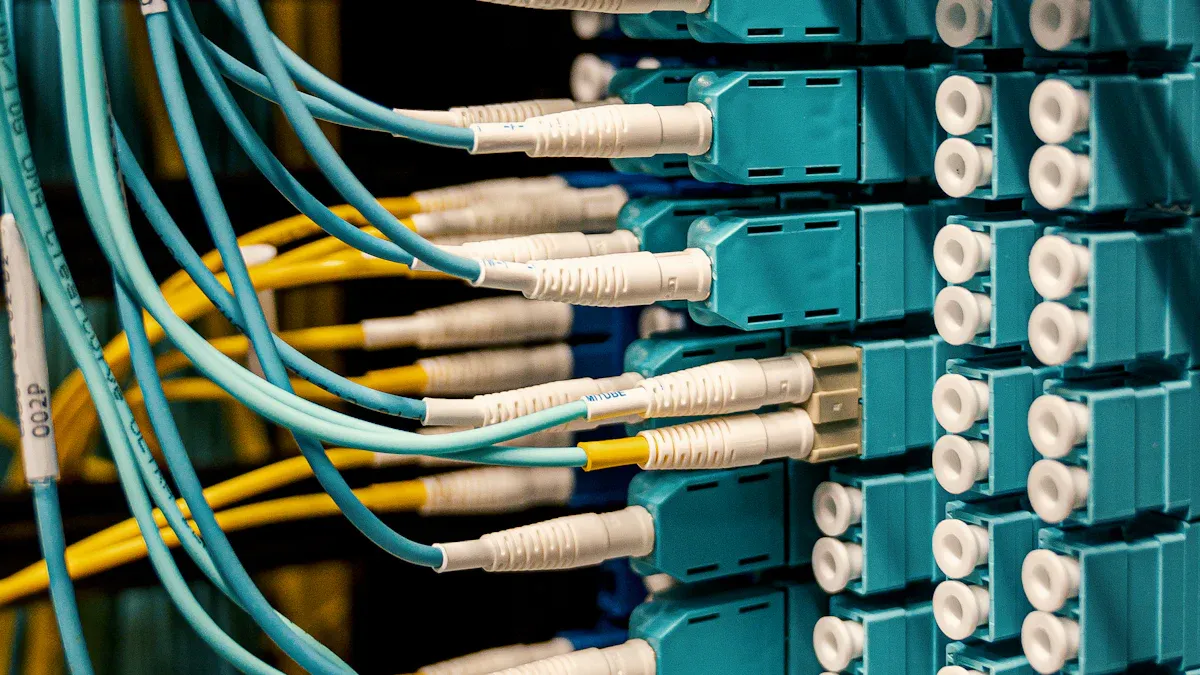
When you work with fiber optic cable, you need to choose the right splicing method for your project. The two main techniques are fusion splicing and mechanical splicing. Each method has unique steps, tools, and performance characteristics. Understanding these differences helps you select the best approach for your network's needs.
Fusion Splicing
Fusion splicing creates a permanent, molecular bond between two fiber ends. You use this method when you need a strong, low-loss connection that will last for years. Fusion splicing is the industry standard for high-speed, long-distance networks.
Fusion Splicing Process:
- Prepare the cable and strip the fiber to expose the bare glass.
- Clean the fiber ends thoroughly to remove any dust or oil.
- Cleave the fiber ends to create a flat, perpendicular surface.
- Align the fiber ends precisely in a fusion splicing machine.
- Use an electric arc to fuse the fibers together, forming a seamless joint.
- Protect the splice with a heat-shrink sleeve or re-coating.
- Test the splice for loss and reflectance using specialized instruments.
You need several tools for this process:
- Fusion splicing machine
- Precision fiber cleaver
- Fiber stripping tools
- Alcohol wipes for cleaning
- Protective sleeves
- Test equipment like OTDRs
Tip: Fusion splicing takes about 5 to 10 minutes per splice. The process requires skill and specialized equipment, but it delivers the lowest optical loss and highest durability.
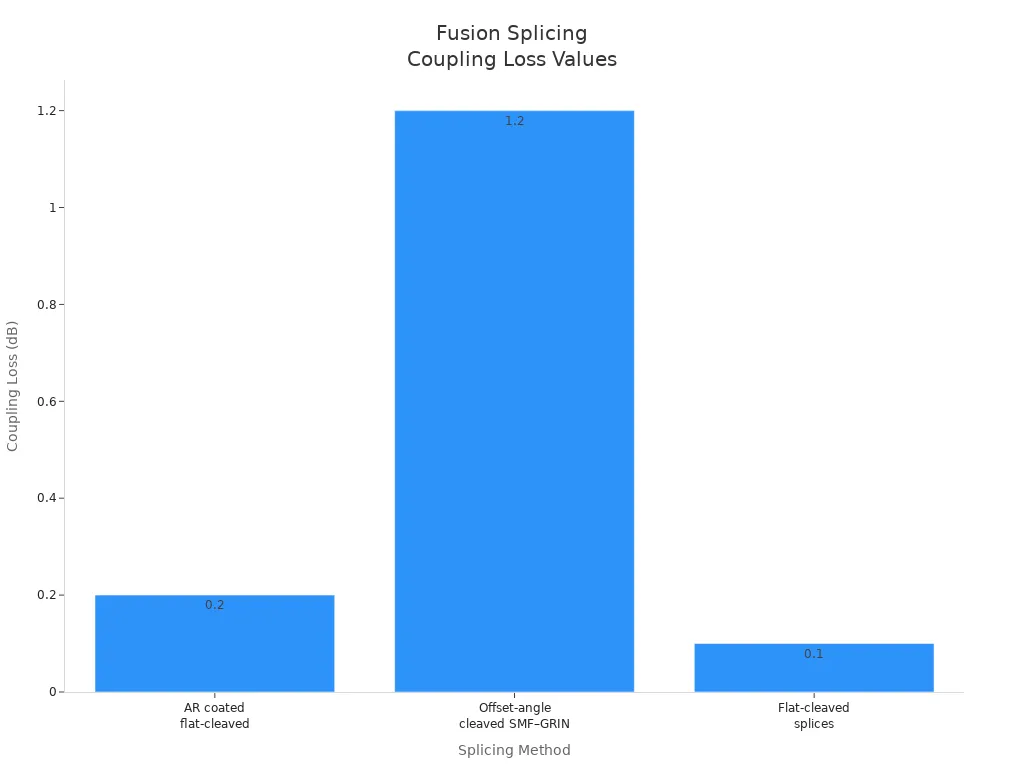
Fusion splicing produces extremely low insertion loss, often as little as 0.02 dB. This efficiency makes it ideal for backbone networks and data centers. The splice resists environmental changes and mechanical stress, ensuring reliable performance over time.
|
Splicing Method |
Coupling Loss (dB) |
Back-Reflection (dB) |
|---|---|---|
|
AR coated flat-cleaved fiber |
0.2 |
-28 |
|
Flat-cleaved splices |
0.1 (additional) |
N/A |
Mechanical Splicing
Mechanical splicing joins two fiber ends using an alignment fixture and index matching gel, rather than heat. You can complete this method quickly, making it useful for emergency repairs or temporary connections.
Mechanical Splicing Steps:
- Strip the protective coatings from the fiber ends.
- Cleave the fibers to create clean, flat ends.
- Align the fiber ends in a mechanical splice unit.
- Apply index matching gel or epoxy to reduce signal loss.
- Secure the fibers in a splice tray and closure to protect against moisture.
Mechanical splicing requires fewer tools:
- Fiber cleaver
- Stripping tools
- Mechanical splice kit
- Index matching gel
- Splice tray
You can finish a mechanical splice in just a few minutes. This method does not require electricity or expensive machines, so it works well in the field or for small jobs. However, mechanical splicing usually results in higher insertion loss, around 0.2 to 0.3 dB, and the connection is less durable than a fusion splice.
Note: Mechanical splicing is best for short-distance links, local area networks, or situations where you need a fast, temporary fix.
Method Comparison
Choosing between fusion and mechanical splicing depends on your project's goals, budget, and performance needs. Here is a direct comparison to help you decide:
|
Factor |
Fusion Splicing |
Mechanical Splicing |
|---|---|---|
|
Optical Loss |
Lowest (0.01 – 0.03 dB) |
Higher (0.2 – 0.75 dB) |
|
Durability |
Permanent, strong molecular bond |
Weaker mechanical connection |
|
Cost |
Higher upfront (splicer required) |
Lower initial cost (simple kit) |
|
Installation Speed |
Slower (5–10 min per splice) |
Faster (field-ready, a few minutes) |
|
Best for |
Long-term, high-speed networks |
Temporary or short-distance links |
Fusion splicing gives you the best performance and reliability for fiber optic cable installations. You get minimal signal loss and a connection that stands up to harsh environments.
Mechanical splicing offers speed and convenience. You can use it for quick repairs or when you need to connect fiber optic cables temporarily.
Fusion splicing requires a larger investment in equipment and training, but it pays off in long-term network stability.
Mechanical splicing costs less up front, but you may see higher maintenance needs and more signal loss over time.
🛠️ Pro Tip: For mission-critical networks or long-haul fiber optic cable runs, always choose fusion splicing. Use mechanical splicing for quick fixes or when you need to restore service fast.
Fiber optic splicing technology continues to evolve. Manufacturers now add features like AI-driven alignment and automated testing to fusion splicers. These advancements improve efficiency and reduce errors, helping you build more reliable networks.
By understanding the strengths and limitations of each splicing method, you can make informed decisions that match your network's requirements. Whether you need speed, durability, or cost savings, the right splicing process ensures your fiber optic cables deliver top performance.
Splicing Tools and Preparation
Essential Tools
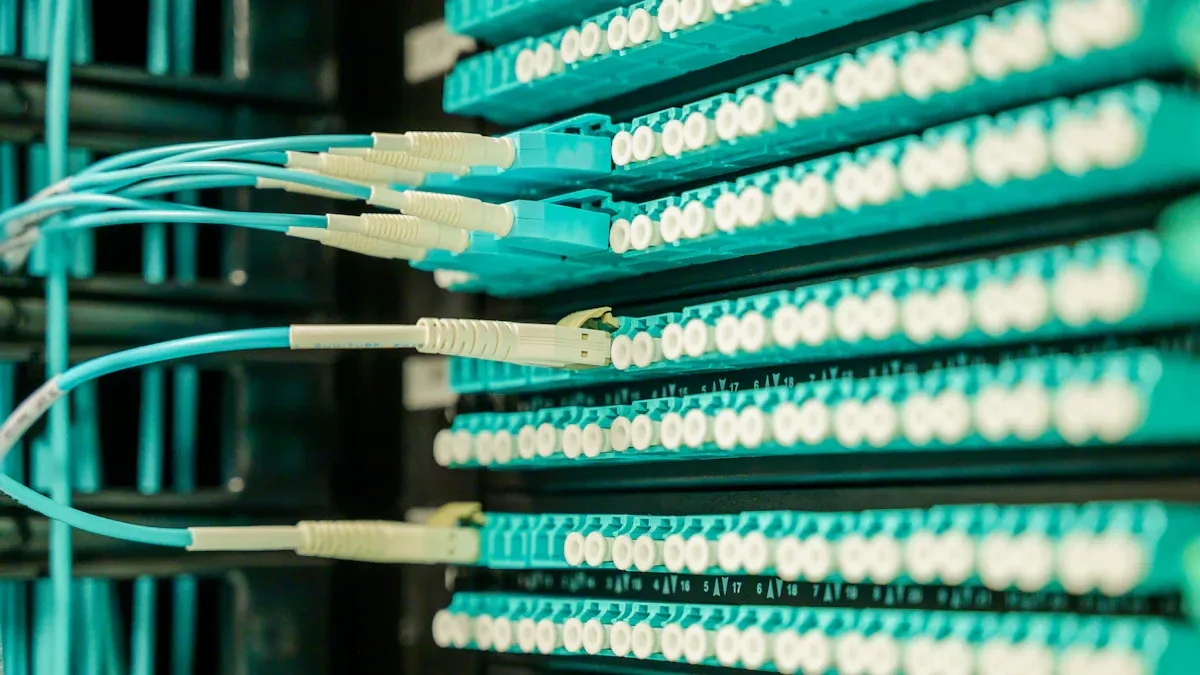
You need the right tools to achieve reliable splicing results with fiber optic cable. Industry guidelines recommend a set of specialized instruments that help you maintain precision and consistency throughout the splicing process. Here are the essential tools you should have on hand:
- Fusion splicer
- Fiber cleaver
- Strippers (including fiber optic stripper and strength member cutters)
- Visual fault locator
- Cleaning tools (lint-free wipes, isopropyl alcohol, fiber optic cleaning solution)
- Splice protection sleeve
- Safety glasses
- Work mat
- Fiber shard container
Each tool plays a critical role. For example, a fusion splicer ensures a strong, low-loss connection, while a fiber cleaver provides a clean, perpendicular cut for optimal core alignment. Cleaning tools remove dust and oil, which can otherwise cause signal loss. Safety glasses and a fiber shard container protect you from sharp glass fragments.
Tip: Using high-quality, well-maintained tools reduces the risk of poor splicing and helps you avoid common mistakes like contaminated connectors or poor fiber alignment.
Fiber End Preparation
Proper fiber end preparation directly impacts the quality and reliability of your splicing work. You must strip the fiber accurately to maximize core-to-core contact. This reduces attenuation and improves splice quality. Always follow industry standards for stripping and cleaning fiber optic cables. Clean, well-prepared fiber ends minimize light loss and back reflection, which leads to better network performance.
- Accurate stripping ensures the fiber core aligns perfectly.
- Clean fiber ends prevent contaminants from interfering with the splice.
- Consistent preparation reduces the risk of high splice loss and network downtime.
Skipping these steps can result in poor splicing, increased signal loss, and unreliable connections. You should always test your splices to confirm low loss and high performance.
Safety Tips
Working with fiber optic cables requires strict safety precautions. You handle sharp glass fibers and chemicals, so you must protect yourself and your workspace. Follow these best practices:
- Always wear safety glasses with side shields to protect your eyes from fiber splinters.
- Keep food and beverages away from the work area to prevent accidental ingestion of fiber particles.
- Dispose of all fiber scraps properly in a designated container.
- Disconnect all power sources before starting the splicing process.
- Wear a disposable lab apron to keep fiber splinters off your clothing.
- Clean your work area thoroughly after finishing your tasks.
|
Safety Precaution |
Description |
|---|---|
|
Wear safety glasses with side shields |
Shields your eyes from sharp fiber splinters. |
|
Keep food and beverages out of the area |
Prevents ingestion of hazardous fiber particles. |
|
Dispose of fiber scraps properly |
Reduces injury risk and keeps your workspace safe. |
|
Work in well-ventilated areas |
Minimizes inhalation of tiny glass particles. |
|
Do not touch your eyes while working |
Prevents fiber particles from reaching sensitive areas. |
🛡️ Alert: Neglecting safety can lead to serious injuries. Always follow recommended procedures and use personal protective equipment.
Benefits and Challenges of Splicing
Advantages
You gain several key advantages when you use cable splicing for fiber optic cable networks. Fusion splicing minimizes signal loss during transmission, which boosts overall network performance. This method delivers the lowest optical loss, making it ideal for long-distance communication where high signal strength is critical. You also benefit from the reliability of fusion splicing, which ensures strong, permanent connections that withstand environmental stress.
- Fusion splicing provides the most reliable and durable connections for fiber.
- You can achieve high signal quality with minimal loss, even over long distances.
- Mechanical splicing offers a lower initial investment, making it suitable for quick repairs or temporary setups.
- Over time, fusion splicing becomes more cost-effective per connection, especially in large-scale projects.
Accurate splicing also enhances the long-term durability of your network. This reduces the need for frequent repairs and lowers operational costs. You can expand your network easily by adding new connections or increasing bandwidth without replacing existing fiber optic cables.
Drawbacks
Despite its benefits, cable splicing presents several challenges. You must address these issues to maintain network reliability.
|
Challenge |
Description |
|---|---|
|
Cable Damage |
Excessive bending or twisting can cause signal loss or failure. |
|
Moisture Infiltration |
Water entering splice boxes leads to corrosion and performance issues. |
|
Cable Bends |
Sharp bends stress fibers, reducing network performance. |
|
Fiber Misalignment |
Poor alignment increases attenuation and signal loss. |
|
Poor Connection Quality |
Dirty or damaged connectors degrade performance. |
|
Cable Strain |
Pulling cables too tightly risks damage. |
|
Excessive Cable Slack |
Extra slack can cause fiber movement and breaks. |
|
Compatibility Issues |
Mismatched components may not work with your fiber optic cable. |
You need regular inspections and proper sealing to prevent moisture infiltration. High-quality gaskets and tightly sealed entry points protect your splices. Always focus on environmental factors to maintain the integrity of your fiber network.
Splicing vs. Replacing
You often face a choice between cable splicing and replacing the entire fiber optic cable. Splicing offers clear advantages in many scenarios:
- You can repair a damaged cable quickly without the expense of full replacement.
- Splicing allows you to join two cables to extend the length of your network.
- Temporary connections become possible with mechanical splicing, saving time and resources.
For example, if a cable is damaged by construction or rodents, splicing restores service faster and at a lower cost than replacing the whole line. In large-scale projects, splicing reduces costs per connection over time. The table below compares the cost implications:
|
Splicing Method |
Initial Cost |
Cost per Splice |
Consumables Cost |
|---|---|---|---|
|
Mechanical Splicing |
A few hundred dollars |
Higher than fusion |
More expensive |
|
Fusion Splicing |
A few thousand dollars |
Lower than mechanical |
Less expensive |
You should choose splicing when you need a fast, cost-effective solution for repairs, extensions, or temporary setups. Replacing the entire cable makes sense only when the damage is extensive or the infrastructure is outdated.
📝 Note: Regular maintenance, including inspections and proper sealing, ensures your splicing process delivers long-term reliability and performance.
References:
Corning Optical Communications
Telecommunications Industry Association (TIA)
International Electrotechnical Commission (IEC)
You can splice fiber optic cable effectively with the right approach. Splicing offers a practical solution for network repairs and upgrades. Consider
these key points:
Fusion splicing delivers nearly perfect connections with minimal light loss, while mechanical splicing is faster but introduces more signal loss.
Accurate fiber cleaving, visual inspection, and thorough testing-such as using an OTDR-are essential for quality assurance.
Always weigh the benefits and challenges before starting. If you feel unsure, consult a professional to protect your fiber network's performance.
FAQ
Can you splice any type of fiber optic cable?
You can splice most fiber optic cables, including single-mode and multi-mode types. Always check compatibility before starting a cable splice. Some specialty fibers may require unique tools or procedures.
Why does splicing matter in networking projects?
Splicing ensures your networking infrastructure remains reliable and efficient. You restore damaged connections and extend cable runs without replacing entire sections. This process supports high-speed data transfer and minimizes downtime.
What causes a splice to fail?
A splice fails when you misalign fibers, use dirty tools, or expose the joint to moisture. You must follow best practices and use proper equipment to achieve a successful splice.
How do you test a fiber optic cable splice?
You test a cable splice using an Optical Time Domain Reflectometer (OTDR). This device measures signal loss and verifies the integrity of your networking connection. Always test after splicing to confirm performance.
Is splicing better than replacing a damaged cable?
Splicing saves time and money compared to replacing an entire cable. You repair only the affected section, which keeps your networking system running smoothly. Replacement is necessary only for extensive damage.