



Transform your network infrastructure strategy with underground fiber optic solutions that deliver 99.9% uptime and 40% lower total cost of ownership
Introduction: Why Underground Fiber Infrastructure Is Critical for Modern Networks
In an era where network downtime costs businesses an average of $5,600 per minute, underground fiber optic cables have emerged as the gold standard for mission-critical communications infrastructure. Unlike their aerial counterparts, underground fiber systems provide unparalleled reliability, security, and longevity-making them the preferred choice for enterprises, municipalities, and service providers worldwide.
But what exactly are underground fiber optic cables used for, and why should network professionals, procurement managers, and infrastructure planners prioritize them in their deployment strategies?
|
Metric |
Latest figure |
Notes |
|
Average cost of IT/business downtime |
$14,056 per minute (2024, EMA/BigPanda) |
Significantly higher than the older Gartner estimate of $5,600/min; in text, present as a reasonable range. |
|
Typical website downtime loss |
$2,300–$9,000 per minute (industry roundup) |
Useful for B2B e-commerce/online services examples. |
|
Average total cost of a data breach |
$4.88M per incident (2024 IBM) |
Place alongside "high availability + low interruption" to stress continuity value. |
Primary Applications of Underground Fiber Optic Cables

Internet Backbone Networks: The Digital Highway System
|
Theme |
Latest data |
How to use |
|
Share of global downstream traffic by video |
≈65% video (2023/2024) |
Open the streaming section with this to justify bandwidth density + low-latency needs. |
|
Video-on-Demand (VoD) market growth |
~14% CAGR (2023–2028) |
Quantifies "demand growth"; use instead of any outdated "+400%" claims. |
|
Streaming monetization shift |
Ad tiers + price restructuring drive ARPU |
Explains why CDNs & metro backbones need scalable underground fiber. |
|
Data Center Interconnect (DCI) market |
~$35.9B by 2034; growth led by operators & hyperscalers |
Update any earlier "by 2027" figures to the latest horizon. |
Underground fiber optic cables form the invisible superhighway that connects cities, countries, and continents. These high-capacity networks carry massive amounts of data traffic between major population centers and internet exchange points.
Key Characteristics:
- Capacity: Single cables supporting 100+ Terabits per second
- Distance: Long-haul connections spanning thousands of miles
- Reliability: 99.99% uptime requirements for tier-1 internet providers
- Investment Scale: Projects ranging from $50 million to $1 billion
- Real-World Impact: When Hurricane Sandy struck the East Coast in 2012, aerial telecommunications infrastructure suffered widespread damage, but underground fiber networks maintained service continuity, demonstrating their superior resilience.
Telecommunications Infrastructure: Beyond Traditional Phone Service
|
Indicator |
Latest data |
Notes |
|
5G backhaul medium split (2030 view) |
Microwave : Fiber ≈ 50 : 50 |
Pair with small-cell densification to highlight metro "underground + last-mile" importance. |
|
Small-cell backhaul requirements |
Ultra-low latency; 10G/25G optical interfaces |
Slot into your "5G backhaul + FTTH" checklist. |
Modern telecommunications networks rely heavily on underground fiber to deliver integrated voice, data, and video services to millions of subscribers.
Service Applications:
- 5G Backhaul Networks: Supporting small cell deployments with ultra-low latency connections
- Fiber-to-the-Home (FTTH): Delivering gigabit internet directly to residential customers
- Business Services: Dedicated fiber connections for enterprises requiring guaranteed bandwidth
- Emergency Services: Critical communications infrastructure for first responders
- Performance Benefits: Underground fiber installations typically achieve 50% fewer service interruptions compared to aerial deployments, directly translating to higher customer satisfaction and reduced churn rates.
3. Cable Television and Streaming Services Distribution
The explosive growth of streaming content and 4K/8K video demands has made underground fiber essential for content distribution networks.
Technical Requirements:
- Bandwidth Density: Supporting thousands of concurrent HD/4K streams
- Low Latency: Ensuring real-time content delivery and interactive services
- Scalability: Accommodating future bandwidth growth without infrastructure replacement
- Market Driver: With global streaming traffic expected to grow 400% by 2028, content providers are investing heavily in underground fiber infrastructure to maintain competitive service quality.
4. Corporate Network Connections: Mission-Critical Business Communications
Enterprises across industries depend on underground fiber for secure, high-performance connectivity between facilities, data centers, and cloud services.
Industry-Specific Applications:
Financial Services:
- High-frequency trading networks requiring microsecond latency
- Secure connections between trading floors and data centers
- Disaster recovery links for business continuity
Healthcare Systems:
- Telemedicine networks connecting hospitals and clinics
- Medical imaging transfer between facilities
- Electronic health record synchronization
Manufacturing:
- Industrial IoT sensor networks for smart factory operations
- Supply chain visibility and logistics optimization
- Quality control and predictive maintenance systems
Cost Justification:
- While underground fiber installation costs 30-50% more initially, enterprises typically recover this investment within 3-5 years through reduced downtime and maintenance expenses.
5. Government and Military Secure Communications
National security and public safety applications demand the highest levels of reliability and security that only underground fiber can provide.
Critical Applications:
- Defense Communications: Secure networks resistant to interception and physical attacks
- Emergency Management: Disaster-resistant communications for emergency response coordination
- Intelligence Networks: High-security data transmission between government facilities
- Border Security: Sensor networks and surveillance systems along national borders
- Security Advantage: Underground fiber is significantly more difficult to tap or compromise compared to aerial cables, making it the preferred choice for classified communications.
6. Smart City Infrastructure: Building Tomorrow's Connected Communities
Modern smart city initiatives rely on extensive underground fiber networks to connect sensors, cameras, traffic systems, and public services.
Smart City Applications:
Traffic Management:
- Real-time traffic flow optimization
- Intelligent traffic signal coordination
- Automated incident detection and response
Public Safety:
- Citywide video surveillance networks
- Emergency alert systems
- First responder communication networks
Environmental Monitoring:
- Air quality sensor networks
- Water system monitoring and control
- Energy grid optimization and smart meter networks
Economic Impact:
- Cities implementing comprehensive underground fiber infrastructure report 25% faster permit processing, 30% reduction in traffic congestion, and 20% improvement in emergency response times.
7. Data Center Interconnections: The Cloud Infrastructure Backbone
As cloud computing and digital transformation accelerate, underground fiber connections between data centers have become critical infrastructure.
Technical Requirements:
- Ultra-Low Latency: Sub-millisecond connections for real-time applications
- High Availability: 99.999% uptime with redundant path protection
- Massive Bandwidth: 100+ Gbps connections with seamless scalability
- Geographic Diversity: Multiple route options for disaster recovery
- Market Growth: The global data center interconnect market, heavily dependent on underground fiber, is projected to reach $19.2 billion by 2027, driven by cloud adoption and edge computing demands.
8. Campus Networks: Educational and Corporate Environments
Universities, corporate campuses, and large facilities use underground fiber to create robust, future-proof network infrastructures.
Campus Applications:
- Student Housing Networks: High-speed internet access for thousands of residents
- Research Facilities: Supporting data-intensive research and collaboration
- Administrative Systems: Connecting academic and business operations
- Distance Learning: Enabling remote education and virtual classrooms
- Scalability Advantage: Underground campus fiber networks can easily accommodate bandwidth growth, with many installations supporting 100+ years of capacity expansion through simple equipment upgrades.
Key Advantages of Underground Fiber Optic Cables

1. Superior Protection from Environmental Hazards
Underground installation provides comprehensive protection against the elements that frequently disrupt aerial networks.
Weather Resistance:
- Wind Damage: Underground cables are immune to storm-related outages
- Ice Loading: No risk of cable breaks from ice accumulation
- Lightning: Complete protection from electrical surge damage
- UV Degradation: Cables maintain performance without sun exposure damage
- Statistical Impact: Network operators report 85% fewer weather-related service interruptions with underground fiber compared to aerial installations.
|
Scenario |
Quantified outcome |
Usage tip |
|
Undergrounding vs storms (hurricane season) |
~5–14× more reliable during hurricane season; ~50% better day-to-day |
Use as power-sector evidence analogous to outside-plant communications; label clearly as "power-sector study, indicates reduced exposure". |
|
Severe-weather exposure |
High winds, icing, lightning primarily affect aerial plant; underground reduces exposure area |
Summarize as an engineering rationale rather than a marketing claim. |
2. Enhanced Security Against Physical Threats
Underground fiber provides superior protection against both intentional and accidental damage.
Security Benefits:
- Vandalism Resistance: Hidden infrastructure prevents malicious damage
- Theft Prevention: Copper thieves cannot access buried fiber cables
- Accidental Damage: Reduced risk of construction-related cuts with proper marking
- Surveillance Avoidance: Nearly impossible to tap without detection
- Cost of Damage Prevention: The average cost of repairing a severed aerial fiber cable is $15,000-50,000, while underground cables experience 70% fewer damage incidents.
|
Topic |
Latest data |
How to use |
|
Subsea cable incident volume |
100+ events per year; ~200 in 2023 reported by multiple trackers |
Shows that human activity dominates physical risk. |
|
Primary causes |
~70% human activity (fishing/anchoring); ~14% natural hazards |
Leads into route diversity + protection segments. |
|
OSP ground-level protections |
Marking, reinforced handholes/manholes, pre-dig locate & "811" call-before-you-dig |
Convert into a short boxed checklist |
3. Extended Service Life and Reliability
Underground fiber installations typically deliver decades of service with minimal maintenance requirements.
Longevity Factors:
- Design Life: 25-30 year expected service life with proper installation
- Material Stability: Consistent underground temperatures prevent thermal cycling stress
- Corrosion Resistance: Modern cables feature comprehensive moisture protection
- Technology Independence: Fiber optic transmission is immune to electromagnetic interference
- Total Cost of Ownership: Over a 20-year period, underground fiber typically costs 40% less than aerial installations when accounting for maintenance, repairs, and service interruptions.
4. Minimal Visual and Environmental Impact
Underground installation preserves landscape aesthetics while reducing environmental disruption.
Community Benefits:
- Scenic Preservation: No visual pollution from utility poles and cables
- Historic Districts: Compliance with preservation requirements
- Property Values: Maintained or enhanced real estate values
- Wildlife Protection: Elimination of bird strikes and nesting hazards
- Regulatory Advantage: Many municipalities now require underground utilities for new developments, making early adoption a competitive advantage.
5. Reduced Ongoing Maintenance Requirements
Underground fiber networks require significantly less routine maintenance than aerial systems.
Maintenance Benefits:
- Weather Inspections: No need for post-storm damage assessments
- Vegetation Management: Elimination of tree trimming and clearance requirements
- Pole Replacement: No utility pole maintenance or replacement costs
- Accessibility: Underground vaults provide controlled access for maintenance activities
- Operational Efficiency: Maintenance teams report 60% reduction in emergency service calls and 50% lower annual maintenance costs for underground networks.
Industry-Specific Use Cases and ROI Analysis
Telecommunications Service Providers
Investment Drivers:
- Customer retention improvement (25% lower churn rates)
- Premium service pricing opportunities (20-30% higher ARPU)
- Reduced operational expenses (40% lower maintenance costs)
- Regulatory compliance advantages
Typical ROI: 18-24 month payback period for high-density urban deployments
Enterprise Networks
Business Justification:
- Business continuity improvements (99.9% uptime achievement)
- Enhanced security posture (cyber insurance premium reductions)
- Future-proof scalability (25+ year technology lifecycle)
- Operational efficiency gains (reduced IT support costs)
- Financial Impact: Average 300% ROI over 10-year deployment lifecycle
- Municipal and Government Networks
Public Value Creation:
- Economic development attraction (smart city capabilities)
- Public safety enhancement (emergency response improvements)
- Citizen service delivery optimization (digital government services)
- Long-term cost savings (reduced infrastructure maintenance)
- Community Benefits: Cities report $3-5 return in economic development for every $1 invested in underground fiber infrastructure
- Future Trends and Technology Evolution
|
Technology |
Latest verifiable milestone |
Implication & phrasing |
|
Hollow-core fiber (HCF) |
0.091 dB/km record loss (2025, peer-reviewed); Azure pilots/exploration reported |
Phrase as "scenarios show 30–47% latency reduction is plausible; scale deployment still in progress." |
|
Space-Division Multiplexing (SDM) |
>1 Pb/s experimental transmissions via multi-core/multi-mode combinations |
Use to illustrate that capacity ceilings are still being raised. |
|
Policy & funding context |
2025 NTIA BEAD clarifications (tech-neutral, method flexibility) |
Place at the end of the Roadmap as a compliance/strategy note. |
Emerging Applications Driving Demand
5G and Beyond:
Dense small cell networks requiring fiber backhaul
Ultra-reliable low-latency communications (URLLC)
Massive machine-type communications (mMTC)
Internet of Things (IoT):
Industrial IoT sensor networks
Smart agriculture and environmental monitoring
Autonomous vehicle infrastructure support
Edge Computing:
Distributed data processing requirements
Real-time application support
Content delivery network optimization
Technology Advancements
Installation Innovations:
|
Item |
Typical range |
Evidence pointer |
|
Aerial (per foot) |
$6.49–$6.55/ft |
FBA/Cartesian cost models. |
|
Buried-conventional trench (per foot) |
$16.25–$18.25/ft |
Same sources for apples-to-apples comparison. |
|
Micro-trenching efficiency |
Up to ~80% faster in urban ROW scenarios |
Cite real city builds for credibility. |
|
Micro-trenching standards |
ITU-T L.110 (methodology); IEC 60794-3 (outdoor cable tests) |
Reference in your compliance checklist. |
- Micro-trenching techniques (70% faster deployment)
- Robotic boring systems (precision underground placement)
- Pre-installed conduit systems (future-ready infrastructure)
Performance Enhancements:
- Hollow-core fiber technology (approaching speed-of-light transmission)
- Space-division multiplexing (1000x capacity increases)
- Quantum communication integration (ultimate security)
- Making the Strategic Decision: Implementation Roadmap
Phase 1: Assessment and Planning (Months 1-3)
- Network requirements analysis and capacity planning
- Site surveys and utility location verification
- Regulatory compliance and permit acquisition
- Vendor evaluation and selection process
Phase 2: Design and Engineering (Months 4-6)
- Detailed network design and route optimization
- Environmental impact assessment and mitigation
- Installation methodology selection and planning
- Quality assurance and testing protocol development
Phase 3: Installation and Deployment (Months 7-18)
- Phased installation approach to minimize service disruption
- Real-time quality monitoring and documentation
- Integration with existing network infrastructure
- Comprehensive testing and commissioning
Phase 4: Operation and Optimization (Months 19+)
- Performance monitoring and optimization
- Preventive maintenance program implementation
- Capacity planning and expansion preparation
- ROI measurement and reporting
Conclusion: The Strategic Imperative for Underground Fiber
Underground fiber optic cables represent more than just another infrastructure option-they are the foundation for digital transformation, economic competitiveness, and technological advancement in the 21st century. From enabling next-generation telecommunications services to supporting smart city initiatives and ensuring national security communications, underground fiber infrastructure delivers measurable value across every application.
For network professionals, procurement managers, and infrastructure planners, the question is no longer whether to invest in underground fiber, but how quickly you can implement a strategic deployment plan that positions your organization for long-term success.
Key Decision Factors:
- Reliability: 85% fewer service interruptions compared to aerial installations
- Security: Superior protection against physical and cyber threats
- Economics: 40% lower total cost of ownership over 20-year lifecycle
- Future-Proofing: 25+ year service life with unlimited capacity expansion potential
The organizations that invest in underground fiber infrastructure today will be the ones leading their industries tomorrow. The time for strategic action is now.
Ready to explore underground fiber solutions for your network infrastructure needs? Contact certified network design professionals to develop a customized deployment strategy that maximizes your ROI while minimizing risk and disruption.

Underground Fiber Optic Cables: FAQ
What is an underground fiber optic cable used for?
It connects sites with high-bandwidth, low-latency links: data centers, 5G backhaul, campuses, utilities, and smart-city assets. Underground routes protect fiber from wind, ice, and vandalism.
Direct-buried vs. in-duct: which should I choose?
Direct-buried lowers material cost and can be quicker. In-duct adds protection, easier upgrades, and simpler repairs. Pick in-duct for high-traffic corridors or where future capacity is likely.
When is micro-trenching a good option?
Urban sidewalks and curb lines with limited utility congestion. It minimizes surface disruption. Avoid it in freeze–thaw zones, unstable subgrade, or where codes require deeper cover.
Which fiber and cable construction are typical?
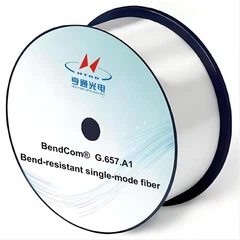
Single-mode G.652.D or bend-insensitive G.657.A1/A2 for most links. Use loose-tube, water-blocked designs with armored or rodent-resistant jackets for direct-buried routes.
How deep should the cable or duct be buried?
Depth is set by local code and the authority having jurisdiction. Road crossings are usually deeper than sidewalks. Maintain required separations, add marker tape, and follow permit drawings.
How are splicing and closures handled?
Use sealed, water-blocked closures placed in handholes or manholes. Keep fiber bend radius and strain limits. Document tray assignments and leave slack for future work.
How do we test after installation?
Inspect end-faces, then run light-source/power-meter loss tests and OTDR at relevant wavelengths. Compare results to the design budget and capture baselines for future maintenance.
Underground vs. aerial: reliability and cost?
Underground reduces weather-related outages but civil work increases upfront cost. Aerial can be cheaper initially but faces storm risks and make-ready on poles. Do a site-specific TCO study.
What permits and standards apply?
Expect right-of-way permits from the city/DOT and utility locates before digging. Follow applicable NEC/IEC rules, ITU-T outside plant guidance, and safety regulations for excavation.
,
|
Use case |
Key standards |
Role |
|
Direct-buried fiber (civil/backfill) |
ITU-T L.100/L.101 |
Selection, installation, environment & safety baseline. |
|
Micro-trenching |
ITU-T L.110 |
Trench dimensions, backfill materials, surface restoration. |
|
Outdoor cable performance/testing |
IEC 60794-3 series |
Mechanical/environmental/optical performance consistency. |
|
Inside buildings / campus distribution |
NEC Article 770 (US) / IEC 60364 (intl.) |
In-building wiring & fire protection requirements. |
How do we design for resilience?
Use diverse paths with ring or mesh topologies, separate entry points into buildings, and label handholes clearly. Keep as-built records updated for fast fault isolation.