





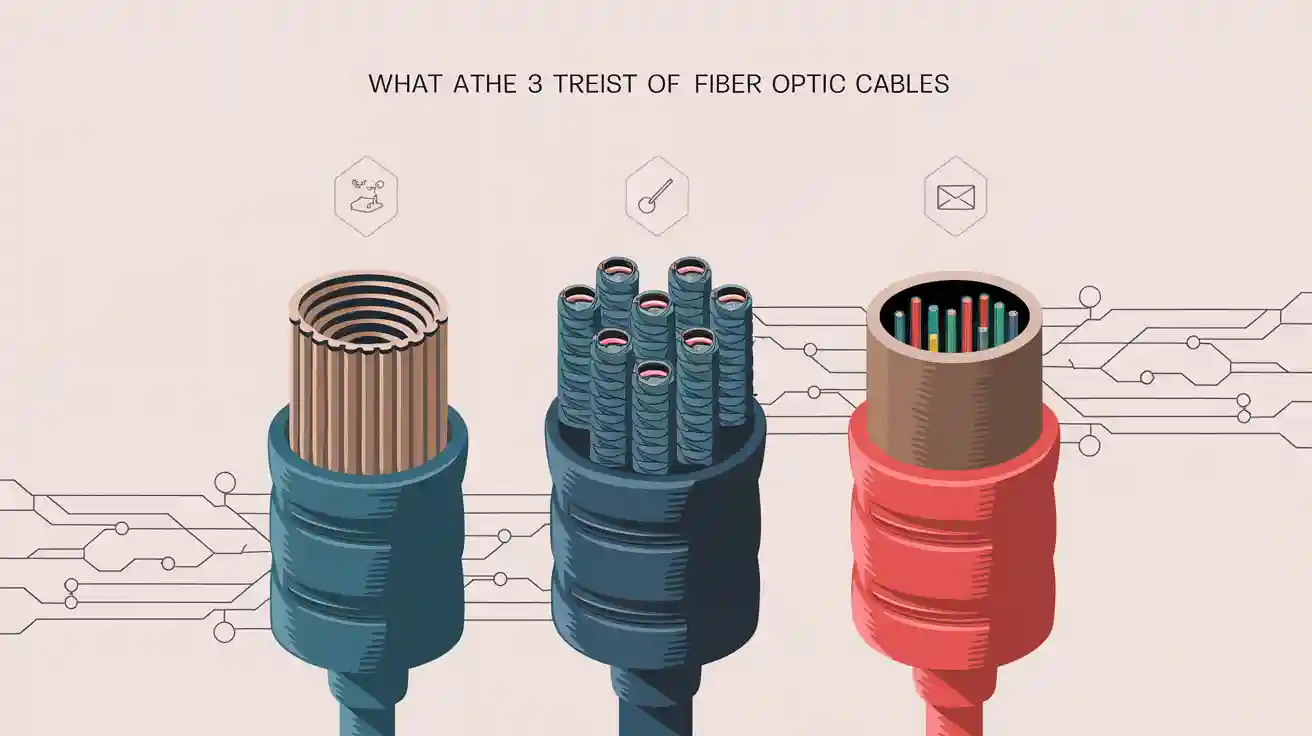
You will find three main types of fiber optic cable in today's networks: single-mode fiber, multimode fiber, and plastic optical fiber (POF). Each type offers unique features and benefits. Single-mode fiber supports long-distance connections and dominates global installations with 68% usage. Multimode fiber provides reliable performance for short-haul networks and accounts for 24%. Plastic optical fiber, at 8%, suits home and industrial environments. The table below highlights their prevalence:
|
Fiber Type |
Percentage |
|---|---|
|
Single-mode Fiber |
68% |
|
Multimode Fiber |
24% |
|
Plastic Optical Fiber |
8% |
You can choose the right type based on your needs for speed, distance, and cost.
Key Takeaways
- Single-mode fiber is ideal for long-distance communication, offering high bandwidth and minimal signal loss. It is perfect for telecom networks and data centers.
- Multimode fiber is cost-effective for short-distance connections, making it suitable for enterprise LANs and campus networks. Its larger core diameter simplifies installation.
- Plastic optical fiber (POF) is flexible and easy to install, making it great for home networks and automotive applications. It supports short-distance data transfer with minimal interference.
- When choosing a fiber optic cable, consider distance, bandwidth, and installation costs. Match the cable type to your current and future needs for optimal performance.
- Future-proof your network by selecting the right fiber type now. Single-mode fiber allows for upgrades to higher speeds and longer distances, saving costs in the long run.
Single-Mode Fiber
Features
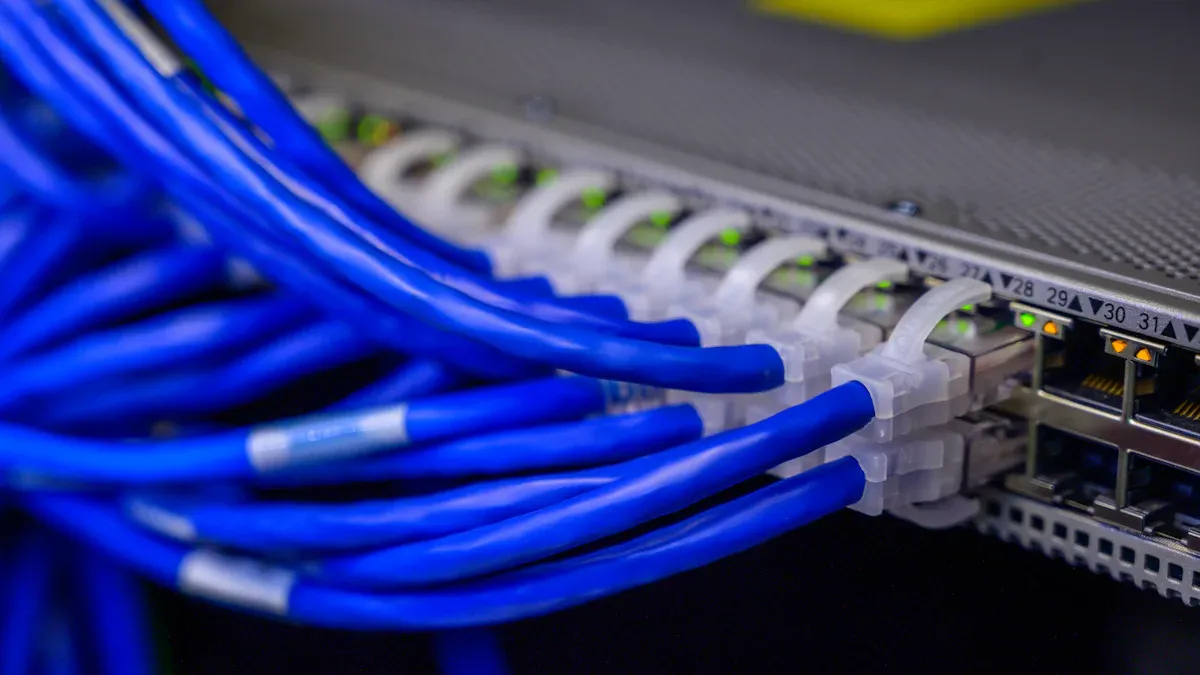
Single-mode fiber stands out among fiber optic cable types for its ability to transmit high-speed data over long distances. You will find that this type uses a very small core, which helps keep the light focused and reduces signal loss. Here is a quick look at its physical structure:
|
Parameter |
Diameter (µm) |
|---|---|
|
Core Diameter |
9 |
|
Cladding Diameter |
125 ± 0.7 |
You typically see single-mode fiber operating within the 1260-1650 nm wavelength range. The most common wavelengths are 1310 nm and 1550 nm. This design allows you to achieve lower attenuation and higher bandwidth compared to multimode fiber. You can use single-mode fiber optic cables for both indoor fiber optic cable and outdoor fiber optic cable installations, including direct burial fiber cables and aerial fiber optic cables.
Pros and Cons
Tip: If you need to connect buildings or support a large network, single-mode fiber offers unmatched performance.
Advantages:
Designed for long-distance communication, often reaching up to 160 kilometers without repeaters. With amplifiers, you can exceed 1000 kilometers.
- Smaller core diameter minimizes signal loss and supports higher bandwidth.
- Lower attenuation and signal dispersion than multimode fiber.
- Ideal for high-speed data transmission in large-scale networks.
Disadvantages:
- Single-mode transceivers and components cost more than those for multimode fiber-sometimes 1.5 to 5 times higher.
- Installation requires precise alignment, making it more complex and expensive.
- Less forgiving of bending or misalignment, which can complicate maintenance.
Uses
You will find single-mode fiber widely used in industries that demand reliable, long-distance, high-speed data transmission. Typical applications include:
- Telecommunications networks that span cities or countries.
- Data centers where you need to connect servers across large campuses.
- Broadcasting, military, and aerospace systems that require secure, stable connections.
- Healthcare facilities that rely on fast, uninterrupted data flow.
If your project involves connecting remote offices, supporting a growing business network, or building a backbone for a smart city, single-mode fiber optic cable delivers the performance you need. When you compare it to multimode fiber, you get greater distance and bandwidth, making it the preferred choice for mission-critical infrastructure.
Multimode Fiber

Features
You will recognize multimode fiber as one of the most common fiber optic cable types for short-distance data transmission. This type uses a larger core diameter, which allows multiple light modes to travel through the cable at once. The typical core diameter range for multimode fiber optic cable is:
- 50 microns
- 62.5 microns
This larger core makes multimode fiber easier to align during installation and more forgiving of slight bends or imperfections. You can use multimode fiber optic cables for both indoor fiber optic cable and outdoor fiber optic cable applications. The cable supports high-speed data transfer within buildings and across campuses. Multimode fiber is available in several grades, such as OM1, OM2, OM3, and OM4, each offering different performance metrics for bandwidth and distance.
Pros and Cons
Note: Multimode fiber offers a cost-effective solution for many enterprise networks, but you should consider its limitations before choosing it for your project.
|
Fiber Type |
Cost per Foot |
Distance Capability |
|---|---|---|
|
Single-mode fiber |
$0.09-$1.49/foot |
Ideal for long distances, high-speed applications |
|
Multimode fiber |
Lower material costs |
Suitable for shorter runs within buildings |
Advantages:
- Lower material and equipment costs compared to single-mode fiber optic cable.
- Easier installation due to the larger core diameter.
- Compatible with less expensive light sources, such as LEDs and VCSELs.
- Supports high-speed data transmission for short distances.
Disadvantages:
- Modal dispersion causes signal distortion over longer distances, which affects data integrity.
- Maximum bandwidth and data rate are limited by modal dispersion.
- The impact of modal dispersion increases as the distance grows.
- All multimode fibers have a maximum transmission distance of less than 2 km for 100 Mbps speed.
- Different multimode types support varying distances; OM1 allows up to 300 meters for 1GbE, OM4 sustains 10GbE for up to 550 meters.
Uses
You will find multimode fiber widely used in environments where short-distance, high-speed connections are essential. Common applications include:
- Enterprise LANs and server rooms
- Building-to-building links on the same campus
- High-bandwidth short-distance connections
Data centers, where the maximum recommended transmission distance does not exceed 2 km for 100 Mbps
Multimode fiber optic cable is ideal for network installations that require reliable performance without the expense of single-mode equipment. You can use multimode fiber optic cables for direct burial fiber cables in campus environments or for connecting devices within a building. If you need to upgrade your network for faster speeds or support high-bandwidth applications, multimode fiber provides a practical and affordable solution.
Multimode fiber remains a popular choice for organizations seeking to balance cost, performance, and ease of installation in their fiber optic cable infrastructure.
Plastic Optical Fiber Types

Features
Plastic optical fiber (POF) stands out among fiber optic cable types for its unique construction and flexibility. You will notice that POF uses a core made from PMMA (Poly(methyl methacrylate), acrylic), which comprises 96% of the cross section in a standard 1mm fiber. The cladding consists of fluorinated polymers, while advanced graded-index POF (GI-POF) uses amorphous fluoropolymer for higher performance. The following table shows the materials used in POF:
|
Material Type |
Description |
|---|---|
|
Core |
PMMA (acrylic), 96% of cross section in 1mm fiber |
|
Cladding |
Fluorinated polymers |
|
Advanced Material |
Amorphous fluoropolymer (CYTOP) for GI-POF |
You will find that POF features a much wider core diameter compared to glass fiber optic cables. This design allows for easier handling and installation. See the comparison below:
|
Item |
Glass optical fiber |
Plastic optical fiber |
|---|---|---|
|
Core diameter |
50-100μm (multimode), 8-10μm (single mode) |
150-2000μm, up to 20000μm |
Pros and Cons
Tip: Choose plastic optical fiber if you need a rugged, flexible solution for short-distance data transmission.
Advantages:
- POF is soft and non-brittle, so you can bend it without cracking.
- You will find it lightweight and easy to route through tight spaces.
- Installation is simple, requiring minimal training and basic tools.
- POF is more rugged than glass, making it suitable for both indoor fiber optic cable and outdoor fiber optic cable applications.
Disadvantages:
Standard POF supports lower data rates and shorter distances than glass fiber optic cables.
Signal attenuation is higher, which limits its use in long-distance or high-bandwidth scenarios.
Environmental factors such as heat and UV exposure can affect performance over time.
The table below summarizes data transmission rates for POF:
|
Type of Fiber |
Maximum Data Rate |
Distance |
|---|---|---|
|
Standard POF |
50 to 100 Mbit/s |
Up to 50m |
|
GI-POF |
Over 1 Gbit/s |
Up to 500m |
|
GI-POF |
3 Gbit/s |
100m |
Uses
You will see plastic optical fiber used in many consumer electronics and automotive applications. POF serves as the preferred medium for high-speed data links within modern vehicles, supporting infotainment systems and electronic monitoring. You will also find POF in smart TVs, gaming consoles, and wearable devices, where it enables fast data transfer with minimal interference. Recent advancements have expanded POF's role in avionics and short-distance interconnects, offering a cost-effective alternative to glass fiber or copper.
- Automotive networking and infotainment systems
- Consumer electronics such as smart TVs and gaming consoles
- Short-distance data links in homes and offices
If you need a fiber optic cable that is easy to install, flexible, and suitable for short runs, POF provides a practical solution. You can use it for both indoor and outdoor fiber optic cable needs, especially where space and installation speed matter.
Fiber Optic Cable Types Compared
Comparison Table
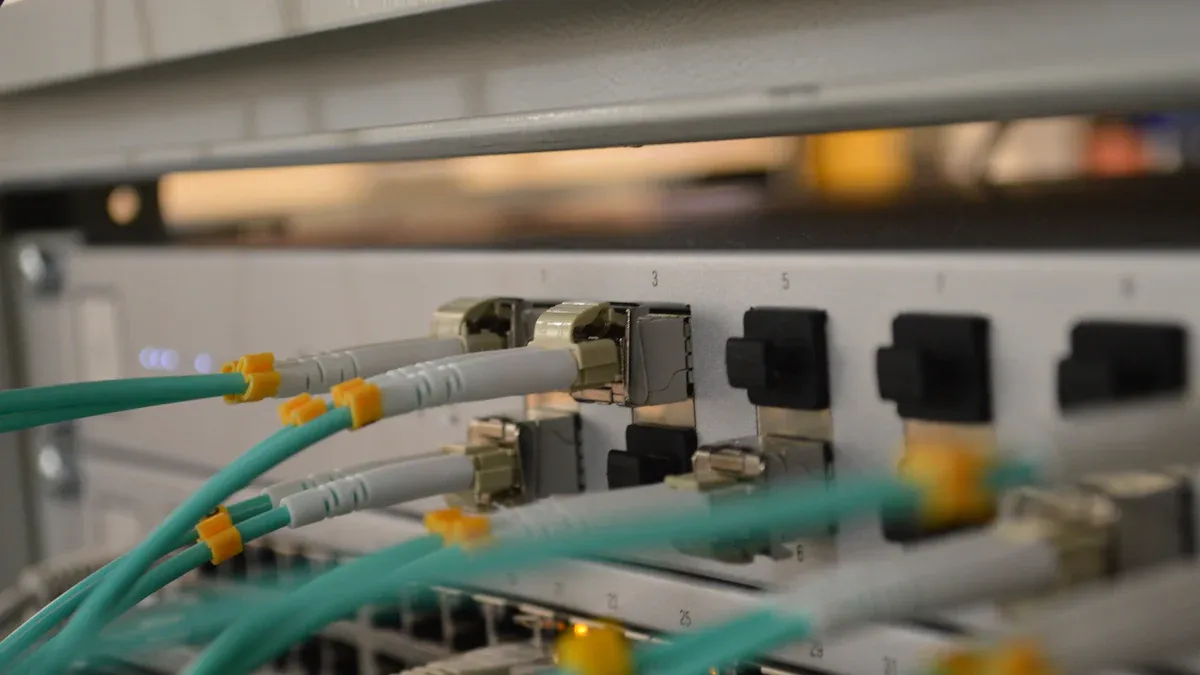
You need a clear overview to compare the main types of fiber optic cables. The table below summarizes the essential differences in distance, bandwidth, cost, and common applications. This helps you quickly identify which cable fits your network requirements.
|
Fiber Type |
Bandwidth Capacity |
Max Distance |
Cost per Foot |
Typical Applications |
|---|---|---|---|---|
|
Single-mode fiber |
Nearly unlimited |
Up to 40 km (OS2) |
$0.10 - $0.50 |
Long-distance transmission, telecom, data centers, underwater fiber optic cables, aerial fiber optic cables |
|
Multimode fiber |
Limited (OM1: 200 MHz·km, OM4: 4,700 MHz·km) |
Up to 1 km (OM3/OM5) |
$0.30 - $1.00 |
Indoor fiber optic cable, enterprise LANs, direct burial fiber cables, short-haul networks |
|
Plastic optical fiber |
Up to 3 Gbps |
Up to 500 m (GI-POF) |
Lowest cost |
Home networks, automotive, consumer electronics |
Tip: If you want high-speed data over long distances, single-mode fiber delivers the best performance. For short runs inside buildings, multimode fiber offers a cost-effective solution. Plastic optical fiber works well for simple, flexible installations in homes or vehicles.
Choosing the Right Type

You should consider several factors before selecting a fiber optic cable for your network. Start by evaluating the distance between connection points. If your network spans multiple buildings or requires underwater fiber optic cables, single-mode fiber is the best choice. You get nearly unlimited bandwidth and minimal signal loss, making it ideal for long-distance transmission.
For most indoor fiber optic cable installations, such as office networks or campus environments, multimode fiber provides reliable performance at a lower cost. You benefit from easier installation and compatibility with affordable equipment. If you need direct burial fiber cables for short distances, multimode fiber is often sufficient.
Plastic optical fiber suits home networks and automotive systems. You can install it quickly without specialized tools. Its flexibility and low cost make it perfect for consumer electronics and environments where you need simple, rugged cabling.
When planning your network, think about future growth. If you expect to expand or require higher speeds, investing in single-mode fiber now can save you money later. Always match your cable type to your application, environment, and budget. Industry standards like ITU-T G.652 and ISO/IEC 11801 guide you toward the best choice for your scenario.
The performance efficiency of your fiber optic cables depends on the quality, specifications, and compatibility with your network devices.
You need to understand the main differences between fiber optic cable types before making a decision. The table below highlights how single-mode fiber, multimode fiber, and plastic optical fiber compare in performance and cost:
|
Fiber Type |
Core Diameter (µm) |
Modes of Propagation |
Bandwidth |
Transmission Distance |
Attenuation |
Cost Comparison |
|---|---|---|---|---|---|---|
|
Single-Mode Fiber |
5 to 10 |
Single |
High |
Long Distance |
Low |
Higher installation cost |
|
Multi-Mode Fiber |
50 to 65 |
Multiple |
Lower |
Short Distance |
Higher |
Lower installation cost |
|
Plastic Optical Fiber |
N/A |
N/A |
N/A |
N/A |
N/A |
N/A |
For home networking, you should choose multimode fiber or plastic optical fiber because they support short runs and easy installation. If your network requires long-distance communication, single-mode fiber provides the best signal quality and bandwidth. Businesses must consider distance, bandwidth, and environmental conditions when selecting a cable. You should match the fiber type to your current and future needs to avoid costly upgrades.
Tip: Evaluate your installation environment, signal requirements, and budget to select the most suitable fiber optic cable. Future trends in fiber technology will continue to improve speed and efficiency, so plan for scalability.
FAQ
Why should you choose single-mode fiber for long-distance communication?
Single-mode fiber optic cable transmits data over much longer distances than multimode fiber. You get higher bandwidth and lower signal loss, making it ideal for telecom networks, data centers, and city-wide infrastructure.
Why does multimode fiber work best for short runs inside buildings?
Multimode fiber optic cable uses a larger core, which simplifies installation and reduces cost. You can connect devices across rooms or floors without expensive equipment. This makes it perfect for enterprise LANs and campus networks.
Why is plastic optical fiber recommended for home and automotive use?
|
Scenario |
Benefit |
|---|---|
|
Home networking |
Easy installation |
|
Automotive |
Flexible and rugged |
Plastic optical fiber offers simple routing, flexibility, and durability. You can install it quickly in tight spaces, making it ideal for consumer electronics and vehicle systems.
Why do installation costs differ between fiber optic cable types?
You pay more for single-mode fiber due to precise alignment and specialized transceivers. Multimode fiber and plastic optical fiber cost less because they use simpler connectors and equipment.
Why should you consider future network growth when selecting fiber optic cable?
You ensure scalability by choosing the right fiber optic cable. Single-mode fiber supports upgrades to higher speeds and longer distances. You avoid costly replacements and keep your network ready for new technologies.