





If you work in telecommunications network construction, you've likely encountered these common armored fiber optic cable types. While they may look similar, their constructions and applications vary significantly.
GYTS, GYTA and GYTA53 are all armored outdoor fiber optic cables using different protection methods. They share the same basic fiber optic transmission function but differ in structure, armor type, and deployment scenarios.
What Are the Construction Similarities Among These Cables?
Common Core Design Features
All three cable types follow similar basic construction principles:
Optical Unit: All contain fiber bundles or loose tubes with color-coded fibers
Water Protection: Each includes water-blocking materials (tapes or compound)
Outer Sheath: High-density polyethylene (HDPE) outer jacket for UV protection
Standard Diameters: Typical outside diameters range from 10-15mm
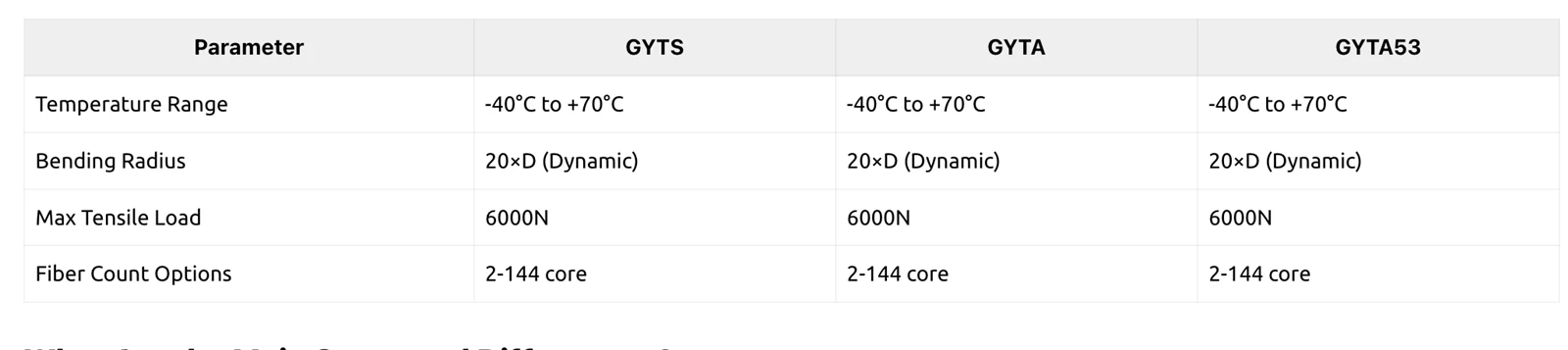
Key shared specifications table:
What Are the Main Structural Differences?
Each cable type contains distinct protective elements that define their applications.
1. GYTS (Steel Tape Armored)
Structure: Loose tube fibers + water-blocking material + steel tape armor + PE sheath
Application: Direct burial, pipe installation
Protection: Crush resistance from steel tape (0.15-0.3mm thickness)
Weight: 70-150kg/km (depending on fiber count)
2. GYTA (Aluminum Armored)
Structure: Loose tube fibers + water-blocking material + aluminum tape + PE sheath
Application: Aerial, underground, duct installation
Protection: Mechanical + rodent protection
Note: More flexible than GYTS
3. GYTA53 (Double Armored)
Structure: Loose tube fibers + inner aluminum tape + corrugated steel tape + PE sheath
Application: Extreme environments (high crush risk/rodent areas)
Key Feature: Dual-layer armor provides maximum mechanical protection
When Should You Choose Each Type?
Selecting the right armored cable depends on your installation scenario.
GYTS Selection Criteria:
✔ Direct burial applications
✔ Pipe installation
✔ Cost-sensitive projects
❌ Not ideal for rodent areas
GYTA Selection Guide:
✔ General outdoor use (aerial/underground)
✔ Areas with potential rodent activity
✔ Duct installations
GYTA53 Applications:
✔ High-risk rodent zones
✔ Areas with extreme mechanical stress
✔ Mountainous/rocky terrain
✔ River crossings
Installation Method Comparison:
 Performance Comparison in Different Conditions
The armor types provide varied protection in different operating environments.
1. Crush Resistance:
GYTS: Good (steel tape protection)
GYTA: Fair (aluminum offers less crush resistance)
GYTA53: Excellent (dual armor protection)
2. Flexibility:
GYTS: Medium (stiff due to steel tape)
GYTA: High (more flexible than steel)
GYTA53: Lowest (most rigid construction)
3. Rodent Resistance:
GYTS: Poor (rodents can bite through PPSM)
GYTA: Better (aluminum provides deterrent)
GYTA53: Best (corrugated steel prevents chewing)
Environmental Factor Rating (1-5):
 Conclusion
All three cable types (GYTS, GYTA, GYTA53) serve as reliable outdoor fiber optic solutions, but with key structural differences that determine their ideal applications. GYTS offers cost-effective steel-based protection, GYTA provides aluminum-armored flexibility, while GYTA53 delivers maximum defense through dual armor. Consider your installation environment, mechanical risks, and budget when selecting between these popular armored cable options. For projects in high-risk rodent areas or extreme conditions, GYTA53's added protection often justifies its higher cost, while standard outdoor deployments may find GYTS or GYTA perfectly adequate.