

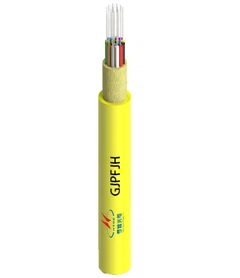


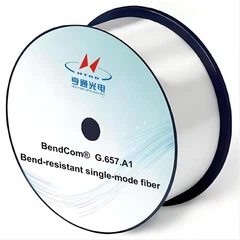
Fiber optic cables have revolutionized telecommunications, enabling lightning-fast data transmission over vast distances. Their exceptional performance stems from a combination of advanced materials engineered to minimize signal loss and maximize efficiency. Below, we delve into the core components and materials that constitute these optical marvels.
1. The Core: The Pathway for Light
Material: Pure Silica Glass (SiO₂)
The core is the heart of the fiber, where light travels. Silica glass is chosen for its transparency to infrared and visible light wavelengths, with minimal attenuation (signal loss).
Doping: To fine-tune refractive indices, the core may be "doped" with germanium dioxide (GeO₂) or phosphorus pentoxide (P₂O₅), which increases its refractive index relative to the cladding.
2. The Cladding: The Protective Shield
Material: Silica Glass with Lower Refractive Index
The cladding surrounds the core and has a slightly lower refractive index, ensuring total internal reflection of light within the core. This prevents light leakage and maintains signal integrity.
Doping Variations: Fluorine (F₂) is often added to silica to reduce the cladding's refractive index.
3. The Buffer Coating: Strength and Flexibility
Material: Acrylate Polymers (e.g., UV-Curable Resins)
The buffer coating protects the fragile glass fiber from physical damage, moisture, and environmental stress. It's applied directly to the cladding and hardens via ultraviolet (UV) light exposure.
Key Properties: High tensile strength, flexibility, and resistance to microbending.
4. Strength Members: Structural Support
Material: Kevlar® Aramid Fibers or Glass Yarn
Embedded within the cable jacket, these materials provide mechanical reinforcement, allowing the cable to withstand pulling forces during installation.
Function: Prevents breakage when cables are tugged or bent.
5. The Jacket: Environmental Protection
Material: Polyvinyl Chloride (PVC), Polyethylene (PE), or Fluoropolymers
The outer jacket shields the fiber from moisture, chemicals, and physical abrasion. Its composition varies based on application:
PVC: Cost-effective, used in indoor cables.
PE: Flexible and moisture-resistant, ideal for outdoor use.
Fluoropolymers: High chemical resistance for harsh environments.
6. Specialty Fibers: Tailored for Specific Needs
Single-Mode vs. Multimode:
Single-Mode: Uses a smaller core (8–10 µm) for long-distance, high-bandwidth applications (e.g., telecommunications).
Multimode: Larger core (50–62.5 µm) for shorter distances (e.g., data centers).
Polymer Optical Fibers (POF): Made from plastics like PMMA (acrylic) for low-cost, short-range applications (e.g., automotive, home networks).
7. Innovations in Fiber Materials
Hollow-Core Fibers: Air-filled cores with a glass cladding, promising ultra-low latency for future high-speed networks.
Photonic Crystal Fibers: Microstructured claddings that guide light via photonic bandgap effects, enabling unique dispersion properties.
8. Environmental and Safety Considerations
Recyclability: Silica glass is non-toxic and recyclable, but plastic components require proper disposal.
Flame Retardancy: Jackets may include flame-retardant additives to meet safety standards.
Conclusion
The materials in fiber optic cables are a testament to the synergy between material science and engineering. From the purity of silica glass to the resilience of polymers, each component plays a vital role in delivering the speed and reliability we rely on today. As technology advances, new materials will continue to push the boundaries of optical communication.
By understanding these materials, technicians and engineers can better appreciate the intricacies of fiber optic design and anticipate future innovations in this ever-evolving field.