





Patch Cord Cable Solutions for Data Centers, Telecom, and Enterprise Networks
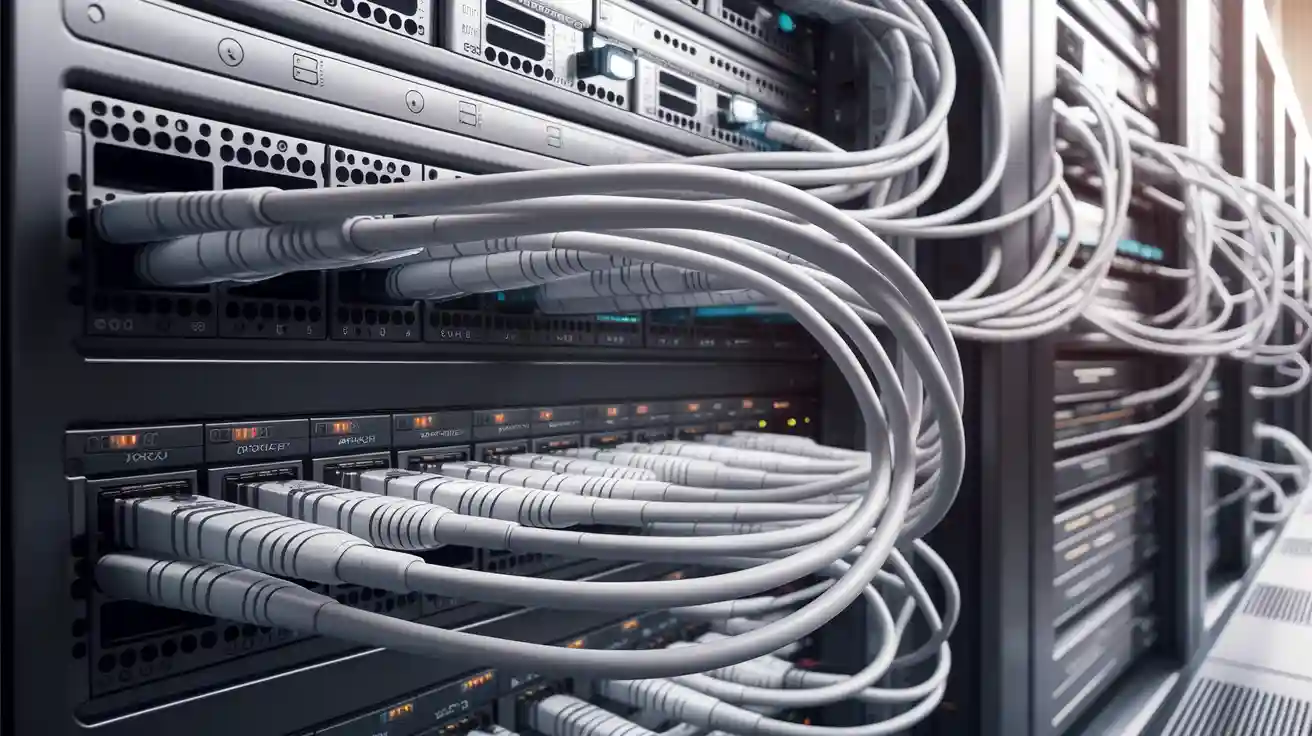
Selecting the right Patch Cord Cable plays a critical role in the reliability of your network. Poor cable quality causes up to 83% of failures in enterprise and telecom environments, as shown below:
|
Cable Type |
Failure Rate (%) |
|---|---|
|
Category 5e |
69.8 |
|
Category 6 |
83 |
You support high-speed, data-intensive operations when you invest in advanced solutions like MPO fiber patch cords, Corning EDGE Rapid Connect, or CommScope Propel. These innovations simplify installation, reduce cable congestion, and allow seamless upgrades to 400G/800G networks. Consider your environment, network density, and future scalability before making your choice.
Key Takeaways
- Choose high-quality patch cord cables to reduce network failures and ensure reliable data transmission.
- Understand the differences between fiber optic and copper cables to select the best option for your network needs.
- Invest in modular patch cord solutions for easy upgrades and scalability as your business grows.
- Prioritize proper cable management to improve airflow, reduce overheating, and simplify troubleshooting.
- Regularly test patch cord cables to identify faults early and maintain network reliability.
- Select specialty cables, like armored and shielded types, for environments with physical or electromagnetic interference.
- Follow industry standards like TIA-568 to ensure compatibility and performance across your network.
- Plan for future growth by choosing cables that support high bandwidth and low latency for evolving technology demands.
Patch Cord Cable Types
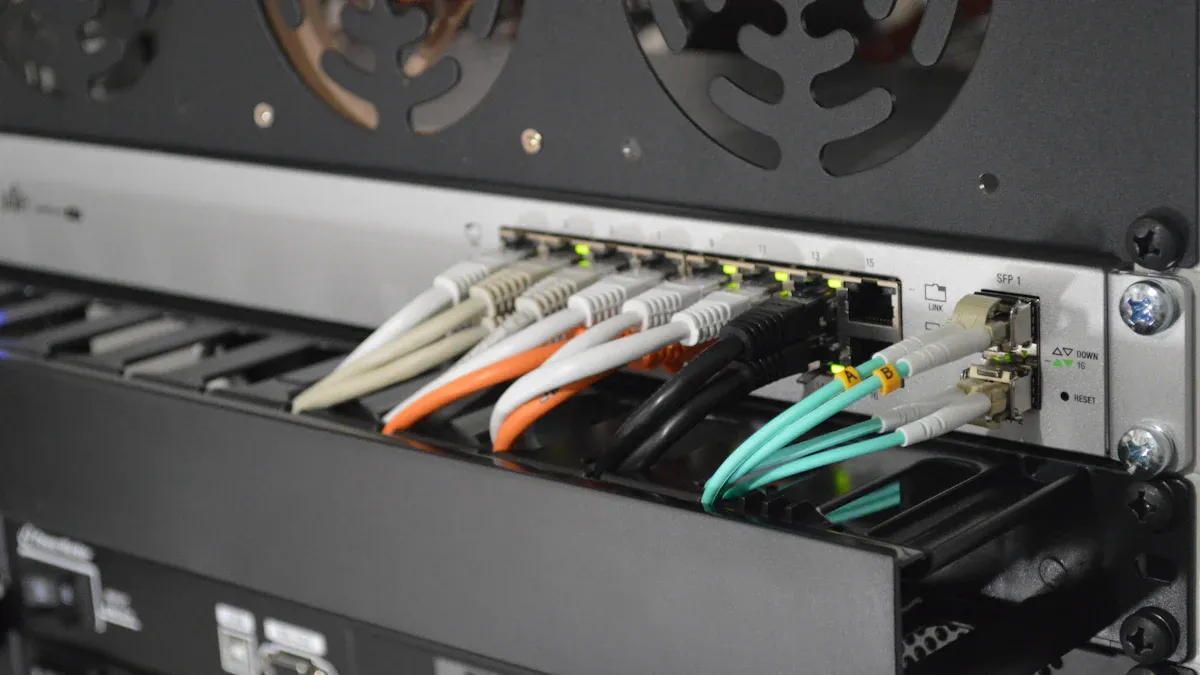
Choosing the right Patch Cord Cable type is essential for building a reliable and scalable network. You encounter three main categories: fiber optic, copper, and specialty cables. Each type offers unique features and use cases that suit different environments and technical requirements.
Fiber Optic
Features
Fiber optic Patch Cord Cable delivers high-speed data transmission and supports long-distance connectivity. You benefit from low signal loss, immunity to electromagnetic interference, and future-proof bandwidth. Fiber optic cables come in several OM types, each designed for specific performance needs:
|
OM Type |
Core Size (µm) |
Maximum Distance (m) |
Common Use |
Light Source |
|---|---|---|---|---|
|
OM1 |
62.5 |
33 |
100 Megabit Ethernet |
LED |
|
OM2 |
50 |
82 |
1 Gigabit Ethernet |
LED |
|
OM3 |
50 |
300 |
10 Gigabit Ethernet |
Laser |
|
OM4 |
50 |
550 |
10 Gigabit Ethernet |
Laser |
|
OM5 |
50 |
N/A |
28Gbps per channel |
N/A |
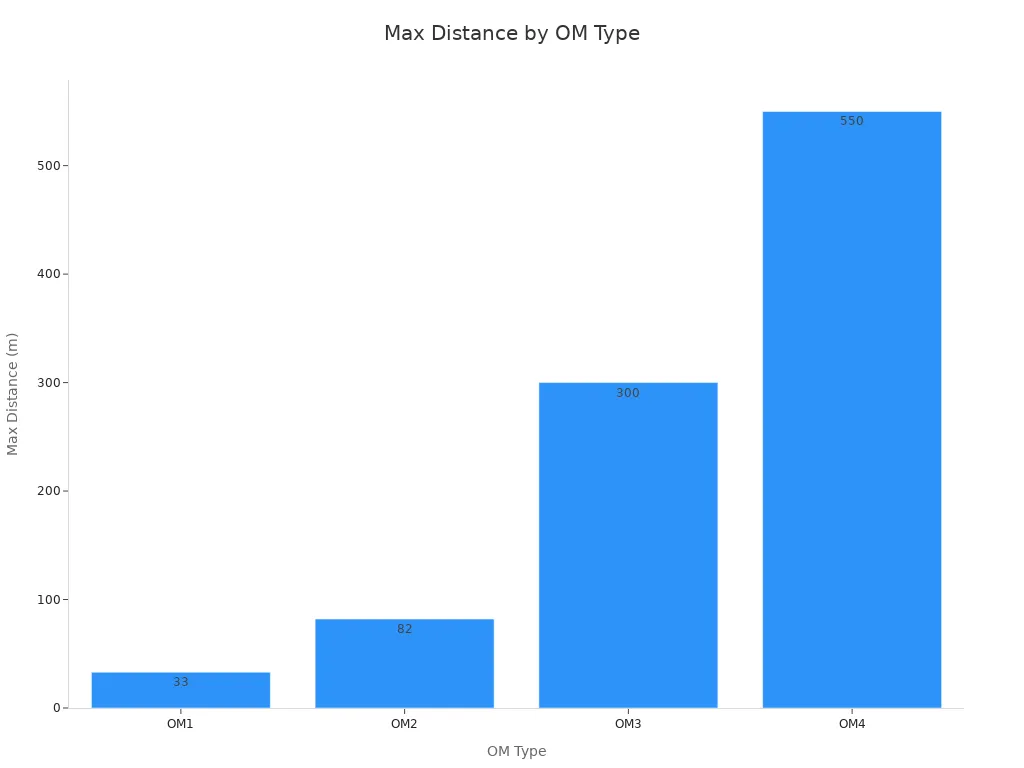
You can select MPO fiber patch cords for high-density environments, enabling rapid deployment and simplified cable management. Active optical and direct attach cables integrate signal amplification, supporting longer transmission distances in data centers.
Use Cases
You deploy fiber optic Patch Cord Cable in environments that demand high bandwidth and low latency. Common scenarios include:
- Data center backbone connections
- Telecom core networks
- Campus-wide fiber runs
- High-performance computing clusters
Fiber optic cables excel in supporting 40/100 GB multimode OM4 and OM5 applications, ensuring your network remains scalable and ready for future upgrades.
Copper
Features
Copper Patch Cord Cable provides flexible, cost-effective connectivity for short distances. You benefit from easy installation and plug-and-play operation. Copper cables include several types:
|
Feature |
Fiber Optic Cable |
Patch Cord (Copper) |
|---|---|---|
|
Length |
Long-distance (up to km) |
Short-distance (<10m) |
|
Usage |
Backbone/access runs |
Quick, flexible connections |
|
Connector |
Usually not pre-installed |
Factory pre-terminated (RJ45) |
|
Flexibility |
Rigid structure |
Highly flexible |
|
Installation |
Requires splicing |
Plug-and-play |
|
Application |
Data center backbone |
Workstation/switch/panel |
You can choose coaxial patch cords for durability and corrosion resistance. UTP patch cords offer lightweight construction and cost savings, while STP patch cords feature shielding to prevent interference in electrically noisy environments.
Use Cases
You use copper Patch Cord Cable for:
- Connecting workstations to switches
- Linking patch panels in enterprise networks
- Quick changes in office layouts
- Temporary setups at events
Copper cables suit environments where flexibility and ease of replacement matter most. STP patch cords help you maintain signal integrity in areas with high electrical interference.
Specialty
Shielded
Shielded Patch Cord Cable, such as STP and coaxial types, protects your network from electromagnetic and radio frequency interference. You rely on these cables in environments with heavy machinery, wireless equipment, or high-voltage systems. Shielded cables ensure stable data transmission and reduce downtime caused by signal degradation.
Armored
Armored Patch Cord Cable features robust construction with metal sheathing. You deploy these cables in harsh environments where physical damage, moisture, or vibration threaten network reliability. Armored cables withstand crushing forces and resist corrosion, making them ideal for:
- Outdoor telecom installations (cell towers, base stations)
- Industrial settings (factories, refineries)
- Military and defense field communications
- Transportation hubs (railways, airports)
- Utilities (substations, power distribution)
- Outdoor security systems and remote locations
Tip: When you operate in challenging environments, armored Patch Cord Cable offers unmatched durability and long-term performance.
You can select specialty cables to meet the demands of mission-critical applications, ensuring your network remains secure and operational under extreme conditions.
Patch Cord Cable Features
When you evaluate Patch Cord Cable solutions for your network, you need to focus on features that drive performance, reliability, and scalability. These features determine how well your infrastructure supports current and future business needs.

Performance
Speed
You rely on high-speed data transmission to keep your network running efficiently. Patch Cord Cable speed depends on the cable type, connector quality, and compliance with industry standards. In high-speed networks, return loss (RL) and near-end crosstalk (NEXT) are critical metrics. These measurements help you identify signal degradation and interference, which can slow down data transfer. If your cables fail to meet Telecommunications Industry Association (TIA) specifications, you risk bottlenecks and downtime.
- RL and NEXT testing ensures optimal performance.
- Compliance with TIA standards protects your investment.
- High-speed cables support seamless upgrades to 10G, 40G, and 100G networks.
Bandwidth
Bandwidth determines how much data your network can handle at once. You need cables that support high-bandwidth applications, such as cloud computing, video conferencing, and large-scale data transfers. Fiber optic Patch Cord Cable offers superior bandwidth, making it ideal for data centers and telecom environments. Copper cables work well for short runs and lower bandwidth needs.
Tip: Choose cables rated for your maximum bandwidth requirements to avoid future limitations.
Reliability
Durability
Durability ensures your network stays operational under demanding conditions. You want cables with robust construction, strong connectors, and resistance to physical stress. Armored and shielded Patch Cord Cable options provide extra protection in harsh environments, reducing the risk of damage and costly repairs.
Standards
Structured cabling standards, such as ANSI/TIA-568 and ISO/IEC 11801, set technical requirements for layout, installation, and testing. By following these standards, you guarantee compatibility across devices and technologies. Standards also support consistent performance, minimize downtime, and simplify troubleshooting.
- Standards ensure backward compatibility.
- They reduce incompatibility issues and network failures.
- High-bandwidth applications depend on quality cables that meet these guidelines.
Scalability
Modularity
Modular Patch Cord Cable designs let you expand and upgrade your network with minimal disruption. You can add new connections, replace damaged cables, or reconfigure layouts quickly. This flexibility supports business growth and changing technology needs.
Future-Proofing
You future-proof your network by selecting cables with high bandwidth, low latency, and durable construction. Modular designs make upgrades easy, so you can scale your infrastructure as data demands increase.
|
Feature |
Contribution to Future-Proofing |
|---|---|
|
High Bandwidth |
Supports increased data demands and scalability. |
|
Low Latency |
Ensures quick data transmission for real-time applications. |
|
Durability |
Enhances reliability in various environments. |
|
Modular Design |
Facilitates easy upgrades and expansions. |
Note: Investing in future-proof Patch Cord Cable solutions helps you avoid costly replacements and ensures your network remains competitive.
Environment Solutions
Modern network environments demand tailored cabling strategies. You must address specific challenges in data centers, telecom, and enterprise networks to ensure optimal performance, reliability, and cost-effectiveness.

Data Centers
High-Density
You face increasing pressure to maximize rack space and airflow in data centers. Fiber optic cables offer high bandwidth capacity and space efficiency, making them essential for high-density deployments. These cables transmit multiple data streams simultaneously, which optimizes space and enhances signal integrity. You also reduce power consumption and minimize heat generation, which is critical for maintaining equipment longevity.
Congested, unmanaged cabling can block airflow and cause equipment damage.
Moving high-density cables overhead prevents congestion and improves accessibility.
Using smaller-gauge copper patch cords enhances airflow and cooling efficiency.
Corning EDGE Rapid Connect and CommScope Propel platforms provide modular, high-density solutions. You can deploy pre-terminated fiber assemblies that simplify installation and support rapid scaling. These systems help you maintain organized cabling, reduce installation time, and prepare your infrastructure for 400G/800G upgrades.
Tip: Choose modular patching systems to streamline moves, adds, and changes in your data center.
Speed
You need to support high-speed data transmission for applications like cloud computing, virtualization, and real-time analytics. CAT6A UFTP patch cables deliver up to 10 Gbps at frequencies up to 750 MHz, making them ideal for server rooms and smart buildings. Enhanced shielding minimizes crosstalk and electromagnetic interference, ensuring stable data transfer.
- CAT6A UFTP patch cables support high bandwidth and low latency.
- Backward compatibility allows seamless integration with existing CAT6, CAT5E, and CAT5 infrastructure.
- Power over Ethernet (PoE/PoE+) enables you to power devices like IP cameras and VoIP phones directly through the network.
You should always select cables that comply with TIA/EIA-568-B.2-1 and ISO/IEC 11801 standards to guarantee performance and reliability.
Telecom
Distance
Telecom networks often require long-distance transmission. You must optimize signal transmission based on your application. Fiber optic patch cords excel in these scenarios, supporting high-speed data transfer over kilometers without significant signal loss. Shielded copper cables can also play a role in electrically noisy environments.
|
Consideration Type |
Key Points |
|---|---|
|
Performance Characteristics |
Optimize signal transmission; use shielded copper in noisy environments; test for IL/RL, attenuation, geometry, end face inspection. |
|
Physical Characteristics |
Cables must withstand heat, moisture, and foot traffic; balance physical and performance needs. |
|
Quality of Manufacturing |
Choose reliable manufacturers for quality components and assembly. |
|
Testing |
Perform channel tests, including patch cords, to ensure field performance. |
You should select cables that withstand environmental stresses and maintain performance over long distances.
Integrity
Maintaining signal integrity is crucial in telecom applications. Patch cords connect wavelength division multiplexers (WDMs), which enhances data transmission efficiency and optimizes bandwidth utilization. This reduces network congestion and improves signal quality.
Fiber optic patch cables connect network equipment and support high-speed internet.
Mode conditioning cords help mitigate differential mode delay (DMD) during high-speed transmission.
Duplex fiber patch cables provide durability and optimal signal integrity.
You ensure efficient and scalable communication infrastructures by choosing the right patch cord solutions.
Enterprise
Cost
You can achieve significant cost savings by selecting the appropriate patch cord cable solutions. Scalable cabling lets you add new devices without running new cables end-to-end. Shorter patch cords reduce clutter and lower cabling costs. Investing in quality network cabling may require a higher initial investment, but durable cables reduce the frequency of replacements and repairs. Efficient cabling also optimizes device performance, which minimizes energy consumption and lowers utility bills.
Scalability allows you to expand your network without major rewiring.
Improved cable management reduces clutter and enhances organization.
Fast maintenance means you can move, maintain, or repair devices quickly.
Note: Quality cabling pays off in the long run by reducing operational costs and downtime.
Management
Effective cable management directly impacts your network's operational efficiency. Organized cables reduce electromagnetic interference, which maintains high-speed data transmission. Proper routing improves airflow, reducing equipment temperatures and cooling costs. Labeled cables make troubleshooting faster, minimizing downtime and maintenance expenses.
Enhanced network performance through reduced interference.
Improved cooling efficiency due to better airflow.
Reduced maintenance time with clear labeling and organization.
You create a more reliable and manageable network environment by prioritizing structured cabling and best practices.
Installation & Maintenance
Proper installation and maintenance of patch cord cables ensure your network remains reliable, efficient, and scalable. You need to understand why careful handling, thorough testing, and strategic upgrading are essential for long-term network performance.

Handling
Damage Prevention
You prevent costly downtime and signal loss by handling patch cord cables with care. Physical damage often results from improper installation or maintenance. You should:
- Protect mating adapters by keeping them covered when not in use. Remove protective caps only when necessary and replace them immediately after disconnecting fibers to maintain cleanliness.
- Use cable management accessories, such as bend radius limiters and cable ties, to secure cables without applying excessive tension.
- Avoid sharp bends or kinks during installation. Sharp bends can cause signal loss or permanent damage.
- Regularly inspect cable routes for signs of strain or stress. Early detection helps you address issues before they escalate.
- Secure cables with strain relief brackets or cable ties, but never pull with excessive force.
- Always verify the minimum bend radius for optical fiber patch cords before routing them. Exceeding this radius can degrade performance.
- Educate your team on gentle handling techniques to minimize stress on cords and connectors.
Tip: Gentle handling and proper routing extend the lifespan of your patch cord cables and reduce maintenance costs.
Labeling
Clear labeling streamlines troubleshooting and future upgrades. You should:
- Label both ends of every patch cord with unique identifiers.
- Use color-coded labels to distinguish between different cable types or network segments.
- Update labels immediately after any changes to prevent confusion.
- Proper labeling saves time during maintenance and reduces the risk of accidental disconnections.
Testing
Tools
You need reliable testing tools to verify patch cord cable performance. The right tools help you identify issues before they impact your network. Commonly used devices include:
- Fluke Network Analyzers (such as the DSX-8000)
- Link testing devices
- Third-party certification testers
Testing methods vary based on your needs:
|
Testing Method |
Description |
|---|---|
|
Channel Testing |
Tests the entire cabling circuit, including patch cords, wall plates, and horizontal cables. |
|
Permanent Link Testing |
Evaluates the cabling system without patch cords to ensure compliance with standards. |
|
Component Testing |
Focuses on individual patch cords, checking parameters like insertion loss and crosstalk. |
Troubleshooting
You maintain network uptime by troubleshooting proactively. Regular testing detects faults early, allowing you to replace or repair cables before failures occur. Channel and component testing help you pinpoint performance issues, ensuring your network meets industry standards.
Note: Scheduled testing and documentation reduce emergency repairs and keep your network running smoothly.
Upgrading
Downtime
You minimize downtime during upgrades by following a structured approach. Routine maintenance schedules, such as quarterly inspections for wear and dust, help you plan upgrades without disrupting operations. Effective cable management, including relabeling and organizing cables every six to twelve months, streamlines the upgrade process. For complex installations, you benefit from professional assistance and digital resources.
|
Strategy |
Description |
|---|---|
|
Routine Maintenance Schedules |
Inspect cables every three months for wear, tension, and dust build-up. |
|
Effective Cable Management |
Reorganize and relabel cables every 6–12 months to simplify upgrades. |
|
Professional Assistance |
Consult certified network engineers for complex or large-scale upgrades. |
Lifecycle
You extend the lifecycle of your patch cord cables by following best practices:
- Plan and design your cabling layout with scalability and redundancy in mind.
- Implement cable management using horizontal and vertical organizers, plus color-coded cables.
- Maintain optimal environmental conditions, such as temperature and humidity control.
- Label all cables and connections for easy identification.
- Use patch panels and racks to consolidate cabling and provide access for maintenance.
- Perform regular testing and keep documentation up to date.
By investing in proper installation and maintenance, you ensure your patch cord cables deliver reliable performance and support your network's growth for years to come.
Patch Cord Cable Comparison

Fiber vs. Copper
Performance
When you compare fiber and copper patch cord cables, you see clear differences in speed and distance. Fiber optic cables use light to transmit data, which allows for much higher bandwidth and longer transmission distances. Copper cables rely on electrical signals, which limits both speed and range.
|
Cable Type |
Maximum Data Rate |
Maximum Transmission Distance |
|---|---|---|
|
Single-mode Fiber |
Up to 400 Gbps |
Multiple kilometers |
|
Copper (Cat6a) |
Up to 10 Gbps |
100 meters |
- Fiber optics support extremely high bandwidth and greater speeds.
- Single-mode fiber can achieve data rates of up to 400 Gbps.
- Fiber cables can transmit data over much longer distances without repeaters.
- Copper cables are limited to a maximum distance of 100 meters and support speeds of up to 10 Gbps.
You should choose fiber when your network demands high-speed data transfer across large spaces, such as data centers or campus environments. Copper works well for short connections, like linking workstations to switches in a single room.
Fiber optic cables deliver unmatched performance for high-bandwidth, long-distance applications. Copper remains a practical choice for short, flexible connections.
Cost
You often find copper cabling cheaper per foot than fiber. However, copper's limited range means you may need more runs and equipment, which can increase your total costs. Fiber installations require specialized skills and tools, raising initial expenses. Yet, fiber's smaller size and flexibility can make installation easier in dense environments.
Fiber optics generally last longer and need less maintenance than copper. Over time, copper systems may cost more due to frequent repairs and replacements. Fiber's resistance to interference and lower power needs can also reduce ongoing expenses. Recent advances have lowered fiber installation costs, making it a strong choice for new networks, especially when you consider long-term savings.
While copper offers lower upfront costs, fiber provides better value over the lifespan of your network.
Specialty Options
Security
Specialty patch cord cables, such as armored and shielded types, offer enhanced security for sensitive environments.
Armored fiber cables use a tough outer layer, often stainless steel or aluminum, to protect against physical damage.
These cables resist tampering and can alert you to unauthorized access attempts.
Shielded cables block electromagnetic interference, keeping your data safe from eavesdropping or disruption.
You should use these options in government, finance, or healthcare networks where data security is critical.
Environment
Specialty patch cord cables excel in harsh conditions. They withstand extreme temperatures, moisture, and UV exposure better than standard cables. For example, armored cables remain flexible and operational even in challenging environments, such as industrial plants or outdoor installations. Standard cables may become brittle or fail under the same conditions.
Choose specialty cables when your network faces physical threats or tough environments. They ensure reliable performance and reduce the risk of costly downtime.
Network Impact
Reliability
Uptime
You depend on network uptime to keep your business running smoothly. Downtime disrupts operations, causes lost revenue, and damages your reputation. High-quality patch cord cables play a direct role in maintaining consistent uptime. When you use cables that meet industry standards, you reduce the risk of unexpected failures and performance drops. Many networks experience issues because of poor-quality patch cords. For example:
- 60% of Cat 6 and 6a patch cords fail to meet TIA's critical performance requirements.
- 70% of Cat 5e and Cat 6 patch cords do not meet return loss or crosstalk specifications.
- High-quality patch cords are essential for maintaining consistent and reliable network performance.
You avoid costly outages and emergency repairs by choosing cables that deliver reliable connections. This proactive approach ensures your network stays available when you need it most.
Mission-Critical
Mission-critical applications demand the highest level of reliability. In healthcare, finance, and data center environments, even a brief network interruption can have serious consequences. You cannot afford to risk your operations with subpar patch cord cables. High-quality cables help you:
- Maintain stable connections for essential services.
- Prevent data loss and ensure compliance with industry regulations.
- Support real-time applications that require uninterrupted performance.
You protect your business and your clients by investing in patch cord cables that meet or exceed industry standards. This decision supports your mission-critical operations and builds trust with stakeholders.
Scalability
Growth
Your network must adapt as your business grows. Scalable patch cord cable solutions let you expand capacity without major overhauls. MPO patch cords, for example, offer flexible configurations that match your current and future bandwidth needs. The following table highlights how patch cord choices affect scalability:
|
Aspect |
Description |
|---|---|
|
Number of Fibers |
MPO connectors come in configurations of 12 or 24 fibers, which should match current and future bandwidth needs. |
|
Future Scalability |
Choosing MPO patch cords that support higher speeds ensures scalability without needing to replace cabling. |
|
Space Saving |
MPO patch cords consolidate multiple fibers into a single connection, optimizing space in data centers. |
|
Improved Scalability |
Their design allows for easy upgrades to higher bandwidth systems, essential for adapting to new technologies. |
You position your network for seamless upgrades and rapid growth by selecting modular and high-density patch cord cables. This flexibility helps you respond quickly to new business opportunities.
ROI
You want your network investments to deliver strong returns. Upgrading to advanced patch cord cable solutions improves performance and reduces long-term costs. Consider these benefits:
- Embrace High-Density Fiber Optic Cabling: You support higher data transfer rates and enhance scalability for future growth.
- Invest in Cat8 Ethernet Cabling: You gain excellent shielding and reduced interference, ensuring long-term network reliability.
- Optimize Cable Management: You improve efficiency and reduce downtime through better organization.
High-density fiber optic cabling provides unparalleled speed and bandwidth, optimizing your data center layout and minimizing clutter. Cat8 Ethernet cabling offers speeds up to 40Gbps and future-proofs your network. Modular patch panels simplify cable management and reduce downtime. Investing in fiber networks requires careful planning, but the long-term ROI includes increased revenue, lower maintenance costs, and the ability to adapt to new technologies.
By choosing advanced patch cord cable solutions, you ensure your network remains reliable, scalable, and cost-effective-delivering value for years to come.
- You strengthen your network by choosing patch cord cable solutions tailored for each environment.
- Data centers benefit from Cat8 cables, which support up to 40 Gbps and advanced shielding.
- Telecom networks require high-capacity fiber optic patch cords for long-distance reliability.
- Enterprise networks achieve cost savings and flexibility with scalable copper and specialty cables.
Adhering to standards like TIA-568 ensures safety and performance. Evaluate your current infrastructure, plan for future growth, and select cables that deliver reliability, scalability, and long-term value.
FAQ
Why should you choose high-quality patch cord cables for your data center?
High-quality patch cord cables reduce network failures and downtime. You ensure reliable data transmission, support high-speed operations, and protect your investment. Quality cables also meet industry standards, which helps you maintain compliance and future-proof your infrastructure.
Why do fiber optic patch cords outperform copper in telecom networks?
Fiber optic patch cords deliver higher bandwidth and longer transmission distances. You avoid electromagnetic interference and signal loss. Fiber supports rapid data transfer across large areas, making it ideal for telecom networks that require speed and reliability.
Why does cable management matter in enterprise networks?
Proper cable management improves airflow, reduces equipment overheating, and simplifies troubleshooting. You save time during maintenance and upgrades. Organized cables also minimize the risk of accidental disconnections, which helps you maintain consistent network performance.
Why invest in modular patch cord cable solutions?
Modular patch cord cable solutions let you scale your network quickly. You can add or replace connections without major disruptions. This flexibility supports business growth and adapts to changing technology needs, which maximizes your return on investment.
Why do shielded and armored patch cords matter in harsh environments?
Shielded and armored patch cords protect your network from physical damage and electromagnetic interference. You maintain stable data transmission in factories, outdoor installations, or areas with heavy machinery. These cables ensure your network stays operational under tough conditions.
Why is compliance with cabling standards important?
Compliance with standards like TIA-568 and ISO/IEC 11801 guarantees compatibility and performance. You reduce the risk of network failures and simplify troubleshooting. Standards also support interoperability between devices from different manufacturers.
Why should you test patch cord cables regularly?
Regular testing detects faults before they cause outages. You maintain network reliability and performance. Scheduled tests help you identify worn or damaged cables, which reduces emergency repairs and extends the lifespan of your infrastructure.
For more details, refer to industry standards and manufacturer guidelines.
Authoritative sources: TIA-568, ISO/IEC 11801, Corning, CommScope, Fluke Networks.