





In optical fibre procurement, you must check supplier quality. This helps you save money over time and get good products. Managing suppliers well means more than looking at price and delivery dates. You can get better results by:
Looking up vendors to find ones that fit your goals
Making deals that help you save money
Making connections by talking often and checking how they do
If you ask good questions, you can see if a supplier is reliable. This also helps you make sure the supplier fits your business needs.
Key Takeaways
- Check suppliers for quality, reliability, and certifications, not just price. This helps you get the best products for your needs.
- Always ask for proof of certifications to make sure suppliers meet international standards. This helps you avoid bad products and legal trouble.
- Do careful site audits to see how suppliers work. This step helps you check their quality control and how they make things.
- Make after-sales support from suppliers a top priority. Good technical help and clear warranty rules can save you time and money later.
- Use a clear process to compare suppliers. This helps you make smart choices and build strong partnerships.
Optical Fibre Supplier Criteria
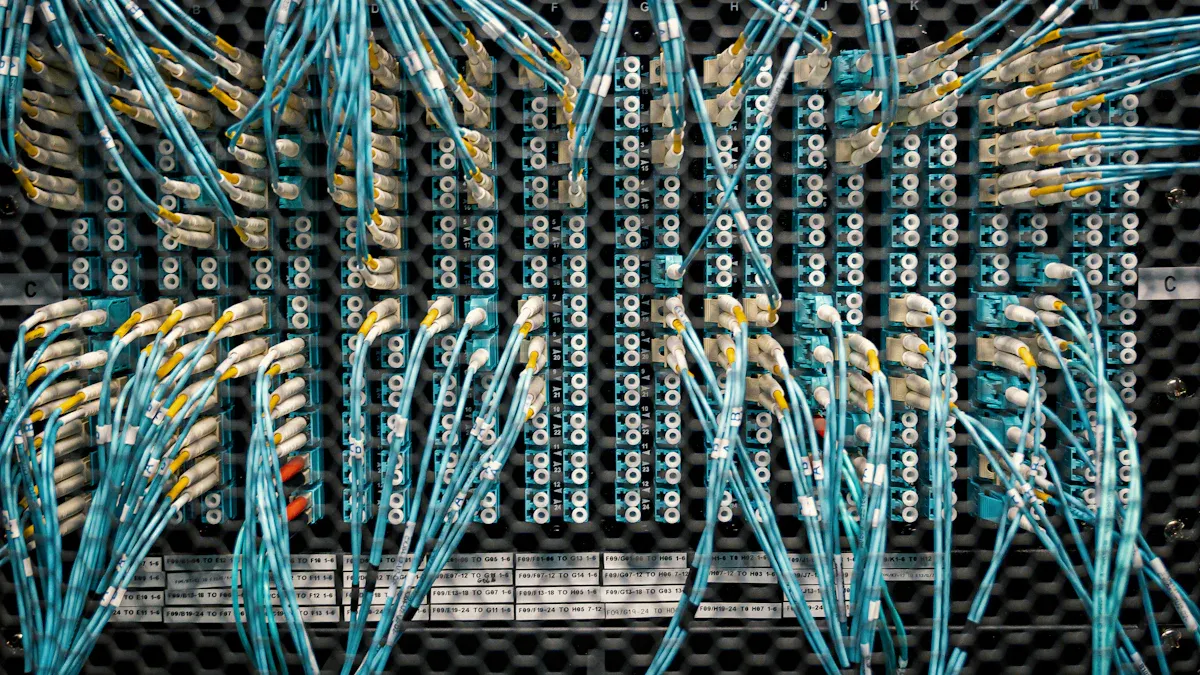
Picking the best optical fibre supplier is not just about price. You also need to think about quality, reliability, and how long the value will last. These things help you make smart choices and keep your supply chain safe.
Product Standards & Certifications
You should check if a supplier follows international standards. These rules make sure optical fibre works well and is safe. Suppliers who follow these rules care about quality and doing things right.
|
Certification/Standard |
Description |
|---|---|
|
ISO/IEC Standards |
Cover design, installation, and performance for fiber optic networks. |
|
TIA/EIA Standards |
Define performance for fiber optic cabling in commercial buildings. |
|
RoHS Certification |
Ensures products are free from hazardous substances. |
You should also see if they meet ITU-T G.652 and ISO 9001. These rules help the optical fibre work in public networks and perform as expected. Suppliers who meet these rules usually give you better products.
Tip: Always ask for proof of certification. This helps you avoid suppliers who only claim compliance.
Manufacturing & Processes
How a supplier makes optical fibre changes its strength and how long it lasts. You should ask about how they make it and look for good ways of working.
|
Process Aspect |
Best Practice Details |
|---|---|
|
Drawing Speed |
10–20 m/s for long fiber lengths. |
|
Tension Control |
50–100 grams to prevent microfissures. |
|
Cooling Methods |
Water-cooled chamber for stable structure. |
|
Mechanical Testing |
Tensile strength ≥700MPa, bend loss <0.5dB, crush resistance 1000N/100mm. |
|
Optical Performance |
Attenuation <0.3dB/km at 1550nm, dispersion <18 ps/(nm·km). |
|
Environmental Testing |
Temperature cycling -40°C to +85°C, hydrogen resistance <0.1dB/km increase. |
New machines, like automated drawing towers, help make products more even and with fewer mistakes. These machines watch the process and fix problems fast, so you get better optical fibre.
|
Benefit |
Description |
|---|---|
|
Enhanced Product Quality |
Consistent diameter, fewer defects, better optical properties. |
|
Increased Efficiency |
Faster production, less downtime, and lower labor costs. |
|
Cost Savings |
Less waste and improved energy efficiency. |
|
Expanded Product Line |
Ability to offer custom fiber types and quick prototyping. |
|
Improved Customer Satisfaction |
Faster delivery and high-quality products. |
|
Data-Driven Improvements |
Better quality control and predictive maintenance. |
Scenario: If you need fibre for tough places, ask about tests for weather and strength. This makes sure the product will last where you use it.
Quality Control Systems
You need to check if your supplier has good quality control. Good records and checks help find problems early and keep products good. Look for suppliers who use machines to check, test often, and keep clear records.
Following rules like ITU-T G.652 and ISO 9001 shows the supplier cares about quality.
Regular tests make sure every batch is what you need.
Tracking data and watching in real time help fix problems before you get the product.
Note: Good quality control helps stop hidden costs and broken products.
Reputation & Track Record
A supplier's reputation shows if they are trustworthy. You should look at their past, what customers say, and if they deliver on time. Use this table to compare suppliers:
|
Quality |
Description |
|---|---|
|
Compliance |
Follows industry standards and regulations. |
|
Quality Assurance |
Has systems to ensure reliable products. |
|
Operational Capabilities |
Can meet your production needs and deadlines. |
|
Communication |
Responds quickly and clearly to your questions. |
|
Long-term Partnership |
Shows willingness to build lasting relationships. |
You should also check for:
How long they have worked with optical fibre
Good reviews and happy customers
Proof they can make high-quality products
Strong skills in research and development
Tip: Ask for references or stories to see how the supplier did for others.
After-Sales Support
After-sales support is important for your success. You need a supplier who gives technical help, training, and clear warranty rules. Fast help and good support can save you time and money if something goes wrong.
Technical support helps you fix problems with installation or performance.
Training helps your team use the optical fibre the right way.
Warranty rules are different. For example, Selsor gives a 24-month warranty and a 25-year performance warranty if installed right, but Fiberoptics Technology Inc. gives a 1-year warranty.
|
Supplier |
Warranty Duration |
Performance Warranty |
|---|---|---|
|
Selsor |
24 months |
25 years (if installed to standards) |
|
Fiberoptics Technology Inc. |
1 year |
N/A |
Scenario: If your project needs to last a long time, pick a supplier with a strong warranty and fast technical help.
When you use these criteria to check optical fibre suppliers, you lower risks and have a better chance for long-term success. Always think about the total cost, including support, warranty, and how long the product will last. Green practices, digital tools, and strong supply chains also help you reach your business goals.
Evaluation Process

Picking the best supplier for optical fibre needs a clear plan. You must follow each step to lower risks and get good products. This plan helps you work well with suppliers and reach your business goals.
Supplier Screening
First, you look for suppliers who fit your needs. This step helps you skip bad vendors and focus on good ones. Here are the steps:
- Decide what your business needs. Know the product type, how much you need, and when you need it.
- Find and list possible suppliers. Look for companies that are known in the optical fibre market.
- Send RFIs, RFQs, or RFPs. These forms help you learn more about each supplier.
- Check suppliers using your rules. Look at quality, certifications, and if they can meet deadlines.
- Try pilot runs or visit their sites. Watch how they work in real life.
- Talk about contract terms. Make sure you agree on price, delivery, and support.
- Add the supplier to your system. Set up ways to talk and check quality.
Tip: Careful screening helps you avoid mistakes and work with good partners.
Documentation Review
You must check supplier papers to make sure they follow rules. This step gives proof that the supplier meets standards and can do the job.
|
Documentation Type |
Purpose |
|---|---|
|
Test Results |
Show they meet performance rules and standards. |
|
Certifications |
Prove staff and tools meet industry rules. |
|
Maintenance Logs |
Track ongoing checks and repairs. |
|
Training Records |
Make sure staff know best ways to work. |
|
Equipment Certifications |
Show network tools can handle needed speed and bandwidth. |
You should also check technical papers for truth and details. Use this checklist:
|
Testing Procedure |
Description |
|---|---|
|
Documentation Agreement |
Agree on what papers you need before starting. |
|
Test Results Documentation |
Ask for test proof before you accept and pay for work. |
|
Connection Verification |
Test all cables to make sure they work and connect right. |
|
Insertion Loss Testing |
Test well so you do not miss bad cables or reject good ones. |
Note: Checking papers early helps you find problems and avoid trouble later.
Site Audit
A site audit lets you see how the supplier makes optical fibre. You can check their work, tools, and how they keep quality high. Good site audits include:
- Check and clean fiber optic ends often to stop dirt.
- Follow IEC rules for checking.
- Use new tools to check fiber is clean every time.
You should also look for neat work areas, safe rules, and new machines. A good audit shows how the supplier keeps quality and solves problems.
Pro Tip: Working together on a site audit builds trust and helps fix issues.
Sample Testing
Before you pick a supplier, you must test samples. This step checks if the optical fibre works as you need.
|
Testing Method |
Purpose |
|---|---|
|
Continuity Testing |
Checks if the fiber is whole and light can pass through. |
|
Insertion Loss Testing |
Measures how much signal is lost as light moves through. |
|
Return Loss Testing |
Checks how much light bounces back, showing signal strength. |
|
OTDR Testing |
Gives a close look at the fiber, finding breaks or joins. |
You should look at test results like attenuation or optical-loss. Compare these to industry rules and your project needs. This helps you know if the product will work well.
- Check final attenuation or loss to judge cable quality.
- Know the rules used in testing to make sure cables work in many places.
- Look at product details and standards to make smart choices.
Alert: Testing samples first helps you avoid big problems and get the right product.
Final Selection
After all checks, you pick your supplier. You should think about these things:
- Know what your project needs.
- Check the supplier's skills.
- Look at their quality systems.
- See if they offer custom options.
- Make sure they have industry certificates.
- Check their customer service.
- Think about the total cost.
A clear plan helps you compare suppliers and pick the best one. Working well with your supplier brings better results and long-term success.
Remember: The right supplier helps your business grow and keeps you strong in the optical fibre market.
Common Pitfalls

Hidden Costs
You might think you know the price of optical fibre. But sometimes, there are extra costs you do not see at first. These costs can show up after you sign a contract. They can mess up your budget and slow down your project. You should watch out for extra spending in every step.
|
Cost Category |
Estimated Cost Range |
|---|---|
|
Initial Capital Investment |
$5 million to $20 million |
|
Certifications and Licensing |
$10,000 to $100,000 |
|
Raw Material Costs |
$20 to $50 per kilometer |
|
Labor Costs |
$20 to $50 per hour (high cost) |
|
Energy Costs |
10% to 20% of operational expenses |
|
Maintenance and Depreciation |
Significant over 5-10 years |
|
Transportation and Logistics |
$1 to $5 per kilometer |
|
Marketing and Sales |
$10,000 to $50,000 per event |
You can stop these problems by managing money wisely. Try these ideas: Use good cost control to keep spending low. Make plans that can change if the market changes. Break your fiber cabling into smaller parts to help your budget. Fix the most important areas first. Pick strong parts so you do not need to replace them soon. Teach your workers so they can fix things faster. Check the site early to find problems. Pick standard connectors to save money and make buying easier.
💡 If you plan well, you can stop surprise costs and finish your project on time.
Ignoring Reliability
If you do not check if a supplier is reliable, you can have big problems. Bad suppliers might send you fake or bad parts. These parts can break your network and make it unsafe. You must check if a supplier is reliable to keep your business and customers safe.
|
Risk Type |
Implication |
|---|---|
|
Noncompliant components |
Can lead to significant network reliability issues and operational failures. |
|
Counterfeit components |
Pose health and safety risks, potentially damaging critical infrastructure. |
|
Compromised reliability |
Affects critical systems like hospitals and emergency response facilities, leading to severe consequences. |
Always check the supplier's past work and the quality of their products. Good suppliers help you avoid network problems and expensive fixes. They also help you keep a good name in the market.
🚨 If you ignore reliability, your network can break and people can get hurt.
Certification Gaps
If your supplier does not have the right certifications, you can have big trouble. Certifications show that products are safe and good quality. Without them, your project might not work well and you could get in legal trouble.
|
Benefit |
Description |
|---|---|
|
Quality and Reliability |
Ensures high-quality benchmarks, reducing errors and downtime during installations. |
|
Safety Compliance |
Establishes a safer work environment, minimizing risks of accidents and injuries. |
|
Compliance with Regulations |
Increases likelihood of adhering to local and international regulations, ensuring smooth operations. |
You must check that every supplier has the right certifications. This keeps your project safe and follows the law. Certified products also last longer and work better.
✅ Always ask for proof of certification before you buy.
Sources: Fiber Optic Association, International Electrotechnical Commission, BICSI, ISO/IEC standards.
Making Confident Choices

Comparing Suppliers
When you look at different optical fibre suppliers, you can see what each one does well and where they are not as strong. This helps you make better choices when buying. You can use a table to compare top suppliers in important areas:
|
Supplier |
Strengths |
Weaknesses |
|---|---|---|
|
Legrand |
Has many products, makes reliable items, gives good customer service, and is known around the world. |
Some of their products cost more than others. |
|
Corning |
Was one of the first in optical fiber, makes new products, has high quality, and is known worldwide. |
Their best products can be too expensive for some people. |
|
AFL |
People in the industry respect them, they have many solutions, and their customer service is good. |
They may not have as many products as some other companies. |
|
Commscope |
Has many kinds of products, is known around the world, and makes reliable things. |
Some people think their products are harder to use. |
|
Panduit |
Focuses on big businesses, helps customers well, and makes new products. |
Some customers think their prices are high. |
|
Leviton |
Makes reliable products, works well with other systems, and gets good reviews. |
May not be the best for very high-end needs. |
|
Belden |
Has a long history in cables, makes good quality products. |
May not have as many optical products as others. |
|
Siemon |
Makes quality products, has good customer service, and makes new things. |
Not as well-known around the world as some brands. |
📝 For example, if you need help in many countries and want lots of choices, Legrand or Corning could be best. If you care most about customer service and working with other systems, Panduit or Leviton might be right for you.
Industry Benchmarks
Industry benchmarks help you see how suppliers do compared to others. You can use these to check if a supplier meets or beats the usual standards for quality, delivery, and new ideas. This helps you find the best companies and not fall behind in technology or service. By watching market trends and how suppliers perform, you keep your buying process strong and up to date.
📊 Using benchmarks lets you quickly find which suppliers give the best value and are most reliable for your business.
Strategic Partnerships
Working closely with your optical fibre suppliers brings good results over time. You can team up to make new products, improve how you get supplies, and reach more customers. These partnerships help you keep up with changes in places like data centers and smart buildings. When you build strong relationships, you get better help, faster new ideas, and a steady supply.
🤝 For business buyers, a strong partnership means you can handle big jobs, use new technology, and stay ahead of others.
Sources: Fiber Optic Association, International Electrotechnical Commission, BICSI, ISO/IEC standards.
You can choose better suppliers if you follow clear steps.
- Look at product standards and certifications.
- Check how suppliers control quality.
- See what people say about the supplier and their support after you buy.
- Test samples and compare what each supplier offers.
If you manage supplier quality early, your network will last longer. Using a step-by-step plan helps you avoid problems and keeps your optical fibre investment safe.

FAQ
Why should you verify supplier certifications in optical fibre procurement?
Certifications show that suppliers follow important rules. If you check these papers, you can avoid bad products and trouble with the law. Good suppliers will always give you proof.
Always ask for certificates that are current before you buy.
Why do B2B buyers focus on quality control systems?
Quality control systems help find problems early. Picking suppliers with strong checks stops big mistakes and delays.
Steady quality means you return less stuff
Good performance keeps your network safe
Why is after-sales support important for optical fibre projects?
After-sales support helps you fix problems quickly. Fast technical help and clear warranties save you time and money.
Good support helps your project go well and builds trust with your supplier.
Why compare multiple optical fibre suppliers?
Comparing suppliers helps you get the best deal. You can see which one has better quality, price, and service.
|
Factor |
Why It Matters |
|---|---|
|
Quality |
Makes sure things work well |
|
Price |
Helps you spend less money |
|
Service |
Stops your work from slowing down |
Why do B2B buyers conduct site audits before final selection?
Site audits let you watch how suppliers do their jobs. You can check their tools, safety, and how they keep things good. This step helps you avoid problems and makes sure the supplier fits your needs.
Sources: Fiber Optic Association, International Electrotechnical Commission, BICSI, ISO/IEC standards.