

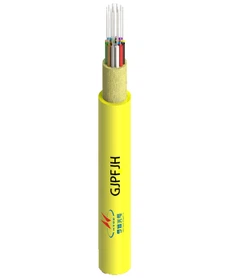


Butterfly introduction of optical fiber is an ideal choice for optical fiber to the home, its production process includes many key links, each link is directly related to the quality and performance of light ran. The following are the main production process steps of butterfly introduction of optical cable, covering the wiring and whole line preparation, injection molding sheath, cooling setting of sheath, cable traction movement, wire collecting plate storage, impurity control and filtration, and mold design and improvement, etc.
Line-out and the whole line preparation
The production of butterfly-introduced optical cable starts from the discharge. First, the tension resistance elements (e. g. phosphowire or KFRP) and optical fibers are drawn from the respective disks. The unwinding tension of tensile elements and optical fibers needs to be precisely controlled by the equipment to ensure stability and continuity in subsequent production.
After the whole line is prepared, the line is released, the optical fiber and tension elements need to go through the parallel mold, arrange them neatly, and then pack the head through the extruder and the subsequent summer treatment. During this process, ensure that the optical fiber and tensile elements are not damaged or scratched.
Injection molding to make sheath
sheath material, butterfly introduction cable sheath is usually low smoke halogen free flame retardant polyethylene (LSZH) or polyethylene (PVC) and other materials. These materials have good flame retardant properties and environmental protection characteristics. The injection molding process draws the prepared sheath material into the hopper of the extruder. The hopper has a continuous drying function to ensure the drying and stability of the material. By setting the drying temperature of the hopper, the temperature area of each section of the extruder, the cooling temperature of the nose warm water tank and the cold water tank, the sheath material is melted and extruded, and coated on the optical fiber and tension resistance components.
The sheath is cooled and finalized
During the cooling process, the squeezed sheath needs to be cooled and finalized through the warm water tank and cold water tank. The warm water tank is initially cooled to reduce the fluidity of the material; the cold water tank is further cooled to shape the sheath.
During cooling, the shape and size of the sheath are fixed to ensure that the geometric size and performance of the cable meet the requirements.
Cable traction movement
Traction device, the cooling cable moves through the traction device, traction tension also needs to be accurately controlled to ensure that the cable is not damaged during movement. Moving path The moving path of optical cable on the production line should be conducted in strict accordance with the operating specifications to avoid unnecessary friction and scraping between optical cable and equipment components.
Receive line loading storage
Cable tension control, optical cable through the cable tension control device, the optical cable winding on the wire plate. The cable tension needs to be kept stable to prevent the cable from deformation or damage during the winding process. Storage winding optical cables need to be stored in dry, well-ventilated warehouses to prevent moisture and damage.
Impurity control and filtration
Source of impurities, impurities in the production process of optical cable mainly come from raw materials, material bag dust and tensile resistance element broken eyebrow, these impurities will lead to optical fiber break and quality problems control measures.
In order to prevent impurities from entering the optical cable, the following measures can be taken: select raw materials whose performance meets the requirements of relevant international, national or industrial standards. Install the filter screen at the connection of the nose and screw chamber to avoid the dust impurities in the fuel from entering the optical cable sheath through the extrusion machine. Clean the filter screen and vacuum material bags regularly to prevent dust and impurities from coming into the hopper.
Mold design and improvement
The structure of the mold design has a great influence on the production rate and surface quality of the optical cable. The mold design requires the arrangement of the optical fiber and tensile elements, the size and shape of the sheath. In view of the problems of fiber breaking and surface impurities in the production process of optical cable, the following improvements can be made: choose the core integrated mold to reduce the contact area of optical fiber and the mold and increase the wear resistance of the fiber hole. Chamfer the mold inlet to avoid scratching the optical fiber.
Adjust the angle of the countertension element into the mold entrance to reduce friction and debris generation.
Through these improvements, the probability of optical fiber breaking accident can be significantly reduced, and the quality and performance of optical cable can be improved.