






Does Underground Fiber Optic Cable Price Vary?
Underground fiber optic cable price varies significantly, ranging from $0.09 to over $50 per linear foot depending on cable specifications, installation method, and geographic location. The material cost alone spans $0.09-$6.00 per foot, while total installation costs can reach $15-$35 per foot when factoring in trenching, conduit, and labor.
Primary Factors Affecting Underground Fiber Optic Cable Price
Cable Type and Construction Specifications
The fundamental architecture of fiber optic cable drives substantial price differences. Single-mode fiber cables, designed for long-distance transmission with a 9-micron core, typically cost $0.09-$1.49 per foot for standard variants. These cables use high-power laser light sources operating at 1310nm and 1550nm wavelengths, making them ideal for distances exceeding 40 kilometers.
Multimode fiber presents a different cost structure. With larger core diameters (50 or 62.5 microns), these cables cost $1.50-$6.00 per foot depending on performance grade. OM3 and OM4 multimode cables command premium prices due to enhanced bandwidth capabilities, though they're limited to shorter distances-typically under 2 kilometers for high-speed applications.
Armored cables add another pricing tier. Corrugated steel tape (CST) armored cables, essential for direct burial applications, cost $6.00-$13.50 per foot. The steel armor protects against rodent damage and physical stress, making these cables indispensable in harsh underground environments. Interlocking armor (ILA) variants offer more flexibility at similar price points, preferred for installations requiring frequent bends or complex routing.
Strand Count Impact
Fiber strand count creates linear cost scaling. A 12-strand cable averages $0.50 per foot, while 24-strand variants reach $1.00 per foot. Modern high-density cables with 144, 288, or even 864 strands can exceed $3-$5 per foot just for materials.
This pricing reflects manufacturing complexity. Each strand requires individual coating (250 microns), buffering (900 microns for tight-buffered cables), and precise arrangement within protective tubes. Ribbon fiber configurations, where 12-24 fibers are grouped into flat strips, add manufacturing costs but simplify installation and splicing.
Higher strand counts provide future capacity without requiring new cable pulls. Organizations planning for growth often choose 48 or 72-strand cables even when initially using only 12 strands, accepting the 50-100% cost premium to avoid future excavation expenses that dwarf cable costs.
Installation Method and Underground Fiber Optic Cable Price Variations
Underground Deployment Techniques
Installation method creates the widest cost variance in underground fiber projects. According to 2024 industry data, median underground deployment costs reached $18.25 per foot, representing a 12% increase from 2023's $16.25 per foot.
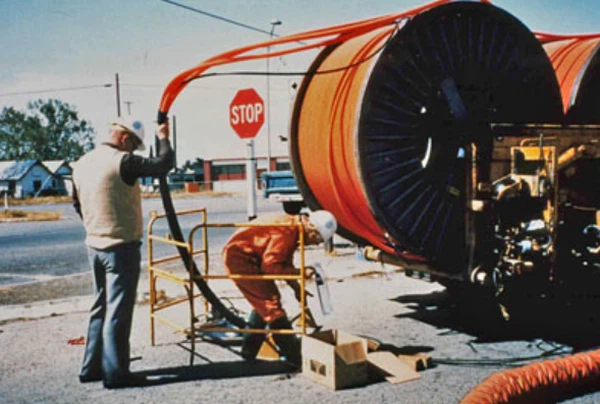
Trenching remains the most common approach, costing $12-$15 per foot on average. This method involves direct excavation using trenchers or backhoes, creating pathways 18-36 inches deep depending on local codes. The process includes excavation, conduit placement, cable installation, and surface restoration. Urban environments with concrete or asphalt surfaces can push trenching costs to $20-$25 per foot due to cutting, removal, and repaving requirements.
Directional boring offers a less disruptive alternative at $15-$30 per foot. This horizontal drilling technique avoids surface disruption, making it ideal for crossing roads, driveways, or landscaped areas. The method uses specialized boring equipment to create underground pathways, then pulls cable through installed conduit. Peak costs occur when navigating obstacles like existing utilities or rocky substrates.
Plowing represents the highest median cost at $17 per foot. Specialized cable plows simultaneously cut a narrow trench, lay cable, and backfill in one operation. This method works best in soft, unobstructed soil but struggles with rocky terrain or areas with dense underground infrastructure.
Direct burial-placing armored cable directly in the ground without conduit-costs $1-$6 per foot for simple installations. This approach minimizes material costs but offers less protection and complicates future upgrades since cable replacement requires complete re-excavation.
Labor Cost Components
Labor represents 60-80% of total underground deployment costs. The 2024 median labor cost for underground installations reached $13.23 per foot. Skilled fiber technicians command $100-$150 per hour, with rates varying by region and contractor specialization.
Outsourced labor costs substantially more than in-house teams. Median outsourced labor runs $19.95 per foot for underground deployments compared to $9.00 per foot for internal crews. Despite this premium, approximately 75% of organizations use external contractors due to specialized equipment requirements and project complexity.
Underground installations demand multiple skill sets: excavation operators, fiber splicers, and testing technicians. Each 1,000-foot installation typically requires 2-3 days for a crew of 3-4 people in straightforward conditions, translating to 50-80 labor hours per thousand feet.
Geographic Variations in Underground Fiber Optic Cable Price
Urban vs. Rural Cost Dynamics
Population density creates dramatic cost variations. Urban underground deployments average $23.25 per foot-nearly double the $12.50 per foot median in rural areas. This urban premium stems from multiple factors working in combination.
Urban environments present denser underground infrastructure. Fiber installers must navigate existing utilities (water, sewer, gas, electric, telecommunications), requiring careful coordination, utility locates, and sometimes hand-digging near sensitive infrastructure. Each utility crossing adds 2-4 hours of labor and potential delays.
Surface restoration costs escalate in cities. Trenching through concrete sidewalks, asphalt roads, or decorative pavement requires specialized equipment for cutting and removal. Restoration must match existing surfaces, with concrete costing $8-$15 per square foot and asphalt $3-$7 per square foot. A 1,000-foot trench crossing multiple surface types can add $3,000-$8,000 in restoration expenses alone.
Permitting complexity multiplies in urban jurisdictions. Major cities may require multiple permits from different agencies (transportation, utilities, historic preservation), each with associated fees ($50-$500 per permit) and review timelines. Right-of-way fees, traffic control requirements, and mandatory inspection schedules extend project duration and cumulative costs.
Rural deployments benefit from simpler conditions. Soft earth dominates rural terrain-median underground costs drop to $10 per foot in soft soil compared to $18-$25 per foot in hard or developed surfaces. Fewer underground obstacles, less stringent permitting, and abundant workspace reduce labor complexity.
However, rural projects face distance challenges. Lower customer density means longer cable runs per customer served, pushing per-household costs to $3,000-$6,000 versus $700-$1,500 in urban areas. Rural fiber projects frequently average $75,000 per mile when accounting for fewer connection points subsidizing infrastructure costs.
Regional Cost Variations
Geographic location influences both material and labor pricing. The 2023 Fiber Broadband Association study documented regional deployment cost differences, though these variations are less pronounced than urban-rural splits.
Western and Northeastern states report higher installation costs due to elevated labor rates ($120-$150/hour vs. $80-$100/hour in Southern and Midwestern states). Regional wage differences compound across multi-day projects, adding 20-40% to labor components.
Terrain type matters significantly. Rocky substrates in mountainous regions increase directional boring costs to $25-$30 per foot and may require rock-cutting equipment. Clay soils provide stable trenching conditions but challenge cable plows. Sandy soils simplify excavation but may require deeper burial (30-36 inches) to prevent erosion exposure.
Local building codes create cost variations. Some jurisdictions mandate 36-inch burial depth while others accept 18 inches. Deeper requirements add 15-25% to excavation costs. Similarly, conduit requirements vary-areas mandating Schedule 40 PVC conduit add $1.50-$2.50 per foot versus HDPE conduit at $0.80-$1.20 per foot.

Material and Market-Driven Pricing Factors
Component Material Costs
Raw material prices for fiber manufacturing fluctuated significantly in recent years. The U.S. Producer Price Index for fiber optic cable manufacturing rose nearly 20% from December 2020 through 2023, driven by input cost increases.
Silicon tetrachloride, the primary material for optical glass production, increased over 50% between 2021 and 2022. This chemical serves multiple industries (semiconductors, photovoltaic cells, fiber optics), and surging demand from electronics and solar sectors created upward pressure on underground fiber optic cable price.
Helium shortages impacted production costs. Manufacturers use helium to rapidly cool fragile glass fibers during the drawing process. Global helium supply constraints pushed prices higher, with manufacturers reporting helium as a significant cost concern. This added an estimated $0.10-$0.30 per fiber kilometer to production expenses.
Energy prices, particularly in Europe, created regional cost disparities. European fiber cable prices in late 2022 reflected energy costs five times higher than early 2022 levels. U.S. manufacturers experienced smaller energy cost increases but still faced upward pressure on production economics.
Protective materials add meaningful cost. Polyethylene jackets for outdoor cables cost manufacturers $0.15-$0.30 per foot. Aramid yarn strength members (similar to Kevlar) add $0.08-$0.15 per foot. Corrugated steel armoring contributes $0.40-$0.80 per foot depending on thickness and quality.
Market Supply and Demand Dynamics
The global fiber optic cable market grew from $78.56 billion in 2023 to $84.85 billion in 2024, representing 8% annual growth. Fiber deployments increased 8.1% during the first half of 2022, with industry projections showing 10%+ compound annual growth through 2028.
This demand surge, particularly for FTTH (Fiber to the Home) deployments, strained manufacturing capacity. Lead times for specialized cables extended from 2-3 weeks to 3-4 weeks or longer for custom configurations. High-demand cable types (especially 48-144 strand outdoor cables) faced periodic shortages, allowing manufacturers to maintain premium pricing.
5G infrastructure buildouts created additional fiber demand. Each 5G cell site requires fiber backhaul, with major carriers deploying thousands of small cells in dense urban areas. This commercial demand competes with residential FTTH projects for available fiber supplies and installation resources.
Government infrastructure programs, including BEAD (Broadband Equity, Access, and Deployment) funding in the United States, injected billions into fiber buildouts starting in 2024. This federal investment intensified demand for both materials and skilled labor, with many contractors reporting full project pipelines through 2025-2026.
Environmental and Application-Specific Pricing
Harsh Environment Cables
Extreme conditions necessitate specialized cables commanding significant premiums. Standard outdoor fiber costs $0.50-$1.50 per foot, while extreme environment variants range $2.00-$5.00 per foot.
Submarine and underground wet environments require gel-filled cables with water-blocking compounds. These cables incorporate super-absorbent polymers that swell when exposed to moisture, preventing water migration along the cable length. The gel and additional sealing add $0.30-$0.60 per foot while improving longevity in perpetually damp soil.
Temperature-rated cables for arctic or desert climates use specialized jacket materials maintaining flexibility from -40°C to +70°C. Standard cables become brittle in extreme cold or soften in high heat. Temperature-resistant formulations add 25-40% to material costs.
Chemical-resistant cables serve industrial environments with exposure to petroleum products, solvents, or corrosive substances. Specialized jacket compounds resistant to specific chemicals cost 40-80% more than standard polyethylene jackets.
Crush-resistant designs for high-traffic areas incorporate additional reinforcement. Broadcast-series cables designed for stadium use where crowds and vehicles cross repeatedly feature specialized constructions costing $3-$5 per foot-double or triple standard cable pricing.
Military and Specialized Applications
MIL-SPEC certified cables meeting defense specifications cost 2-3x commercial equivalents. Military cables undergo rigorous testing for temperature cycling, mechanical stress, moisture resistance, and electromagnetic interference immunity. Documentation, traceability, and compliance verification add substantial costs beyond materials and manufacturing.
Mining applications demand extremely ruggedized cables reaching $3-$5 per meter ($0.90-$1.50 per foot). These cables withstand crushing forces, abrasion from rock contact, and frequent movement during mining operations. Heavy-duty armoring, reinforced jackets, and high-count fiber ribbons combine to support harsh mining environments.
Total Project Cost Considerations
Complete Installation Economics
Total underground fiber project costs extend well beyond cable material. For residential installations, expect $15,000-$30,000 for 100-200 network drops in a commercial building. Large-scale deployments average $60,000-$80,000 per route mile.
Material costs typically represent 20-27% of total project expenses, with a typical breakdown:
Labor: 60-80%
Materials (cable, conduit, connectors): 15-25%
Permitting and engineering: 3-8%
Equipment rental: 5-10%
Testing and documentation: 2-5%
Conduit systems add significant material costs but provide long-term value. HDPE conduit runs $0.80-$1.50 per foot while Schedule 40 PVC costs $1.50-$2.50 per foot. Inner-duct for future cable additions adds $0.40-$0.80 per foot. A complete conduit system can double material costs but simplifies future upgrades, often recovering costs within 5-10 years through avoided re-excavation.
Splicing and termination introduce per-connection costs. Mechanical splices cost $10-$30 each while fusion splicing (preferred for permanent installations) runs $30-$100 per splice depending on fiber count. Termination panels, patch panels, and distribution boxes add $500-$2,000 per location.
Testing equipment and quality assurance represent fixed costs spread across project size. OTDR (Optical Time Domain Reflectometer) testing for each fiber strand costs $50-$150, verifying signal strength, locating breaks, and documenting performance. Proper testing prevents future troubleshooting expenses that can exceed $200 per hour.
Hidden and Escalation Costs
Several factors create cost unpredictability in underground fiber projects. Utility conflicts discovered mid-project require design changes, adding 10-30% to original estimates. Rocky soil or unexpected ledge conditions can triple boring costs for affected sections.
Make-ready work for shared infrastructure adds expenses. When using existing utility conduits, inspection and cleaning run $2-$5 per foot. If conduits are damaged or full, replacement or expansion costs can match or exceed new construction.
Environmental remediation requirements in contaminated areas, wetlands, or protected zones introduce permitting delays and specialized handling. These situations can add 40-100% to baseline costs and extend timelines by months.
Weather delays impact project economics. Underground work stops during frozen ground conditions in northern climates and can face restrictions during wet seasons in flood-prone areas. Each project delay day carries overhead costs even when no productive work occurs.
Price Trends and Future Outlook
Recent Cost Movements
Fiber deployment costs increased substantially in 2023-2024. Survey data showed 46% of providers reporting significant cost increases (>10%) from 2022 to 2023. Underground deployment median costs rose 12% year-over-year, reaching $18.25 per foot in 2024.
Labor shortages drove much of this inflation. The specialized skills required for fiber installation (splicing, testing, underground construction) face workforce limitations. As fiber deployments accelerated nationwide, competition for qualified crews intensified, pushing wages higher.
Material costs stabilized somewhat in 2024 after 2021-2022 spikes. Input prices for silicon tetrachloride and helium remained elevated but stopped accelerating. Energy costs moderated from 2022 peaks, particularly in Europe, easing one pressure point on manufacturers.
Equipment costs rose with demand. Directional boring equipment, fusion splicers, and testing gear faced extended lead times and price increases of 8-15% in 2023-2024. Equipment rental rates similarly increased 10-20% as deployment activity surged.
2025-2026 Projections
Industry participants expect more moderate cost increases ahead. When surveyed about 2024 costs, only 24% anticipated significant increases compared to 46% reporting such increases the prior year. Most respondents (59%) projected slight increases under 10%, with 13% expecting stable costs.
Labor availability improvements may moderate wage pressure. Training programs and workforce development initiatives are expanding capacity, though skill development requires 12-24 months. Increased competition among contractors could stabilize labor rates in high-activity markets.
Manufacturing capacity expansions by major producers (Corning, Prysmian, others) should ease material supply constraints. New production lines coming online in 2025 will increase available supply, potentially creating more competitive pricing for standard cable types.
Technology improvements may reduce deployment costs. Micro-duct systems and blown fiber techniques can decrease installation time by 30-40%. Robotic fusion splicers reduce splicing time from 2-3 minutes to under 60 seconds per splice, cutting labor hours on large projects.
However, sustained demand from government broadband programs will maintain upward pressure. BEAD funding and similar initiatives guarantee strong demand through 2026-2027, limiting downward movement on underground fiber optic cable price even as capacity increases.
Frequently Asked Questions
Why does the same fiber cable cost different amounts in different regions?
Regional pricing varies due to labor rate differences, local permit requirements, terrain conditions, and competitive dynamics among contractors. Urban coastal areas typically see 30-50% higher costs than rural inland regions.
Does buying in bulk significantly reduce fiber cable prices?
Bulk purchases can reduce material costs by 15-30% when ordering full production runs or large spools. However, bulk discounts matter less for total project costs since materials represent only 20-27% of installation expenses. Negotiating labor rates and efficient project management deliver greater savings.
How much do armored cables cost compared to standard outdoor fiber?
Armored cables with corrugated steel or interlocking armor cost 3-5x more than standard outdoor fiber-typically $2.50-$5.00 per foot versus $0.50-$1.50 per foot for non-armored variants. This premium provides essential protection in direct burial applications and often proves cost-effective versus conduit-based installations.
Are pre-terminated fiber assemblies more expensive than field-terminated cables?
Pre-terminated assemblies cost 40-80% more than field-terminated options but offer advantages for specific applications. Factory termination ensures consistent quality, eliminates field splicing labor, and reduces installation time by 50-70%. For data center switch connections or short runs, pre-terminated assemblies often provide better total cost despite higher material prices.
Data Sources
Fiber Broadband Association & Cartesian - Fiber Deployment Annual Report 2023-2024
The Network Installers - Commercial Fiber Installation Cost Analysis 2025
U.S. Bureau of Labor Statistics - Producer Price Index for Fiber Optic Cable Manufacturing
AccuTech Communications - Underground Fiber Optic Cable Installation Study 2024
Dgtl Infra - Fiber Optic Network Construction Cost Analysis
U.S. International Trade Commission - Executive Briefing on Fiber Optic Input Costs
Cables Plus USA - Fiber Optic Cable Cost and Specification Guide
Genuine Modules - Fiber Optic Installation Cost Survey 2024-2025