

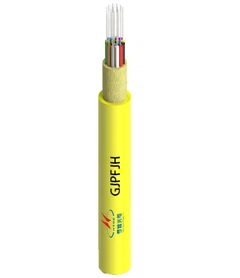


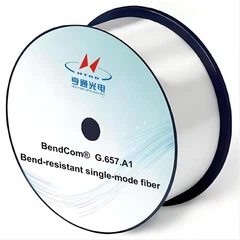

When you evaluate single mode vs multimode fiber, the choice shapes your network's reach, speed, and budget. Single mode fiber delivers superior performance over long distances, supporting high bandwidth and energy efficiency. Over 66% of telecom providers and 61% of hyperscale data centers now deploy singlemode for its reliability and future-proofing. In contrast, multimode fiber remains popular for short-range, cost-sensitive projects, with 54% of new fiber optic network installations using multimode.
You should always match optical cable type to your business needs-consider both current and future optical demands as high-speed connectivity and advanced fiber optic infrastructure become essential.
Key Takeaways
- Single mode fiber is ideal for long-distance transmission, supporting distances over 40 kilometers with minimal signal loss.
- Multimode fiber is best for short-range applications, typically effective up to 500 meters, making it cost-effective for office and campus networks.
- Single mode fiber offers higher bandwidth capabilities, supporting data rates from 10 Gb/s to 400 Gb/s, ensuring future-proofing for growing networks.
- Multimode fiber uses less expensive light sources like LEDs, making it a budget-friendly option for short-distance connections.
- When choosing fiber, consider your network's distance needs; single mode excels in long-haul scenarios while multimode suits local setups.
- Installation costs vary; single mode requires skilled labor for precise alignment, while multimode installations are simpler and faster.
- Evaluate future growth plans; single mode fiber allows for easy upgrades without replacing existing infrastructure, ensuring long-term value.
- Understanding the differences in signal quality and attenuation can help you select the right fiber type for your specific business needs.
Single Mode Vs Multimode Fiber:Key Differences
Single Mode Vs Multimode Fiber:Core Design
Core Size
When you compare single mode vs multimode fiber, the core size stands out as a primary technical difference. Singlemode optical fiber features a much smaller core diameter, typically 8.3 microns, while multimode fiber offers larger core sizes of 50 or 62.5 microns. Both types use a cladding diameter of 125 microns, which ensures compatibility with standard connectors and splicing equipment.
|
Fiber Type |
Core Diameter (μm) |
Cladding Diameter (μm) |
|---|---|---|
|
Single-mode |
8.3 |
125 |
|
Multimode |
50 or 62.5 |
125 |
A smaller core in singlemode fiber allows only one mode of light to propagate, which minimizes signal distortion and supports longer transmission distances. In contrast, multimode fiber's larger core enables multiple modes of light, increasing signal dispersion and limiting transmission range.
Material
You will find that both singlemode and multimode optical fiber use high-purity glass as the core material. This glass provides excellent transmission properties and durability. The cladding, also made of glass, surrounds the core and maintains the light within the fiber through total internal reflection. Manufacturers follow strict ITU-T and ISO/IEC standards to ensure consistent performance and reliability for both fiber types.
Single Mode Vs Multimode Fiber:Bandwidth & Distance
Transmission Range
Singlemode optical fiber excels in long-distance transmission. You can achieve distances up to 40 kilometers or more without significant signal degradation. This makes singlemode the preferred choice for telecom networks, metropolitan area networks, and data center interconnects.
Multimode fiber is designed for shorter transmission distances. OM4 multimode fiber supports up to 400 meters with a 40G-SWDM4 transceiver, while OM5 can reach 500 meters. For 100G-SWDM4 modules, OM5 supports 150 meters, and OM4 supports 100 meters. These ranges make multimode fiber ideal for premise applications, such as office buildings and campus networks.
Tip: If your network requires long-haul transmission, singlemode optical fiber offers unmatched reliability and future-proofing.
Data Rates
Bandwidth capabilities differ significantly between singlemode and multimode fiber. Singlemode fiber supports data rates from 10 Gb/s up to 400 Gb/s, with the ability to maintain high speeds over long distances. Multimode fiber, while cost-effective, supports lower data rates over shorter distances.
|
Fiber Type |
Data Rate |
Distance |
|---|---|---|
|
OM3 |
10 Gbps |
300 m |
|
OM4 |
100 Gbps |
400 m |
|
OM5 |
100 Gbps |
550 m |
Singlemode fiber enables you to deploy high-bandwidth applications without worrying about future upgrades. Multimode fiber suits environments where transmission distances are limited and cost is a priority.
Single Mode Vs Multimode Fiber:Light Source
Laser vs LED
The choice of light source impacts both performance and cost. Singlemode optical fiber uses lasers or laser diodes, which provide precise, high-powered light for long-distance transmission. These transceivers cost more but deliver superior performance and reliability.
Multimode fiber relies on LEDs or VCSELs (Vertical-Cavity Surface-Emitting Lasers). These sources are less expensive-typically two to three times cheaper than singlemode transceivers-and work well for short-range applications.
|
Fiber Type |
Light Source Types |
Wavelengths (nm) |
Cost Comparison |
|---|---|---|---|
|
Singlemode |
Lasers, Laser Diodes |
1310, 1550 |
Higher cost for transceivers |
|
Multimode |
LEDs, VCSELs |
850, 1300 |
2-3 times less expensive than singlemode |
Wavelengths
Singlemode optical fiber operates at wavelengths of 1310 nm and 1550 nm. These wavelengths support long-distance transmission and high data rates. Multimode fiber typically uses 850 nm, which is optimal for short-range, high-speed connections within buildings or campuses.
|
Fiber Type |
Wavelengths (nm) |
|---|---|
|
Singlemode |
1310, 1550 |
|
Multimode |
850 |
Note: Selecting the right wavelength and light source ensures your optical network meets both current and future transmission needs.
Single Mode Vs Multimode Fiber:Cost Comparison
When you evaluate fiber optic solutions for your business, cost plays a critical role in your decision. Understanding the differences in cable, equipment, and installation costs between singlemode and multimode options helps you make the right investment for your network.
Cable Cost
You might expect the cable itself to drive most of your expenses. However, the actual cable cost often represents a minor portion of your total project budget. Singlemode fiber typically costs less per meter than multimode fiber. Manufacturers can produce singlemode cables with lower material and manufacturing precision costs. This makes singlemode fiber optic cable an attractive option for large-scale, long-distance deployments.
|
Cable Type |
Average Cost per Meter |
Typical Use Case |
|---|---|---|
|
Singlemode fiber optic cable |
Lower |
Long-haul, metro, data center |
|
Multimode fiber optic cable |
Higher |
Short-range, enterprise, campus |
Note: While singlemode cable costs less, the total system cost depends on more than just the cable price.
Equipment Cost
Equipment costs often outweigh cable expenses in fiber deployments. You need to consider transceivers, connectors, and testing equipment. Singlemode systems require higher-precision components. For example, singlemode connectors demand exact alignment, which increases their price. Transceivers for singlemode use lasers, which cost more than the LEDs or VCSELs used in multimode systems. Testing equipment for singlemode also comes at a premium due to the need for greater accuracy.
|
Factor |
Singlemode |
Multimode |
|---|---|---|
|
Transceivers |
Higher cost (laser) |
Lower cost (LED/VCSEL) |
|
Connectors |
More expensive |
Less expensive |
|
Testing Equipment |
More expensive |
Less expensive |
|
Power Consumption |
Higher |
Lower |
You should choose singlemode when your network requires high bandwidth and long-distance transmission. The higher equipment cost pays off in future-proofing and scalability. Multimode fiber optic cable systems offer a lower upfront investment, making them ideal for short-range, cost-sensitive environments.
Installation
- Installation complexity and labor costs can impact your project timeline and budget. Singlemode fiber installations require more skill and precision. Technicians must handle alignment and termination with care, which can increase labor costs. Many enterprises choose pre-terminated singlemode cables to reduce installation time and errors.
- Multimode fiber installations are simpler and faster. The larger core size allows for easier alignment and termination. This reduces the need for specialized labor and speeds up deployment. In 2023, global deployment of multimode cable exceeded 820,000 kilometers, reflecting its popularity for short-distance applications and ease of installation.
- Multimode fiber is more cost-effective and simpler to deploy for short-distance networks.
- Singlemode fiber is preferred for long-distance links, even though it requires higher installation investment.
Tip: For B2B buyers, consider the total cost of ownership. Singlemode delivers long-term value for high-growth, high-bandwidth networks. Multimode offers immediate savings and quick deployment for smaller-scale projects.
Single Mode vs Multimode Fiber

Single Mode Vs Multimode Fiber:Performance
Signal Quality
When you compare single mode vs multimode fiber, signal quality stands out as a critical factor for B2B buyers. Single-mode optical fiber transmits light along a single path, which eliminates differential mode delay and minimizes signal distortion. This design ensures that your network maintains high signal integrity, even across ultra-long distances. In contrast, multimode optical fiber allows multiple modes of light to travel simultaneously. As a result, you experience modal dispersion, where light pulses spread out and overlap, causing signal degradation over distance.
Singlemode fiber excels in high-bandwidth and high-speed data transfer applications, such as interconnecting data centers or supporting metropolitan area networks.
Multimode optical fiber works best for short-range deployments, like wiring within office buildings or connecting equipment in enterprise LANs.
|
Performance Metric |
Single Mode Fiber |
Multimode Fiber |
|---|---|---|
|
Transmission Distance |
Supports ultra-long distances (>100 km) |
Effective up to 550 meters |
|
Bandwidth Potential |
High bandwidth capabilities |
High performance over short distances |
|
Signal Loss and Distortion |
Minimal signal loss and distortion |
Experiences modal dispersion |
Tip: If your business requires consistent network performance and minimal signal loss, single-mode optical fiber provides a future-proof solution.
Attenuation
Attenuation measures how much signal strength decreases as it travels through the fiber. Singlemode fiber optic cable offers much lower attenuation rates than multimode optical fiber. For example, at 1550 nm, singlemode fiber has an attenuation rate of just 0.30 dB/km, while multimode optical fiber at 850 nm can reach 3.50 dB/km. This difference means you can deploy singlemode fiber over much longer distances without needing repeaters or amplifiers.
|
Fiber Type |
Wavelength (nm) |
Attenuation Rate (dB/km) |
|---|---|---|
|
Single-mode |
1310 |
0.40 |
|
Single-mode |
1550 |
0.30 |
|
Multimode |
850 |
3.50 |
|
Multimode |
1300 |
1.50 |
In real-world scenarios, you see singlemode fiber supporting high-speed data transfer between cities or across large campuses, while multimode optical fiber is limited to shorter runs within a building. This distinction directly impacts your fiber optic speed and distance planning.
Single Mode Vs Multimode Fiber:Reliability

Error Rates
You want a network that delivers reliable, error-free communication. Single-mode optical fiber maintains low error rates because it avoids modal dispersion and keeps signal pulses sharp. This reliability is essential for mission-critical applications, such as financial trading platforms or healthcare data systems, where even minor errors can have significant consequences.
Multimode optical fiber, due to its multiple light paths, is more prone to errors as distance increases. Modal dispersion causes overlapping signals, which can lead to data loss or the need for retransmissions. For short connections, such as linking servers in a data center, multimode fiber still provides dependable performance.
Environmental Factors
Environmental conditions can affect both singlemode and multimode fiber. Temperature swings may cause the fiber material to expand or contract, potentially impacting transmission quality. High temperatures can reduce the precision of light transmission, while low temperatures might create microfractures in the fiber. Humidity poses another risk, especially for single-mode optical fiber, as moisture can enter connectors and cause corrosion or signal loss.
Note: For outdoor or industrial deployments, you should select fiber and connectors rated for harsh environments to ensure long-term reliability.
Real-World Scenario Comparison
A telecom provider deploying a city-wide backbone network will benefit from singlemode fiber optic cable for its unmatched distance, low attenuation, and robust network performance.
An enterprise wiring a new office building can save costs by choosing multimode optical fiber for short runs between network closets and workstations.
By understanding these differences, you can match your fiber choice to your business needs, ensuring optimal performance, reliability, and value.
Single mode Fiber Optic Cable

Use Cases
Long-Distance Networks
You should consider singlemode fiber when your network must span long distances without sacrificing speed or reliability. Single-mode optical fiber supports ultra-long-distance connections, often exceeding 40 kilometers, with minimal signal loss. This capability makes it the backbone of city-wide and intercity networks. You can deploy singlemode in smart city infrastructure, where sensors and devices require stable, high-bandwidth links across vast areas. Many enterprises use singlemode fiber to connect multiple campuses or remote facilities, ensuring seamless data flow and business continuity.
Singlemode fiber transmits data with limited attenuation, so you avoid frequent signal boosters.
You gain higher bandwidth capacity, which supports advanced digital services and future network upgrades.
The scalability of singlemode fiber allows you to add new transceivers or increase speeds without replacing existing cabling.
Tip: If your business plans to expand or integrate new technologies, singlemode fiber offers a future-proof solution.
Data Centers
Modern data centers rely on singlemode fiber to handle massive data volumes between servers, storage, and core switches. You benefit from high-speed, low-latency connections that support cloud computing, virtualization, and real-time analytics. Singlemode optical fiber ensures your infrastructure can scale as your data needs grow. Many hyperscale data centers now standardize on singlemode to maximize efficiency and reduce long-term costs.
Singlemode fiber supports wavelength-division multiplexing, letting you transmit multiple signals over a single strand.
You achieve higher port densities and reduce cabling complexity compared to multimode optical fiber.
The reliability of singlemode fiber minimizes downtime and supports mission-critical workloads.
Industry Applications
Telecom
Telecommunications companies depend on singlemode fiber optic cable to deliver high-speed internet, voice, and video services worldwide. Single-mode optical fiber forms the backbone of the global internet, enabling data to travel across continents with minimal delay. You can trust singlemode for its unmatched reliability and performance in carrier networks. Telecom providers choose singlemode to support growing bandwidth demands and to ensure seamless connectivity for millions of users.
|
Industry |
Application Description |
|---|---|
|
Telecommunications |
Serves as the backbone of the internet, enabling high-speed data transmission globally. |
Cloud Providers
Cloud service providers require robust, scalable networks to deliver applications and storage to customers. Singlemode fiber enables you to build high-capacity links between data centers, ensuring fast and secure access to cloud resources. You can leverage singlemode to support distributed architectures and disaster recovery solutions. The high bandwidth and low attenuation of singlemode fiber make it ideal for supporting the rapid growth of cloud-based services.
|
Industry |
Application Description |
|---|---|
|
Data Centers |
Essential for efficient communication between servers and storage systems, optimizing data flow and access. |
Note: Leading cloud providers and telecom operators invest in singlemode fiber to guarantee performance, security, and scalability for their customers.
You should view singlemode fiber as a strategic investment. It delivers the reliability, speed, and scalability that modern enterprises and service providers demand. By choosing singlemode, you position your business for growth and technological advancement.
Multi mode Fiber Optic Cable

Use Cases
Short-Distance Networks
You often choose multimode optical fiber for short-distance networks where cost and simplicity matter most. The larger core diameter of multimode optical fiber allows you to use less expensive light sources, such as LEDs and VCSELs. This design supports high-speed data transmission over limited distances, making it ideal for connecting devices within the same building or across a small campus. You can deploy multimode optical fiber in environments where cable runs rarely exceed 500 meters. This approach keeps your installation straightforward and your budget under control.
Tip: Multimode optical fiber offers a practical solution for organizations that need reliable, high-speed connections without the complexity or expense of long-haul infrastructure.
Enterprise LANs
In enterprise LANs, you benefit from the flexibility and performance of multimode optical fiber. Many businesses use multimode fiber optic cable to link wiring closets, switches, and servers. You can achieve data rates up to 100GbE over short distances, which meets the demands of modern office environments. Multimode optical fiber supports rapid deployment and easy upgrades, so your network can grow as your business expands.
- Local Area Networks (LANs)
- Corporate Campuses
- Data Centers
- Enterprise Wiring Closets
These applications highlight the versatility of multimode optical fiber in enterprise settings. You gain high-speed connectivity and future-ready infrastructure without overspending.
|
Use Case |
Description |
Performance Supported |
|---|---|---|
|
Data Centers |
Multimode fibers (OM3/OM4) are ideal for connecting switches, servers, and storage. |
10GbE, 40GbE, 100GbE |
|
Campus Environments |
They are extensively used in corporate campuses for efficient networking. |
Short to medium distances |
|
Enterprise Networks |
Multimode fiber is favored for its cost-effectiveness and performance in enterprise wiring closets. |
High-speed connections |
Industry Applications

Campus Networks
You see multimode optical fiber widely used in campus networks. Educational institutions, corporate headquarters, and healthcare facilities rely on this fiber for robust, high-speed connections between buildings. The ability to support multiple gigabit channels over moderate distances makes multimode optical fiber a top choice for campus-wide deployments. You can easily scale your network as your organization grows, ensuring seamless communication and data sharing.
Industrial Environments
Industrial environments demand reliable and resilient networking solutions. Multimode optical fiber performs well in these settings due to its immunity to electromagnetic interference and its durability. You can use multimode fiber to connect process control systems, machine-to-machine communication, and automated equipment. Industries such as manufacturing, healthcare, and government agencies trust multimode optical fiber for secure and stable data transmission.
|
Sector |
Applications |
|---|---|
|
Telecommunications |
Fiber-to-the-home (FTTH), local area networks (LANs), metropolitan area networks (MANs) |
|
Military & Aerospace |
Avionics, satellite communications, tactical communication systems |
|
Industrial Automation |
Process control, machine-to-machine (M2M) communication |
|
Healthcare |
Medical imaging, diagnostic equipment |
|
Government |
Secure communication networks, public safety systems, e-government services |
Note: Multimode optical fiber delivers dependable performance in sectors where uptime and data integrity are critical.
You can rely on multimode fiber for cost-effective, high-speed networking in a wide range of industries. Its proven track record in enterprise, campus, and industrial environments makes it a smart investment for B2B buyers seeking value and scalability.
Multimode Fiber Deployment

Scenarios
Office Buildings
You often see multimode fiber deployed in office buildings because it supports high-speed connections between workstations, wiring closets, and network switches. Many organizations choose this fiber for its cost-effectiveness and ease of installation. You benefit from reliable performance for applications like VoIP, video conferencing, and cloud access within a single building. Multimode fiber is also common in hospitals and schools, where you need robust connectivity but do not require long-distance transmission. You should note that this fiber cannot support speeds of 1 Gb/s or higher over extended distances, so you must plan your network layout carefully.
Multimode fiber provides efficient data transfer for short runs.
You avoid the disruption and expense of upgrading to singlemode fiber in complex environments.
Office deployments often use OM3 or OM4 fiber for 10GbE or 40GbE links.
Manufacturing
Manufacturing facilities rely on multimode fiber to connect control systems, sensors, and automation equipment across the plant floor. You gain immunity to electromagnetic interference, which is critical in industrial settings. Multimode fiber supports machine-to-machine communication and process control, ensuring stable data flow even in areas with heavy machinery. You can install this fiber in locations with limited access, reducing downtime and operational costs. Upgrading to singlemode fiber in these environments can be disruptive, so you should select multimode fiber for flexibility and reliability.
Multimode fiber enables fast, secure data exchange in manufacturing.
You minimize installation challenges in areas with restricted access.
Industrial networks benefit from the durability and resilience of multimode fiber.
Best Practices
Installation Tips
You should follow proven best practices to maximize the performance and lifespan of your multimode fiber network. Planning your installation is essential. Create a detailed map of cable routes, connection points, and equipment locations. Handle fiber optic cables with care to prevent bending or twisting, which can cause signal loss. Always adhere to the manufacturer's minimum bend radius guidelines. Inspect cables and connectors before installation to avoid future issues.
Use trays and clips to support fiber properly.
Label cables and connectors for easy identification.
Clean connectors with lint-free wipes and alcohol-based solutions.
Test and verify all connections after installation.
Tip: Careful planning and handling during installation help you avoid costly repairs and downtime.
Maintenance
Regular maintenance ensures your multimode fiber network continues to deliver reliable performance. You should clean fiber ends and connectors routinely to prevent signal degradation. Conduct visual inspections to identify damage or wear. Perform regular testing to verify network integrity and address any issues promptly.
|
Maintenance Task |
Frequency |
Benefit |
|---|---|---|
|
Clean connectors |
Monthly |
Prevents signal loss |
|
Visual inspection |
Quarterly |
Detects physical damage |
|
Performance testing |
Annually |
Ensures optimal data transfer |
Note: Consistent maintenance protects your investment and keeps your fiber network running smoothly.
You can deploy multimode fiber confidently in office and industrial environments by following these best practices. This approach helps you meet business demands for speed, reliability, and cost control.
Choosing the Right Fiber
Selecting the optimal fiber for your business network requires a clear understanding of your operational needs and future growth plans. You must evaluate several decision factors to ensure your investment delivers reliable transmission, scalability, and cost efficiency.

Decision Factors
Distance
You should start by assessing the transmission distance your network demands. Single-mode fiber excels in long-distance applications, supporting transmission up to 100 kilometers without signal amplification. This capability makes single-mode ideal for metropolitan networks, inter-building links, and backbone infrastructure. If your network spans only a few hundred meters-such as within a campus, office building, or data center-multimode fiber provides a cost-effective solution. Multimode supports transmission up to 500–600 meters, making it suitable for most enterprise LANs and local networks.
Single-mode fiber: Best for transmission over thousands of meters or more.
Multimode fiber: Sufficient for transmission distances of 300–600 meters.
Tip: Always match the fiber type to your maximum transmission distance to avoid unnecessary costs and ensure optimal performance.
Bandwidth
Bandwidth requirements play a critical role in your fiber selection. Modern enterprise applications demand high-speed data transfer, video conferencing, cloud access, and real-time analytics. Single-mode fiber supports nearly unlimited bandwidth over long distances, exceeding 100 THz, which future-proofs your network for evolving business needs. Multimode fiber delivers high throughput for short distances but faces limitations due to modal dispersion. You can rely on multimode for high-speed connections within a building or campus, but single-mode remains the standard for high-capacity, long-haul transmission.
Single-mode fiber: Supports high data rates, often exceeding tens of Gbps, ideal for ISPs and data centers.
Multimode fiber: Optimized for high bandwidth over shorter distances, perfect for local area networks.
Budget
Budget constraints often influence your choice between single-mode and multimode fiber. While the fiber cable itself represents a minor portion of your total investment, equipment and installation costs vary significantly. Multimode fiber offers a baseline cost advantage, with components and installation typically 20–100% less expensive than single-mode systems. You benefit from lower upfront costs for short-distance networks. However, single-mode fiber becomes more cost-effective for long-distance and high-bandwidth applications, despite its higher initial investment.
|
Fiber Type |
Cost Impact |
|---|---|
|
Multimode |
Baseline (less expensive) |
|
Single-mode |
+20–100% (more expensive) |
Note: Consider both immediate and long-term costs. Single-mode fiber may require a larger initial investment but delivers greater scalability and lower maintenance over time.
Future-Proofing
You must account for future network expansion and technology upgrades. Single-mode fiber offers superior future-proofing due to its nearly unlimited bandwidth and long transmission range. You can upgrade equipment and increase data rates without replacing the existing fiber infrastructure. Multimode fiber supports current standards for enterprise and campus networks but may require replacement as bandwidth demands grow. If your business anticipates rapid growth or new digital services, single-mode fiber provides a strategic advantage.
Single-mode fiber: Enables seamless upgrades and supports next-generation applications.
Multimode fiber: Meets current needs but may limit future scalability.
Comparison Table
You can use the following table to compare the most important features of single-mode and multimode fiber. This quick reference helps you align your network requirements with the right fiber type.
|
Feature |
Single Mode Fiber |
Multimode Fiber |
|---|---|---|
|
Core Diameter |
~9 micrometers |
50–62.5 micrometers |
|
Bandwidth |
Nearly unlimited over long distances |
Limited by modal dispersion |
|
Attenuation |
Lower inherent attenuation |
Higher attenuation |
|
Light Sources |
Lasers (WDM) |
LEDs, VCSELs |
|
Maximum Bandwidth |
Exceeds 10 Gbps over 100 km |
Up to 100 Gbps over shorter distances |
|
Installation Costs |
Higher due to intricate components |
Lower due to cheaper components |
|
Susceptibility to External Influences |
More immune to disturbances |
More prone to signal loss |
|
Upgradability |
Better for future scaling |
Limited by current standards |
Quick Checklist
You can use this checklist to guide your decision:
✅ Does your network require transmission over 500 meters or more?
Choose single-mode fiber.
✅ Do you need high bandwidth for cloud, video, or analytics applications?
Single-mode fiber offers superior capacity.
✅ Is your budget limited and your network confined to a single building or campus?
Multimode fiber provides cost-effective performance.
✅ Are you planning for future upgrades or rapid business growth?
Single-mode fiber ensures long-term scalability.
🚀 You should always align your fiber choice with your business goals, technical requirements, and growth strategy. The right decision secures reliable transmission, maximizes ROI, and positions your network for future success.
You face a clear choice when comparing single mode vs multimode fiber. Single mode fiber delivers long-distance transmission, future-proofing, and high bandwidth, while multimode fiber offers easier installation and lower upfront costs for short-range networks. Review the table below to see how industry trends shape your decision:
|
Key Considerations |
Singlemode Fiber |
Multimode Fiber |
|---|---|---|
|
Core Diameter |
9µ |
Larger diameter |
|
Transmission Range |
Long distances |
Limited (up to 150m) |
|
Cost Trends |
Prices expected to fall |
Currently lower |
|
Future-proofing |
Supports future data rates |
Limited by protocols |
|
Installation Complexity |
More complex |
Easier to install |
You should consult with vendors and conduct a needs assessment to match your fiber choice to your business goals. Select single mode vs multimode fiber based on distance, bandwidth, and budget to maximize network reliability and ROI.
FAQ
Why should you choose single mode fiber for long-distance networks?
Single mode fiber supports transmission over 40 kilometers with minimal signal loss. You gain reliable, high-bandwidth connectivity for backbone infrastructure and metropolitan networks. Industry data shows telecom providers prefer single mode for future-proofing and scalability.[1]
Why does multimode fiber cost less for short-range applications?
Multimode fiber uses less expensive LEDs or VCSELs and simpler connectors. You save on equipment and installation. This makes multimode ideal for office buildings, campuses, and enterprise LANs where runs rarely exceed 500 meters.[2]
Why do data centers often deploy single mode fiber?
Single mode fiber enables high-speed, low-latency links between servers and switches. You benefit from wavelength-division multiplexing and higher port density. Leading cloud providers use single mode to support rapid growth and advanced digital services.[3]
Why is modal dispersion a concern in multimode fiber?
Modal dispersion occurs when multiple light paths overlap, causing signal distortion. You experience reduced bandwidth and shorter transmission distances. This limits multimode fiber to short-range, high-speed connections within buildings or campuses.[4]
Why should you consider future-proofing when selecting fiber?
Single mode fiber offers nearly unlimited bandwidth and supports next-generation upgrades. You avoid costly replacements as your network grows. Multimode fiber may require upgrades if your business demands higher speeds or longer distances in the future.[5]
Why do installation costs differ between single mode and multimode fiber?
Single mode fiber requires precise alignment and skilled labor, increasing installation costs. Multimode fiber allows easier termination and faster deployment. You reduce labor expenses and project timelines with multimode for short-distance networks.[6]
Why is attenuation lower in single mode fiber?
Single mode fiber transmits light along a single path, minimizing signal loss. You achieve lower attenuation rates, which supports long-distance, high-bandwidth applications. Multimode fiber experiences higher attenuation due to multiple light modes.[7]
Tip: Always match your fiber choice to your business needs, considering distance, bandwidth, and future growth.
What is multimode fiber and where is it best used?
Multimode fiber (MMF) features a wider core - typically 50 µm or 62.5 µm in diameter - that allows numerous light signals to travel through the fiber along different paths at the same time. Because of this wider core, MMF works seamlessly with cost-efficient light sources such as LEDs and VCSELs, making the overall system more affordable to deploy. These characteristics make it a practical choice for short-reach, high-speed connections in environments like local area networks (LANs), data centers, and intra-building backbone links. At 10G speeds, multimode fiber typically delivers reliable performance within a reach of 550 meters or less, striking a balance between bandwidth capability and budget-conscious infrastructure planning.