





How do optical to optical cables work
When light travels faster than electricity, your data does too. The global fiber optic cable market was valued at USD 13 billion in 2024 and is estimated to grow at a CAGR of 10.4% to USD 34.5 billion in 2034 (Source: gminsights.com, 2024). This explosive growth reflects a fundamental shift in how we transmit information-not through electrons in copper wire, but through photons in glass.
Optical to optical cables work by converting electrical signals into light pulses, transmitting them through fiber strands using total internal reflection, and converting them back to electrical signals at the destination. Unlike traditional copper cables that degrade over distance, optical cables maintain signal integrity across hundreds of kilometers by bouncing light through a glass core surrounded by protective cladding. This article breaks down the physics behind optical transmission, explores real-world applications from data centers to undersea networks, and explains why this technology has become the backbone of modern connectivity.
The Physics Behind Light Transmission in Optical Cables
Understanding how optical cables work requires grasping the principle of total internal reflection-the phenomenon that traps light inside a fiber strand and allows it to travel vast distances without escaping.

Core and Cladding Architecture
Light signals travel through the core composed of highly purified silicon dioxide (SiO2) with very small trace amounts of dopants such as Germanium added to adjust the index of refraction for optimum optical transmission (Source: aflhyperscale.com, 2024). The cladding surrounds this core with a material that has a lower refractive index-typically around 1.46 for the core versus 1.42 for the cladding.
This refractive index difference creates the conditions necessary for total internal reflection. When light traveling through the denser core hits the boundary with the less dense cladding at an angle exceeding the critical angle, it reflects back into the core rather than escaping. The light in a fiber-optic cable travels through the core by constantly bouncing from the cladding, a principle called total internal reflection (Source: howstuffworks.com, 2022).
How Total Internal Reflection Confines Light
Light traveling from a denser medium to a less dense medium at an angle exceeding the critical angle will experience total internal reflection, where the light reflects into the denser primary medium and does not enter the secondary less dense medium (Source: aflhyperscale.com, 2024).
The critical angle depends on the refractive indices of the core and cladding materials. For standard telecommunications fiber with a core index of 1.46 and cladding index of 1.42, the critical angle is approximately 76 degrees. Light entering the fiber at angles greater than this threshold bounces continuously down the length of the cable, traveling at speeds approaching 200,000 kilometers per second-about two-thirds the speed of light in a vacuum.
This reflection occurs millions of times per kilometer with virtually no energy loss. The cladding prevents light from being transmitted between fibers in a bundle, and because the cladding does not absorb any light from the core, the light wave can travel great distances (Source: phys.libretexts.org, 2024).
Single-Mode vs Multimode Fiber Operation
Single-mode strands held 63.2% of the fiber optic cable market share during 2024, remaining indispensable for metropolitan, long-haul, and submarine links that span hundreds of kilometers (Source: mordorintelligence.com, 2025).
Single-mode fiber has a core diameter of approximately 9 micrometers-about one-eighth the thickness of a human hair. This narrow core allows only a single mode of light to propagate, eliminating modal dispersion and enabling transmission over distances exceeding 100 kilometers without signal regeneration.
Multimode fiber features a larger core diameter of 50 to 62.5 micrometers, allowing multiple light modes to travel simultaneously. Multi-mode is poised for a 13.2% CAGR through 2030, a resurgence propelled by data-center top-of-rack connections where 100-150 meter reach and cost-efficient VCSEL transceivers prevail (Source: mordorintelligence.com, 2025).
Signal Conversion: From Electricity to Light and Back
The optical cable itself is passive-it simply guides light. The intelligence lies in the active components at each end that perform signal conversion.
Transmitter Components
The transmitter is physically close to the optical fiber and may even have a lens to focus the light into the fiber. Lasers have more power than LEDs but vary more with changes in temperature and are more expensive. The most common wavelengths of light signals are 850 nm, 1,300 nm and 1,550 nm (Source: howstuffworks.com, 2022).
For short-distance applications like consumer audio (TOSLINK connections), simple LEDs operating at 650 nanometers suffice. These red-light transmitters convert the S/PDIF digital audio stream into light pulses that travel through plastic optical fiber.
Long-distance telecommunications require more sophisticated laser diodes operating in the infrared spectrum. The 1,550 nanometer wavelength experiences the lowest attenuation in silica fiber-approximately 0.2 decibels per kilometer-making it ideal for submarine cables spanning oceans.
Receiver Electronics
At the receiving end, a photodiode detects incoming light pulses and converts them back to electrical signals. Modern receivers can detect individual photons, enabling transmission over extraordinary distances. Some signal loss occurs when the light is transmitted through the fiber, especially over long distances such as with undersea cables. Therefore, one or more optical regenerators is spliced along the cable to boost the degraded light signals (Source: howstuffworks.com, 2022).
These regenerators contain doped optical fiber sections pumped with laser energy. When weakened signals pass through, the doped molecules amplify the light through stimulated emission-essentially acting as lasers themselves without requiring signal conversion.
Active Optical Cables (AOCs)
The global active optical cable market reached USD 4,079.0 Million in 2024 and is expected to grow at a CAGR of 19.8% to reach USD 20,714.4 Million by 2033 (Source: imarcgroup.com, 2024).
Active optical cables integrate the transmitter and receiver electronics directly into the cable connectors, creating plug-and-play solutions. AOC cables use optic technology models which increase the bandwidth on the cable to 40G and 100G, which is imperative for current usage and requires large amounts of data (Source: ascentoptics.com, 2024).
Unlike passive fiber that requires separate transceivers, AOCs convert signals at the cable ends. This simplifies installation in data centers where thousands of server-to-switch connections must be deployed rapidly.
Types of Optical Cable Construction
Not all optical cables are created equal. Construction varies dramatically based on the deployment environment.
Armored vs Non-Armored Designs
Armored products represented 38.0% of the fiber optic cable market in 2024, evidencing operator preference for mechanically robust designs whenever cables traverse harsh terrain or public rights-of-way (Source: mordorintelligence.com, 2025).
Armored cables incorporate steel wire or corrugated metal tubes surrounding the fiber bundle, protecting against rodent damage, crushing forces, and accidental strikes during excavation. These cables are essential for direct-burial installations where the fiber must survive decades underground without maintenance access.

Non-armored indoor cables prioritize flexibility and fire resistance over mechanical strength. They use aramid yarn (Kevlar) strength members and flame-retardant jackets rated for plenum spaces where air circulates through buildings.
Installation Method Variations
Underground deployments led with 46.1% revenue share in 2024, while submarine projects are set to grow at a 12.8% CAGR through 2030 (Source: mordorintelligence.com, 2025).
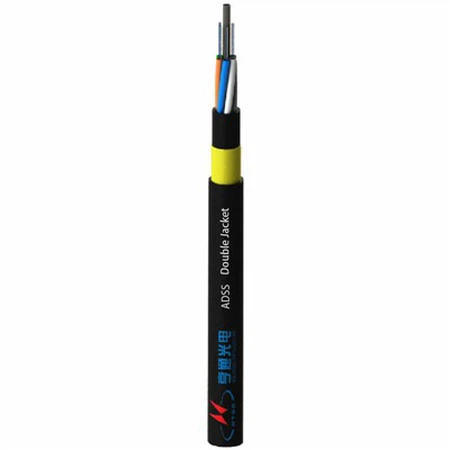
Aerial cables suspend from telephone poles using messenger wires, requiring UV-resistant jackets that withstand decades of sun exposure, ice loading, and wind stress. In January 2022, Orange S.A. extended its optical fiber network to around 63% of the 29 million eligible premises for FTTH in France through aerial installations, resulting in a 20% growth in the number of covered premises (Source: polarismarketresearch.com, 2024).
Submarine cables represent the ultimate engineering challenge. They must operate at crushing ocean depths, resist shark bites, and remain operational for 25 years without maintenance. Modern submarine cables bundle hundreds of fiber pairs capable of carrying 400+ terabits per second across entire oceans.
Specialty Cable Formats
Ribbon cables stack multiple fibers in flat arrays, allowing up to 3,456 fibers in a single cable-critical for fiber-dense routes between data centers. Ribbon cables are forecast to expand at an 11.4% CAGR to 2030 (Source: mordorintelligence.com, 2025).
Micro-cables compress diameter to as little as 2-3 millimeters while still containing 12-24 fibers. These fit into existing conduits already crowded with older copper infrastructure, enabling network upgrades without costly excavation.
Real-World Applications Driving Market Growth
Optical cables serve applications far beyond internet connections, each with unique performance requirements.
Data Center Interconnection
Data-center operators represent the fastest-growing cohort, advancing at a 14.0% CAGR driven by AI model training and latency-sensitive edge workloads (Source: mordorintelligence.com, 2025).
The rapid advancement of generative artificial intelligence requires at least 10 times more fiber connections within data centers as well as a robust fiber network to transmit information between these data hubs (Source: lumen.com, 2024). In August 2024, Lumen Technologies reserved 10% of Corning's global fiber production capacity to double their intercity network miles, specifically to support AI data center connectivity.
Inside data centers, AOCs are capable of preserving high-performance signal integrity at distances over 100 meters, while copper cables lose most of their efficiency performance after 10 meters (Source: fibermall.com, 2024). This enables flexible data center layouts where compute and storage can be separated by building wings rather than confined to adjacent racks.
5G Network Infrastructure
According to GSMA, global 5G penetration is anticipated to reach over 56% in 2030 compared to over 18% in 2023 (Source: gminsights.com, 2024).
5G small cells require fiber backhaul connections to deliver the promised low-latency, high-bandwidth performance. The denser and more extensive infrastructure required for 5G networks relies on small cell deployment for enhanced coverage and speeds, with fiber optic cables needed for backhaul and fronthaul connectivity (Source: gminsights.com, 2024).
According to a report published by the Ministry of Industry and Information Technology (MIIT) in March 2022, telecom service providers in China installed around 1.425 million 5G base stations, requiring fiber optics deployment to accommodate network traffic for more than 500 million users (Source: polarismarketresearch.com, 2024).
Consumer Electronics and Home Theater
TOSLINK was originally created by Toshiba to connect their CD players to receivers for PCM audio streams. The data-link layer is based on the Sony/Philips Digital Interface (S/PDIF) while the hardware layer utilizes a fiber optic transmission system (Source: wikipedia.org, 2025).
Toslink handles PCM 2.0, Dolby Digital 5.1/EX 6.1, DTS 5.1/ES, and DTS 96/24, but for Dolby TrueHD/Atmos you must use HDMI eARC (Source: wireworldcable.com, 2025). While HDMI has displaced optical audio for video applications, TOSLINK remains valuable for isolating audio connections and eliminating ground loop noise in complex home theater systems.
Plastic optical fiber used in consumer applications costs significantly less than glass fiber-as little as $0.82 per meter-though transmission distance is limited to 5-10 meters due to higher attenuation.
Smart Grid and Utility Monitoring
The power utilities industry is expected to grow at a CAGR of over 10.9% during the forecast period, driven by the shift toward smart grid technology (Source: gminsights.com, 2024).
Smart grids rely on fiber optic cables to provide high-speed, low-latency communication between sensors, control systems, and substations comprising the grid's various components (Source: gminsights.com, 2024).
Unlike copper, fiber is immune to electromagnetic interference from high-voltage transmission lines and provides galvanic isolation that enhances safety. Utilities also deploy distributed fiber optic sensing that turns the fiber itself into millions of vibration and temperature sensors capable of detecting equipment faults, right-of-way intrusions, and even forest fire risks.
Key Performance Advantages Over Copper
Optical cables offer multiple technical superiorities that justify their higher initial cost.
Extended Transmission Distance
Copper cable is limited to 100 meters in length without a signal repeater, but fiber optic cables can carry signals for 100 kilometers without losing signal strength (Source: flukenetworks.com, 2024).
This distance advantage eliminates the need for intermediate amplification in most campus and metropolitan networks. A single fiber strand can connect buildings several kilometers apart using passive optics-no power consumption, no active equipment to fail, no maintenance.
For ultra-long-haul applications, modern submarine cables transmit signals across 10,000+ kilometers using erbium-doped fiber amplifiers spaced every 50-100 kilometers. These optical amplifiers boost signal strength without electrical conversion, maintaining multi-terabit throughput across entire oceans.
Bandwidth Capacity
A single fiber can carry much more data than electrical cables such as standard category 5 cable, which typically runs at 100 Mbit/s or 1 Gbit/s speeds (Source: wikipedia.org, 2025).
Modern dense wavelength division multiplexing (DWDM) technology transmits 80+ different wavelengths simultaneously through a single fiber strand, each carrying 100-400 gigabits per second. This enables a single fiber pair to carry tens of terabits-equivalent to millions of simultaneous HD video streams.
The theoretical bandwidth limit of silica fiber exceeds 100 terahertz, far beyond current electronics' ability to utilize it. This headroom ensures fiber infrastructure remains relevant for decades even as data demands multiply.
Electromagnetic Immunity
Unlike electrical cables, fiber conduits are secure and immune to electromagnetic interference (EMI). Optical signals in one fiber do not produce undesirable effects in other adjacent fibers, a property called reduced crosstalk (Source: majorcustomcable.com, 2025).
This immunity proves critical in industrial environments with heavy machinery, electrical substations with extreme EMI, and military applications where electronic warfare threats exist. Fiber optic drones have been used in the Russo-Ukrainian War since March 2024, as this type of drone is immune to electromagnetic interference and not affected by electronic warfare systems (Source: wikipedia.org, 2025).
Weight and Space Efficiency
Fiber cables are small and lightweight when compared to their electrical counterparts carrying the same volume of data (Source: majorcustomcable.com, 2025).
A 144-fiber cable occupies roughly the same conduit space as a 4-pair Category 6 copper cable but carries exponentially more data. In aircraft, satellites, and mobile platforms where every gram matters, fiber's weight advantage becomes decisive. A fiber bundle weighing a few hundred grams replaces copper harnesses weighing tens of kilograms.
Installation and Maintenance Considerations
While fiber offers superior performance, it demands specialized handling that increases deployment costs.
Connector Termination Challenges
The small diameter of the core of optical fibers creates a number of engineering challenges, especially when connecting two cables together. Optical fibers require direct physical contact between the mating surface for effective communication and contamination can prevent accurate alignment (Source: majorcustomcable.com, 2025).
Precision polishing of fiber end-faces achieves flatness measured in nanometers. Even microscopic scratches or dust particles cause significant insertion loss or back-reflection that degrades signal quality.
Connectors should be cleaned before each use with specialized tools like lint-free wipes or cleaning pens and inspected with a fiber scope (Source: majorcustomcable.com, 2025). Professional fiber technicians carry microscopes and cleaning kits as standard equipment.
Bend Radius Limitations
Optical fiber is more fragile than copper wire. Bending fiber beyond its minimum bend radius-typically 10-20 times the cable diameter-stresses the glass and causes microfractures that lead to eventual failure.
Sharp bends also violate the total internal reflection conditions. Light rays hit the core-cladding boundary at angles less than critical, allowing light to escape into the cladding rather than reflecting back into the core. This "bend loss" manifests as signal attenuation proportional to bend severity.
Modern bend-insensitive fiber designs incorporate modified core geometries that maintain total internal reflection even at tight radii, enabling installations in constrained spaces without performance penalties.
Fusion Splicing Requirements
Unlike copper wire that can be twisted together, joining optical fibers requires fusion splicing-precisely aligning the fiber cores and melting them together using an electric arc. Modern fusion splicers achieve splice losses below 0.1 decibel through automated alignment and controlled heating.
Field splicing requires trained technicians and equipment costing thousands of dollars. However, a properly executed fusion splice creates a permanent connection stronger than the fiber itself, with loss characteristics approaching those of continuous fiber.
Emerging Technologies and Future Developments
Fiber optic technology continues evolving to meet exponential data growth demands.
Hollow-Core Fiber
Microsoft has installed 1,280 kilometers of hollow-core fiber now deployed and carrying live traffic, demonstrating the technology is ready for commercial adoption (Source: spectrum.ieee.org, 2025).
Hollow-core prototypes promise latency reductions of 30% attracting algorithmic trading platforms and scientific sites requiring femtosecond-level synchronization (Source: mordorintelligence.com, 2025). Light travels approximately 50% faster through air than through glass, translating to microseconds of latency improvement across metro networks-critical for financial trading where milliseconds represent millions of dollars.
Hollow-core fiber also exhibits lower nonlinear effects that limit power transmission in solid-core fiber, potentially enabling 10x bandwidth increases without additional wavelength channels.
Multi-Core Fiber
Space-division multiplexing using fibers with multiple isolated cores sharing a single cladding enables dramatic capacity increases without requiring new wavelengths or modulation formats. Researchers have demonstrated 19-core fibers carrying petabits per second-though practical deployment awaits compatible amplifiers, splitters, and connectors.
AI-Optimized Networks
In August 2024, Lumen Technologies announced an agreement with Corning for next-generation fiber-dense cable that will more than double Lumen's U.S. intercity fiber miles, offering significant capacity to major cloud data centers racing to stay ahead of AI workloads (Source: lumen.com, 2024).
AI training clusters require unprecedented east-west bandwidth between compute nodes, driving demand for ultra-low-latency fiber fabrics within data centers. Cushman & Wakefield reported that the 11,000 data centers around the world used 7.4 GW in 2023 compared to 4.9 GW in 2022-a 50 percent increase over 2022 (Source: hexatronicdatacenter.com, 2024).
Fiber's inherent energy efficiency becomes critical as data centers struggle with power availability. Fiber optic cables transmit data using light signals which encounter minimal resistance as they travel through the cable's glass or plastic core, requiring less power than electrical signals used in copper cables (Source: hexatronicdatacenter.com, 2024).
Common Misconceptions and Limitations
Despite their advantages, optical cables aren't universal solutions for every application.
Not Always Faster for Short Distances
For distances under 10 meters, copper cables actually deliver lower latency than optical connections. The electrical-to-optical conversion process introduces 5-10 nanoseconds of delay at each end. When cable propagation time is negligible, these conversion delays dominate.
Direct-attach copper (DAC) cables remain the preferred solution for top-of-rack server connections where switches and servers occupy adjacent positions. Only when distances exceed 7-10 meters does fiber's propagation advantage overcome conversion overhead.
Initial Cost Premiums
While fiber offers lower total cost of ownership over 20+ year lifecycles, the initial installation costs 2-3x more than copper. Active components (transceivers) cost $50-$500 per port depending on speed, versus $20-$50 for copper Ethernet ports.
Specialized installation labor, fusion splicing equipment, and precision test instruments add thousands to deployment budgets that copper installations avoid. These upfront costs deter fiber adoption in cost-sensitive applications with shorter planning horizons.
Electrical Power Distribution
Fiber's lack of electrical conductivity eliminates the possibility of Power over Ethernet (PoE) applications. IP cameras, wireless access points, and IoT sensors that rely on PoE must use copper to the network edge, with fiber reserved for backhaul connections between switches.
Researchers are exploring hybrid cables that bundle optical fibers with copper conductors, but these defeat fiber's weight and space advantages while increasing complexity.
Frequently Asked Questions
Can optical cables carry electrical power?
No, optical cables transmit only light signals, not electricity. This limitation means devices like IP cameras and VoIP phones that rely on Power over Ethernet cannot be powered through fiber connections. Hybrid cables containing both fiber and copper conductors exist but lose many of fiber's advantages.
How long do optical cables last before replacement?
Properly installed fiber infrastructure typically operates 25-40 years before requiring replacement. The glass fiber itself doesn't degrade, but protective jackets, connectors, and splices may deteriorate from environmental exposure. Active components like transceivers fail more frequently-every 5-10 years-while the passive fiber remains functional.
Why are optical cables immune to lightning strikes?
Fiber contains no metal conductors, eliminating paths for lightning-induced currents. When lightning strikes near copper cables, the electromagnetic pulse induces massive voltage spikes that destroy connected equipment. Fiber simply doesn't conduct electricity, so electromagnetic disturbances pass through harmlessly. This makes fiber essential for industrial sites, outdoor installations, and elevated structures prone to lightning exposure.
Can I see light coming out of an optical cable?
For telecommunications fiber operating at 1,300-1,550 nanometer wavelengths, the answer is no-these infrared wavelengths are invisible to human eyes. However, looking directly into an active fiber can cause permanent eye damage even though you see nothing. Consumer TOSLINK cables using 650 nanometer red light do emit visible light, though it appears dim. Never look into any optical cable end while equipment is operating.
What's the difference between active and passive optical cables?
Passive optical cables are pure fiber strands requiring separate transceivers to convert electrical signals to light. Active optical cables (AOCs) integrate the transceiver electronics into the cable connectors, creating plug-and-play solutions that appear electrically identical to copper cables. AOCs cost more per cable but eliminate expensive standalone transceivers, making them cost-effective for short runs under 100 meters.
How much faster is fiber than copper cable?
Speed isn't the right metric-both copper and fiber transmit at roughly two-thirds the speed of light through their respective media. The real advantage is bandwidth capacity. A single fiber strand supports 100+ gigabits per second using current technology and multi-terabits using wavelength multiplexing, while copper Category 6a tops out at 10 gigabits over 100 meters. Fiber also maintains full bandwidth over kilometers while copper degrades rapidly beyond 100 meters.
Making the Decision: When Optical Cables Make Sense
Optical to optical cables represent a fundamental advancement in data transmission technology, leveraging the physics of total internal reflection to guide light through glass strands with extraordinary efficiency. Their immunity to electromagnetic interference, massive bandwidth capacity, extended transmission distances, and lightweight construction make them indispensable for modern telecommunications infrastructure.
The technology isn't without challenges-higher installation costs, specialized handling requirements, and inability to carry electrical power limit adoption in some applications. However, for long-distance connections, high-bandwidth requirements, harsh electromagnetic environments, and installations demanding decades of reliable service, optical cables offer unmatched performance that justifies their premium.
As artificial intelligence, 5G networks, and cloud computing drive exponential data growth, the fiber optic infrastructure we deploy today will form the foundation for tomorrow's digital economy. With market values projected to exceed $34 billion by 2034 and innovations like hollow-core fiber promising even greater capabilities, optical cable technology continues evolving to meet humanity's ever-expanding hunger for connectivity.