



Do fiber optic systems need cabling
Yes, fiber optic systems absolutely require cabling infrastructure. The thin glass or plastic strands that transmit light signals don't float in mid-air-they need physical cables with protective layers, proper installation pathways, and specialized connection points to function. The fiber optic cable market reached $13.92 billion in 2025 and is projected to grow to $20.94 billion by 2030 (Source: mordorintelligence.com, 2025), reflecting the massive global investment in this essential cabling infrastructure.
Think of fiber optics like water pipes: the water (light signals) needs pipes (cables) to get from point A to point B. Without proper cabling infrastructure-including protective coatings, installation conduits, connection hardware, and management systems-fiber optic technology simply cannot deliver its promised high-speed performance.
What Makes Fiber Optic Cabling Different from Traditional Infrastructure
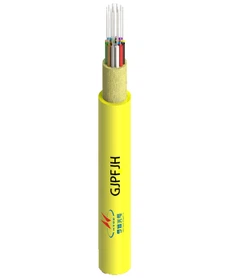
Fiber optic systems rely on a fundamentally different physical structure than copper-based networks. A fiber optic cable consists of thin glass strands no thicker than a human hair, with a core that transmits light signals, surrounded by cladding and an outer protective coating (Source: flukenetworks.com, 2025).
The cabling requirements include several critical components:
Core Infrastructure Elements:
Optical fiber strands (single-mode or multimode)
Protective cladding layers that reflect light back into the core
Buffer coatings that shield against environmental damage
Outer jackets designed for indoor or outdoor deployment
Strengthening members for durability during installation
Installation Pathways: Unlike wireless systems that transmit through air, fiber requires physical pathways. Underground deployments led the market with 46.1% revenue share in 2024, while submarine projects are growing at 12.8% CAGR through 2030 (Source: mordorintelligence.com, 2025). These cables must be buried underground, strung aerially on poles, or routed through building conduits.
Connection Hardware: Fiber optic cables cannot be spliced and taped like electrical wire-they require special connectors that precisely align the ends of two cable segments (Source: sciencedirect.com). This precision requirement drives the need for specialized fusion splicing equipment and trained technicians.
The complexity of fiber cabling infrastructure is actually what makes the technology so powerful. The same protective layers that make installation challenging also shield signals from electromagnetic interference and environmental hazards.
The Scale of Fiber Optic Cabling Infrastructure Deployment
The numbers tell a compelling story about just how much physical cabling modern fiber systems require. Fiber broadband deployments hit a record 10.3 million homes passed in the U.S. in 2024, bringing the total to 88.1 million homes passed with fiber (Source: cablinginstall.com, 2025).
To put this in perspective, every single one of those homes required physical cable installation-trenching through yards, mounting on utility poles, or threading through existing conduits.
Each 5G macrocell typically requires kilometers of fiber deployment (Source: marketdataforecast.com, 2024), and there were approximately 197,850 outdoor small cells in the U.S. at the end of 2024 (Source: marketdataforecast.com, 2025). Multiply those cell sites by kilometers of cable per site, and you begin to understand the massive cabling infrastructure supporting modern wireless networks.
Market Growth Indicators:
The fiber optic cables market grew from $14.52 billion in 2024 to $15.86 billion in 2025, projected to reach $25.09 billion by 2030 at 9.54% CAGR (Source: researchandmarkets.com, 2025)
The global market was valued at $12.55 billion in 2024 and is projected to grow to $30.19 billion by 2033 at 10.24% CAGR (Source: marketdataforecast.com, 2024)
Telecommunications captured 52.4% of the market in 2024, while data centers represent the fastest growth at 14.0% CAGR to 2030 (Source: mordorintelligence.com, 2025)
These figures represent billions of dollars invested in physical cabling infrastructure-conduits, cables, splice closures, and connection hardware.
Why Physical Cabling Infrastructure Is Non-Negotiable
You might wonder whether emerging technologies could eliminate the need for physical cabling. The answer is definitively no, for several technical and practical reasons.
Physics Demands Physical Medium: Light signals need a controlled environment to travel efficiently. Optical fiber is chosen for systems requiring higher bandwidth, harsh environments, or longer distances than electrical cabling can accommodate (Source: wikipedia.org, 2024). Free-space optical communication exists but faces severe limitations from weather, obstacles, and alignment requirements.
Distance and Signal Quality: While single-line copper systems longer than a couple of kilometers require in-line signal repeaters, optical fiber systems routinely operate over 100 kilometers with no active processing (Source: wikipedia.org, 2024). This performance advantage only exists because of the carefully engineered cable structure that protects and guides light signals.
Security Requirements: Physical cabling provides inherent security advantages. It's impossible to tap into fiber optic cable without physically intercepting the signal, which would be detected at the receiving end (Source: sciencedirect.com). This makes cabling infrastructure essential for government, military, and corporate security applications.
Economic Reality: Aerial fiber installations cost between $10,000 to $30,000 per mile, while underground installations range from $20,000 to $60,000 per mile (Source: accutechcom.com, 2024). Organizations wouldn't invest these sums if alternatives existed.
Types of Fiber Optic Cabling Systems Required
Different applications demand different cabling approaches. The fiber optic infrastructure you need depends on transmission distance, bandwidth requirements, and environmental conditions.
Single-Mode Fiber Systems: Single-mode fiber accounted for 63.2% of the market in 2024 (Source: mordorintelligence.com, 2025). These systems use cables with core diameters around 9 microns and require laser light sources. They're essential for long-distance transmission between buildings, across campuses, or intercity connections.

Single-mode cabling infrastructure includes:
Extremely precise cable terminations (laser-grade alignment)
Higher-cost transceiver equipment
Specialized fusion splicing for permanent connections
Yellow-jacketed cables (industry standard color coding)
Multimode Fiber Systems: Multimode fiber is projected to record 13.2% CAGR between 2025-2030 (Source: mordorintelligence.com, 2025). With 50 or 62.5-micron cores, multimode cables work for shorter distances within buildings-typically connecting data center equipment or linking floors in office towers.
Multimode cabling requirements:
LED or VCSEL light sources (lower cost than lasers)
OM3 or OM4 cable grades for higher bandwidth
Aqua or orange cable jackets (depending on grade)
Distance limitations of 300-550 meters for 10 Gbps
Specialized Infrastructure Cables: Ribbon fiber optic cables are projected to grow at 11.4% CAGR, with ribbon architectures expected to more than double by 2030 (Source: mordorintelligence.com, 2025). Ribbon cables capable of mass fusion splicing reduce splicing time by as much as 80% (Source: mordorintelligence.com, 2025), making them ideal for massive deployment projects.
Armored products represented 38.0% of the fiber optic cable market in 2024 (Source: mordorintelligence.com, 2025), protecting cables in harsh terrain or areas vulnerable to excavation damage.
Installation Methods: How Cabling Gets Deployed
Understanding the installation process clarifies why sophisticated cabling infrastructure is essential. Each deployment method requires specific cable types and support equipment.
Underground Installation: The most common approach for residential and urban fiber deployment. Installers either trench directly or use horizontal directional drilling to minimize surface disruption. In Anacortes, Washington, officials ran fiber through water lines to lower deployment costs and minimize disruption (Source: theutilityexpo.com, 2024).
Underground cabling requires:
Gel-filled or dry-core cables for moisture protection
Armored construction for buried applications
Depth requirements of 24-48 inches (depending on local codes)
Warning tape placed 12 inches above cable
Conduit systems for future cable additions
Aerial Installation: In Holland, Michigan, the fiber network follows electrical infrastructure: "If electric is strung on poles, we string on poles. If electric is underground, we go underground" (Source: theutilityexpo.com, 2024).
Aerial cabling infrastructure includes:
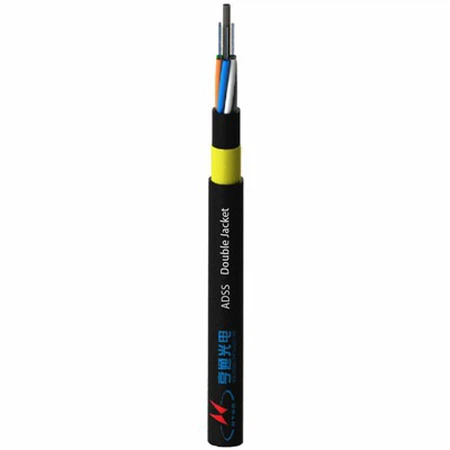
Figure-8 self-supporting cables with integrated strength members
Lashing to existing strand on utility poles
Proper sag calculations to prevent stress
Storm-resistant construction standards
Maintenance access considerations
Building and Data Center Cabling: Indoor environments require entirely different cabling infrastructure. Passive Optical LAN (POL) reduces cabling volume by 50-70% compared to traditional structured cabling (Source: cailabs.com, 2025), but still requires physical cables throughout the building.
Indoor installation demands:
Plenum-rated cables for air handling spaces
Riser-rated cables for vertical pathways
Tight-buffered cables for easier termination
Color-coded organization systems
Cable management hardware (trays, conduits, cabinets)
Micro Cabling Systems: Blown fiber micro-cabling technology uses compressed air to blow lightweight optical fiber bundles through microducts at rates up to 500 feet per minute (Source: ibtta.org, 2023). This reduces installation time dramatically but still requires the pre-installation of microduct infrastructure.
Real-World Deployment Examples
Looking at actual projects illustrates the scale of cabling infrastructure required.
Ripple Fiber secured partnership funding to accelerate deployment to over 400,000 homes by December 2025 (Source: fiberbroadband.org, 2024). That's 400,000 individual physical cable connections-splice closures, drop cables, and in-home terminations.
GoNetspeed completed construction on its $1.5 million fiber network in Camden, Maine, bringing service to 2,000 homes and businesses (Source: lightreading.com, 2024). The company also completed a $2 million project in Attalla, Alabama, delivering service to 1,800 homes (Source: lightreading.com, 2024). These aren't wireless rollouts-they're physical cable installations requiring trenching equipment, splice vans, and installation crews.
The Indian government launched the National Broadband Mission with $30 billion for optical fiber infrastructure (Source: ppc-online.com, 2024), aiming to connect 600,000 villages. In Germany, nearly half of all homes were expected to be passed with fiber by the end of 2024 (Source: ppc-online.com, 2024).
International submarine cables represent another massive cabling infrastructure investment. Meta unveiled a 50,000 km global subsea-cable plan in February 2025 to cement control over international connectivity (Source: mordorintelligence.com, 2025). That's 50,000 kilometers of physical cable laid on the ocean floor.
The Cost Reality of Fiber Cabling Infrastructure
Labor and materials represent significant investments that organizations must budget for.
According to the 2024 Fiber Deployment Cost Annual Report, labor costs now account for 60-80% of overall fiber deployment expenses (Source: straitsresearch.com, 2024). This high labor component reflects the skilled work required-precision splicing, testing, and troubleshooting can't be automated away.
Cost Breakdown Factors:
Cable material costs ($1-5 per meter for basic cables)
Installation labor (60-80% of total project cost)
Specialized equipment (fusion splicers, OTDRs, cleavers)
Permits and right-of-way access
Testing and documentation
Splice closures and connection hardware
Long-Term ROI Benefits: Despite high initial costs, fiber cabling infrastructure delivers compelling returns. Choosing fiber optic cable for structured cabling extends infrastructure lifespan from 5-7 years to 25 years or more (Source: cailabs.com, 2025).
Fiber provides significant longevity compared to other telecom technology-fiber installed in the early 1990s is still in use after 35+ years and expected to continue for decades (Source: fiberbroadband.org, 2025).
Savings come through better reliability translating into fewer truck rolls for repairs, lower power usage, and lower real estate costs as legacy equipment is removed (Source: fiberbroadband.org, 2025).
Supporting Equipment and Management Systems
Fiber optic cabling infrastructure extends far beyond the cables themselves.
Connection and Distribution:
Fiber distribution frames (FDFs) and optical distribution frames (ODFs)
Splice closures for outdoor connections
Patch panels for indoor cross-connects
Fiber optic transceivers (SFP, SFP+, QSFP modules)
Media converters for fiber-to-copper transitions
Testing and Maintenance: A fiber optic tester identifies signal loss or attenuation points along the network (Source: thenetworkinstallers.com, 2025). Essential testing equipment includes:
Optical Time Domain Reflectometers (OTDRs) for fault location
Power meters and light sources for loss verification
Visual fault locators for break identification
Inspection microscopes for connector end-face quality
Cable Management: Physical organization prevents service disruptions. Requirements include:
Cable trays and ladder racks for horizontal runs
J-hooks and D-rings for suspended routing
Fiber bend radius protection (minimum 15x cable diameter)
Color-coded labeling systems
Documentation of splice points and connections
Emerging Trends in Fiber Cabling Infrastructure
The technology continues evolving, but physical cabling remains central.
Higher-Capacity Cables: Ribbon cables support up to 3,456 fibers per duct, with adoption increasing in cities like Seoul and Singapore for space-optimized deployments (Source: marketdataforecast.com, 2024). More fibers per cable reduce installation costs while increasing capacity.
Advanced Installation Technologies: Automated precision alignment tools now use lasers and cameras to align fibers with microscopic accuracy for fusion splicing (Source: amerifiber.com, 2024). These innovations speed installation but don't eliminate the need for physical cables.
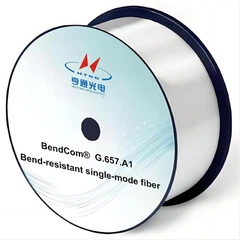
Bend-Insensitive Designs: Bend-insensitive fiber maintains signal integrity even when cables bend at extreme angles, solving challenges in space-constrained environments like crowded data centers (Source: amerifiber.com, 2024). This makes cabling infrastructure more flexible but doesn't replace it.
Speed Improvements: The introduction of 10 Gigabit Passive Optical Network (XGS-PON) technology as the industry standard in 2023 offers speeds up to 10 Gbps, with some providers exploring 25G PON (Source: ppc-online.com, 2024). An 800-Gbps data rate was transmitted at 4,887 miles using a single wavelength of light (Source: ppc-online.com, 2024). These speed increases happen over existing cable infrastructure through equipment upgrades.
Government Investment Driving Cabling Expansion
Public funding is accelerating physical infrastructure deployment.
The U.S. Broadband Equity, Access, and Deployment (BEAD) program provides $42.45 billion to expand high-speed internet access in all 50 states (Source: ppc-online.com, 2024). The Build America Buy America Act requires that BEAD funds be spent only on American-made optical fiber and cable (Source: marketplace.org, 2025).
The Infrastructure Investment and Jobs Act will provide money for unserved and underserved locations, with an estimated 11.8 million locations needing broadband (Source: ppc-online.com, 2024). Currently, more than 30 million Americans live without adequate broadband (Source: ppc-online.com, 2024).
These programs specifically fund physical cable installation-trenching, pole attachments, underground conduit, and all the supporting infrastructure required for fiber deployment.
Common Misconceptions About Fiber Optic Systems
Misconception #1: "Fiber is wireless" No. The confusion likely stems from "fiber-to-the-home" marketing or seeing wireless devices connected to fiber-backed networks. Fiber systems require extensive physical cabling infrastructure from central offices to end users.
Misconception #2: "5G eliminates the need for fiber" Actually the opposite is true. The small cell model central to 5G relies heavily on a fiber-optic backbone to ensure smooth connectivity (Source: industryarc.com, 2023). Every 5G cell site needs fiber backhaul.
Misconception #3: "Satellite internet replaces fiber" Fiber is the backbone of America's broadband technology ecosystem, enabling cable, cellular networks, and even satellite communications (Source: fiberbroadband.org, 2025). Ground stations for satellite systems connect via fiber.
Misconception #4: "Old fiber cables become obsolete" Not really. "Fiber is future proof-cables made today are designed to live outside for decades," according to Prysmian's Jim Overcash (Source: marketplace.org, 2025). Bandwidth upgrades happen through equipment changes, not cable replacement.
Workforce Requirements for Cabling Infrastructure
Physical infrastructure demands skilled workers.
A 2024 workforce study for the Fiber Broadband Association projects a need for 28,000 additional broadband construction workers and 30,000 more technicians (Source: theutilityexpo.com, 2024). This labor shortage could delay deployment as demand exceeds available trained personnel.
Required skills include:
Fiber optic splicing certification (fusion and mechanical)
OTDR testing and troubleshooting
Understanding of telecommunications standards
Safe climbing and confined space training
Blueprint reading and network documentation
Customer service for residential installations
About 280 people work at Prysmian's fiber plant in two 12-hour shifts, and the company expects to hire more as BEAD funding increases demand (Source: marketplace.org, 2025).
FAQs
Can fiber optic technology work without physical cables?
No. Fiber optic systems fundamentally require physical cables to function. The technology relies on light traveling through thin glass or plastic strands contained within protective cable structures. Free-space optical communication exists for specialized applications, but it faces severe limitations from weather, obstacles, and alignment requirements that make it unsuitable for most networking needs.
Why can't wireless technology replace fiber optic cabling?
Wireless systems actually depend on fiber optic cabling infrastructure for backhaul connectivity. Cell towers, Wi-Fi access points, and base stations connect to core networks via fiber cables. Wireless provides the "last few meters" of connectivity, but fiber handles the heavy lifting of transporting massive amounts of data between network nodes.
How long does fiber optic cabling infrastructure last?
Fiber cables can remain functional for 25-35+ years when properly installed. The glass fiber itself doesn't degrade over time like copper oxidizes. Most upgrades involve replacing endpoint equipment (transceivers) rather than the cables themselves. This longevity makes fiber a cost-effective long-term investment despite higher initial installation costs.
What happens if fiber optic cable gets damaged?
Damaged fiber requires professional repair through fusion splicing or cable replacement. Unlike copper cables that can be temporarily repaired with tape, fiber optic cables need precision alignment to restore the light path. Installers use OTDR testing equipment to locate breaks and dispatch specialized splice trucks for repairs, typically restoring service within hours.
Is fiber optic cabling more expensive than copper?
Initial installation costs are higher for fiber-often 40-60% more than comparable copper systems. However, total cost of ownership over 10-20 years typically favors fiber due to lower maintenance, longer lifespan, higher bandwidth capacity, and lower power consumption. Organizations increasingly view fiber as the only future-proof cabling choice.
Do data centers use fiber optic cabling internally?
Yes, extensively. Modern data centers rely on fiber for interconnecting server racks, connecting to storage arrays, and linking between distribution layers. Spine-leaf network architectures commonly use fiber optic cabling for all uplinks. Some data centers now deploy fiber all the way to individual servers, eliminating copper entirely in high-performance computing environments.
Can existing copper cable infrastructure be reused for fiber?
Sometimes. If buildings have adequate conduit systems with pull strings, fiber cables can be installed through existing pathways. However, fiber requires larger bend radius than copper, so tight conduit bends may require rework. Many fiber deployments use existing utility pole infrastructure but need to install new cables rather than reusing old copper wiring.
What makes submarine fiber optic cables different?
Submarine cables require specialized armored construction with multiple protective layers against water pressure, ship anchors, and marine life. They include copper power conductors to supply repeaters placed every 50-100 km. Installation uses specialized cable-laying ships and costs millions of dollars per project, but these cables carry the majority of international internet traffic.
The Bottom Line: Cabling Is Essential
Fiber optic systems are not wireless technologies-they depend entirely on sophisticated cabling infrastructure. The thin glass strands that carry light signals require protective cables, careful installation, specialized connection hardware, and ongoing maintenance. From trenching underground to splicing in cabinets to terminating at end-user devices, every fiber optic system involves extensive physical cabling work.
The explosive growth in fiber deployment reflects this reality. Organizations worldwide are investing billions in laying cables because no alternative exists for delivering the bandwidth, reliability, and security that modern networks demand. As data consumption continues accelerating with 8K video, cloud computing, and artificial intelligence applications, fiber optic cabling infrastructure will only become more essential.
For businesses planning network upgrades, the question isn't whether fiber systems need cabling-they absolutely do. The real questions involve planning the right cabling approach: single-mode or multimode, underground or aerial, now or phased deployment. Working with experienced fiber installation contractors ensures your cabling infrastructure meets current needs while supporting future bandwidth growth for decades to come.