



Optical fibers form the veins, while data centers act as the heart. As global computing power surges with AI, the cables in the hands of optical engineers are becoming the "digital lifelines" of our era.
In Q1 2025, the global optical communication industry chain experienced a long-awaited explosion: North America's four major cloud providers collectively invested $71.89 billion in capital expenditure, a 61.22% year-on-year increase, primarily for AI and cloud infrastructure. As an optical cable engineer, I witnessed round-the-clock production lines and orders scheduled into next year's first quarter.
This growth wave is no coincidence. The training and inference demands of AI large models are driving unprecedented upgrades in data center optical interconnect technology.
01 Computing Demand Ignites New Growth in Optical Cable Market
As traditional telecom markets slow, AI data centers have become the industry's most powerful engine. In Q1 2025, 17 Chinese optical component manufacturers saw combined revenue grow 51.67% YoY, while overseas counterparts reported 28.71% growth. Behind these numbers lies the insatiable demand for high-speed connectivity from countless AI servers.
As an engineer, I observe profound shifts in product structures:
Multimode fiber applications in data centers now grow at >10% annually, especially in China's supercomputing centers where its short-range, high-bandwidth traits dominate. Our production ratio for multimode fiber surged from 15% to 35%.
Data Center Interconnect (DCI) market explodes: TrendForce predicts DCI-related output will exceed $40 billion in 2025 (+14.3% YoY).
China's "East Data West Computing" project tackles chip bottlenecks through cross-regional computing synergy, while the U.S. uses DCI to address power imbalances. This fuels demand for long-distance G.654.E fiber, expected to reach ¥70 billion this year.

02 Technological Revolution: Disruptive Upgrades in Optical Products
To meet AI's computing demands, optical products are leaping forward:
800G modules become standard, 1.6T accelerates: 800G products dominate InnoLight's 2024 revenue ($2.28 billion). 1.6T commercialization progresses rapidly-a top cloud provider requires reliability validation by Q3 2025. Industry forecasts >31.9M high-speed (>400G) modules shipped in 2025 (+56.5% YoY).
Spatial multiplexing breaks capacity limits: With single-mode fiber nearing Shannon's limit, multi-core fiber (MCF) emerges as the solution. Our lab with Hengtong developed a 7-core fiber achieving 1,000Tb/s per fiber-a future-proof answer to AI's exponential growth.
03 Regional Divergence: The Global Market's Tale of Two Worlds
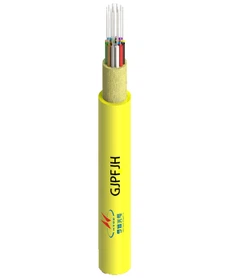
North America leads: 2025 optical cable demand growth projected at 15.9%, claiming >40% global share. We allocate 50% capacity to customized products like micro-bundle cables for high-density racks.
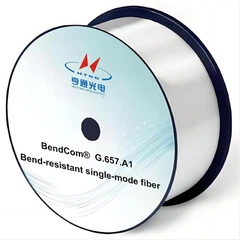
China's dual engines: While FTTH nears saturation, "East Data West Computing" drives western network construction. Orders for our bend-resistant cables in Guizhou data clusters surged 300% YoY.
Europe's green transition: ETSI EN 306 efficiency standards mandate carbon metrics for market entry. We developed the world's first carbon-traceable cable using 30% recycled materials while maintaining ≤0.16dB/km attenuation.
Emerging markets rise: India holds 25% of APAC (ex-China) demand. Our nylon-sheath formula adaptation extends cable lifespan to 25 years in high-heat/humidity environments.
04 Future Trends: At the Forefront of Technology
Three key trends emerge for late 2025:
Co-Packaged Copper (CPC) redefines short-range links: NVIDIA's high-density copper cables cut costs by 40% vs. optical within 3m. We're developing hybrid cables using copper for power and fiber for data.
Green manufacturing becomes core: EU's carbon border tax pushes recycling tech. Corning's chemical stripping achieves 95% material recovery; our Foshan pilot recycles fiber coatings.
AI-driven smart optical networks: Predictive maintenance systems reduce data center O&M costs by 30%. Our smart cables with embedded sensors monitor strain/temperature in real time, accelerating response 5x.
In silicon photonics labs, lasers dance across wafers; in testing rooms, 1.6T modules twinkle like stars. The optical communication industry's golden age has dawned-yet this is merely the prelude. When quantum computing converges with photonic communication, single-fiber capacity will enter the petabit era.
As engineers shuttling between labs and production lines, we understand: the cables in our hands aren't just data conduits-they are the neural bundles linking human and machine intelligence.
In the coming decade, what flows through each fiber won't be photons, but the lifeblood of AI civilization.