

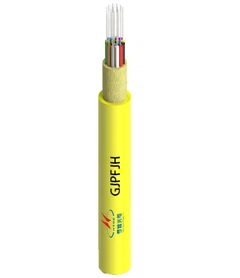


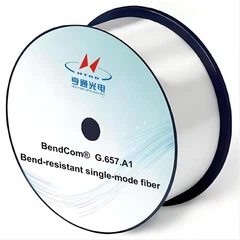

When you look at G652 vs G655, you see two fiber types designed for different network needs. G652 fiber dominates the global market because you get low attenuation and dispersion, which supports high-speed data over long distances. G655, though less common, stands out in DWDM systems where higher data capacity matters.
G652 fibers lead in market share, especially in metropolitan and long-distance networks.
G655 fibers, while less prevalent, are increasingly chosen for advanced optical applications.
Selecting the right type shapes your network's performance, cost, and scalability for years to come.
Key Takeaways
- G652 fiber is the most widely used type, ideal for metro and access networks due to its low cost and reliable performance.
- G655 fiber excels in long-haul and DWDM systems, offering higher data capacity and reduced signal degradation over long distances.
- Choose G652 for short to medium distances, as it provides low attenuation and is compatible with standard equipment.
- Select G655 for high-capacity applications, as its non-zero dispersion minimizes nonlinear effects, enhancing data transmission.
- G652 fiber supports a broad wavelength range, making it versatile for various applications, including data centers and FTTH.
- G655 fiber's advanced design allows for efficient transmission over thousands of kilometers, reducing the need for amplifiers.
- Consider your network's future growth when choosing fiber; G655 is better for high-speed upgrades, while G652 is cost-effective for standard needs.
- Always align your fiber choice with your specific network requirements, budget, and long-term goals to ensure optimal performance.
G652 Vs G655:G652 Fiber

Overview
You encounter G652 fiber as the backbone of modern optical networks. This fiber type follows the ITU-T G.652 standard, which defines its structure and performance. You choose G652 because it offers low attenuation and minimal dispersion, making it ideal for both short and long-distance transmission. When you compare G652 vs G655, you notice G652 dominates in metropolitan and access networks due to its versatility and cost-effectiveness.
Characteristics
Structure
G652 fiber features a single-mode core with a diameter between 8 and 10 microns. The cladding measures 125 microns, which ensures compatibility with most connectors and splicing equipment. The mode field diameter at 1310 nm is typically 9.2±0.4 microns, while at 1550 nm, it is 10.4±0.5 microns. You benefit from high tensile strength, often exceeding 5 GPa, and a minimum bending radius of 30 mm, which supports flexible installation.
Tip: The robust structure of G652 fiber allows you to deploy it in diverse environments, from underground ducts to indoor cabling.
|
Characteristic |
Value |
|---|---|
|
Core Diameter |
8-10 microns |
|
Cladding Diameter |
125 microns |
|
Mode Field Diameter (1310 nm) |
9.2±0.4 microns |
|
Mode Field Diameter (1550 nm) |
10.4±0.5 microns |
|
Tensile Strength |
> 5 GPa |
|
Minimum Bending Radius |
30 mm |
Attenuation
You rely on G652 fiber for its low signal loss. At 1310 nm, attenuation typically measures 0.35 dB/km, and at 1550 nm, it drops to around 0.20 dB/km. These values ensure efficient data transmission over long distances without frequent signal regeneration.
Dispersion
G652 fiber exhibits near-zero chromatic dispersion at 1310 nm, which is crucial for high-speed data. At 1550 nm, dispersion rises to about 17 ps/(nm·km), but this remains manageable for most metro and access applications.
Supported Wavelengths
You can use G652 fiber across a broad wavelength range, from 1260 nm to 1625 nm. The most common transmission windows are 1310 nm and 1550 nm, which align with the lowest attenuation and optimal performance.
Note: G652 fiber comes in several variants (A, B, C, D), each offering slightly different attenuation and wavelength support. G652D covers the widest range, making it the most popular choice for new deployments.
Applications
Metropolitan Networks
You often deploy G652 fiber in metropolitan area networks (MANs). Its low attenuation and compatibility with standard equipment make it the default choice for connecting city-wide infrastructure.
Data Centers
G652 fiber supports high-density cabling in data centers. You benefit from its low loss and ease of splicing, which help maintain signal integrity across complex network topologies.
Access Networks
You find G652 fiber in access networks, including FTTH (Fiber to the Home) and indoor cabling. Over 95% of access network deployments use G652, thanks to its reliability and cost efficiency.
Long-haul telecom backbones
Coarse Wavelength Division Multiplexing (CWDM) networks
LAN/MAN deployments
When you evaluate G652 vs G655, you see that G652 remains the preferred option for most metro, data center, and access scenarios due to its proven performance and broad compatibility.
G652 Vs G655:G655 Fiber

Overview
You turn to G655 fiber when your network demands high capacity and long-distance performance. This fiber type follows the ITU-T G.655 standard, which defines it as a non-zero dispersion-shifted fiber (NZDSF). You often see G655 in advanced optical networks where Dense Wavelength Division Multiplexing (DWDM) is essential. The unique structure of G655 fiber helps you reduce nonlinear effects and increase data throughput, especially over long-haul routes.
Characteristics
Non-Zero Dispersion
G655 fiber features non-zero chromatic dispersion in the C-band (1530–1565 nm). You benefit from this because it minimizes four-wave mixing, a nonlinear effect that can degrade signal quality in DWDM systems. Typical dispersion values range from 2 to 6 ps/(nm·km) at 1550 nm. This controlled dispersion allows you to transmit multiple wavelengths with less interference, supporting higher data rates and longer distances.
Attenuation
You experience low attenuation with G655 fiber, similar to G652. At 1550 nm, attenuation usually measures around 0.22 dB/km. This low loss enables you to send signals farther without frequent amplification, which reduces your operational costs in long-haul networks.
Wavelength Range
G655 fiber supports a wide wavelength range, typically from 1460 nm to 1625 nm. You can use both the C-band and L-band (1565–1625 nm) for transmission, which increases your network's capacity. This broad range makes G655 ideal for DWDM, where you need to pack many channels into a single fiber.
Refractive Index
You notice that G655 fiber has a higher refractive index profile compared to G652. This design helps you achieve lower bend attenuation and maintain signal integrity, even in challenging installation environments. The optimized refractive index also supports stable performance across a wide range of wavelengths.
|
Characteristic |
G655 Fiber Value |
|---|---|
|
Dispersion (1550 nm) |
2–6 ps/(nm·km) |
|
Attenuation (1550 nm) |
~0.22 dB/km |
|
Wavelength Range |
1460–1625 nm |
|
Bend Radius |
30 mm (typical) |
Note: The non-zero dispersion of G655 fiber is a key reason why you choose it for high-capacity, long-distance DWDM networks.
Applications
DWDM Systems
You select G655 fiber for DWDM systems because it supports high channel counts and minimizes nonlinear effects. The controlled dispersion in the C-band allows you to transmit more data with fewer errors, making your network more efficient.
Long-Haul
You rely on G655 fiber for national and international backbone networks. Its low attenuation and optimized dispersion let you cover distances over 1000 km with fewer repeaters, reducing both capital and operational expenses.
FTTH
You can use G655 fiber in Fiber to the Home (FTTH) deployments, especially when you need to future-proof your network for high bandwidth and long reach. While G652 vs G655 often favors G652 for access networks, G655 gives you an edge in advanced scenarios where high capacity and long distances are critical.
G655 fiber is your choice for demanding, high-performance optical networks.
You gain higher data capacity, longer transmission distances, and better performance in DWDM environments.
G652 vs G655

G652 Vs G655 Key Differences
Attenuation & Dispersion
When you compare G652 vs G655, you see clear differences in attenuation and dispersion. G652 fiber offers low attenuation, typically around 0.20 dB/km at 1550 nm, and near-zero dispersion at 1310 nm. However, at 1550 nm, G652 fiber shows higher chromatic dispersion, about 17 ps/(nm·km). This can limit its performance in high-capacity, long-distance networks.
G655 fiber, on the other hand, is engineered for non-zero dispersion in the C-band (1530–1565 nm). You benefit from dispersion values between 2 and 6 ps/(nm·km) at 1550 nm, which helps reduce nonlinear effects like four-wave mixing. Attenuation remains low, around 0.22 dB/km, making G655 ideal for long-haul and DWDM systems.
|
Fiber |
Zero Dispersion Wavelength (λ0) |
Chromatic Dispersion (Dλ) @ 1550 nm (ps/nm·km) |
Attenuation @ 1550 nm (dB/km) |
|---|---|---|---|
|
G652 |
1300–1324 nm |
17 |
0.20 |
|
G655 |
1530–1565 nm |
2–6 |
0.22 |
Tip: If your network requires long-distance transmission with high channel counts, G655 fiber's controlled dispersion gives you a clear advantage.
Wavelength Performance
You notice that G652 fiber supports a broad wavelength range, from 1360 nm to 1530 nm, and works well in both the 1310 nm and 1550 nm windows. This makes it versatile for metro and access networks. However, in DWDM applications, G652 fiber can be more susceptible to nonlinear effects.
G655 fiber is optimized for the C-band (1530–1565 nm) and L-band (up to 1625 nm), which are critical for DWDM systems. Its non-zero dispersion profile minimizes interference between channels, allowing you to transmit more data over longer distances.
|
Fiber Type |
Wavelength Range |
Performance Characteristics |
|---|---|---|
|
G652 |
1360–1530 nm |
Best for short to medium distances, low attenuation at 1550 nm, suitable for WDM transmission |
|
G655 |
1530–1565 nm (C-band) |
Low dispersion, ideal for long-haul, minimizes nonlinear effects, supports dense DWDM |
PMD
Polarization Mode Dispersion (PMD) can impact your network's ability to handle high data rates. G652 fiber typically has higher PMD values than G655, which can limit its use in ultra-high-speed or long-haul applications. G655 fiber is manufactured with tighter PMD controls, making it more suitable for advanced, high-capacity optical networks.
|
Feature |
G652 |
G655 |
|---|---|---|
|
PMD (ps/√km) |
~0.2–0.5 |
<0.2 |
|
Nonlinear Effects |
More susceptible |
Reduced |
G652 Vs G655:Use Cases
Best for Metro/Access
You often choose G652 fiber for metro and access networks. Its low cost, broad compatibility, and reliable performance make it the default option for city-wide infrastructure, data centers, and FTTH deployments.
|
Use Case |
Description |
|---|---|
|
Metro Networks |
Common in telecom core and access networks where minimal bends are expected. |
|
Long-Haul Networks |
G652.D is suitable for backbone lines in wide area networks with low losses. |
|
Submarine and Aerial Installations |
Ideal for stable outdoor environments that can accommodate large bends in the fiber cable. |
Best for Backbone/Long-Haul
You select G655 fiber for backbone and long-haul networks. Its low attenuation and controlled dispersion allow you to transmit signals over thousands of kilometers with fewer amplifiers and less signal degradation. G655 is also the preferred choice for DWDM systems and high-capacity data center interconnects.
|
Use Case |
Description |
|---|---|
|
Long-Haul Applications |
Designed for long-haul, allowing optical signals to travel over long distances with low loss. |
|
Telecommunication Backbone |
Used to build backbone networks that carry large volumes of data across regions and countries. |
|
Data Centers |
Connects servers and storage systems, enabling high-bandwidth and low-latency communication. |
Note: For G652 vs G655, your choice depends on the network's scale and performance requirements. G652 excels in metro and access scenarios, while G655 dominates in backbone and DWDM environments.
G652 Vs G655:Cost
Price
You find that G652 fiber is generally less expensive than G655. The manufacturing process for G652 is simpler, and its widespread adoption drives down costs. This makes G652 the economical choice for most metro and access deployments.
G655 fiber, with its advanced design and tighter manufacturing tolerances, comes at a higher price point. However, you may offset this initial investment with savings in system costs for long-haul and DWDM networks.
Installation
When you install G652 fiber, you benefit from easier handling and compatibility with standard connectors and splicing equipment. The installation process is straightforward, which reduces labor costs.
G655 fiber requires more precise installation due to its specialized properties. However, you save on the need for dispersion compensation modules (DCMs) and amplifiers in long-distance applications. For a 2000 km, 10G network, G655 can reduce your total system cost by up to 8% compared to G652, thanks to fewer repeaters and lower amplifier costs.
|
Factor |
G652 Fiber |
G655 Fiber |
|---|---|---|
|
Dispersion |
Higher |
Lower |
|
Transmission Distance |
Shorter |
Longer |
|
Need for DCM |
Yes |
No |
|
Cost of Amplifiers |
Higher |
Lower |
|
System Cost Reduction |
N/A |
Up to 8% (2000 km) |
Tip: If you plan a large-scale, long-distance network, investing in G655 fiber can lower your total cost of ownership over time.
G652 Vs G655:Pros and Cons
G652
Advantages
You gain several key benefits when you choose G652 fiber for your optical network. This fiber type stands out for its versatility, reliability, and widespread adoption. Network engineers and industry experts consistently recommend G652 fiber for a broad range of applications, from metropolitan networks to data centers.
|
Advantage/Characteristic |
Description |
|---|---|
|
Widely Used |
G652 fiber dominates the market, accounting for over 95% of optical fiber deployments. |
|
Long-Distance Capability |
You can use G652 fiber for long-distance, high-capacity communication networks. |
|
Zero Dispersion Wavelength |
Optimized for 1310 nm operation, but also supports the 1550 nm band for added flexibility. |
|
Subcategories |
Includes G652.A, G652.B, G652.C, and G652.D, each tailored for specific network needs. |
Tip: You can deploy G652 fiber in almost any environment, from city-wide metro networks to FTTH projects, thanks to its proven performance and compatibility with standard equipment.
Disadvantages
- While G652 fiber offers many strengths, you should consider its limitations, especially in high-capacity or long-haul scenarios.
- G652 fiber is prone to signal loss if you bend it excessively. This makes it less suitable for environments where cables require frequent manipulation or tight routing.
- G652D provides low dispersion at 1310 nm, but at 1550 nm, dispersion increases. This can hinder network performance in long-haul or DWDM applications.
- You must maintain a higher bend radius during installation. Sharp bends are not permissible, so you may need to use more fiber, which increases deployment costs.
Note: If your project involves complex routing or demands high data rates over long distances, you may encounter challenges with G652 fiber's bend sensitivity and dispersion profile.
G655
Advantages
- G655 fiber brings advanced features that address the needs of modern, high-capacity optical networks. You benefit from its optimized design for long-haul and DWDM systems.
- G655 fiber offers non-zero dispersion in the C-band (1530–1565 nm), which reduces nonlinear effects like four-wave mixing. This enables you to transmit more channels with higher data rates.
- You experience low attenuation, typically around 0.22 dB/km at 1550 nm, allowing signals to travel farther with fewer amplifiers.
- G655 fiber supports a wide wavelength range, including both C-band and L-band, which increases your network's capacity and scalability.
- The higher refractive index profile improves bend performance, so you can install G655 fiber in challenging environments with less signal degradation.
Tip: If you plan to build a national backbone or a DWDM system, G655 fiber gives you the performance and future-proofing you need for demanding applications.
Disadvantages
- Despite its strengths, G655 fiber has some drawbacks you should weigh before making a decision.
- G655 fiber costs more than G652 due to its advanced manufacturing process and tighter tolerances.
- Installation requires greater precision. You may need specialized equipment and skilled technicians, which can increase labor costs.
- G655 fiber is less common in access and metro networks, so you may face compatibility issues with existing infrastructure.
Note: For most metro and access deployments, G652 fiber remains the more practical and cost-effective choice. Reserve G655 fiber for scenarios where long-haul performance and high channel counts are critical.
G652 Vs G655:Choosing the Right Fiber
Selecting the right fiber type shapes your network's performance, cost, and ability to scale. You need to match your choice to your technical requirements, budget, and long-term goals. Here's how you can make an informed decision.

Network Needs
Start by analyzing your network's technical requirements. You should consider the following factors:
- Transmission Speed: If your network needs to support high-speed multiplexing, such as 10G or 100G over DWDM, you will benefit from G655 fiber. Its low dispersion in the C-band reduces nonlinear effects and supports higher data rates. For lower speeds or standard metro applications, G652 fiber meets most needs.
- Distance: Measure the distance between your network points. G652 fiber works well for short to medium distances, such as within cities or between buildings. If you plan to connect sites over hundreds or thousands of kilometers, G655 fiber offers lower dispersion and better signal integrity.
- Application Type: Use G652 fiber for access networks, metropolitan area networks, and data centers. Choose G655 fiber for long-haul, backbone, or high-capacity DWDM systems.
Tip: G652 fiber has a zero dispersion wavelength at 1310 nm and supports CWDM due to its reduced water peak. G655 fiber eliminates four-wave mixing and provides low dispersion, making it ideal for high-speed, long-distance DWDM transmission.
Typical Scenarios:
Deploy G652 fiber for city-wide FTTH, campus networks, or data center interconnects.
Select G655 fiber for national backbones, international links, or networks requiring future upgrades to 40G or 100G.
Budget
Your budget plays a critical role in fiber selection. G652 fiber costs less to purchase and install. Its widespread use means you can find compatible equipment and skilled technicians easily. For most metro and access deployments, G652 fiber gives you the best value.
G655 fiber requires a higher initial investment. You pay more for the cable and may need specialized installation. However, in long-haul or DWDM networks, G655 fiber can reduce your total system cost by minimizing the need for dispersion compensation modules and amplifiers. Over a 2000 km, 10G network, G655 fiber can lower your system cost by up to 8% compared to G652 fiber.
|
Fiber Type |
Initial Cost |
Installation Complexity |
Long-Term Savings |
Best Use Case |
|---|---|---|---|---|
|
G652 |
Low |
Standard |
Moderate |
Metro, access, data centers |
|
G655 |
High |
Specialized |
High (long-haul) |
Backbone, DWDM, long-haul |
Note: If you need to balance cost and performance, use G652 fiber for short to medium distances and G655 fiber for high-capacity, long-distance links.
Future Growth
Plan for your network's future needs. You want a fiber type that supports upgrades and new technologies. G652D fiber offers low attenuation (max 0.3 dB/km at 1550 nm) and good PMD performance (better than 0.2 ps/√km), which allows you to upgrade to higher speeds, such as 10 Gbps, without replacing the fiber. Its low water peak attenuation lets you use the full spectrum for CWDM and future applications.
G655 fiber sets an upper limit on PMD, which is essential if you plan to upgrade to 40 Gbps or beyond. Its design supports dense channel packing and high data rates, making it a future-proof choice for backbone and DWDM networks.
|
Fiber Type |
Key Specification |
Importance for Scalability and Upgrades |
|---|---|---|
|
G652D |
Low attenuation (≤0.3 dB/km at 1550 nm) |
Efficient data transmission over long distances |
|
Good PMD performance (<0.2 ps/√km) |
Supports upgrades to higher speeds |
|
|
Low water peak attenuation |
Optimized for full spectrum use up to 10 Gbps |
|
|
G655 |
Upper limit on PMD |
Essential for upgradeability to 40 Gbps and beyond |
Callout: If you expect your network to grow or need to support future high-speed upgrades, choose a fiber type with strong PMD and attenuation performance.
When you compare G652 vs G655, you see that G652 fiber fits most metro and access networks, while G655 fiber excels in long-haul and high-capacity scenarios. Always align your choice with your network's technical requirements, budget, and growth plans.
G652 Vs G655:Use Cases

Metro Networks
You often see G652 fiber as the backbone of metro networks. Its low attenuation and broad compatibility make it the standard for city-wide data transmission. You can deploy G652 fiber in dense urban environments where reliability and cost control matter. The fiber supports high-speed connections between central offices, business districts, and data centers. You benefit from its ease of installation and maintenance, which reduces downtime and operational expenses.
Tip: G652 fiber's robust structure and low signal loss help you maintain stable performance, even when your network faces frequent upgrades or expansions.
|
Metro Network Requirement |
G652 Fiber Performance |
|---|---|
|
Typical Distance |
10–80 km |
|
Attenuation @ 1550 nm |
~0.20 dB/km |
|
Supported Data Rates |
Up to 10 Gbps |
|
Installation Flexibility |
High |
You can also use G655 fiber in metro networks that require higher capacity or future DWDM upgrades. However, most metro deployments rely on G652 due to its cost-effectiveness and proven track record.
National Backbone
You need to build national backbone networks that handle massive data volumes over long distances. G655 fiber stands out in these scenarios. Its non-zero dispersion profile and low attenuation allow you to transmit signals across hundreds or even thousands of kilometers with minimal signal degradation. You reduce the need for dispersion compensation modules and amplifiers, which lowers your total system cost.
G655 fiber is optimal for high-traffic areas, such as those found in eastern China.
You can deploy G655 fiber in national and international backbones to support DWDM systems with high channel counts.
The fiber's controlled dispersion minimizes nonlinear effects, ensuring reliable, high-capacity transmission.
|
Backbone Network Feature |
G655 Fiber Advantage |
|---|---|
|
Typical Distance |
100–2000+ km |
|
Dispersion @ 1550 nm |
2–6 ps/(nm·km) |
|
Attenuation @ 1550 nm |
~0.22 dB/km |
|
DWDM Channel Support |
40+ channels |
Note: You can future-proof your backbone network by choosing G655 fiber, especially if you expect rapid growth in data traffic or plan to upgrade to 40G or 100G transmission.
FTTH Deployments
You want to deliver high-speed internet directly to homes and businesses. FTTH (Fiber to the Home) deployments rely on fiber types that balance performance, cost, and scalability. Single-mode fiber, especially G652, dominates FTTH networks. You benefit from its large carrying capacity, compatibility with existing infrastructure, and cost-effectiveness for long-range connections. While multi-mode fiber offers lower component costs, single-mode fiber provides better performance over the distances required in FTTH.
You can use G655 fiber in FTTH projects that demand future-proofing for higher bandwidth or longer reach, but G652 remains the preferred choice for most access networks.
|
FTTH Requirement |
G652 Fiber Benefit |
|---|---|
|
Distance to Premises |
Up to 20 km |
|
Attenuation @ 1310 nm |
~0.35 dB/km |
|
Upgrade Path |
10G and beyond |
|
Cost Efficiency |
High |
Callout: Choose single-mode G652 fiber for FTTH to ensure reliable, scalable, and cost-effective broadband delivery to your customers.
G652 Vs G655:Future Trends

Standards
You need to stay updated on international standards because they shape the future of optical fiber networks. The ITU-T regularly updates its recommendations to address new challenges and technologies. In August 2024, ITU-T released version 10.0 of the G.652 standard. This update ensures that G652 fiber remains relevant for modern networks, especially with the G652D variant now serving as the mainstream model for long-distance communications and fiber-to-the-home (FTTH) applications.
- G.652, G.653, G.654, G.655, G.656, and G.657 are the latest ITU-T recommendations.
- G.655 fiber is classified as non-zero dispersion shifted fiber, with subtypes A and B for different network needs.
- G652D continues to dominate in metro and access networks due to its broad compatibility and performance.
Note: You should monitor these standards because they directly impact which fiber types manufacturers produce and which technologies network operators adopt.
Technology
Emerging technologies are transforming how you use G652 and G655 fibers. You see new developments that push the boundaries of capacity, efficiency, and performance. The table below highlights some of the most influential innovations:
|
Emerging Technology |
Description |
|---|---|
|
Hollow-core optical fibers |
These fibers use air-filled cores to reduce losses and improve performance, offering lower latency and higher speed. |
|
Space Division Multiplexing |
This technology lets you transmit multiple signals through different spatial paths, greatly increasing network capacity. |
|
Next-generation optical fiber |
You require fibers with high performance, low loss, and strong resistance to nonlinear effects to meet future network demands. |
You should pay attention to these trends because they will influence which fiber types you choose for new deployments. For example, as space division multiplexing becomes more common, you may need fibers that support higher spatial channel counts. Hollow-core fibers could eventually replace traditional G652 and G655 fibers in ultra-high-speed networks.
Tip: Staying informed about these technologies helps you future-proof your network and make smarter investment decisions.
Network Evolution
Network evolution will drive your decisions between G652 and G655 fiber over the next decade. You will see project-specific needs-such as capacity, reach, and upgrade potential-shape your fiber selection. G652D fiber remains suitable for metro networks where ultra-low attenuation is not critical. G655 fiber stands out in long-haul applications that demand higher performance and minimal signal degradation.
You may encounter hybrid cables that combine both G652 and G655 fibers, allowing you to optimize costs and performance for each segment of your network.
As data traffic grows, you will need to balance cost, scalability, and technical requirements more carefully.
You should expect the choice between G652 and G655 to become even more project-driven, with no single fiber type dominating every scenario.
Callout: You can prepare for future network evolution by understanding the strengths of each fiber type and matching them to your network's unique demands.
When you choose between G652 and G655 fiber, you must weigh technical needs and budget. G652 fiber works best for metro and access networks, offering zero dispersion at 1310 nm. G655 fiber excels in long-haul and DWDM systems, thanks to reduced dispersion in the C-band and a higher refractive index.
G652 suits standard deployments.
G655 integrates easily with EDFA and supports challenging conditions.
You should match your fiber choice to your network's demands and plan for future upgrades. Consult experts for complex projects to ensure long-term success.
FAQ
Why should you choose G652 fiber for metro networks?
G652 fiber offers low attenuation and broad compatibility. You benefit from cost-effective deployment and reliable performance in city-wide networks. Its structure supports easy installation and maintenance, making it the industry standard for metropolitan fiber optic systems.
Why does G655 fiber perform better in DWDM systems?
G655 fiber features non-zero dispersion in the C-band. This design reduces nonlinear effects like four-wave mixing. You can transmit more channels with higher data rates, which makes G655 fiber ideal for high-capacity DWDM optical networks.
Why is attenuation important when selecting fiber optic cables?
Attenuation measures signal loss per kilometer. Lower attenuation means your data travels farther without amplification. You reduce operational costs and improve network reliability by choosing fiber with low attenuation, such as G652 or G655.
Why do you need to consider dispersion in long-haul networks?
Dispersion causes signal spreading, which can degrade data quality over distance. G655 fiber controls dispersion in the C-band, allowing you to maintain high data integrity in long-haul and backbone networks.
Why does G652 fiber remain the most widely used type?
G652 fiber dominates the market due to its versatility, low cost, and compatibility with most optical equipment. You can use it in metro, access, and FTTH deployments, making it the default choice for many network operators.
Why does G655 fiber cost more than G652 fiber?
G655 fiber requires advanced manufacturing and tighter tolerances. You pay more upfront, but you save on system costs in long-haul and DWDM networks by reducing the need for dispersion compensation and amplifiers.
Why should you plan for future upgrades when choosing fiber?
Network demands grow rapidly. By selecting fiber with low attenuation and strong PMD performance, such as G652D or G655, you ensure your infrastructure supports higher speeds and new technologies without costly replacements.
Tip: Always consult ITU-T standards and industry data when planning your fiber optic network.