

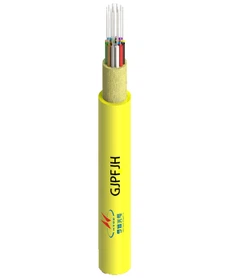


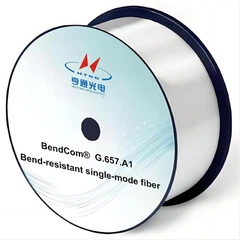
In the wave of digitization, Fiber-to-the-Home (FTTH) technology is emerging as a primary driver for future communications, smart homes, and the Internet of Things. This technology connects households, businesses, and communities to high-speed, high-quality internet, bringing unprecedented convenience and experiences to people.
What is FTTH?
FTTH, or Fiber to the Home, is an advanced communication technology that extends optical fiber directly to users' homes, businesses, and communities. Compared to traditional copper-based ADSL (Asymmetric Digital Subscriber Line), FTTH offers higher bandwidth and a more stable connection. Additionally, due to the faster speed of optical signals and their immunity to noise, crosstalk, or other interferences, FTTH networks can provide uninterrupted fiber optic internet over longer distances, meeting the growing demands of digitization.
What is the architecture and working principle of FTTH?
The basic framework of fiber-to-the-home consists of three main components: the central office, the optical distribution network (ODN), and the end users.
1. Central Office: The central office serves as the core of the fiber-to-the-home network, responsible for converting, routing, and distributing fiber optic signals. It connects to the global internet and delivers signals to fiber nodes in various regions.
2. Optical Distribution Network (ODN): The ODN is responsible for transmitting optical signals from the central office to users' homes, businesses, and communities. It includes fiber branches, splitters, and connecting devices, ensuring effective signal transmission and coverage to each user.
3. End Users: End users are the ultimate destination of the fiber-to-the-home network. They receive optical signals through an optical network terminal (ONT) or fiber modem, which converts them into electrical signals for use by devices such as computers, phones, and televisions.
Characteristics and Differences between Active Optical Networks and Passive Optical Networks
Active Optical Networks (AON) and Passive Optical Networks (PON) are two common architectures in optical communication networks, playing different roles in fiber optic communication.
AON utilize optoelectronic conversion devices such as optical amplifiers, lasers, optical receivers, and modems, as well as other active components to transmit and receive optical signals. This type of network typically operates at higher signal power levels, enabling longer transmission distances and higher data rates. AON are commonly deployed in scenarios such as large enterprise networks, data center interconnections, and long-distance transmission, where high bandwidth and high-speed applications are required.
The biggest difference between PON and AON lies in the former's use of splitters instead of active switching equipment to direct signals to users. This network doesn't require external power sources, hence it has lower energy consumption and costs, and is easier to maintain. It's commonly employed to provide broadband access services like fiber-to-the-home, offering users high-speed, high-quality network access.
What is the connection between active optical networks and passive optical networks?
Active optical networks and passive optical networks are both communication systems built on top of optical cables, and they have close connections with the optical cables. Whether it's an active optical network or a passive optical network, optical fiber cables serve as the transmission medium capable of effectively transmitting optical signals. Furthermore, the quality and performance of optical fiber cables affect the transmission performance of both active and passive optical networks. High-quality optical cables can reduce signal attenuation, improve transmission rates, and reliability, thus enhancing network performance.
When deploying active and passive optical networks, considerations need to be made regarding the cabling and connections of the optical cables. Different types of optical fibers (single-mode fibers and multi-mode fibers) are suitable for different network requirements, so it's important to choose the appropriate optical fiber cable based on specific circumstances.
With the rapid development and widespread adoption of FTTH (Fiber-to-the-Home), fast and stable network connections have not only enhanced users' online experiences but also supported various digital lifestyles such as high-definition video streaming, online gaming, remote work, and smart home applications. The popularization of FTTH technology can promote the process of social informatization, drive the development of digital society, and improve people's quality of life.