

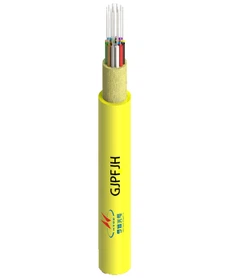


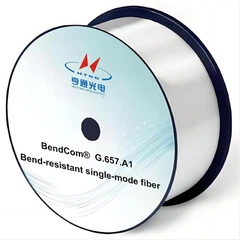
In the current wave of optical communication development, fiber optic cables and components have been widely applied in various fields, becoming key driving forces for advancement. Fiber optic dispersion, as a significant concept in the optical domain, not only profoundly impacts the development of optical communication but also demonstrates vast potential in spectroscopy, optical imaging, and other areas.
What is Fiber Optic Dispersion?
Fiber optic dispersion refers to the phenomenon where signals transmitted through optical fibers, carrying different frequency components and mode components, experience distortion due to variations in transmission speeds of these components.
How does Dispersion in Optical Fibers Affect Optical Communication Systems?
Dispersion in optical fibers causes pulse broadening of optical pulses. When dispersion is severe, optical pulses may overlap in time, leading to intersymbol interference and increased bit error rate. Thus, fiber optic dispersion not only affects the transmission capacity of optical fibers but also limits the relay distance of optical communication systems.
What are the Types of Fiber Optic Dispersion and Their Associations?
Fiber optic dispersion mainly includes material dispersion, polarization mode dispersion (PMD), waveguide dispersion, and mode dispersion.
Material Dispersion:
Material dispersion occurs due to variations in the refractive index of the fiber material with the frequency of the light wave. Typically, the refractive index of the fiber material changes with the frequency of the light wave, causing different frequency components of the signal to have different group velocities, resulting in dispersion.
Polarization Mode Dispersion:
Polarization mode dispersion, abbreviated as PMD, refers to polarization dispersion in optical fibers. It occurs because the fundamental mode in the actual fiber contains two orthogonal polarization modes. During propagation along the fiber, external factors such as temperature and pressure variations cause coupling between these modes, and they propagate at different speeds, leading to pulse broadening and signal distortion.
Waveguide Dispersion:
Waveguide dispersion arises from the different guiding characteristics of the waveguide structure for different frequency light waves. The waveguide structure in the fiber can be the internal structure of the fiber or external constraints or microstructures induced by the environment. Waveguide dispersion typically manifests as a dependence of the propagation constant on frequency, resulting in different frequency light waves propagating at different speeds within the waveguide.
Mode Dispersion:
Mode dispersion stems from the different transmission characteristics of different transmission modes (e.g., fundamental mode, higher-order modes) of light waves in the fiber. As light waves propagate in the fiber, the mode field distribution differences cause different frequency light waves to have different phase velocities, resulting in mode dispersion.
Testing Methods for Fiber Optic Dispersion:
1. Time-Domain Methods: These involve observing the broadening of optical pulses in time to measure the dispersion characteristics of fibers. Common methods include Optical Time Domain Reflectometry (OTDR) and Self-Phase Modulation (SPM).
2. Frequency-Domain Methods: These entail observing changes in the frequency domain to measure fiber dispersion characteristics. Frequency domain spectroscopy and frequency domain phase-shift methods are commonly used techniques.
3. Phase Comparison Method: This method utilizes the phase differences of light waves at different frequencies transmitted through the fiber to measure fiber dispersion characteristics.
In conclusion, fiber optic dispersion, with its various types and testing methods, significantly influences the performance of optical communication systems. Understanding and controlling these dispersion phenomena are crucial for optimizing the performance of fiber optic systems in various applications.