





Choosing the right fiber optic cable depends on the installation environment, the mechanical risks the cable will face, and the fire safety requirements of the space. A cable designed for aerial deployment along rural power lines has a fundamentally different structure from one routed through a building riser shaft or pulled into an underground duct. Selecting the wrong type can lead to premature failure, costly repairs, and extended network downtime.
This guide walks through the most common deployment scenarios, explains the structural features that matter in each case, and provides a quick-reference table to help engineers, procurement teams, and network planners match cable type to application. Where relevant, we reference international standards such as ITU-T G.652 and ITU-T G.657 for fiber specifications, and the IEC 60794 series for cable construction and testing requirements.
Fiber Optic Cable Selection by Scenario
| Application Scenario | Primary Risk | Recommended Cable Type | Key Structural Feature | Typical Installation Method |
|---|---|---|---|---|
| Mountainous or rural routes with wildlife exposure | Rodent and animal damage | Anti-rodent armored cable (e.g., GYTS04, GYTA53) | Nylon outer sheath, steel tape or stainless steel wire armor | Duct or direct burial |
| Aerial deployment along power lines or between poles | Wind load, lightning, UV exposure | ADSS cable or figure-8 self-supporting cable | All-dielectric structure (ADSS) or integrated messenger wire | Lashed or self-supporting aerial |
| Underground duct or conduit | Moisture ingress, crush pressure | Duct-rated loose tube cable (e.g., GYTS, GYTA) | Water-blocking tape or gel fill, PE outer sheath | Pulled or blown into duct |
| Direct burial without conduit | Soil pressure, moisture, ground movement | Double-jacketed armored cable (e.g., GYTA53, GYTY53) | Double PE jacket with corrugated steel tape armor | Trenched and backfilled |
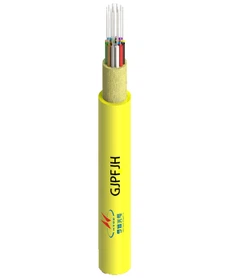
| Building riser and vertical wiring | Fire spread between floors | Riser-rated or flame-retardant cable | LSZH or flame-retardant jacket, tight-buffered or semi-tight design | Vertical pull through riser shaft |
| Equipment rooms, data centers, subway infrastructure | Fire, smoke, confined space hazards | Fire-resistant indoor cable (LSZH rated) | Low-smoke zero-halogen jacket, compact construction | Cable tray, raceway, or raised floor |
| FTTH last-mile access | Tight bends, limited space, aesthetic concerns | FTTH drop cable (butterfly or round type) | Bend-insensitive G.657 fiber, small diameter, self-supporting option | Aerial drop, duct drop, or indoor routing |
Harsh Outdoor Routes: Anti-Rodent and Armored Fiber Optic Cables
In mountainous terrain, rural base station corridors, and agricultural areas, one of the leading causes of cable failure is physical damage from rodents, birds, and other animals. When a rodent gnaws through the outer jacket of a standard cable, the exposed fibers are vulnerable to moisture ingress, mechanical stress, and eventual signal loss or breakage. Repairing a damaged cable in a remote location is both time-consuming and expensive, so the selection of a properly armored cable at the design stage can significantly reduce long-term maintenance costs.
Anti-rodent fiber optic cables use additional mechanical protection layers to resist animal damage. Common structural approaches include a high-hardness nylon outer sheath that resists gnawing, corrugated steel tape armor that provides crush resistance, and stainless steel wire wrapping that adds both tensile strength and bite resistance. Some designs, such as GYTS04-type cables, combine a nylon sheath with steel tape reinforcement. Others use fine stainless steel wire between the jacket layers to create a barrier that is difficult for rodents to penetrate.
When specifying anti-rodent cables, consider the full deployment environment. A cable that will be installed in an underground duct in a rodent-prone area needs both moisture protection and mechanical armor. A cable strung aerially through a forested area may need UV-resistant jacketing in addition to animal protection. The right combination of protective layers depends on the specific threats present along the route. For a deeper look at rodent damage mechanisms and prevention methods, see this analysis of rodent damage on optical cables.

Hengtong Anti Rodent Fiber Optic Cable
For outdoor fiber routes exposed to rats, squirrels, or other rodents, Hengtong Anti-Rodent Fiber Optic Cable provides stronger protection than standard PE-sheathed cables. Its steel tape, stainless steel tape, nylon sheath, and optional double-jacket structures help resist rodent bites, moisture ingress, crush force, and abrasion, making it suitable for rural broadband, duct routes, aerial links, railway/highway networks, and remote telecom sites where cable failure is costly to repair.
Aerial Fiber Optic Cables: ADSS, Figure-8, and Self-Supporting Designs
Aerial installation is common in areas where underground trenching is impractical or too costly, including rural electrification corridors, urban village upgrades, and suburban network extensions. The main engineering challenges for aerial cables are wind and ice loading, UV degradation, vibration fatigue, and in some regions, lightning exposure.
Two broad categories of aerial cable are widely used. ADSS (All-Dielectric Self-Supporting) cables contain no metallic components at all, which makes them suitable for installation on or near power transmission lines where electrical induction is a concern. Because they are self-supporting, ADSS cables can be strung directly between poles without a separate messenger wire, which reduces hardware requirements and simplifies installation. ADSS cables are available in single-jacket and double-jacket configurations; double-jacket versions provide additional protection for longer span lengths or harsher environments.

Hengtong ADSS Fiber Optic Cable for Aerial Power & Telecom Networks
Hengtong ADSS fiber optic cable is an all-dielectric self-supporting solution for aerial telecom networks, power utility communication, smart grid projects, rural broadband, and long-span pole routes. It can be customized by span length, fiber count, tensile strength, PE/HDPE/AT sheath, wind and ice load, and project standard-helping buyers get a safer, route-matched ADSS cable design and quotation for real installation conditions.
Figure-8 cables integrate a steel or FRP messenger wire into the cable structure, creating a cross-section that resembles the number 8. This integrated messenger provides the tensile strength needed to span between poles while keeping installation straightforward. Figure-8 aerial cables are a practical choice for moderate-span rural and suburban deployments where power line proximity is not a concern.
For routes that pass near high-voltage power lines, the all-dielectric construction of ADSS cables is a significant advantage. Metal-free cables eliminate the risk of induced current and do not require grounding, which reduces both installation complexity and ongoing safety considerations. For more detail on ADSS cable applications and design, refer to this aerial fiber cable installation guide.
Underground and Duct-Installed Fiber Optic Cables
Cables installed in underground ducts or directly buried in the ground face a different set of challenges compared to aerial or indoor applications. The primary concerns are moisture and water ingress, soil pressure and ground movement, and chemical exposure from soil conditions. Cable selection for underground use is governed primarily by the moisture resistance of the cable structure and the level of mechanical protection required.
For duct installations, standard loose tube duct cables with water-blocking elements, either gel-filled or dry water-blocking tape, are typically sufficient. These cables are pulled or blown into pre-installed conduit, which provides external physical protection. The cable itself needs to resist moisture ingress over time and withstand the tensile forces applied during installation.

Direct burial applications, where the cable is placed directly in a trench without conduit, require heavier construction. Double-jacketed, steel-tape-armored cables such as GYTA53 or GYTY53 types provide the crush resistance and moisture protection needed when there is no conduit to absorb external forces. The corrugated steel tape between the inner and outer jackets acts as both a moisture barrier and a mechanical shield against rocks, soil shifting, and accidental dig-ups.

For underground routes where rodent activity is also a concern, consider combining the features of direct-burial armor with anti-rodent protection, such as a stainless steel tape layer or a nylon-reinforced outer jacket.
Building Entry and Indoor-Outdoor Transition Cables
The transition from outdoor plant to indoor cabling is a point where cable requirements change significantly. Outdoor cables are designed for environmental resistance but typically use polyethylene (PE) jackets that are not rated for indoor fire safety codes. Indoor cables must meet flame retardancy and smoke emission requirements, but they generally lack the mechanical toughness needed for outdoor exposure.
Indoor-outdoor transition cables, sometimes called riser-rated cables, bridge this gap. Riser fiber optic cables are constructed to meet indoor fire codes while also providing enough mechanical protection for short outdoor runs or building entry points. They typically use flame-retardant or LSZH (low-smoke zero-halogen) jackets, combined with sufficient tensile strength members for vertical pulls through riser shafts.
In high-rise buildings and multi-dwelling units, vertical backbone cables need to resist the gravitational pull of their own weight over multiple floors. Selecting a cable with adequate tensile rating for the vertical run length, along with the correct fire rating for the jurisdiction, is essential. For more information on vertical wiring solutions, see the building vertical wiring cable category.

Equipment Rooms, Subways, and Confined Spaces: Fire-Resistant Fiber Optic Cables
In enclosed or underground environments such as telecom equipment rooms, subway tunnels, data center floors, and building utility corridors, fire safety is the dominant selection criterion. If a cable catches fire or is exposed to flames from another source, the jacket material determines how much toxic smoke and corrosive gas is released into the space. In a confined area with limited ventilation, this can be a life-safety issue.
Fire-resistant fiber optic cables use LSZH jacket materials that produce minimal smoke and no halogen gas when exposed to flame. This is a different requirement from simple flame retardancy, which only addresses whether the cable self-extinguishes. LSZH cables are designed to protect both the network and the people in the vicinity of a fire event.
When selecting fire-resistant cables for equipment rooms or subway systems, pay attention to the specific fire rating standard that applies in your region. Standards vary by country and application. IEC 60332 covers flame propagation testing for single cables and bundles, while IEC 61034 addresses smoke density. Make sure the cable you select has been tested and certified to the applicable standard for your installation environment. For a deeper discussion of when and why to use fire-resistant cables, see this guide on fire-resistant cable applications.
FTTH Last-Mile Drop Cables
The final connection from a distribution point to an individual subscriber, often called the drop cable or last-mile cable, has its own set of requirements. These cables are typically short, need to be routed through tight spaces and around sharp bends, and must be easy and fast to install in large quantities.
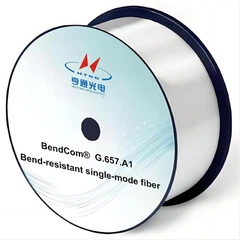
FTTH drop cables are designed to be lightweight, flexible, and compatible with bend-insensitive fiber such as ITU-T G.657.A2, which tolerates much tighter bend radii than standard G.652.D fiber without significant signal loss. Common form factors include flat butterfly cables with integrated strength members for aerial or duct drops, and round drop cables for indoor routing.
Self-supporting butterfly drop cables include a built-in steel wire or FRP strength member that allows the cable to span short distances between a pole and a building wall without additional hardware. This simplifies FTTH deployments in both urban and suburban environments by reducing the amount of ancillary hardware needed at each drop point.
Key Factors in Fiber Optic Cable Selection
Regardless of the specific scenario, the cable selection process should consider several factors systematically.
Installation method. The way a cable is installed, whether pulled into duct, blown with air, lashed to a messenger, buried in a trench, or routed through a building, determines the mechanical properties it needs. Tensile strength, crush resistance, and flexibility requirements all vary by installation method.
Environmental exposure. Outdoor cables must withstand UV radiation, temperature cycling, moisture, and potentially ice or wind loading. Underground cables need moisture barriers and possibly rodent protection. Indoor cables must meet fire safety codes.
Maintenance access. In remote or difficult-to-access locations, the cost of repairing a cable failure is high. Investing in stronger mechanical protection at the outset can reduce total cost of ownership over the cable's service life.
Fiber type and count. The type of optical fiber inside the cable, whether single-mode G.652.D for long-haul trunk routes or bend-insensitive G.657.A2 for access networks, should be matched to the application. Fiber count should account for current needs and future capacity growth.
Compliance and certification. Make sure the cable meets the relevant international and local standards. The IEC 60794 series covers general cable construction and testing. Regional standards may impose additional requirements for fire rating, environmental testing, or installation practices. For guidance on fiber optic cable testing and quality verification, consult the manufacturer's test reports and certification documentation.
FAQ
Q: What type of fiber optic cable is best for rodent-prone areas?
A: Cables with anti-rodent armor are recommended for areas with high rodent or animal activity. Look for designs that incorporate stainless steel tape, steel wire wrapping, or high-hardness nylon outer sheaths. The specific armor type should be matched to the severity of the threat and the installation method, whether duct, direct burial, or aerial.
Q: What is the difference between ADSS and figure-8 aerial cables?
A: ADSS cables are entirely non-metallic and self-supporting, making them suitable for installation on or near power lines. Figure-8 cables integrate a metallic or FRP messenger wire into the cable structure for tensile support. ADSS is preferred near high-voltage lines; figure-8 is often more economical for general aerial routes away from power infrastructure.
Q: Can outdoor fiber optic cable be used indoors?
A: Standard outdoor cables with PE jackets are generally not rated for indoor use because PE does not meet indoor fire safety codes. If a cable needs to transition from outdoor to indoor, use an indoor-outdoor rated cable or a riser-rated cable at the building entry point. Alternatively, splice the outdoor cable to an indoor-rated cable at the building entrance.
Q: Which fiber optic cable is used in equipment rooms and data centers?
A: Equipment rooms and data centers typically use fire-resistant cables with LSZH jackets that produce minimal smoke and no halogen gas in a fire. These cables should meet the applicable fire rating standard for the installation environment, such as IEC 60332 for flame propagation or IEC 61034 for smoke density.
Q: What fiber standard should I specify for FTTH drop cables?
A: ITU-T G.657.A2 bend-insensitive fiber is widely used for FTTH drop cables because it tolerates the tight bends and small routing spaces typical in last-mile installations. It remains compatible with G.652.D fiber in the upstream network, so splicing and connectivity are straightforward.
Q: How do I choose between duct cable and direct-bury cable for underground routes?
A: If pre-installed conduit is available, a standard duct-rated cable is sufficient. For routes without conduit, choose a double-jacketed, steel-tape-armored cable rated for direct burial. Direct-bury cables are built to withstand soil pressure, ground movement, and moisture without the external protection of a duct.