Who Are We?
Hengtong Group is an international enterprise with a diverse range of expertise covering fibre optical communication, power transmission, EPC turnkey service and maintenance, as well as IoT, big data, e-commerce, new materials and new energy.
Why Choose Us
Our credentials
It applies to enterprises that carry out the design and development, manufacture, installation and servicing of medical devices or related services.
Global Operation
HENGTONG possesses 70 wholly-owned companies and holding companies, establishes industrial bases in up to 16 provinces of China and in Europe.
Good service
Providing technical support, troubleshooting, and maintenance services.
One-stop Solution
We offer a comprehensive customization solution, tailored to meet the specific needs and requirements of our clients.

LC To LC Duplex Cable Assembly
LC to LC duplex cable assemblies are one of our hot selling patch cords. With the continuous development of fiber optic communication technology, 3G, 4G commercial trial network, high-speed LAN and optical access network and other markets that is continuous.

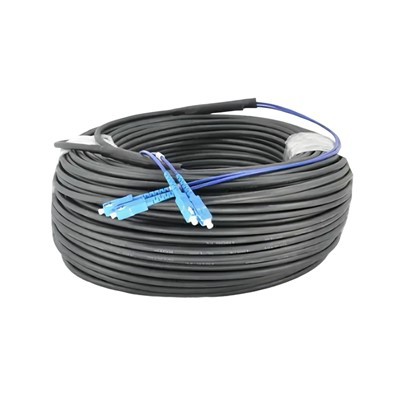
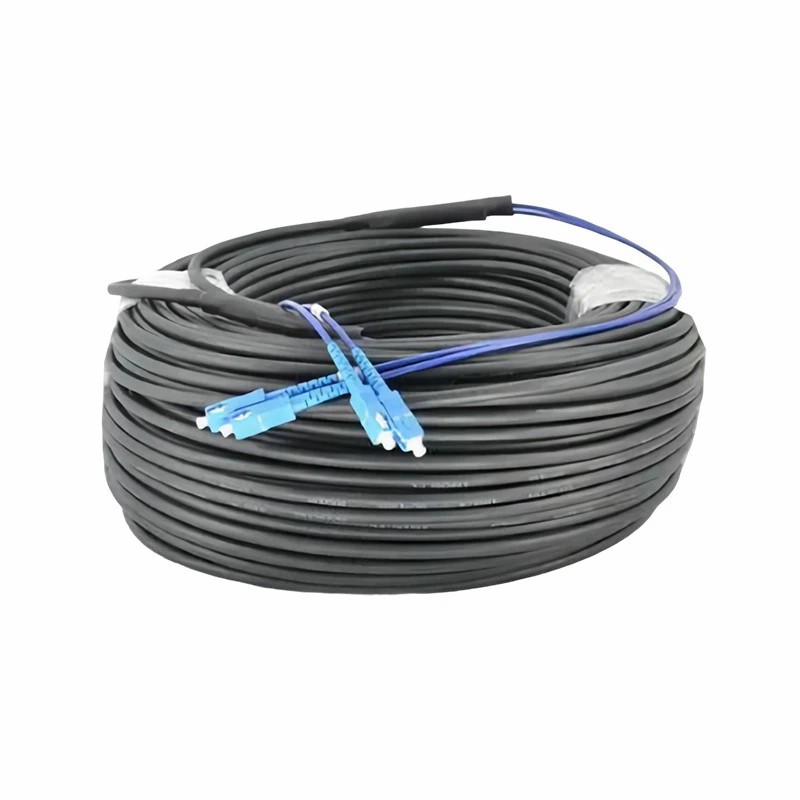
SC To SC Duplex Cable Assembly
SC to SC duplex cable assemblies with strong tensile strength, compression resistance , flexibility characteristics, bending resistant, oil resistant, abrasion resistance, flame retardant and other characteristics are widely used in building access, cabling construction,

FC To FC Duplex Cable Assembly
FC to FC duplex cable assemblies, using only high-quality components, equipment and workmanship, resulting in products that meet or exceed the most demanding specifications.
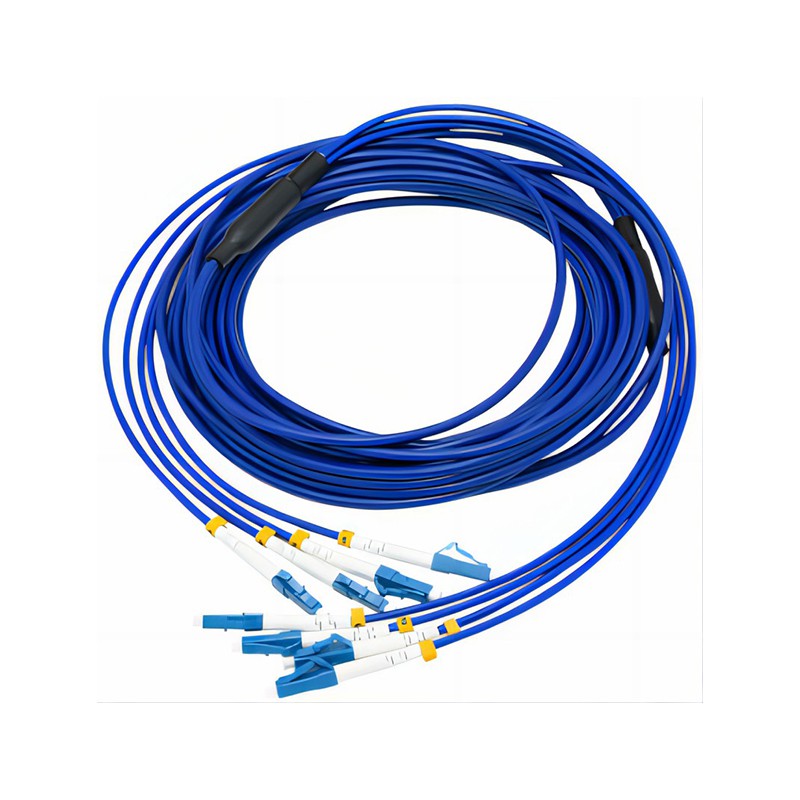
Multi-Fiber LC To LC Cable Assembly
Multi-Fiber LC to LC cable assemblies typically refer to equipment and components used to extend or connect optical fibers in outdoor environments. Multi-Fiber LC to LC cable assembly are durable, waterproof and weather resistant to adapt to harsh outdoor environments and to ensure the reliability and stability of data transmission.

Multi-Fiber SC To SC Cable Assembly
Multi-Fiber SC to SC cable assemblies are fiber optic cabling components designed specifically for outdoor environments, catering to the high-speed broadband access services of Fiber to the X (FTTX). Manufactured and tested to meet ICE, ISO, and ROHS industry standards,

Multi-Fiber FC To FC Cable Assembly
Multi-Fiber FC to FC cable assemblies for CATV, PON, FTTH and ATM/SONET applications. These multi-core fiber optic patch cords for CATV, PON, FTTH and ATM/SONET applications save space while reducing the need for additional protection. Multi-core fiber optic patch cords are available in both single-mode and multi-mode types.
What Is Fiber Optic Cable Assemblies?
Fiber optic cable assemblies are the process of connecting and terminating optical fibers to create an optical communication system. This process involves assembling components such as connectors, cables, and adapters to ensure the efficient transmission of light signals through the fiber optic network.
Fiber cable assemblies are used in a variety of applications, from connecting devices in a network to transmitting high-bandwidth signals. Here are some of the most common uses for fiber cable assemblies:
Networking: Fiber networking is an important part of modern business, and fiber cable assemblies make it possible to connect devices securely and quickly. Fiber cables can support data at an extremely high rate, which is more than enough bandwidth to handle today's most demanding networks.
Signal transmission: Fiber cable assemblies are perfect for transmitting high-bandwidth signals over long distances. They're able to transmit signals with little distortion, which means they can reach areas that other types of cables can't.
Data storage: Fiber cable assemblies are also ideal for storing data in large quantities. They have a low loss rate, meaning they can store massive amounts of information without losing any of it. This makes them perfect for use in data centers and other industries that need to store large amounts of information safely.
Types of Fiber Optic Cable Assemblies
Fiber optic cable assemblies come in various types, catering to specific applications. The main types include:
Single-Mode Fiber (SMF): Designed for long-distance data transmission, SMF cables use a single, narrow core to transmit light, reducing signal dispersion and ensuring high fidelity data transfer.
Multi-Mode Fiber (MMF): MMF cables are ideal for shorter-distance applications, such as local area networks (LANs). They use a larger core that allows multiple modes of light to propagate, resulting in shorter transmission distances but lower costs.
Simplex and Duplex Cables: Simplex cables have one fiber for one-way data transmission, while duplex cables consist of two fibers, allowing for bidirectional communication. These are commonly used in telecommunications and data centers.
Advantages of Fiber Optic Cable Assemblies
Fiber optic cable assemblies offer numerous advantages over traditional copper cables:
High-Speed Data Transmission
Fiber optics can transmit data at the speed of light, providing unmatched data transfer rates, crucial for bandwidth-intensive applications.
Immunity to Electromagnetic Interference (EMI)
Unlike copper cables, fiber optics are immune to EMI, ensuring data integrity in electrically noisy environments.
Long-Distance Transmission
Single-mode fibers can transmit data over vast distances, making them ideal for long-haul applications like undersea cables.
Security
Fiber optic cables are difficult to tap into, enhancing data security, making them ideal for sensitive applications.
What Are Fiber Optics Cable Assemblies Made of?
Telecom, data transfer, and the web are a few industries that fiber optic cables have transformed, but have you ever wondered how they're made? As experts in the design and manufacture of fiber optic cable assemblies and fiber optic cable harnesses, NAI explains what fiber optic cable assemblies are made of and why they are important.
From home internet connections to industrial robots to the 27,000-km undersea network called the Fiberoptic Link Around the Globe (FLAG), fiber optic cables can be found in more places than we'd ever expected. Why are fiber optic cable assemblies so common? It's because fiber optics have revolutionized countless industries with their superior signal transmission abilities. In addition, they have many desirable material properties.
The impressive performance of fiber optic cable assemblies and fiber optic cable harnesses is a result of the materials from which they're made. Having relatively high mechanical strength given their hair-thin size, fiber optic cables are made from materials that can withstand harsh external conditions without compromising the important signals they carry.
Cable harnesses and assemblies are constructed by combining multiple cables and connectors to perform the desired function. When it comes to fiber optic cable assemblies and fiber optic cable harnesses, these products are created using fiber optic cables rather than copper cables. But what are these fiber optic components truly made of?
The two most common materials for optical fibers are silica and plastic. When engineered correctly, both have impressive mechanical properties like flexibility and strength. They can also be designed with reflecting and refracting properties that are essential for signal transmission.
When it comes to creating a fiber optic cable assembly, the cost can be another deciding factor, but application and design may be the most important factors among the many fiber optic cable types available.
Is There Silica In Fiber Optics?
Typically, the thin filaments inside fiber optic cables are made from one of the most abundant materials on earth: silica. Short for silicon dioxide (SiO2), the fundamental material behind most fiber optic cables is the same compound found in sand.
Also used for solar photovoltaics and other electronics, the silica used for optical fiber is heated to extreme temperatures until it turns into glass. After further processing, the glass is heated and purified so that it becomes monocrystalline, which allows for minimal signal loss (attenuation). This purified glass is then slowly stretched until it forms thin filaments with the required diameter. The final product is a flexible optical fiber that - along with having a tensile strength of approximately 2 million psi - can withstand about 20 pounds of strain in a given fiber area.
Essentially, silica is transformed into a special glass to create the fiber optics we use in our cable assemblies and cable harnesses.
Is There Plastic In Fiber Optics?
One fiber optic technology trend is to use plastics instead of glass. Polymethyl methacrylate (PMMA) is the ingredient that makes up acrylic glass or plexiglass. It is also used to manufacture plastic optical fibers or POF.
It constitutes a 96% hybrid blend of materials to comprise the optical fiber core. While its exact material properties vary with its chemical composition, its cost-effectiveness often makes it favorable as a solution for consumer fiber optics products.
While plastic fiber is used for shorter distance runs and can typically be found in the home and in autos, glass fiber is used for longer distances and higher speeds, and can generally be found in commercial office and industrial applications.
How Are Fiber Optic Cable Assemblies Designed?
The decision to use glass or plastic as your optical fiber material may depend on the mode of transmission that applies to your cable assembly design and your end-use application. There are two different modes of fiber, which differ depending on how light travels through them:
Single-mode Fiber Optics. Excluding their ability to relay a signal back and forth, single-mode fiber optic cables only refract the light signals they carry in one direction. Their small diameter of 9 micrometers allows them to control the mode of transmission tremendously. Additionally, single-mode cables are always made from glass.
Multimode Fiber Optics. Having an average diameter of 125 microns, multimode optical fibers are larger than single mode and, thus, allow light to refract in multiple directions. Multimode fiber optic cables can be made from plastic or glass.
Another design parameter that may determine which material you use is the cladding type you need. Step index cladding has a single material composition throughout the fiber, while graded index cladding has multiple layers - each with a different refractive index. The result is a graded index that can steadily bend the light traveling through the fiber so that even less is lost during transmission. This, however, is more difficult to manufacture, making it more expensive.
Ultimately, it depends on the goals of your fiber optic cable harness or cable assembly to determine the makeup of the fiber optics. Knowing your end-use application, our NAI engineers can work with you to design a custom fiber optic cable assembly or harness to meet your exact specifications.
Fiber Optic Cable Assembly Process
It's no secret that today's digital economy is built on optical fiber. These thin fibers of glass are responsible for sending large streams of data every second, which makes the use of the internet possible. However, fiber needs to be handled carefully. Since the optic cables are small, you need to align the fiber with great precision and small shifts.
Fiber optic cable assembly understanding
Cable assemblies combine several wires and connectors with doing what is needed. But it's hard to put fiber optic components together. Fiber is different to work with than aluminum or copper wire because of the nature of the material it's made from and how flexible it is.
Common materials for strands in Optical cables
You can often see two types of fibers in life.
Silica
SiO2, a chemical formula for "silicon dioxide," is the main ingredient in many optic cables. This is the same substance you find in the sand. Optic fibers are made by heating silica to a very high temperature until it turns into glass. The result is a pliable optical fiber, which can hold up to about 20 lbs. of pressure in a certain area of the fiber.
Plastic
Some fiber optics are made up of plastic components instead of glass. It's a 96% mix of materials that make up the core of the optic fiber. Even though the loss might occur due to the use of different materials, still lower in cost, making it the preferred choice for consumers.
Plastic fiber is best for short ranges, and you can use them in homes and cars. Glass fiber, on the other hand, is ideal for greater distances and faster speeds. Thus, you can find them in offices and factories.
How Are Fiber Optic Cable Assemblies Designed?
It doesn't matter whether you use plastic or glass as the material for your optical fiber; however, what matters is the way you have designed your cable assembly and how you plan to use it.
Single Mode: Single-mode cables only bend the optical signal in one direction. They can't send a signal back and forth. Because their diameter is only 9 micrometers, they have much control over how they send information. Thus, manufacturers always make single-mode fiber optics in the glass.
Multimode Fiber Optic: Multimode optical fibers have an average size of 125 microns, which is bigger than single-mode fiber and enables the light to bend in more than one direction. The companies use glass or plastic to make multimode fiber optic cables.
Another factor that changes the design decisions is the type of cladding you plan to use. For example, in Step index cladding, you use the same material through the cable. However, in gradual index cladding, you need different materials at every layer, giving a specific refractive index. The latter ensures that the signals are refracting with little to no loss.
Grade index cladding is harder to make. Which means it costs more than the step-index cladding. In the end, the type of fiber optics material you want to use depends on what you want to do with your optical assembly or harness.
Due to potential future increases in transportation costs, online meetings, education, and sales call participation will likely grow in importance. Costs associated with travel and training might be drastically cut. Some businesses have looked into this but decided against it due to the large increase in the capacity needed to stream high-definition video over cable. However, optical fiber networks can carry a frequency band significantly greater than cable internet, which greatly improves the feasibility. Today, we will have a clear comparison of the fiber optic cable assembly and the copper cable assembly.
What is the copper cable?
Cable internet is a high-speed service delivered to your home or business using primary Cable lines (coaxial cables). Coaxial cables have aluminum and copper shielding, an insulation sheath, and a plastics outer layer, with the core made of copper (or copper-clad steel). The copper core sends data waves by riding on top of customized radio waves that travel through empty cable TV channels.
What are optical cable assemblies?
The ones and zeroes that make up data are represented in fiber by pulses of light from LEDs or lasers. Optical cables use a single glass or polymer core to transmit data. The light signals are protected from damage and can be sent across the cable's twists and turn due to reflecting covering. Moreover, lightweight buffers and jackets shield the wires easily.
Cable vs. Fiber: What's the difference?
Both copper cable and fiber are trustworthy options for internet service. However, they are different in speed, dependability, availability, and cost differences.
Cable vs. Fiber: Speed
Although cable internet may theoretically reach the same rates as fiber connection, operators are throttling speeds due to inefficient network resource use.
Cable internet download speeds are capped at 1,200 Mbps since the underlying infrastructure was designed for cable TV and did not support speeds greater than 1,200 Mbps. Now, it's also used to get online, but cable companies can only provide you with so much speed before you have to pay more.
In most cases, upload and download speeds on fiber networks are identical. But most users download much more than they upload, so this difference in bandwidth isn't usually a deal-breaker.
Our Factory
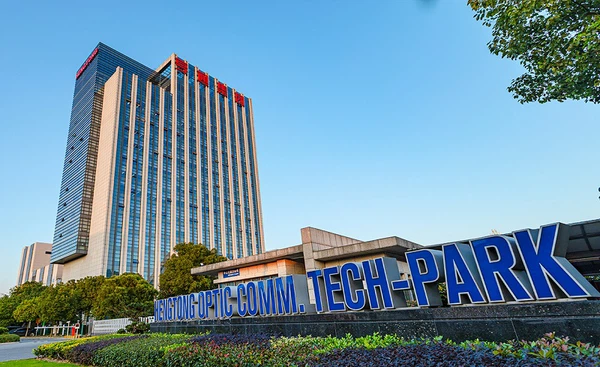
Hengtong has over 70 wholly-owned companies and holding companies (5 of which are listed on the Shanghai, Hong Kong, Shen Zhen and Indonesian stock exchanges respectively), with 12 manufacturing bases in Europe, South America, Africa, South Asia and Southeast Asia. Hengtong operates sales offices in over 40 countries and regions around the world, supplying products to over 150 countries and regions.
FAQ
Q: What is a fiber optic cable assembly?
Q: What is fiber optic cable and what does it do?
Q: What are the three types of fiber optic cable?
Q: What are the components of a fiber optic cable?
A fiber optic cable consists of five basic components: the core, the cladding, the coating, the strengthening fibers, and the cable jacket.
Q: What is the purpose of a cable assembly?
Q: What are cable assemblies used for?
Q: Is fiber optic better than Wi-Fi?
Q: What does a fiber connection look like?
Q: What is the difference between wired and fiber optic cables?
Q: How many wires are in a fiber optic cable?
Q: How many wires does fiber optic have?
Q: What is the basic component of the cable assembly?
Q: How do you test a cable assembly?
Q: What is a cable routing assembly?
Q: What is the difference between wire harness and cable assembly?
Q: What is a cable support assembly?
Q: Why fiber is better than cable?
Q: What are the risks of fiber optic cables?
Q: Does fiber internet need a modem?
Q: What is the maximum distance of fiber optic cable?
Although the maximum distance of fiber optic cable is affected by both attenuation and dispersion, for most applications, the maximum distance of any type of fiber optic cable is around 62.14 miles (100 kilometers).
Hot Tags: sc to sc duplex cable assembly, China sc to sc duplex cable assembly manufacturers, suppliers