

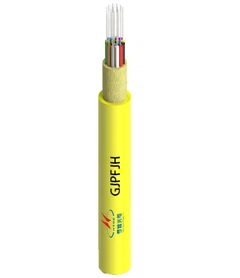


Hey there! I'm a supplier of single mode fiber, and I'm super excited to share all about what single mode fiber is. So, let's dive right in!


Single mode fiber is a type of optical fiber that's designed to carry a single ray of light, or mode, at a time. Unlike multimode fiber, which can carry multiple modes of light simultaneously, single mode fiber offers some pretty amazing advantages.
First off, single mode fiber has a much smaller core diameter, usually around 8 - 10 microns. This small core size allows it to transmit light with very low dispersion, which means the light signals can travel much longer distances without losing their strength or quality. In fact, single mode fiber can transmit signals over distances of tens or even hundreds of kilometers, making it ideal for long - haul telecommunications networks, such as those used by phone companies and internet service providers.
Another great thing about single mode fiber is its high bandwidth. Bandwidth refers to the amount of data that can be transmitted over the fiber in a given amount of time. With single mode fiber, you can send a huge amount of data, like high - definition video, large files, and real - time voice and data communications. This makes it perfect for applications that require high - speed data transfer, such as data centers, cloud computing, and 5G networks.
Now, let's talk about the different types of single mode fiber. There are several standards defined by the International Telecommunication Union (ITU), each with its own unique characteristics and applications.
One of the most commonly used types is the SL-G.652.D. This type of fiber is known for its low attenuation, which means it loses very little of the light signal as it travels through the fiber. It's suitable for a wide range of applications, from local area networks (LANs) to long - haul telecommunications. It's also compatible with a variety of optical equipment, making it a very versatile choice.
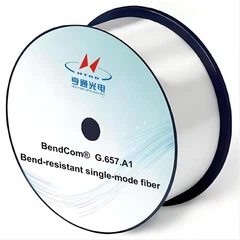
Then there's the G.657.A1. This fiber is designed for use in access networks, like those that connect homes and businesses to the main telecommunications network. It has a bend - insensitive design, which means it can withstand being bent or curved without significant loss of the light signal. This is really useful in situations where the fiber needs to be installed in tight spaces or around corners.
The G.655 is another important type of single mode fiber. It's optimized for use in long - haul, high - bit - rate systems, especially those that use dense wavelength division multiplexing (DWDM). DWDM is a technology that allows multiple wavelengths of light to be transmitted over the same fiber simultaneously, greatly increasing the amount of data that can be sent. G.655 fiber helps to minimize the nonlinear effects that can occur when multiple wavelengths are used, ensuring reliable and high - performance data transmission.
When it comes to manufacturing single mode fiber, it's a pretty high - tech process. The fiber is made from a pure form of silica glass, which is drawn into a thin strand. During the manufacturing process, different dopants are added to the glass to control its optical properties, like the refractive index. The refractive index determines how the light travels through the fiber, and by carefully controlling it, we can ensure that the fiber has the desired characteristics, such as low attenuation and high bandwidth.
Once the fiber is manufactured, it needs to be tested to make sure it meets the required standards. We use a variety of testing methods, like optical time - domain reflectometry (OTDR), to measure the fiber's attenuation, length, and any potential defects. This helps us to ensure that only high - quality fiber is sent out to our customers.
Now, you might be wondering where single mode fiber is used in real - life applications. Well, as I mentioned earlier, it's widely used in telecommunications networks. Phone companies use it to connect different parts of their network, allowing you to make clear phone calls and access the internet at high speeds. Internet service providers rely on single mode fiber to deliver broadband internet to homes and businesses.
Data centers are another major user of single mode fiber. In a data center, there are thousands of servers that need to communicate with each other quickly and efficiently. Single mode fiber provides the high - speed data transfer capabilities needed to keep these servers connected and running smoothly.
5G networks also rely heavily on single mode fiber. 5G is all about high - speed, low - latency communication, and single mode fiber is the perfect medium to support these requirements. It helps to connect the 5G base stations to the core network, enabling fast data transfer between mobile devices and the cloud.
If you're in the market for single mode fiber, whether you're building a new telecommunications network, upgrading your data center, or implementing a 5G solution, we've got you covered. We offer a wide range of single mode fiber products, including the different types I mentioned earlier. Our fibers are of the highest quality, and we can provide you with the technical support and advice you need to choose the right fiber for your specific application.
If you're interested in learning more or starting a procurement discussion, don't hesitate to reach out. We're always happy to talk about how our single mode fiber can meet your needs and help you achieve your goals.
References:
- International Telecommunication Union (ITU) standards for single mode fiber
- Technical literature on optical fiber manufacturing and testing
- Industry reports on the use of single mode fiber in telecommunications, data centers, and 5G networks