

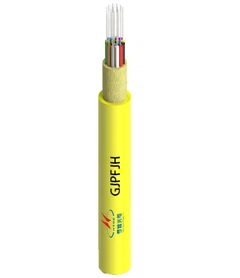


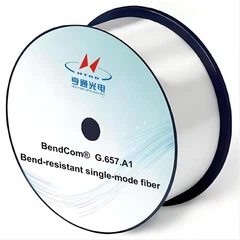
Single-mode fibers provide a single pathway for light to travel and are defined by their small core size of approximately 8.3 µm. Multimode fibers, on the other hand, have various paths, or modes, in which light can travel through optical fiber. These core sizes are larger, ranging from 50 µm to 62.5 µm. This blog delves into the key distinctions between these two fiber types, exploring their construction, applications, light propagation characteristics, and selection criteria.
Difference in Construction
Core Diameter Variations
The most apparent difference between multimode and single-mode fibers lies in their core diameters. Multimode fibers typically have larger core diameters, ranging from 50 to 62.5 micrometers. In contrast, single-mode fibers feature much smaller core diameters, usually around 8 to 10 micrometers. This significant difference in core size directly impacts the way light travels through each fiber type.
Refractive Index Profiles
Multimode fibers often employ a graded-index profile, where the refractive index gradually decreases from the center of the core to its outer edge. This design helps to reduce modal dispersion and improve bandwidth capabilities. Single-mode fibers, on the other hand, utilize a step-index profile with a uniform refractive index throughout the core. This configuration allows for the propagation of only one mode of light, hence the name "single-mode."
Cladding Characteristics
While both fiber types feature cladding to contain light within the core, the cladding-to-core ratio differs. Multimode fibers typically have a cladding diameter of 125 micrometers, resulting in a smaller cladding-to-core ratio compared to single-mode fibers. Single-mode fibers maintain the same 125-micrometer cladding diameter but with a much smaller core, leading to a larger cladding-to-core ratio.
Difference in Application
Short-Distance vs. Long-Distance Communication
Multimode fibers excel in short-distance applications, typically within buildings or campus environments. They are commonly used for distances up to 300 meters, making them ideal for local area networks (LANs) and data centers. Single-mode fibers, with their superior long-distance capabilities, are the preferred choice for telecommunications networks spanning hundreds or even thousands of kilometers.
Bandwidth Considerations
The bandwidth capacity of multimode fibers is generally lower than that of single-mode fibers. This limitation makes multimode fibers more suitable for applications with moderate bandwidth requirements, such as enterprise networks and some industrial settings. Single-mode fibers, boasting significantly higher bandwidth capabilities, are essential for high-speed, long-distance data transmission in telecommunications and cable television networks.
Cost and Installation Factors
Multimode fibers often present a more cost-effective solution for short-distance applications. The larger core diameter allows for the use of less expensive light sources and connectors, reducing overall system costs. Single-mode fibers, while more expensive in terms of initial equipment costs, offer long-term cost benefits for long-distance applications due to their superior performance and lower signal loss over extended distances.
Difference in Light Propagation
Modal Dispersion Characteristics
Multimode fibers allow multiple modes of light to propagate simultaneously through the core. This phenomenon, known as modal dispersion, can lead to signal degradation over longer distances as different light modes travel at slightly different speeds. Single-mode fibers eliminate modal dispersion by supporting only one mode of light propagation, resulting in clearer signals over extended distances.
Wavelength Considerations
Multimode fibers typically operate at shorter wavelengths, usually 850 nm or 1300 nm. These wavelengths are well-suited for the larger core diameters and shorter transmission distances associated with multimode applications. Single-mode fibers, designed for long-distance transmission, operate at longer wavelengths, typically 1310 nm or 1550 nm. These longer wavelengths experience less attenuation, allowing signals to travel further without degradation.
Chromatic Dispersion Effects
Both fiber types experience chromatic dispersion, where different wavelengths of light travel at slightly different speeds. However, the impact of chromatic dispersion is more pronounced in single-mode fibers due to their longer transmission distances. Advanced single-mode fiber designs, such as dispersion-shifted fibers, help mitigate these effects in long-haul applications.
How to Choose Between Single-Mode and Multimode?
Distance Requirements
The primary factor in choosing between single-mode and multimode fibers is the required transmission distance. For short-distance applications under 300 meters, multimode fibers often provide a cost-effective solution. When distances exceed 300 meters or for future-proofing networks, single-mode fibers become the preferred choice due to their superior long-distance performance.
Bandwidth Needs
Assessing current and future bandwidth requirements is crucial in fiber selection. Multimode fibers can support bandwidths up to 100 Gbps over short distances, making them suitable for many enterprise applications. However, for high-bandwidth, long-distance needs or to accommodate future network expansions, single-mode fibers offer unparalleled scalability and performance.
Cost Considerations
While single-mode fibers offer superior performance, they often come with higher initial costs due to more expensive transceivers and connectors. Multimode fibers can be more economical for short-distance applications, especially in existing infrastructure. It's essential to consider both immediate and long-term costs when deciding.
Compatibility with Existing Infrastructure
When upgrading or expanding networks, compatibility with existing infrastructure is a key consideration. Multimode fibers may be the logical choice if the current network predominantly use multimode technology. However, if long-term scalability is a priority, transitioning to single-mode fiber might be more beneficial despite potential short-term compatibility challenges.
Environmental Factors
The operating environment can influence fiber choice. Single-mode fibers are generally more resilient to external factors such as temperature fluctuations and physical stress, making them ideal for outdoor and harsh industrial environments. Multimode fibers, while suitable for controlled indoor environments, may require additional protection in more demanding settings.
Future-Proofing Considerations
As data demands continue to grow, future-proofing network infrastructure becomes increasingly important. Single-mode fibers offer greater potential for future upgrades and bandwidth expansion without the need for fiber replacement. This long-term perspective can offset higher initial costs and provide a more sustainable network solution.
Where to Buy Single Mode or Multimode Fiber?
Hengtong Group is an international enterprise with a diverse range of expertise covering fibre optical communication. For expert guidance on selecting the right fiber optic solution for your specific needs, contact Hengtong Group. Our team of specialists can provide personalized recommendations and cutting-edge fiber optic products tailored to your unique requirements. Reach out to us at jenny@htgd.com.cn or call +8615711010061 to explore how our advanced fiber optic solutions can enhance your network performance and reliability.
References
1. Agrawal, G. P. (2019). Fiber-Optic Communication Systems. John Wiley & Sons.
2. Keiser, G. (2021). Optical Fiber Communications. McGraw-Hill Education.
3. Senior, J. M., & Jamro, M. Y. (2009). Optical Fiber Communications: Principles and Practice. Pearson Education.
4. Hecht, J. (2015). Understanding Fiber Optics. Laser Light Press.
5. Dutton, H. J. R. (1998). Understanding Optical Communications. Prentice Hall.
6. Crisp, J., & Elliott, B. (2005). Introduction to Fiber Optics. Newnes.