

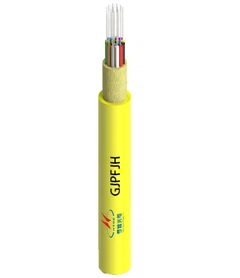


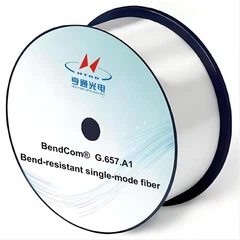
Optic cable, commonly referred to as fiber optic cable, is a revolutionary technology that has transformed the way we transmit data over long distances. Unlike traditional copper cables that use electrical signals, optic cables utilize light signals to convey information. This fundamental difference allows for faster data transmission rates, greater bandwidth, and improved reliability.
At the core of an optic cable are thin strands of glass or plastic fibers, known as optical fibers. These fibers are designed to carry light signals, which are generated by lasers or light-emitting diodes (LEDs). When data is transmitted, it is converted into light pulses that travel through the fibers. The principle of total internal reflection ensures that the light signals remain within the core of the fiber, allowing them to travel long distances without significant loss of quality.
One of the most significant advantages of optic cables is their ability to transmit data at incredibly high speeds. While traditional copper cables can handle a limited amount of data, fiber optic cables can support gigabits per second (Gbps) and even terabits per second (Tbps) in some cases. This capability is essential for modern applications such as streaming high-definition video, online gaming, and cloud computing, where large amounts of data need to be transferred quickly and efficiently.
In addition to speed, optic cables also offer superior bandwidth. Bandwidth refers to the amount of data that can be transmitted in a given time frame. Fiber optic cables can carry significantly more data than copper cables, making them ideal for high-demand environments like data centers and telecommunications networks. This increased capacity allows service providers to offer faster internet speeds and more reliable connections to their customers.
Another key benefit of optic cables is their resistance to electromagnetic interference (EMI). Unlike copper cables, which can be affected by electrical noise from nearby devices, fiber optic cables are immune to such interference. This characteristic ensures that the data transmitted remains clear and uninterrupted, making optic cables a preferred choice for critical communication systems.
Moreover, optic cables are more secure than traditional copper cables. Since they transmit data as light rather than electrical signals, it is much more challenging for unauthorized individuals to tap into the signal without detection. This enhanced security is particularly important for businesses and organizations that handle sensitive information.
In conclusion, optic cables represent a significant advancement in data transmission technology. Their ability to provide high-speed, high-bandwidth, and secure communication makes them an essential component of modern telecommunications infrastructure. As the demand for faster and more reliable internet continues to grow, the role of optic cables will only become more critical in shaping the future of connectivity.