

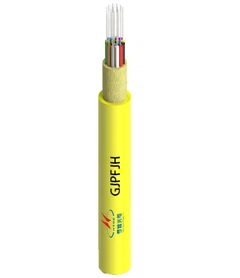


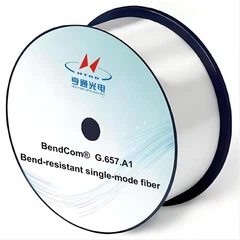
Fiber optic connections are crucial in fiber optic communication systems, determining the quality and efficiency of optical signal transmission within the network. There are three main types of fiber optic connections: permanent fusion splicing, emergency splicing (cold splicing), and connectorized (activity) connections. Each type has its specific application scenarios, advantages, and drawbacks.
Permanent Fusion Splicing
Advantages:
Low Attenuation: Offers the lowest attenuation among all connection methods, typically ranging from 0.01 to 0.03 dB per splice, ensuring high-intensity signal transmission.
Long-term Stability: Forms a permanent connection with high physical strength and long-term stability, suitable for long-haul communications and high-reliability applications.
Disadvantages:
Equipment Dependency: Requires specialized fusion splicers and skilled operators, leading to higher costs.
Protection Needs: The splice points require special protection enclosures to prevent mechanical damage and environmental impacts.
Emergency Splicing(Cold Splicing)
Advantages:
Quick Connection: Utilizes mechanical and chemical methods for fast fiber fixation and bonding, suitable for emergency restoration.
Reliability: Provides relatively stable connections within a short period, with attenuation ranging from 0.1 to 0.3 dB per splice.
Disadvantages:
Long-term Instability: Long-term use can lead to unstable connections and significant attenuation increases, limiting its suitability for long-term applications.
Higher Attenuation: Compared to fusion splicing, cold splicing exhibits higher attenuation.
Connectorized (Activity) Connections
Advantages:
Flexibility: Uses fiber optic connectors (plugs and sockets) to easily connect sites or cables, offering convenience and flexibility.
Simplicity: Installation and maintenance are relatively straightforward, requiring no complex equipment or specialized skills.
Wide Application: Ideal for use in building networks, such as data centers and office buildings.
Disadvantages:
Higher Attenuation: Connectorized connections typically exhibit higher attenuation, around 1 dB per connection, which may impact signal transmission quality.
Connector Quality Dependence: The quality of the connectors directly affects the stability and attenuation of the connection.