






Who Are We?
Hengtong Group is an international enterprise with a diverse range of expertise covering fibre optical communication, power transmission, EPC turnkey service and maintenance, as well as IoT, big data, e-commerce, new materials and new energy.
Why Choose Us
Our credentials
It applies to enterprises that carry out the design and development, manufacture, installation and servicing of medical devices or related services.
Global Operation
HENGTONG possesses 70 wholly-owned companies and holding companies, establishes industrial bases in up to 16 provinces of China and in Europe.
Good service
Providing technical support, troubleshooting, and maintenance services.
One-stop Solution
We offer a comprehensive customization solution, tailored to meet the specific needs and requirements of our clients.

Multi Tube Single Jacket ADSS Cable
The Multi tube Single Jacket ADSS Cable as a whole is single jacket loose tube lamination structure. The cable core is extruded with polyethylene sheathed, and the aramid yarn armor is strengthened.

Multi Tube Double Jacket ADSS Cable
The multi-tube double jacket ADSS optical cable is a double-sheath loose tube SZ stranded structure. The cable core uses an extruded polyethylene inner sheath and is reinforced with aramid wire armor.

The cable core of Mini ADSS is composed of a loose sleeve pipe and two non-metallic reinforcing parts. The water resistance yarn is placed in the gap of the cable core, and the tear rope is placed under the sheath to facilitate the opening and stripping of the cable during construction.

Uni-Tube Figure 8 Aerial Cable
The Uni-tube Figure 8 Aerial Cable cable is divided into three parts: suspension wire, sling and optical cable. The cable core of the optical cable part has a central bundle tube structure. The outside of the cable core is armored with steel tape.

Uni-Tube Steel Tape Armored Aerial Cable
The Uni-tube Steel Tape Armored Aerial Cable is a central tube structure, and the steel belt outside the central tube is armored and extruded with polyethylene sheath entrained with parallel steel wire to provide comprehensive protection for the fiber optic cable.

Multi Tube Single Jacket Figure 8 Aerial Cable
The overall structure of the Multi tube Single Jacket Figure 8 Aerial Cable is "8" shape, divided into three parts: Cable, sling and optical cable. The cable core of the optical cable is loose set lamination structure, and the outer cable core is longitudinally clad with aluminum tape armor (steel tape/none).

Non-Metallic Strength Member Multi Tube Single Jacket Figure 8 Cable
The overall structure of the Non-Metallic Strength Member Multi tube Single Jacket Figure 8 Cable is "8" shape, divided into three parts: cable, sling and optical cable. The cable core of the optical cable is loose set lamination structure, and the outer cable core is longitudinally clad with aluminum tape (steel tape/none) armor.

Non-Metallic Strength Member Figure 8 Fiber Optic Cable
The overall structure of the Non-Metallic Strength Member Figure 8 Fiber Optic Cable is "8" shape, divided into three parts: cable, sling and optical cable. The cable core of the optical cable is a center beam tube structure.
Fiber optic aerial cables are used in telecommunication networks that are installed on poles, towers, or other structures above the ground. Aerial fiber optic networks are designed to provide high-speed internet, television, and telephone services to homes and businesses. These are often used in rural or suburban areas where it is impractical or too expensive to bury cables underground. They are also commonly used in urban areas where there are already existing poles and infrastructure to support the installation of these networks.
What are Aerial Fiber Optic Cables?
In optical signal transmission, we often have to overcome long distances, and one solution for these long paths is the installation of aerial cables.
For these applications, aerial installation is a much faster and cheaper method. However, these cables are directly exposed to the elements, which can be quite severe in some locations.
Aerial cables are built to have a lifespan of 25 years, resisting wind, rain, ice, heat, UV rays, and other constant weather variations that occur with the seasons or even throughout the day. However, in some locations, where temperatures can vary greatly in just a few hours, elongation or contraction can happen in both the cable and its supporting structures, which can affect the conditions of the fibers inside.
Therefore, as always, the choice of cable should take into consideration the local conditions, including the maximum and minimum temperatures, hours of sun exposure, humidity, and so on.
How are Aerial Fiber Optic Cables Classified
Aerial cables can be classified into two categories: Self-supported and Catenary. The choice between these two types depends on the installation's location.
If we want to install the cable on a path that already has support to attach it, where we don't have to worry about the span of the cable, we can use a catenary cable and fix it to the existing messenger wire.
If the installation doesn't have an existing messenger wire, we can opt for the self-supported aerial optical cable type, which as the name implies, has a structure that allows us to overcome long distances by fixing it only on the poles.
OPGW (Optical Ground Wire): These are fully metallic cables, capable of holding large quantities of fibers inside. These aerial fiber optic cables are used in power lines and work for both data transmission and protection against lightning strikes.
The main advantages of aerial fiber optic cables are
These can be easily installed due to being very lightweight and flexible (except for OPGW cables).
Often, in the path we want make, there already exist electrical or other network poles, and we can take advantage of these existing paths.
Aerial fiber optic cables allow for covering long distances fast, sometimes in just a day's work.
However, they also have disadvantages like the visual pollution they cause to landscapes, increased risks of contact due to exposure (some cables are hit by hunting shots), and impact from the environment, which translates into greater maintenance needs for these cables.
The Mechanics of Aerial Fiber Cable
With a plethora of aerial fiber cable products on the market today it can be difficult to differentiate and fully appreciate why one construction is or isn't more suitable than another.
Taking a very broad overview of the aerial installation solutions presently available, there are two distinct approaches: Either installing fiber into an aerial drop tube or microduct, or deploying a stand-alone self-supporting cable.
Normally the fiber-in-duct approach will require two installation phases, whereas the self-supporting aerial cable route can be deployed in one stage. From this you'd assume that the self-supporting cable solution reduces labor costs.
But this is actually not the case, so let's delve deeper and further subdivide these two options into two more, assessing each for the total cost outlay, installation time and applicability in different areas of a fiber network.
1. Fiber In-Duct
Blown Fiber
Costs are comparatively high since the microduct must be deployed before fiber can be blown. The additional time and cost of the blowing head and compressor makes this an unattractive solution unless the plant/equipment is already owned. While the time to install the microduct is no different than installing a constructed cable solution, blowing fiber is a lengthy process. For this reason it is not well suited to final drops, but does still have applications where fiber routes are long, hard to access, or where planners value installing a fiber raceway that can readily be revisited for future upgrades and maintenance.
Following the microduct and fiber deployment, the fibers must be spliced by a trained optical engineer which, again, can consume time, depending on their availability. Blowing fiber certainly still has benefits. And if the planner were looking to build a future-proof network where fibers can more easily be replaced with minimum disruption, a fiber cable-in-duct solution would be the best option. As with all cable-in-duct scenarios, the fiber is separate from the microduct and therefore protected from high tensile loads.
Fiber can be successfully blown up to two miles and farther if blowing heads are run in tandem - although real world scenarios are likely to be less than one mile. This makes blown fiber highly unsuitable for last drops, but where multiple fibers need to be routed further than a few hundred meters, blown fiber becomes a contender.
Pushable Fiber
Similar to blown fiber, this is a two stage installation process which first requires microduct to be lashed to utility poles. It is this second stage where the cost comparison can be made since the fiber is pushed/pulled rather than air-blown. Installation speeds are comparable to blown fiber ranging between 20-50 feet per minute by hand, or with aid of a battery powered pushing machine in excess of 100 feet per minute.
The pushable fiber cable is much smaller than an aerial cable (in the region of 1/8 of an inch) and, because it is manufactured from an indoor rated material, can be safely routed inside a building following the aerial deployment. The sheath of the pushable fiber cable will be much more rugged than a blown fiber tube or bundle, as well as utilizing a harder material than an aerial cable or microduct, which are usually of the polyethylene variety.
In Fiber to the Home (FTTH) installations, it is possible to pre-terminate a connector onto the pushable fiber cable, reducing the need to splice the fibers at both ends of the drop cable. In terms of limitations, it is really only advantageous to use it in last drops or short metropolitan area networks where fiber counts are between one and 48 and routes don't exceed 1,000 feet.
2. Pre-Fibered Self Supporting Cable
Loose Tube
Mechanics of aerial fiber cableThese are larger than "fiber in-duct" cables, with a single fiber version typically in the ¼ to ½ inch region. While pre-terminated options are available they require bulky, cumbersome connectors so can be a little unwieldy. The cost of loose tube aerial cable is determined largely by the number of fiber tubes in it. Some cables have a rectangular or oval design or, when round, are constructed with empty "filler" tubes for lower count cables.
In terms of installation the process is largely similar to microduct deployments, and when it comes to splicing the cable it will require a level of deconstruction in order to access the individual element tubes. This makes the process much more cumbersome, especially when network terminals are located in different locations or the fibers need to be accessed mid-span.
Compared to cable-in-duct practices a loose tube cable will be faster to deploy since it requires just one truck roll. However, the process of accessing fibers and, if necessary, routing them some distance into the dwelling can be very time consuming for even the skilled splice technician.
Loose tube aerial cables are highly suited to long deployments, up to and beyond what was traditionally feasible with blown fiber. Depending on the pay-off capabilities of the installation crews and the landscape, continuous lengths of 30,000ft (+5 miles) of fiber cable are not uncommon. This makes aerial loose tube fiber cable ideal for building backbone networks or long metropolitan area trunk lines.
Tight Buffered
These typically follow the same design and construction as loose tube cables, with the obvious exception that the fiber sets (normally 12 fibers each) are tightly sheathed and therefore are not able to move freely. Pricing will also be similar with perhaps small savings because tight buffer is less expensive to manufacture. However, the fibers will be at higher risk once the cable is stripped for termination.
Installation costs are the same as loose tube with a single installation phase to get the fiber deployed but will also require routing to the termination box and splicing, as per loose tube cable. The plant/equipment requirement is the same so while beneficial for higher fiber counts, it works less well for low count drop cables where a single splice technician could be required to terminate fibers across the network in a range of locations.
Unfortunately, tight buffered cables are not best suited to long hauls (over 1 km) since the processing of the fibers can potentially add stress to the glass. It is therefore a viable and cost effective alternative for metropolitan area or FTTH drop cables but less suitable for backbone fiber.
When it comes to aerial deployments, every installation is different.
To succeed you therefore need to understand the advantages of each approach in different conditions and parts of the network in order to minimize cost and installation time in order to ensure a reliable, high quality deployment.
Aerial Fiber Optic Cable Hardware and Accessories

We will explore the various hardware and accessories required for successful aerial fiber optic cable installations. These components play a crucial role in ensuring the stability, support, and protection of the aerial fiber optic cable infrastructure.
Aerial Lashing Hardware
Aerial lashing hardware is used to secure the aerial fiber optic cable to messenger wires or other support structures. It includes components such as lashing clamps, brackets, and straps. These hardware elements provide stability and prevent cable sagging over long spans, ensuring proper tension and minimizing stress on the cable.
Messenger Wire and Brackets
Messenger wires, also known as support wires or guy wires, are essential for aerial fiber optic cable installations. They provide structural support and help distribute the tension along the cable route. Messenger wire brackets are used to securely attach the messenger wire to utility poles or other mounting points. They ensure the cable's stability, especially during extreme weather conditions or high wind loads.
Suspension and Tension Devices
Suspension and tension devices are used to manage the tension of the aerial fiber optic cable and maintain its proper alignment. These devices, such as suspension clamps and preformed wire grips, are designed to withstand the weight of the cable and maintain its position on utility poles or other support structures. They help prevent excessive cable sag and ensure the cable remains at the desired height and alignment.
Cable Clamps and Supports
Cable clamps and supports are essential for securing the aerial fiber optic cable to utility poles or messenger wires. They provide strain relief and prevent the cable from moving or vibrating, ensuring its stability and protection. Cable clamps come in various designs, including wedge-type clamps, armor grip clamps, and dead-ends, each suited for different applications and cable types.
Grounding and Bonding Equipment
Grounding and bonding equipment is crucial for ensuring proper electrical grounding of the aerial fiber optic cable system. Grounding helps protect the cable and network equipment from electrical surges or lightning strikes. Grounding equipment includes ground wires, ground rods, and bonding clamps, which are installed at specified intervals to establish a low-resistance path to the ground, dissipating potential electrical currents.
It is important to select high-quality hardware and accessories that are specifically designed for aerial fiber optic cable installations. These components should comply with industry standards and be compatible with the cable type and installation requirements. Proper installation techniques and adherence to safety practices should be followed to ensure the longevity and reliability of the aerial fiber optic cable system.
Installing Aerial Fiber Optic Cables
Aerial fiber optic cable is installed using a stationary reel or moving reel method. The stationary reel method is best used when there are obstacles along the planned cable route that reduce or eliminate equipment access. The moving reel method is used when the route is free from obstacles and obstructions, allowing easy or improved equipment access between the cable reel, the aerial section of placement, and a clear path alongside the poles for the reel trailer and trucks.
Pre-Construction Preparations
Careful planning and preparation are necessary before proceeding with aerial fiber optic cable installation. Conduct a survey of the proposed installation route and include all concerned parties. Consider details such as permitting, approvals, route clearance, and pre-existing poles and equipment.
Conduct a pre-survey - Inspect the route to determine the installation method, equipment, and material requirements most suited to the aerial fiber optic cable installation.
Consider route issues - Investigate ground conditions, clearance issues from roadways, trees, obstructions, and driveways
Select splicing locations - Plan cable distances to select splicing locations that are at convenient non-hazardous locations. These locations should support the greatest length cable to reduce the number of splicing locations.
Handling - Fiber optic cables can be damaged if not handled properly during the installation process. Adherence to the cable's design limits of pull tension, minimum bend, and crush force during installation will ensure that the cable will perform properly throughout its full design lifetime. The greatest mistake when handling fiber optic cable is assuming that all outside plant (OSP) handling equipment is suitable for use.
Installation safety
Use properly trained personnel and make sure that conditions support the work. Work done during inclement weather can reduce safety. Use tools and equipment that are designed for the work being done and that function well. Be careful working near high voltage lines. When pulling cables, make sure that personnel and equipment do not get caught in the line. Failing to do these things may result in project delays and personnel injury.
Our Factory
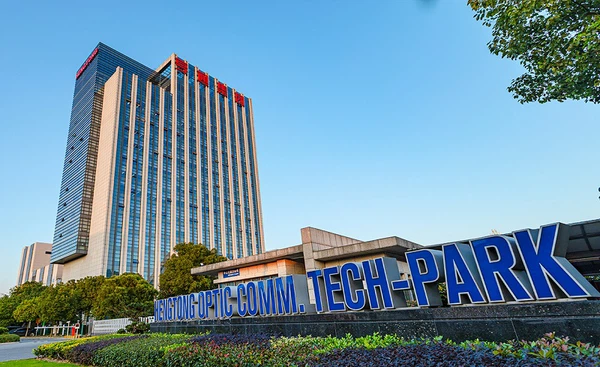
Hengtong has over 70 wholly-owned companies and holding companies (5 of which are listed on the Shanghai, Hong Kong, Shen Zhen and Indonesian stock exchanges respectively), with 12 manufacturing bases in Europe, South America, Africa, South Asia and Southeast Asia. Hengtong operates sales offices in over 40 countries and regions around the world, supplying products to over 150 countries and regions.
FAQ
Q: What is aerial fiber optic cable?
Q: What are the 3 types of fiber optic cable?
Q: What is the difference between aerial and buried fiber?
Q: How does aerial fiber work?
Q: Is fiber optic for TV or internet?
Q: Which type of fiber optic cable is most widely used?
Q: What does fibre optic cable look like?
Q: Why is coax better than fiber?
Q: What problems may arise using Fibre optic cable?
Q: Is aerial fiber good?
Q: Can fiber optic be run above ground?
Q: How is aerial fibre installed?
Q: What is aerial fiber installation?
Q: What does an aerial cable do?
Q: Where is most of the fiber optic cable installed?
Q: What cable do I need for fiber optic internet?
Q: Which type of fiber optic cable is most widely used?
Q: Are fiber optic cables good or bad?
This makes them much less likely to be damaged by things like heavy traffic or bad weather conditions. In addition, fiber optic cables are also resistant to electromagnetic interference (EMI), which can often cause problems with regular wire cables.
Q: What are the three types of fiber optic cable?
Q: Why would I use an optical cable?
Hot Tags: uni-tube figure 8 aerial cable, China uni-tube figure 8 aerial cable manufacturers, suppliers, optical fiber wire, overhead fibre optic fibre optic wire, optical fibre optical wire, optical fiber optical cable, fiber overhead cable, aerial optic cable


