



Introduction
Drop cables are essential components in telecommunications and electrical distribution networks, providing support and connectivity for overhead lines. A critical aspect of their design is the use of galvanized steel, which enhances durability and resistance to environmental factors. This essay examines why galvanized steel is preferred in drop cables, compares the cost-effectiveness of reinforcing messenger wires versus strengthening the cable's core, and provides visual examples for clarity.
Why Use Galvanized Steel in Drop Cables?
Galvanized steel is widely used in drop cables due to its superior corrosion resistance. The zinc coating acts as a protective barrier against moisture, oxidation, and chemical exposure, significantly extending the cable's lifespan. In outdoor installations, where cables are exposed to rain, humidity, and temperature fluctuations, galvanization prevents rust and structural degradation.
Additionally, galvanized steel provides mechanical strength, ensuring that the cable can withstand tension, wind loads, and other physical stresses. This is particularly important for messenger-supported drop cables, where the steel strand bears the weight of the cable and any additional loads, such as ice accumulation.
Cost-Effectiveness: Reinforcing the Messenger Wire vs. Strengthening the Cable Core
When designing drop cables, engineers must balance cost and performance. Two common approaches are:
Reinforcing the Messenger Wire with Additional Steel Strands
This method involves adding extra steel wires to the messenger (support strand) to enhance load-bearing capacity.
Pros:
Lower initial cost since the cable core remains unchanged.
Easier to install in existing infrastructure.
Cons:
Increased weight may require stronger poles or supports.
Potential for higher long-term maintenance if corrosion occurs.
Strengthening the Cable Core with Galvanized Steel
Here, the cable itself incorporates galvanized steel as part of its reinforcing elements.
Pros:
Better overall durability due to integrated corrosion protection.
Reduced need for additional messenger wires, simplifying installation.
Cons:
Higher upfront material costs.
May require specialized manufacturing processes.
Which is More Cost-Effective?
While reinforcing the messenger wire may seem cheaper initially, integrating galvanized steel into the cable core offers long-term savings by reducing maintenance and replacement costs. Galvanization ensures consistent protection, whereas adding separate steel strands may lead to uneven wear and higher upkeep expenses.
Visual Examples
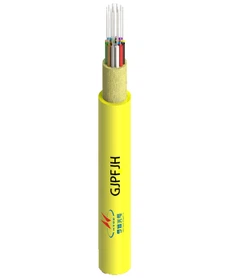
Below are illustrative examples of galvanized steel in drop cables:
Galvanized Messenger Wire with Integrated Cable
[Insert Image: A drop cable with a thick galvanized steel messenger strand supporting fiber-optic lines.]
This design ensures both strength and corrosion resistance.
Cable with Internal Galvanized Reinforcement
[Insert Image: A cross-section of a drop cable showing steel-reinforced core layers.]
The internal steel strands provide structural support while being shielded by the outer jacket.
Comparison of Galvanized vs. Non-Galvanized Cables
[Insert Image: Side-by-side comparison showing rusted non-galvanized cable vs. intact galvanized cable after years of exposure.]
Demonstrates the long-term benefits of galvanization.
Conclusion
The use of galvanized steel in drop cables is crucial for ensuring durability, corrosion resistance, and mechanical strength. While reinforcing messenger wires with additional steel strands may appear cost-effective initially, integrating galvanized steel into the cable core provides superior long-term performance and reduced maintenance costs. Engineers and network planners should prioritize galvanized solutions to enhance reliability and minimize lifecycle expenses in overhead cable installations.
(Note: For a complete presentation, high-resolution images of galvanized drop cables should be included to visually reinforce the discussion.) If you want to know more , please feel free to contact with me by jenny@htgd.com.cn