

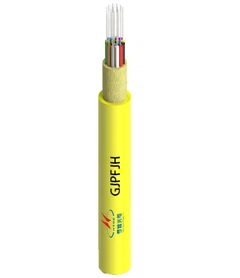


Remote - extension optical cables, also known as wireless radio - frequency remote - extension optical cables, are vital components in base station signal transmission systems. They are used to connect the Baseband Unit (BBU) to the Remote Radio Unit (RRU), playing a key role in ensuring efficient signal transfer.
Characteristics of Remote - Extension Optical Cables
Remote - extension optical cables need to be suitable for both indoor and outdoor environments. They require excellent resistance to sunlight radiation, as they may be exposed to direct sunlight when installed outdoors. The cables should also be highly flexible to facilitate easy installation in complex environments. Additionally, they need to have a compact structure with a small diameter and light weight to reduce installation difficulties and costs.
Production Process
Core Component Manufacturing:The production starts with the manufacturing of the core components. A central strengthening member is selected, which can be glass fiber - reinforced plastic, aramid yarn, or glass fiber yarn. This strengthening member provides the cable with the necessary tensile strength. A plastic layer is then extruded around the central strengthening member. The plastic layer can be made of materials such as low - density polyethylene, medium - density polyethylene, high - density polyethylene, polyvinyl chloride, low - smoke zero - halogen polyethylene, or polypropylene. The extrusion process is carefully controlled to ensure a uniform and smooth plastic layer.
Inner Lining Layer Formation:Next, an inner lining layer is formed. This can be achieved by extruding polybutylene terephthalate or modified polypropylene around the plastic - covered central strengthening member. Another method is to extrude the inner lining layer with a hollow interior and then insert the plastic - covered central strengthening member into it. The inner lining layer helps to protect the core components and provides additional mechanical support.
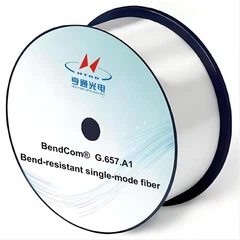
Optical Transmission Body Placement and Outer Lining Layer Creation:The optical transmission body, which can consist of multiple types of optical fibers such as G.652, G.655, G.657, A1a, A1b, A1c, OM1, OM2, OM3, or tight - buffered fibers, is placed outside the inner lining layer and in close contact with it. Then, an outer lining layer is created. Polybutylene terephthalate or modified polypropylene is extruded to form an outer lining layer with an internal cavity, and the inner lining layer and the optical transmission body are placed inside this cavity. The design ensures that only one layer of the optical transmission body can be placed in the gap between the inner and outer lining layers.
Outer Sheath Application:Finally, an outer sheath is applied. First, a protective layer is formed. This can be done by evenly placing aramid yarn or glass fiber yarn around the outer lining layer, or by longitudinally or helically wrapping a water - blocking tape or non - woven fabric, or by longitudinally wrapping a composite aluminum tape or composite steel tape. Then, an outer sheath material is extruded over the protective layer. The composition of the outer sheath material is carefully formulated to ensure optimal performance. For example, it may include polyvinyl fluoride resin, nylon, linear low - density polyethylene resin, and various additives such as flame retardants, antioxidants, and fillers. The extrusion process for the outer sheath is precisely controlled to ensure a uniform and durable outer covering.
Comprehensive Quality Assurance:Similar to the production of indoor butterfly optical cables, remote - extension optical cable production also involves strict quality control. The optical performance of the fibers, including attenuation and chromatic dispersion, is carefully measured. The mechanical properties of the cable, such as its resistance to tensile forces, pressure, and bending, are tested. Environmental tests are also carried out to assess the cable's performance under different temperature, humidity, and sunlight exposure conditions. This comprehensive quality assurance process ensures that the remote - extension optical cables meet the high - performance requirements for use in base station signal transmission systems.