





When to replace optical cables
Replace optical cables when insertion loss exceeds 3 dB, when physical damage is visible, or after 25-30 years of service under normal conditions. However, most replacements happen much sooner due to external factors rather than cable aging. Nearly 60% of fiber optic cable failures result from physical damage like backhoe incidents during construction, while properly installed tier 1 fiber has only a 1 in 100,000 failure probability over 20-40 years (Source: ppc-online.com, 2022). The decision hinges on whether repair remains economically viable or if performance has degraded beyond acceptable thresholds.
Understanding when optical cables truly need replacement versus when they can be repaired saves considerable expense and downtime. The fiber optic cable market, valued at USD 15.86 billion in 2025 and projected to reach USD 25.09 billion by 2030 at a 9.5% CAGR, continues expanding rapidly as organizations deploy more fiber infrastructure (Source: researchandmarkets.com, 2025). This growth makes replacement timing decisions increasingly important for maintaining network reliability while managing costs effectively.
Physical Damage Indicators That Demand Immediate Replacement
Physical damage represents the clearest signal for optical cable replacement. Unlike copper cables that can tolerate some abuse, fiber optics contain glass cores thinner than human hair that fracture under stress.

Visible Structural Compromise
Inspect cables for these critical warning signs:
Jacket breaches: If the outer protective jacket shows cuts, abrasions, or punctures, moisture can infiltrate and cause signal degradation. Water represents one of the primary threats to fiber longevity, especially in underground installations where water molecules migrate into the glass and change its refractive index.
Sharp bends exceeding minimum radius: Cables bent tighter than 10 times their outer diameter experience fiber breakage or microbending losses. During a 5G Remote Radio Head deployment in Malaysia, engineers observed intermittent transmission loss specifically from cables that violated bend radius specifications at cable routing points.
Flattened or crushed sections: Physical compression damages the protective buffer layers and stresses the glass fibers. Even if signal passes initially, compressed areas create weak points prone to future failure.
Corroded or burned connectors: Connector ferrules showing visible corrosion, burn marks, or melted plastic indicate electrical faults or environmental exposure severe enough to warrant replacement rather than cleaning.
The "Damaged Worse Than Broken" Phenomenon
Here's something that surprises many network managers: partially damaged cable causes more problems than completely severed fiber. When cables break cleanly, testing equipment immediately identifies the fault location and you can splice or replace that section. But when fiber cores crack without completely severing, they create intermittent failures that are difficult to diagnose.
Partial damage allows some light signal to pass through, but with severe attenuation and reflections. The connection works sometimes but fails unpredictably as temperature changes cause thermal expansion, shifting the partially aligned fiber ends. Network engineers prefer dealing with complete failures because at least those problems are obvious and fixable. Intermittent issues from damaged-but-not-broken cables waste hours in troubleshooting.
Performance Degradation Metrics
Numbers don't lie. Specific performance thresholds indicate when optical cables have degraded beyond repair.
Insertion Loss Thresholds
Replace cables when insertion loss exceeds 3 dB, as this indicates the light signal has weakened too much for reliable data transmission. Normal, healthy fiber typically shows insertion loss well below 1 dB for short runs.
Test systematically using these methods:
Visual Fault Locator (VFL): Projects visible red light through the fiber for quick field checks. Breaks, bends, or contamination cause light to escape, pinpointing problem areas visually.
Optical Time Domain Reflectometer (OTDR): Provides detailed fault location and loss analysis by measuring light reflections along the fiber. OTDR testing gives precise distance measurements to faults and quantifies loss at splice points and connectors.
When optical loss increases, the light signal arriving at the receiver weakens and may drop below sensitivity thresholds, directly causing low throughput, high error rates, and disconnections.
Signal Quality Indicators
Monitor these performance metrics:
Persistent signal loss: Attenuation that cleaning and connector re-seating cannot resolve
Bit error rate increases: Rising error rates even with acceptable signal strength
Intermittent connectivity: Connections dropping and recovering without pattern
Failed link negotiation: Equipment unable to establish stable connections
Indoor fiber optic cables showing frequent signal loss or degradation, particularly when quality of internet connections or data transfer speeds drop noticeably, signal deterioration requiring attention.
Lifespan Expectations Across Different Environments
Environmental conditions dramatically affect how long optical cables last before replacement becomes necessary.
Standard Lifespan Under Optimal Conditions
Fiber optic cables have a lifespan of 25 to 30 years under normal conditions, with some installations lasting longer (Source: gl-fibercable.com, 2024). This assumes proper installation, stable environmental conditions, and minimal physical disturbance. Indoor fiber optic cables can last between 20 to 30 years when installed properly, used in appropriate conditions, and maintained adequately (Source: wirenet-tech.com).
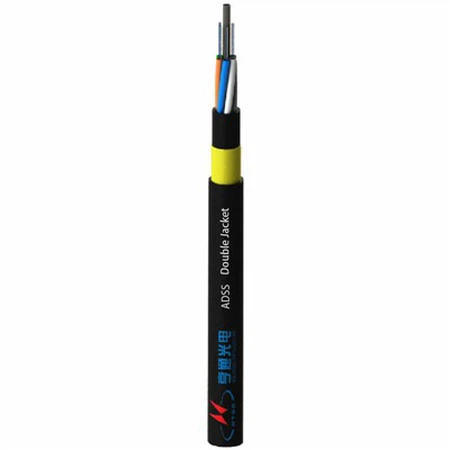
For correctly installed tier 1 fiber, the failure probability over a 20-40 year timeframe is of the order of 1 in 100,000 (Source: ppc-online.com, 2022). In comparison, the chances of fiber being damaged by manual intervention such as digging over the same timeframe is about 1 in 1,000-meaning external damage is 100 times more likely than intrinsic fiber failure.
The design life of professionally engineered fiber cables, barring cable damage and water ingress, was engineered to be approximately 20 to 25 years (Source: gl-fiber.com). However, electronic components connected to cables-including transmitters, receivers, and transceivers-have shorter lifespans than the optical fiber itself. Early generation optical transceivers had limited lifespans in the 3-6 year range, though newer models prove much more reliable.
Environmental Factors Affecting Longevity
Underground installations: Protected from physical disturbances but vulnerable to soil acidity, moisture permeation, and excavation damage. One estimate indicates that any given mile of cable operates about 228 years before damage occurs, which translates to 4.39 cuts per year per 1000 sheath-miles (Source: informit.com). On 100,000 installed route miles, this implies more than one cut per day on average.
Aerial deployments: Subject to weather hazards including ice storms, tree falls, lightning strikes, and vehicle collisions with poles. Much fiber mileage remains on aerial pole-lines in regions where trenching is difficult, exposing cables to these environmental risks.
Indoor controlled environments: Most stable conditions with minimal temperature fluctuation and no weather exposure. Cables in data centers or office buildings typically achieve the longest service lives approaching 30 years.
Harsh environments: Extreme temperatures accelerate crack growth in fiber. Elevated temperatures combined with moisture presence facilitates stress corrosion, where micro-cracks in the glass expand under tensile stress, eventually causing fiber failure.
[Visual element suggestion: Insert timeline chart showing expected lifespan across different installation environments - underground, aerial, indoor, harsh conditions]
Technological Obsolescence Versus Physical Degradation
Sometimes replacement becomes necessary not because cables failed physically but because they can't support modern applications.
Bandwidth and Performance Requirements
As technology evolves, older fiber installations may become outdated. Single-mode fibers installed in the 1980s might not support modern high-bandwidth applications effectively. While fiber optics themselves rarely become obsolete-since XGS-PON 10 Gb/s access networks deployed today use less than 0.002% of an optical fiber's available capacity-upgrades to faster systems may still prompt replacement.
Networks that grow or face increased bandwidth demand sometimes require higher fiber count cables to meet new requirements without frequent repairs. Operators may replace existing cables with versions offering more fibers or improved specifications.
Technology Upgrade Scenarios
5G deployment impact: The widespread rollout of 5G networks globally drives demand because these high-speed, low-latency networks require highly reliable infrastructure. According to GSMA, global 5G penetration is anticipated to reach over 56% in 2030 compared to over 18% in 2023 (Source: gminsights.com, 2025). Each 5G macrocell typically requires kilometers of fiber deployment, with base stations needing significantly more fiber connectivity than 4G predecessors.
Data center expansion: Rapid proliferation of data centers worldwide represents another leading factor driving fiber deployment. India's data center market value is expected to increase from USD 4.5 billion in 2023 to USD 11.6 billion by 2032, growing at a CAGR of 10.9% (Source: gminsights.com, 2024). High-capacity fiber networks have become a key design differentiation feature for data center operators.
Smart city initiatives: Development of smart cities increases demand for fiber-optic-powered communication networks. With growing adoption of IoT-based solutions in traffic management, surveillance, energy distribution, and public safety, reliable high-speed data transmission through fiber-optic networks becomes essential.
If a company upgrades to newer fiber types such as G.652.D or G.657.A1 fibers, older cables may need replacement to meet modern performance standards. However, in many cases, the distribution network remains unchanged while modifications only affect active equipment.
Cost-Benefit Analysis of Replacement Versus Repair
Financial considerations often drive replacement timing more than technical factors.
When Repair Makes Economic Sense
Not every damaged fiber needs full replacement. Field engineers determine appropriate action based on:
Single fault point: If OTDR testing identifies one specific fault location with otherwise healthy fiber, splicing or connector replacement costs far less than full cable replacement.
Accessible damage location: Faults in easily reached areas like equipment rooms or junction boxes allow simple repairs without major infrastructure work.
Low overall cable age: Newer cables with isolated damage justify repair over replacement, preserving the investment in recently installed infrastructure.
Budget constraints: When capital expenditure approval takes months, temporary repairs keep networks operational until replacement funding arrives.
Replacement Becomes More Cost-Effective When
Multiple breaks occur: Cables requiring frequent repairs indicate systematic problems. Increasing repair frequency signals that replacement proves more economical long-term.
Inaccessible fault locations: Damage buried in walls, underground conduits, or difficult routing paths makes repair labor costs exceed replacement.
Widespread degradation: When multiple fiber strands in a cable show performance issues, replacing the entire cable makes more sense than repairing individual fibers.
Obsolescence factors in: If current cables can't support planned upgrades, combining replacement with technology improvement delivers better value than repairing outdated infrastructure.
Metro networks annually experience 13 cuts for every 1000 miles of fiber, while long haul networks experience 3 cuts per 1000 miles (Source: informit.com, 2002). Even the lower long-haul rate implies a cable cut every year on a 300-mile network, making repair frequency a significant ongoing expense.
Maintenance Practices That Extend Cable Life
Proper maintenance dramatically extends operational lifespan before replacement becomes necessary.
Installation Quality Matters Most
The quality of initial installation plays a decisive role in how long optical cables last. Adherence to industry standards serves as safeguard against premature failure.
Respect minimum bend radius: Typically 10 times the cable outer diameter. Violating this specification causes immediate microbending losses or delayed failures from fiber stress.
Avoid tensile stress during pulling: Of the three deployment techniques-pulling, pushing, and blowing-only pulling creates undesirable stretching that stresses fiber. Unlike metal, glass doesn't suffer fatigue from compression, so the mild compression during pushing causes no harm.
Protect from physical damage: Use appropriate enclosures, conduits, and protective measures. IP67 armored waterproof cables provide essential protection for outdoor or harsh environments.
Maintain proper strain relief: Cable design typically includes strength elements like fiberglass rods or aramid yarn that prevent tensile stress from reaching the delicate glass fibers. Proper termination ensures these elements bear the load.
Ongoing Maintenance Best Practices
Regular maintenance dramatically extends fiber network operational lifespan:
Semiannual testing: Maintain regular inspection logs and test all fibers twice yearly using VFL and OTDR equipment. Catching degradation early allows proactive replacement before complete failure.
Connector cleaning: Clean connectors before every mating using specialized fiber cleaning pens. Dust, fingerprints, scratches, and humidity contaminating connectors cause attenuation that mimics cable damage.
Environmental monitoring: Track temperature and humidity in cable routes. Ensure water-blocking materials remain intact in underground and outdoor installations.
Protective measures: Keep unused connectors covered with dust caps. Apply protective boots or heat-shrink sleeves at exposed ends. Use waterproof connectors in moisture-prone locations.
Documentation: Maintain detailed as-built drawings showing cable routes, splice locations, and test results. This documentation proves invaluable when troubleshooting problems or planning upgrades.
During the last 35 years, there have been no large-scale outbreaks of fiber failure in correctly installed systems using tier 1 components (Source: ppc-online.com, 2022). Breakages occur predominantly where fibers have been removed from cables and bent below their permitted bend radius.
[Visual element suggestion: Insert maintenance checklist infographic showing inspection frequency, cleaning procedures, and testing requirements]
Warning Signs That Replacement Can't Wait
Certain conditions demand immediate replacement rather than attempting repairs.

Critical Failure Indicators
Complete loss of connectivity: No light transmission detected between endpoints indicates severed fiber requiring immediate attention.
Rapidly deteriorating performance: Signal quality degrading week by week rather than remaining stable indicates progressive damage that will continue worsening.
Multiple splice failures: Repeated splice breakage at the same location suggests underlying cable problems that splicing can't fix.
Water infiltration: If the outer jacket is breached and water seeps in, freezing can cause attenuation or fiber breakage. Once moisture penetrates protective layers, the entire affected section requires replacement.
Safety hazards: Aerial cables showing structural weakness that could fall, or underground cables exposed by erosion, create safety risks demanding immediate replacement.
The "Wait and Monitor" Approach
Some situations allow watching cable performance before committing to replacement:
Marginal but stable loss: Insertion loss slightly above specifications but not changing over time might function adequately for current applications.
Isolated minor damage: Small jacket abrasions that haven't reached inner layers can be monitored and protective covering applied.
Acceptable performance degradation: Older cables running at reduced bandwidth that still meet current needs can continue service until planned upgrade cycles.
The key distinction: stable problems you can work around versus progressive failures that will inevitably worsen. Plan replacement for deteriorating conditions rather than reacting to complete failures.
Regional and Industry-Specific Considerations
Replacement timing varies significantly based on geographic location and application sector.
Telecommunications Infrastructure
Long-haul telecommunications networks show the longest operational lifespans because cables are buried deep, protected from disturbance, and maintained by professional crews. TDS fiber optic cables placed in 1988 continue operating utilizing multiple 100 Gbps wavelengths, demonstrating that properly installed fiber can support ongoing technology evolution without cable replacement.
However, metro networks face higher damage rates from construction activity, requiring more frequent repairs and eventual replacement. The concentrated construction in urban areas creates higher cut rates than rural long-haul routes.
Data Center Applications
Data centers drive the fastest-growing segment in fiber optic cable adoption, advancing at a 14.0% CAGR between 2025-2030 (Source: mordorintelligence.com, 2025). These controlled environments allow cables to approach maximum theoretical lifespan of 30 years.
However, data centers also undergo frequent equipment upgrades and reconfigurations. Cables may be replaced during infrastructure refreshes even when functioning perfectly, simply to accommodate new rack layouts or higher density connections.
Industrial and SCADA Networks
Industrial automation and control systems, which represent a growing fiber application segment, face harsher environmental conditions than office installations. Chemicals, vibration, temperature extremes, and electromagnetic interference in industrial settings accelerate degradation.
These environments typically plan shorter replacement cycles of 15-20 years rather than the 25-30 year lifespan possible in benign conditions. Preventive replacement before failure becomes critical when controlling manufacturing processes where downtime costs thousands per minute.
Geographic Climate Impact
Tropical regions: High humidity and temperature accelerate stress corrosion. Moisture combined with elevated temperatures promotes faster crack growth in fiber.
Cold climates: Extreme cold renders cables brittle, heightening crack risk under mechanical stress. Ice loading on aerial cables adds significant weight that stresses fiber.
Desert environments: UV radiation degrades cable jackets over time. Temperature swings between daytime heat and nighttime cold create expansion/contraction cycles that stress fiber and connections.
Coastal areas: Salt spray and humidity create particularly corrosive environments requiring more robust cable specifications and shorter replacement intervals.
Future-Proofing Replacement Decisions
When replacing optical cables, consider future requirements to avoid premature obsolescence.
Fiber Count and Type Selection
Single-mode versus multimode: Single-mode fiber accounted for 63.2% of the fiber optic cable market in 2024, while multimode projects a 13.2% CAGR between 2025-2030 (Source: mordorintelligence.com, 2025). Single-mode supports longer distances and higher bandwidth, making it the better choice for most replacements despite higher initial cost.
Fiber strand count: Installing cables with more fibers than currently needed provides expansion capacity. Adding fiber count during replacement costs little more than installing minimum required fibers but avoids another replacement cycle when capacity needs grow.
Bend-insensitive fiber: Newer G.657 fiber specifications allow tighter bend radius than traditional G.652 fiber, simplifying installation in congested spaces. When replacing cables in tight routing paths, bend-insensitive fiber reduces future damage risk.
Installation Method Impact
Ribbon fiber advantages: Ribbon fiber optic cables show the highest projected growth at 11.7% CAGR from 2025 to 2033 due to escalating need for high-fiber-count deployments (Source: marketdataforecast.com). Ribbon cables enable mass fusion splicing, reducing splicing time compared to individual fiber handling. Large-scale deployments like India's BharatNet project connecting villages with fiber require rapid deployment methods that ribbon cables facilitate.
Blown fiber systems: Micro-duct cabling systems using blown fiber installation allow future cable replacement without disturbing building structure. Initial installation costs more but enables easy upgrades by blowing new cable through existing ducts.
Direct burial versus conduit: Conduit installation costs significantly more initially but allows cable replacement without excavation. In areas with active development or where underground utilities crowd the subsurface, conduit systems prove worth the investment.
Frequently Asked Questions
How long should optical cables typically last before replacement?
Fiber optic cables last 25 to 30 years under normal conditions when properly installed and maintained. However, most replacements happen earlier due to external damage rather than cable aging. Indoor installations in controlled environments can approach 30 years, while harsh outdoor environments might require replacement after 15-20 years. Electronic components like transceivers have shorter lifespans than the fiber itself, often needing replacement every 5-10 years.
What are the most common reasons optical cables fail?
Nearly 60% of fiber optic cable failures result from physical damage during excavation or construction, with backhoe incidents being most common. Other major causes include vehicle damage to aerial cables (10-15%), rodent damage (5-8%), and natural disasters like floods or earthquakes (5-10%). Intrinsic fiber failure from aging is extremely rare-only 1 in 100,000 over 20-40 years for properly installed tier 1 fiber. Water infiltration and stress corrosion account for most age-related degradation.
Can you repair damaged optical cables or do they need complete replacement?
Single fault points in easily accessible locations can usually be repaired through splicing or connector replacement at a fraction of replacement cost. However, multiple breaks, widespread degradation, or inaccessible damage locations make replacement more economical. Partially damaged cable that creates intermittent failures often requires replacement because the inconsistent performance proves more problematic than complete failure. When insertion loss exceeds 3 dB or connectors show corrosion, replacement becomes necessary.
How do you test if optical cables need replacement?
Use a Visual Fault Locator for quick field checks by projecting visible red light through the fiber-breaks or contamination cause light to escape visibly. For detailed analysis, an Optical Time Domain Reflectometer provides precise fault location and quantifies insertion loss along the cable length. Test for physical damage including bent, crushed, or stretched sections. Monitor performance metrics including bit error rates, signal strength, and connection stability. Conduct testing semiannually to catch degradation early.
Does cable installation method affect lifespan?
Installation quality dramatically impacts longevity. Pulling cables creates tensile stress that pushing or blowing methods avoid. Respecting minimum bend radius (typically 10 times outer diameter) prevents immediate and delayed failures. Underground cables protected by robust conduit last longer than direct-burial installations. Aerial cables face more environmental hazards than underground routes. Proper strain relief at terminations and avoiding excessive splice points extend operational life. Quality tier 1 fiber properly installed has only 1 in 100,000 failure probability over 20-40 years.
What's the difference between physical cable failure and technological obsolescence?
Physical failure means the cable can no longer transmit light signals due to broken fibers, excessive loss, or moisture damage. Technological obsolescence occurs when functioning cables can't support new bandwidth or application requirements. Modern optical fiber has immense unused capacity-XGS-PON networks use less than 0.002% of fiber's available capacity. Most "obsolete" cables actually remain functional for decades with upgraded transceivers. Replacement for obsolescence typically aligns with major network upgrades rather than following strict timelines.
How does environment affect when optical cables need replacement?
Harsh environments significantly shorten lifespans. Underground cables face soil acidity and moisture but avoid physical disturbance. Aerial installations endure weather, ice loading, and vehicle strikes. Indoor controlled environments allow cables to approach maximum 30-year lifespan. Extreme temperatures accelerate crack growth-heat causes expansion/contraction while severe cold makes glass brittle. Coastal areas with salt spray and humidity create particularly corrosive conditions. Industrial settings with chemicals and vibration typically plan 15-20 year replacement cycles versus 25-30 years for benign locations.
Should you replace optical cables proactively or wait for failure?
Balance proactive and reactive approaches based on criticality. Mission-critical applications controlling manufacturing or financial systems justify proactive replacement near end-of-life to avoid expensive downtime. Less critical applications can run until failure since fiber failure probability remains low. Monitor cables with regular OTDR testing-replacing those showing progressive degradation before complete failure prevents unexpected outages. Budget constraints often drive waiting until necessary, but plan replacement during scheduled maintenance windows rather than emergency response mode. Document cable age and condition to inform replacement timing decisions.
Making Replacement Decisions With Confidence
Optical cables represent long-term infrastructure investments that typically outlast the equipment they connect. The decision to replace hinges on multiple factors: physical condition, performance metrics, environmental exposure, technological requirements, and economic considerations.
Most premature replacements stem from installation errors or external damage rather than inherent cable failure. Quality fiber properly installed can operate for decades, supporting multiple generations of technology upgrades without infrastructure changes. The XGS-PON networks deployed today use less than 0.002% of available fiber capacity, meaning the same optical cables installed now can support many decades of speed increases.
When physical damage occurs-and with 4.39 cuts per year per 1000 sheath-miles, damage happens regularly-assess whether isolated repairs suffice or systematic problems require full replacement. Monitor performance metrics systematically through semiannual testing. When insertion loss exceeds 3 dB, multiple failures occur, or environmental infiltration happens, replacement becomes necessary.
Plan replacements during technology upgrade cycles to maximize return on investment. Installing higher-count cables than currently needed provides expansion capacity that avoids another replacement cycle. Choose single-mode fiber for future compatibility despite higher initial cost. Consider installation methods like conduit systems that enable easier future replacement without excavation.
The fiber optic infrastructure you install today should serve reliably for 25-30 years with proper maintenance. Understanding replacement indicators helps you maximize cable lifespan while avoiding the false economy of continuing to repair infrastructure that's reached end-of-life. Replace when necessary, repair when practical, and maintain consistently to achieve optimal performance over the longest possible service life.