

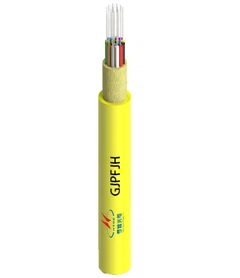


In today's digital age, communication networks are like the nervous system of society, and optical cables are the crucial "nerve fibers" responsible for transmitting vast amounts of data at high speed and stably. Have you ever wondered why mechanical property tests and other tests are conducted on optical cables? There are profound reasons behind this, which are related to the quality and stability of communication.
Ensuring Smooth Laying and Installation
During the actual laying process, optical cables will face various complex environments and mechanical stresses. For example, when installed overhead, they need to bear their own weight, the swinging and stretching caused by wind; when laid in pipes, they have to adapt to the bending and possible compression of the pipes. Through items such as tensile, bending, and flattening tests in mechanical property testing, it can be ensured that the optical cables will not be easily damaged in these scenarios. If the tensile strength of an optical cable is insufficient and it is stretched too much during laying, it may lead to the breakage of the internal optical fibers and the interruption of signal transmission. The accurate test data provides crucial operation references for construction personnel, allowing them to clearly understand the ultimate bearing capacity of the optical cables, so that they can adopt appropriate laying methods and protective measures to ensure the smooth installation of the optical cables from the starting point to the terminal, avoiding high repair costs and communication failures caused by improper construction.
Extending the Service Life
Optical cables that are exposed to the natural environment for a long time will be affected by daily temperature changes, humidity erosion, and slight vibrations caused by crustal movements. Mechanical property testing simulates these external forces that act over a long period to examine the durability of the optical cables. For example, in fatigue resistance testing, the performance of optical cables under long-term dynamic stress is simulated. Only optical cables that pass the tests can maintain stable structural integrity during years of use. High-quality optical cables that have undergone strict testing can significantly extend their service life, reducing the need for frequent replacement of optical cables. This not only saves a lot of manpower, material resources, and financial resources but also reduces the risk of communication interruption caused by cable replacement, providing strong support for the long-term stable operation of communication networks.
Ensuring Stable Signal Transmission
The mechanical properties of optical cables are closely related to the quality of signal transmission. When optical cables are subjected to improper external forces, such as excessive bending that changes the refraction angle of the internal optical fibers or compression that damages the concentricity of the optical fibers, it will cause signal attenuation, scattering, or even interruption. Strict mechanical property testing is to eliminate these risk factors that affect signal transmission in advance. From short-distance optical cable connections inside data centers to long-distance transmissions through transoceanic submarine cables, each section of optical cable can ensure that signals reach their destinations accurately only when its mechanical properties meet the standards, enabling us to conduct video calls smoothly, download files quickly, and obtain financial transaction data in real time, meeting the strict requirements of modern society for high-speed and stable communication.
Conclusion
Conducting mechanical property tests on optical cables is an indispensable part of the construction and maintenance of communication networks. It runs through the whole process of optical cable production, installation, and use, ensuring the quality of optical cables at the source, guiding correct operations during construction, and ensuring reliability during long-term operation, safeguarding the seamless flow of global information and allowing us to enjoy stable and efficient communication services at all times in the information age.