





Many buyers (and even some production teams) still choose MPO assembly methods based on incomplete information. The problem is, the cost doesn't show up immediately-it shows up later as rework, unstable IL, polarity surprises, and "why did this batch suddenly get worse?" moments. And by the time those issues surface, the margin is already gone.
We see a very similar pattern when customers reach out to HengTong:
"Nothing changed, but today the ferrule window glue keeps shrinking / fibers are exposed / polarity is off / loss is drifting."
Most of the time, the root cause is not mysterious. It's usually orientation + glue control + curing discipline-small steps, but they decide whether the connector stays stable after thermal cycling and handling.
So instead of writing a "perfect-looking" SOP, I'm going to walk you through the process the way we explain it on the shop floor: what to do, what to look for, and what tends to go wrong first.
What this process actually covers and why it matters
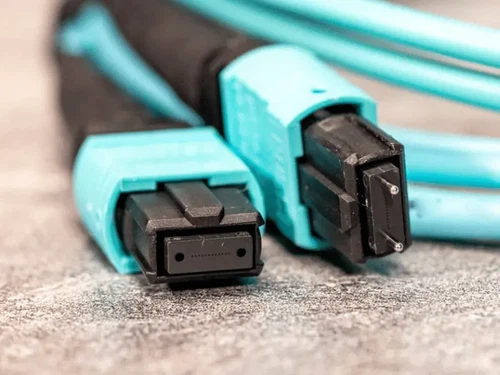
We're talking about one specific but critical link in MPO production:
- Fiber insertion into the MPO ferrule
- Epoxy fill control
- Two-stage oven curing
- Glue replenishment during cure
- Post-cure cooling before the next operation
Why this link is so sensitive is simple: if the fiber sequence is wrong or the epoxy state is unstable, you won't always see it right away. Problems can appear later as:
- polarity mismatch (worst-case: rework or scrap)
- unstable insertion loss
- epoxy contamination creeping into optical path / endface
- fiber fixation weakening after thermal cycling
Before you start: parts, tools, and one "non-negotiable" working orientation
,
Let's keep the prep simple-most failures aren't caused by missing equipment, but by skipping one check.

Parts you'll need
- MPO ferrule with window
- Correct spring matched to the ferrule model
- Approved epoxy for MPO ferrule bonding
- Clean wipes / lint-free tissue
Equipment
- Epoxy dispensing tool
- Curing oven with stable temperature/time control
- Clean workstation (dust is a real enemy here)
The non-negotiable orientation
Ferrule window facing up is your default working position.
Whenever we say "blue fiber facing right", we mean:
with the window facing up, the first fiber on the right side of the window is blue (or orange, depending on method).
This one reference saves a lot of confusion later.
The insertion step: what we do first and what people most often forget?

Step A - Spring installation (yes, it's small, but it bites later)
You insert the spring into the designated position in the ferrule, then confirm it's seated properly (not tilted, not missing).
The reason we're picky here is practical: a missing/mis-installed spring can lead to unstable ferrule seating and inconsistent mating contact, which shows up as intermittent optical behavior.
HengTong team note (Our engineering team's tip): Spring seating quick check
On the line we use a 3-step check:
- Look: spring is fully in the pocket, centered, not riding the edge or tilted.
- Press: gently press once-should compress smoothly and return straight (no sticking/side slip).
- Judge: if it doesn't "press straight, return straight," re-seat immediately.
Common wrong installs (good photo refs): missing spring, tilted spring, half-seated on the pocket edge, wrong spring model (length/stiffness mismatch).
Step B - Epoxy application + fiber insertion (this is where "polarity" becomes real)
Apply epoxy evenly so the ferrule absorbs glue uniformly. Then insert the fiber ribbon / fiber cores carefully.
Now the key part: Method A/B/C is not a "paper rule" - it directly changes how you insert fibers at End A and End B.
Method A (same direction on both ends)
- End A: blue is the first fiber on the right side of the window
- End B: blue is the first fiber on the right side of the window
Method B (same direction on both character ends)
- End A (character end): blue is the first fiber on the right
- End B (character end): blue is the first fiber on the right
Method C (one end changes + strict cross sequence)
- End A (character end): blue is the first fiber on the right
- End B (character end): every two colors cross, and orange is the first fiber on the right
Here's the point we repeat in production (because it prevents the most expensive mistakes):
Polarity errors may look "fine" right after insertion, and only become obvious after curing/testing.
So we treat polarity verification as a mandatory checkpoint before the oven.
Data source: HengTong internal SOP / production-validated insertion reference.
| Polarity Method | End A (window up) right-side 1st fiber | End B (window up) right-side 1st fiber | Special rule |
|---|---|---|---|
| Method A | Blue | Blue | Same reference both ends |
| Method B | Blue (character end) | Blue (character end) | Confirm "character end" definition |
| Method C | Blue (character end) | Orange (character end) | Cross arrangement every two colors |
Table 1 - Polarity insertion quick reference
Interpretation (why this table matters):
If you can't answer "which color is the first fiber on the right side of the window?" in one second, the line is at risk. This table is the fastest way to stop the mistake before curing.
Curing: two-stage profile, and why we don't treat it as "set-and-forget"
Once insertion is done, you place the product onto the curing oven fixture and run a two-stage profile.

Table 2 - Two-stage oven curing profile
Data source: HengTong internal curing standard for this process (shop-floor execution values).
| Stage | Temperature | Time | What this stage is for |
|---|---|---|---|
| Stage 1 | 60 ± 5°C | 10–20 min | initial setting + controlled flow |
| Stage 2 | 80 ± 5°C | 30–40 min | full cure + long-term mechanical stability |
Interpretation (what people miss):
Stage 1 is where you'll often see window glue level drop if replenishment is not done.
Stage 2 locks in strength-if the oven drifts or timing is off, you'll see later failures like loosening or drift.
HengTong team note : Oven verification + drift symptoms
Verification routine: We do a monthly temperature check using an independent probe/thermometer placed at the actual product position (not just reading the oven display). Record Stage 1 and Stage 2 stability.
Quick daily check: Before loading, let the oven stabilize, then confirm the display is steady and the timer works normally.
Typical drift symptoms on product: window glue shrinks faster than usual in Stage 1, more frequent fiber exposure, or cured parts feel slightly "soft"/weak and show higher risk of loosening after handling.
The step that saves a lot of rework: glue replenishment during curing
This is the part many teams under-estimate.

At 10 minutes after curing starts:
replenish epoxy in the ferrule window
control amount so it does not flow out
if overflow happens, wipe immediately
Then, every 5 minutes after replenishment:
check window glue level
if glue is insufficient and fiber starts to be exposed → replenish in time
Why do we insist on this "10 min + every 5 min" rhythm?
Because without it, what often happens is:
glue shrinks/flows during early curing
window level drops
fiber becomes visible
after full curing, you're stuck with a hardened defect that's costly to recover
Figure 1 - Curing timeline checklist

Interpretation:
Put this timeline next to the oven. People don't forget because they're careless-people forget because they're busy. A visible rhythm makes the process stable.
Cooling: the rule is simple, but it prevents "invisible damage"
After curing:
remove product from oven
place in a clean, dry area
static cooling ≥ 10 minutes
only transfer to the next step after reaching room temperature
We say this very bluntly on the floor:
Don't rush a hot part into the next operation.
Residual heat can lead to deformation or can change how the next process behaves (especially if the next step involves handling/fixturing).
What "good epoxy" looks like with numbers + figure placeholder?
You don't need fancy wording here-you need a clear visual target and a pass/fail rule.
Data source: HengTong internal visual standard for epoxy control in this operation.
| Area | Target appearance | Numeric target | Fail risk if out of spec |
|---|---|---|---|
| Butt joint surface | Crescent shape | 1.0–1.5 mm height | too much → optical path contamination; too little → weak fixation |
| Ferrule window | Concave, no fiber exposure | fiber not exposed | exposure → poor fixation / rework risk |
Table 3 - Epoxy acceptance target

Interpretation:
Crescent too tall usually means overflow risk
Window not concave / fiber visible usually means shrinkage or insufficient replenishment
This figure should sit right next to the dispensing station-operators learn faster by image than by text.
QC checkpoints
Instead of "before/during/after" repeating the same structure, here's how we usually run it:
"Before oven" - stop the biggest expensive mistakes early
window up confirmed
polarity method confirmed on traveler
right-side first fiber color verified at both ends
spring present + seated
epoxy applied evenly, no contamination
"While curing" - keep the window stable
oven setpoints confirmed (stage 1 + stage 2)
replenish at 10 minutes (mandatory)
inspect every 5 minutes after replenish
overflow cleaned immediately if it happens
"After cure" - only move a stable part forward
cooled ≥ 10 minutes, at room temperature
window glue meets target, no exposed fibers
no epoxy residue contamination around parts
Troubleshooting: don't list causes-follow a check order
Here's the shop-floor style: first check the fastest/most likely items, then go deeper.

Issue A - Fiber becomes visible in the window
Check order
Look at window glue: is it concave? is fiber exposed?
Check the record: was replenishment done at 10 minutes?
Was the "every 5 minutes" inspection actually executed?
If those are correct, then consider epoxy behavior (shrinkage/flow) or dispensing volume.
Action
If still in curing window → replenish immediately
If already cured and fiber exposed → evaluate rework per your internal rule
Issue B - Epoxy overflow from the window
Check order
Was replenishment volume too aggressive?
Was the product stable and window truly facing up? (fixture/tilt matters)
Is epoxy viscosity too low at current room temperature?
Action
reduce replenishment amount
stabilize orientation
wipe overflow immediately (don't let it cure)
Issue C - Polarity mismatch / wrong fiber sequence
Check order
Re-confirm the reference: window up → right-side first fiber color
Confirm which method the order requires (A/B/C)
Confirm End A vs End B identification (especially character end)
Action
stop + isolate if polarity uncertain
rework only under controlled condition
Issue D - Fibers feel loose later / reliability failures
Check order
Verify oven timer + temperature accuracy
Confirm cooling rule followed (≥10 minutes)
Review epoxy target: crescent 1.0–1.5 mm and window not exposing fiber
Action
verify oven calibration & settings
enforce cooling discipline
tighten epoxy volume + replenishment control

HengTong Customer Cases (Q&A): what goes wrong first, and how we fix it
Note: These are anonymized "typical cases" summarized from real production/field feedback. The goal is to connect SOP controls to real failure modes.
Case 1 - "Nothing changed, but yield suddenly dropped."
Scene: Customer ramps up in-house MPO termination for a batch build.
What they saw: More rework, window fiber exposure increases, and IL becomes operator-dependent.
How we checked first (fastest order):
- Look at window glue shape (concave? any fiber visible?).
- Check replenishment timing (10-min replenish done or skipped?).
- Verify 5-min inspection rhythm was actually executed.
- Only then look at oven stability (Stage 1 temp drift).
Fix: We "locked" the line with three hard gates:
polarity verification before oven
epoxy appearance must match Figure 2
curing actions must follow Figure 1 timeline with tick-signoff
Prevention: Traveler must state Method A/B/C; replenishment/inspection must be recorded; window glue appearance becomes a mandatory post-cure check.
Case 2 - "Can we use instant glue to save time?"
Scene: Customer considers replacing epoxy with fast/instant glue to shorten takt time.
What they saw: Early speed looks good, but later they get handling/aging instability and harder-to-control defects.
How we checked first: We asked: does the failure show up right after cure, or after handling/thermal cycling? Instant glue risk usually shows up later.
Fix: We kept epoxy and improved takt by: stabilizing fixtures, using controlled replenishment, and cutting rework time (rework is the real time killer).
Prevention: Any adhesive change requires validation (shrinkage, strength, aging). Don't trade "2 minutes saved" for "days of rework."
Case 3 - "After cure, fibers are visible in the ferrule window."
Scene: Customer runs the correct time/temperature, but cured parts show fiber exposure in the window.
What they saw: "There is glue," but the window surface is flat/not concave, and some fibers are visible.
How we checked first:
Compare directly to Figure 2 (concave window, zero exposed fiber).
Confirm 10-min replenishment (most misses happen in Stage 1).
Confirm every-5-min checks were done (busy shifts often skip).
Fix: Make replenishment a mandatory action: replenish at 10 min, then check every 5 min and top up as needed until stable.
Prevention: Put Figure 1 next to the oven + use a simple tick sheet (who checked, when).
Case 4 - "Replenishment keeps causing overflow contamination."
Scene: Window replenishment frequently overflows; later cured residue contaminates nearby areas.
What they saw: They wiped it, but after cure there's still residue that transfers later.
How we checked first:
Was it "one big fill" instead of small controlled dots?
Needle/dispense volume too aggressive?
Was the ferrule truly window-up and stable (fixture tilt)?
Fix: Use smaller controlled dispensing (often 25G–27G), apply small repeated dots, and wipe overflow immediately (not "later").
Prevention: Define a "maximum window fill" visual limit + training photo (OK vs overflow risk).
Case 5 - "Manual epoxy termination is too slow and inconsistent."
Scene: Field termination or a small line uses manual epoxy steps and sees big operator variation.
What they saw: Shift changes → IL swings → rework rises; cycle time becomes unpredictable.
How we checked first: Are they forced to do field termination, or could they use pre-terminated assemblies?
Fix:
If schedule is tight: move to factory pre-terminated MPO assemblies (inspection/testing done before shipment).
If in-house is required: standardize using the same oven profile, the same replenishment rhythm, and the same visual acceptance target (Figure 1 + Figure 2).
Prevention: Make the timeline and epoxy appearance "on-wall standards," not just document text.
Case 6 - "The link doesn't come up - polarity confusion."
Scene: Data center deployment; link fails after connection.
What they saw: Some channels work, some don't; troubleshooting time explodes.
How we checked first (fastest):
Confirm what the traveler actually requires: Method A/B/C.
With window up, verify right-side first fiber color on both ends.
Confirm End A/End B identification (character end confusion is common).
Fix: Move polarity verification to before oven and require a double-check.
Prevention: Traveler must specify Method; End A/End B must be clearly labeled; optional photo record before cure.
Case 7 - "OTDR reflectance is high - is it cure or glue contamination?"
Scene: Customer sees high reflectance and immediately blames curing/epoxy.
What they saw: They changed parameters multiple times and made things worse.
How we checked first: Clean + inspect endfaces first (dirty connectors and dirty test jumpers are the highest-frequency cause). Then review overflow/epoxy shape and cure record.
Fix: Make "clean + inspect before test" a hard rule, then use process records for root cause.
Prevention: Add endface inspection pass before IL/RL/OTDR tests.
Case 8 - "Cleaning made IL worse."
Scene: Customer repeatedly cleans without inspection feedback.
What they saw: IL increases; debris gets redistributed into core area.
How we checked first: Do they have a scope/inspection step, or are they cleaning "by feel"?
Fix: Use MPO-appropriate cleaning tools and verify by inspection instead of repeated blind wiping.
Prevention: Define approved tools + technique + inspection acceptance in one place.
Case 9 - "Key/Pin/Male/Female + polarity… too many variables."
Scene: New MPO system build; cross-team confusion leads to wrong selections.
What they saw: Wrong parts, mismatched assemblies, schedule delays.
How we checked first: Confirm the design definition: polarity method, key orientation, pin config, male/female.
Fix: Push definitions upstream (design + incoming inspection), then enforce the simplest production safeguard.
Prevention: In production, the most reliable anti-error step is still: window up + right-side first fiber color verification before cure.
Case 10 - "How do we clean male MPO (pinned) safely?"
Scene: Customer worries about debris around pins and scratches during cleaning.
What they saw: Inconsistent results; risk of trapped debris.
How we checked first: Are they using tools compatible with pinned interfaces, and do they confirm by inspection?
Fix: Use pinned-compatible cleaning tools, keep motion consistent and gentle, and always confirm cleanliness by inspection.
Prevention: Make a small pinned-interface cleaning card at the station (tool + steps + pass criteria).


