



Where to Buy Huawei FTTX Equipment?
Your local Huawei distributor just told you they can't sell optical line terminals anymore. The reason? They're not sure themselves-something about export licenses getting revoked in May 2024. You're staring at a half-built fiber network and a procurement deadline three weeks out.
This isn't rare. Between December 2024's National Defense Authorization Act amendments and ongoing Entity List restrictions, the Huawei FTTX purchasing landscape changed more in 18 months than it did in the previous decade. The $4.8 billion FTTX active equipment market is growing at 6.5% annually, but access to market-leading Huawei hardware-which commands the largest share of global optical access deployments according to Omdia-has become a navigation exercise in geopolitics, vendor verification, and supply chain transparency.
The question "where to buy" now splits into three equally critical questions: Where can you legally buy? How do you verify authenticity when gray markets flourish? And which channel matches your deployment timeline versus risk tolerance? The difference between the right answer and the wrong one isn't just price-it's project viability.
Understanding the Huawei FTTX Equipment Landscape
Before identifying purchase channels, you need clarity on what you're actually buying and why the procurement context matters more now than technical specifications.
What Qualifies as Huawei FTTX Equipment
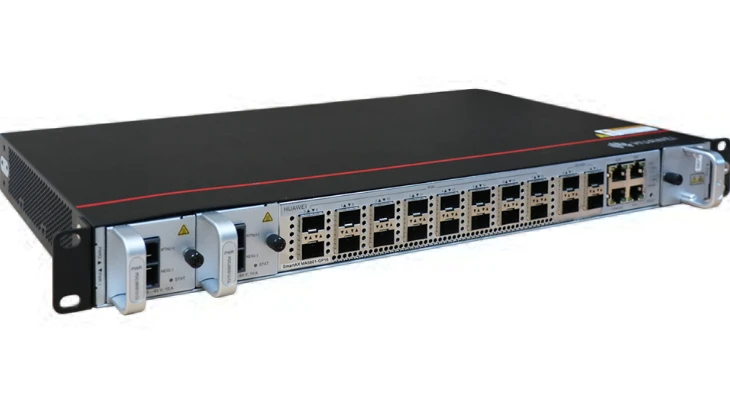
Huawei's FTTX portfolio centers on three equipment categories that work as an integrated system. The Optical Line Terminal (OLT) sits at the network's core-the SmartAX EA5800 series (X17, X15, X7, X2 models) dominates large-scale deployments with 7Tbps backboard capacity and support for GPON, 10G PON, and 50G PON standards introduced in March 2024. The MA5600T and newer MA5800T intelligent OLT serve mid-market ISPs requiring 3.2Tbps capacity with distributed architecture.
On the subscriber end, Optical Network Units and Terminals provide the customer premise equipment. The MA5600 series MDUs handle FTTB scenarios, while OptiXstar series ONTs-including the B675-1E3W with Wi-Fi 6 and the F50 FTTR package-deliver fiber to individual rooms. Supporting infrastructure includes the QuickODN optical distribution network components using plug-and-play FastConnect technology, GPON/EPON service boards, SFP modules for various distances (10G 10KM, 100G options), and site power supply systems operating on -48V/-60V DC standards.
The technical convergence matters because 2024 innovations blur traditional categories. Huawei's iFTTR OptiXstar F50 combines FTTH with WiFi-7 routers and 8TB storage, while the MiniFTTO F1002-AC-H1 integrates five network functions in one gateway. When evaluating vendors, verify they stock current-generation equipment, not just 2019-era MA5600T backstock.
The Geopolitical Purchasing Reality
Huawei FTTX procurement exists in a regulatory minefield that shifted decisively in 2024. The foundation: Since August 2019, Huawei has been on the U.S. Department of Commerce Entity List, requiring export licenses for U.S. technology transfer. Section 889 of the 2019 NDAA prohibits U.S. federal agencies and contractors from procuring Huawei equipment or using it in systems supporting government contracts.
May 2024 brought a critical inflection point. The Commerce Department revoked certain export licenses previously granted to suppliers like Qualcomm and Intel, cutting off even licensed chip sales to Huawei. This followed the February 2024 launch of Huawei's MateBook X Pro with Intel's Core Ultra 9 processor-a product that drew congressional fire and triggered the license cancellations.
December 2024's NDAA language escalated further, effectively barring Defense Department contractors from selling semiconductors, chip-making equipment, or design tools to Huawei or affiliates. If your organization holds any DoD contracts, purchasing decisions now carry compliance implications extending beyond the FTTX equipment itself.
But here's the nuance: These restrictions primarily govern U.S. entities and U.S.-origin technology. They don't universally prohibit Huawei equipment procurement worldwide. A South African ISP, Indian telecom operator, or Latin American enterprise faces different constraints than a Texas-based network operator or a Virginia government contractor.
The practical impact: Authorized Huawei distribution channels have fragmented. Traditional vendor relationships dissolved as U.S. suppliers exited. Alternative channels emerged-some legitimate regional distributors, others gray-market operations of questionable authenticity. The burden of verifying legal compliance, equipment genuineness, and supply chain integrity shifted entirely to buyers.
Why Traditional Buying Paths Changed
Pre-2019, procuring Huawei FTTX equipment followed established patterns: contact Huawei Enterprise directly for large deployments, work through authorized regional distributors for standard orders, or source from established IT vendors with Huawei partnerships. This three-tier distribution model provided price competition, local technical support, and equipment authenticity guarantees.
The 2019-2024 restriction period collapsed this structure. Major U.S. distributors terminated Huawei product lines entirely. European distributors grew cautious about serving U.S.-adjacent customers due to secondary sanction risks. Huawei's direct sales channels became selective, prioritizing established customers with clear legal standing.
Market response created a fragmented landscape. Specialized optical equipment vendors like XponShop and Router-switch.com (RSLab) positioned themselves as Huawei FTTX specialists operating outside U.S. jurisdiction. General B2B marketplaces like Alibaba saw increased Huawei FTTX listings-71 suppliers offering Huawei FTTX equipment as of late 2024, with fiber optic equipment accounting for 84% of listings.
Regional dynamics diverged sharply. Asia-Pacific markets, commanding 62% of global FTTX deployment share, maintained relatively open Huawei access. Middle East and African regions, where Huawei deployed significant operator networks, kept distribution channels active. Latin American suppliers sustained availability, supporting the region's ongoing fiber buildouts.
The consequence: "Where to buy" now depends fundamentally on "who you are" and "where you're operating." The answer for a Chennai-based ISP differs completely from a Chicago-based enterprise IT buyer, even if both need identical MA5800-X7 OLT units.

The Purchase Reality Matrix: Mapping Your Buying Options
Rather than presenting a static vendor list that's obsolete by publication, understanding your position within the procurement landscape enables you to identify appropriate channels and assess options intelligently.
Buyer Type × Geography × Risk Tolerance
The optimal procurement channel emerges from three variables working together. First, buyer classification: Are you a telecom service provider, enterprise IT department, government entity, system integrator, or reseller? Each category faces distinct compliance requirements and vendor access levels.
Geography determines baseline legality. Operating exclusively outside the U.S. and its direct sanctions sphere opens channels unavailable to U.S. entities. However, even non-U.S. buyers with American subsidiary relationships, U.S. dollar transactions, or supply contracts to U.S. customers face secondary exposure.
Risk tolerance acknowledges the spectrum between "absolutely must maintain U.S. compliance" and "legally operating in jurisdictions without U.S. restriction applicability." A multinational corporation with diverse government contracts occupies a different position than a regional ISP in Southeast Asia with no U.S. market exposure.
Consider three example scenarios. A municipal fiber project in Kansas pursuing BEAD program funding faces absolute prohibition-Section 889 compliance is non-negotiable, and Huawei equipment disqualifies the project. Zero legitimate procurement path exists.
A privately funded fiber provider in Bangalore expanding FTTH service faces no U.S. legal restrictions. Huawei maintains strong presence in India through distributors like Sunlite Systems, authorized for government e-marketplace platforms. Direct channels through Huawei Enterprise India remain viable for large deployments. Risk level: Low, focus shifts to price and support quality.
A European system integrator serving diverse customers sits in the complexity zone. No blanket prohibition exists, but client-specific restrictions apply. Due diligence on each deployment's end-use and customer jurisdiction becomes mandatory. Procurement channels exist but require transaction-level compliance verification.
Direct Procurement Channels: When They Work
Huawei Enterprise's direct sales channels remain the gold standard for authenticity, full technical support, and warranty coverage-when accessible. The company operates enterprise sales departments across regions, handling large-scale deployments typically exceeding $100,000 in equipment value.
For qualifying buyers-generally ISPs, major enterprises, and government entities in permitted regions-the direct path offers significant advantages. You receive current-generation equipment (including the 50G PON-capable MA5800T launched March 2024), comprehensive deployment planning assistance, guaranteed authentic products, and multi-year support contracts backed by Huawei's global service organization.
Access requirements have become more stringent. Huawei's sales teams conduct upfront compliance screening, verifying buyer jurisdiction, end-use application, and absence of U.S. restriction applicability. For first-time enterprise customers, expect a qualification process that includes business registration documentation, deployment location disclosure, and intended network application details.
The process timeline extends significantly compared to pre-2019 norms. Budget 4-6 weeks from initial contact to purchase order acceptance for new customer relationships. Established customers with clear compliance history see faster processing, but still plan for 2-3 week lead times on custom configurations.
Pricing favors volume. Huawei's direct channel targets deployments requiring multiple OLT chassis, hundreds of ONUs, and complete ODN infrastructure. For individual chassis or small ONU quantities, direct pricing typically exceeds distributor options by 15-30%. The tradeoff: premium support and zero counterfeit risk.
The critical limitation: Geographic and compliance boundaries. Huawei Enterprise U.S. operations, while maintaining presence, operate under severe restrictions. Direct procurement for U.S. buyers faces case-by-case evaluation with frequent declinations. European direct channels remain active but exercise caution with any U.S.-connected customers.
Authorized Regional Distributors: The Middle Path
Regional distributors occupy the middle ground-more accessible than direct channels, more reliable than gray markets. These companies hold formal Huawei partner status, typically certified for specific product lines and geographic territories.
Asia-Pacific maintains the most robust authorized distributor network. Companies like Sunlite Systems (India), operating with multiple Huawei authorizations and GEM platform approval, serve enterprise and government customers. Middle Eastern distributors like MUK in Bulgaria handle PON technology implementation across their regions. These partners stock current equipment, provide local technical support, and process orders measured in weeks rather than months.
Verification remains critical. Genuine authorized status should be confirmable through Huawei's official partner locator tools, though these are increasingly region-specific. Request distributor authorization documentation directly, including partnership certificates and product line approvals. Legitimate distributors provide these readily; evasive responses signal concern.
Pricing sits approximately 10-20% above gray market options but 5-15% below direct Huawei pricing for comparable order sizes. The margin funds local inventory, technical support, and faster fulfillment. For deployments requiring 10-50 ONU units or single-chassis OLT projects, authorized distributors typically offer the best value proposition.
The limitation: coverage gaps. Strong distributor networks exist in Asia, Middle East, and parts of Latin America. European coverage has thinned post-2019. North American authorized distribution effectively ceased for U.S. customers, though Canadian distributors maintain some presence.
Technical support quality varies significantly by distributor. Larger partners with dedicated Huawei engineering teams provide configuration assistance, troubleshooting, and on-site support. Smaller distributors may offer only basic order fulfillment. Evaluate technical capability before committing, particularly for complex deployments involving OLT configuration or ODN planning.
Specialized Optical Equipment Vendors
A category of vendors specializes in optical networking equipment across multiple brands, maintaining Huawei FTTX product lines alongside alternatives. These companies operate in a gray zone-not always holding formal Huawei authorization, but maintaining legitimate supply chains distinct from counterfeit operations.
XponShop represents this category, offering Huawei OLT/ONT/SFP modules with bulk procurement discounts and inventory claims for fast delivery. The website lists specific products like the H906CGHF 16-port XG-PON/GPON combo board for MA5800 series and H801MCUD1 main control boards, suggesting genuine product access rather than generic relabeling.
Router-switch.com (operating as RSLab) positions as a "leading Huawei FTTx solution provider" emphasizing competitive pricing, fast delivery, and technical support. The company's longevity (founded 2002) and breadth (serving 200+ countries, 18,000+ customers/projects) suggest established operations rather than fly-by-night marketplaces.
These vendors fill a market need for buyers who cannot access direct channels or authorized distributors but require more reliability than general B2B marketplaces. They typically serve system integrators, smaller ISPs, and regional network operators procuring equipment in 10-100 unit quantities.
Pricing advantage is their primary draw-typically 20-35% below authorized distributor pricing for comparable equipment. Volume discounts appear more flexible, making them attractive for irregular procurement patterns or mixed-vendor deployments where Huawei components supplement other brands.
The tradeoffs are substantial. Technical support quality ranges from competent to minimal. Warranty coverage becomes murky-sellers may offer warranties, but enforcement through Huawei's official service network can prove challenging. Equipment authenticity, while likely genuine (counterfeit OLT chassis are economically impractical), lacks the verification guarantees of authorized channels.
Due diligence becomes buyer responsibility. Request serial number verification before payment, check product labeling matches Huawei's official documentation, and confirm return/replacement policies explicitly. For critical deployments where downtime carries significant cost, the price savings may not justify the support and warranty risks.
B2B Marketplaces: Maximum Caution Required
Alibaba and similar platforms host numerous Huawei FTTX equipment sellers, with 71 suppliers identified offering FTTX products and over 1,300 listing Huawei GPON ONU FTTH equipment. These marketplaces serve as last-resort sources, offering maximum price competition and flexible sourcing but demanding extreme caution.
Counterfeit and refurbished equipment proliferate in this channel. Some ONUs labeled "compatible Huawei" contain entirely different chipsets. Used OLT chassis get superficial refurbishment and resale as new. Genuine Huawei products mix with lookalikes that fail under production network loads.
Legitimate use cases exist. Buyers familiar with optical equipment who can perform technical verification may source genuine products at 40-50% below authorized pricing. Refurbished equipment for lab environments, staging networks, or non-critical applications offers acceptable risk/reward trade-offs. Replacement parts for aging equipment out of manufacturer support windows sometimes only appear on these platforms.
Never use marketplace channels for critical production equipment without extensive verification. Request detailed product photographs including serial number plates, circuit board markings, and packaging. Verify seller history, transaction volume, and buyer feedback-though recognize these can be manipulated. Use escrow payment protection and inspection periods where available.
The fundamental challenge: No quality assurance mechanism exists. Marketplace operators disclaim responsibility for product authenticity. Payment processing offers limited fraud protection. Technical support is non-existent beyond seller responsiveness.
For buyers without technical expertise to evaluate optical equipment authenticity, marketplace channels present unacceptable risk. The cost of network failure, redeployment, and reputation damage far exceeds the purchase price savings.
The "No Legal Path" Scenario
Some buyer situations simply have no compliant procurement channel. U.S. federal agencies, U.S. government contractors subject to Section 889, and entities receiving certain U.S. federal broadband funding (including BEAD program recipients) face absolute prohibitions.
The restriction isn't ambiguous-it's statutory. Huawei equipment procurement violates federal law for these buyers, regardless of vendor or geographic sourcing. Civil and criminal penalties apply, including contract termination, repayment obligations, debarment from future government contracts, and False Claims Act liability.
Alternative strategies become mandatory. Explore equivalent alternatives from Cisco, Nokia, Ericsson, or Asian vendors like ZTE (noting ZTE faces similar though distinct restrictions). Design networks around non-restricted equipment, even if procurement costs increase. For acquisitions of networks already using Huawei equipment, build rip-and-replace timelines into transition plans.
Political and regulatory landscapes can shift. Monitor the Huawei Entity List status, Section 889 modifications, and sector-specific guidance updates. What's prohibited today may become permitted through regulatory change or license processes-but operate on current law, not anticipated modifications.
For non-U.S. buyers uncertain about jurisdiction issues, seek legal counsel specializing in export control and sanctions compliance. The cost of professional guidance is minimal compared to procurement missteps triggering legal liability or forcing expensive equipment replacement.
Verification, Due Diligence, and Purchase Protection
Regardless of channel, smart buyers implement verification processes before finalizing purchases and accepting deliveries. The fragmented market and prevalence of questionable sellers make these steps non-negotiable.
Verifying Vendor Legitimacy
Start with the seller's digital footprint. Legitimate distributors and specialized vendors maintain professional web presence with technical specifications, company history, certifications, and contact information beyond email forms. Check domain age-recently created websites selling "authentic Huawei" equipment warrant suspicion.
Request business registration documentation. Reputable vendors provide company registration, tax identification, and business license details readily. Evasion of these requests signals potential problems.
For claimed authorized distributor status, verify through multiple sources. Contact Huawei Enterprise regional offices to confirm partner status-legitimate distributors won't object to this verification. Check for distributor listings in Huawei's official partner programs, though be aware these have become region-specific and may not cover all legitimate partners post-2019.
Evaluate technical competence. Engage the vendor in technical discussion about equipment specifications, configuration requirements, and compatibility. Genuine optical equipment specialists demonstrate deep product knowledge. Sales-only operations with surface technical understanding raise concerns about their supply chain authenticity.
Check for physical business presence. Legitimate distributors and specialized vendors maintain warehouses, offices, and technical support staff. Request facility information and verify physical addresses through multiple sources. Brass plate operations with virtual offices and no technical staff present higher risk profiles.
Review payment terms and procedures. Established vendors accept standard commercial payment methods with buyer protections-purchase orders, bank transfers to verifiable corporate accounts, escrow services for new relationships. Demands for cryptocurrency, personal account transfers, or payments to third-party entities suggest problematic operations.
Authenticating Equipment Before and After Delivery
Pre-delivery verification should be mandatory for any non-direct Huawei purchase. Request detailed product photographs including serial number plates, manufacturer labels, and packaging. Compare these against Huawei's official product documentation and images from verified Huawei sources.
Serial number verification provides critical authenticity validation, though Huawei's public serial number verification tools have limited accessibility post-2019. For large purchases, consider engaging third-party verification services that maintain equipment authentication databases.
Request test reports and certifications. New equipment should include manufacturer test documentation, regulatory compliance certifications (CE, FCC equivalents, etc.), and quality assurance paperwork. Missing or generic documentation suggests used/refurbished equipment or counterfeit products.
Upon delivery, conduct immediate physical inspection before accepting the shipment. Check packaging quality-Huawei uses high-quality foam molding, professional crating, and branded packaging materials. Generic boxes and minimal protection suggest non-factory channels.
Inspect equipment closely for signs of previous use or refurbishment: Rack mount wear, port dust accumulation, finger oils on connectors, asymmetric screws suggesting previous opening, or inconsistent manufacturing markings. New equipment shows factory-fresh conditions with protective coverings and unused connectors.
Power-on testing should occur before finalizing acceptance. Connect OLT or ONU equipment, verify boot sequence matches official procedures, check firmware versions against current Huawei releases, and confirm management interface accessibility. Non-genuine equipment often fails basic operational verification or displays anomalous behavior.
For critical deployments, consider professional optical equipment inspection services. These services verify hardware authenticity, test performance specifications against manufacturer claims, and provide documentation for warranty and compliance purposes.
Contractual Protections and Warranty Considerations
Regardless of vendor, establish clear contractual terms before finalizing purchases. Written purchase agreements should specify: exact equipment models with full part numbers, quantities, pricing per unit and total, delivery timelines with penalties for delays, warranty terms including duration and coverage scope, technical support availability and response times, and return/exchange policies for defective or non-conforming equipment.
Warranty coverage varies dramatically by channel. Direct Huawei purchases include comprehensive manufacturer warranties, typically 1-3 years with options for extended coverage and next-business-day replacement. Authorized distributors honor Huawei's warranty terms with local support execution.
Specialized vendors and marketplace sellers offer inconsistent warranty treatment. Seller warranties may provide replacement within 30-90 days but lack Huawei's official backing. Confirm warranty execution processes explicitly-who provides replacement equipment, what testing proves defects, and how long resolution takes.
Consider third-party warranty coverage for critical equipment purchased through non-authorized channels. Independent warranty providers offer coverage for optical networking equipment, filling gaps in seller-provided protection. Costs typically run 8-15% of equipment value annually but provide claim resolution through established processes.
Payment staging protects against non-delivery or non-conforming equipment. For new vendor relationships, structure payments as: 30-40% deposit on order placement, 50-60% upon delivery before acceptance, and 10% retention released after successful installation and testing. Established vendor relationships may warrant different terms, but never pay 100% upfront for significant orders.
Escrow services provide additional protection for large purchases from unfamiliar vendors. Third-party escrow holds funds until buyer confirms receipt of conforming equipment. While adding 1-3% transaction cost, escrow dramatically reduces fraud and non-delivery risks.

Regional and Jurisdictional Considerations
Where you're purchasing from and where you're deploying matters profoundly for channel access, legal compliance, and practical procurement success.
Asia-Pacific: Most Open Access
Asia-Pacific remains Huawei's strongest region for FTTX equipment availability, commanding 62% of global fiber deployment market share. China, India, Southeast Asian nations, and Oceania maintain robust distribution networks with minimal restriction impacts.
Indian buyers benefit from Huawei's established local presence through authorized partners like Sunlite Systems, offering full product portfolios including the latest MA5800T intelligent OLT and 50G PON capabilities. Government e-marketplace approval enables public sector procurement. No U.S.-origin restrictions limit Indian ISPs or enterprises operating domestically.
Southeast Asia (Indonesia, Malaysia, Philippines, Thailand, Vietnam) maintains strong Huawei adoption driven by national broadband initiatives and existing operator relationships. Regional distributors stock current equipment with local technical support. DishHome in Nepal, Elanta in Russia, and Biznet in Indonesia represent successful large-scale Huawei FTTH deployments completed in recent years, indicating active supply chains.
China obviously presents unrestricted access as Huawei's home market. Domestic pricing tends toward the lowest globally, though equipment may require region-specific firmware. International buyers sourcing from Chinese distributors should verify compatibility with their operational regions, particularly regarding management software language support and regulatory compliance certifications.
Australia and New Zealand face unique positioning-Western alignment creates pressure to avoid Huawei infrastructure for network carriers, but enterprise and private sector buyers face no absolute prohibitions. Market practice has trended toward alternative vendors for major deployments, but equipment availability exists through regional distributors.
Japan and South Korea balance technology advancement with geopolitical considerations. While not prohibiting Huawei equipment outright, major carriers have largely selected alternative vendors for 5G infrastructure. FTTX equipment faces less scrutiny, making procurement feasible though not necessarily from mainstream channels.
Middle East and Africa: Active but Evolving
Middle Eastern markets maintain significant Huawei presence given the company's strong positions in regional carrier networks. MUK's authorized distribution of Huawei PON technologies in Bulgaria reflects broader Middle Eastern and North African access patterns.
Gulf Cooperation Council nations (UAE, Saudi Arabia, Qatar, Kuwait, Bahrain, Oman) represent mature fiber markets with established Huawei deployments. Distributors in these regions supply new installations and expansion equipment. However, recent geopolitical shifts have introduced uncertainty-some GCC nations are diversifying vendor relationships due to U.S. diplomatic pressure, though this affects carrier-level decisions more than enterprise buyers.
African markets show robust Huawei FTTX adoption driven by continental digitalization initiatives and Chinese infrastructure investment. South Africa, Kenya, Nigeria, and Egypt maintain distribution channels serving ISP and enterprise buyers. Huawei's competitive pricing aligns with budget constraints in many African markets, sustaining demand despite availability concerns in Western markets.
Israel presents unique complexity-despite advanced technology economy, U.S. sanctions considerations influence but don't prohibit Huawei equipment procurement. Enterprise buyers assess risk based on their own U.S. exposure and customer relationships.
Sub-Saharan Africa's fiber expansion relies heavily on Huawei equipment due to price-performance value propositions. National broadband initiatives in countries like Tanzania, Ethiopia, and Uganda incorporate Huawei FTTX technology. Regional distributors serve these markets with equipment sourced through Middle Eastern and Asian channels.
Europe: Increasing Caution
European markets exhibit the most dramatic shift in Huawei FTTX procurement patterns. While no EU-wide prohibition exists, member state policies vary significantly, and vendors exercise abundant caution given U.S. secondary sanction considerations.
Western European markets (UK, Germany, France, Netherlands, Sweden) have seen major carriers exclude Huawei from 5G infrastructure under government pressure. This hasn't extended universally to FTTX equipment, but distributor caution and banking sector restrictions on Huawei transactions create practical barriers even where no legal prohibition exists.
Eastern European and Balkan markets maintain more open access. MUK's operations distributing Huawei optical equipment throughout Bulgaria illustrate continuing channel availability in these regions. However, EU expansion candidates and recent members face pressure to align with Western European and U.S. positions.
Nordic countries (Denmark, Norway, Sweden, Finland) largely moved away from Huawei infrastructure, though this primarily affects mobile networks. FTTX equipment procurement remains theoretically possible but occurs through limited specialized channels rather than mainstream distribution.
Southern Europe (Italy, Spain, Portugal, Greece) shows mixed patterns. Telefónica's historical relationship with Huawei, including FTTH deployments using FastConnect technology, indicates Spain maintained equipment access. However, this reflects legacy relationships; new customer procurement faces greater uncertainty.
Practical guidance for European buyers: Larger enterprises with U.S. relationships should exercise extreme caution and seek legal counsel before Huawei equipment procurement. Smaller regional operators, MSPs serving purely European customers, and enterprises with no U.S. exposure face fewer restrictions but should verify vendor legitimacy carefully given limited authorized distribution.
Americas: Sharp North-South Division
North American and Latin American markets present entirely different procurement realities.
United States faces comprehensive restrictions. Section 889 prohibits federal agencies and contractors from Huawei procurement. Entity List designation restricts U.S. companies' ability to sell to Huawei, effectively eliminating mainstream distribution. U.S. buyers with government relationships or federal funding face absolute prohibition. Even purely private sector U.S. buyers struggle to find legitimate channels-major distributors exited the market, and remaining specialized vendors are scarce.
Exceptions exist at the margins: Research institutions, educational labs, and technology companies legitimately studying optical networking may procure equipment for non-production use through careful compliance procedures. These represent narrow cases requiring legal guidance.
Canada maintains distinct sovereignty from U.S. policy but faces intense pressure. Major Canadian carriers largely excluded Huawei from 5G infrastructure, though FTTX equipment doesn't face formal prohibition. Canadian distributors may serve Canadian buyers, but carefully screen for any U.S. connection given banking system and supply chain U.S. exposure.
Latin America presents the opposite picture-open access, active distribution, and significant Huawei deployment. Mexico, Brazil, Argentina, Chile, and Colombia maintain distribution channels serving ISP and enterprise markets. Huawei's competitive pricing and established presence in Latin American telecommunications creates sustained demand.
Infrastructure projects across Latin America commonly incorporate Huawei FTTX technology. Regional distributors stock standard equipment with local support capabilities. For U.S.-based companies operating Latin American projects, careful legal structuring (using local subsidiaries without U.S. fund flows) can enable equipment procurement, though this requires sanctions counsel guidance.
Product Categories and Sourcing Strategies
Different equipment types present varied procurement challenges and optimal channel strategies.
OLT (Optical Line Terminal) Equipment
OLT chassis represent the highest-value purchases and greatest procurement complexity. SmartAX EA5800 series units cost $15,000-$45,000 depending on configuration and board population. These purchases typically require direct Huawei engagement or authorized distributor relationships.
For new network builds requiring multiple OLT installations, the direct channel offers compelling value despite longer timelines. Huawei's sales engineering assistance in network architecture, ODN planning, and board selection justifies premium pricing. Organizations deploying 5+ OLT chassis should prioritize direct engagement.
Single OLT procurement for network expansion or technology refresh suits authorized distributor channels best. Regional distributors stock common configurations (EA5800-X7 with standard board combinations) enabling 2-4 week fulfillment versus 6-8 weeks direct. Pricing sits 10-15% below direct quotes for single-chassis orders.
The specialized vendor channel can source OLT equipment but provides minimal value-add for these complex products. Without Huawei's engineering support for VLAN configuration, PON port planning, and management interface setup, buyers must possess deep technical expertise. Only consider this channel if internal capabilities handle full deployment complexity.
Marketplace channels should be avoided entirely for OLT equipment. The risk of counterfeit chassis, refurbished components sold as new, or incompatible firmware versions creates unacceptable network reliability exposure.
Board-level components (GPON/XG-PON service boards, uplink cards, control boards) present different optimization. These items stock through specialized vendors with reasonable authenticity assurance. XponShop's listings for H906CGHF 16-port XG-PON/GPON combo boards and H801GICF uplink boards serve upgrade scenarios where the OLT chassis already exists. Verify board compatibility with your specific OLT model and firmware version before purchase.
ONU/ONT (Optical Network Units/Terminals)
Customer premise equipment represents the highest volume procurement category and the most channel flexibility. Individual ONUs cost $40-$250 depending on capability (basic GPON, 10G EPON, WiFi integration, FTTR configuration).
Volume ONU procurement (100+ units) benefits from authorized distributor relationships. Bulk pricing negotiation, coordinated delivery, and pre-configuration services justify the relationship establishment effort. Expect pricing around $55-$85 per unit for standard EchoLife HG8310M GPON ONTs in 100-unit quantities.
Mid-volume orders (20-100 units) work well through specialized vendors. XponShop and similar operations stock popular models with fast fulfillment and competitive per-unit pricing ($65-$95 range). Technical support proves adequate for these relatively simple devices-installation and provisioning follow standard procedures requiring minimal vendor assistance.
Small quantities or mixed-model procurement can leverage marketplace channels with appropriate caution. Buy from established sellers with strong transaction histories and verified buyer feedback. Inspect units immediately upon receipt-counterfeit ONTs are common, typically identifiable by poor build quality, incorrect labeling fonts, and firmware anomalies.
The newest FTTR (Fiber to the Room) systems like OptiXstar F50 requiring integrated WiFi-7 routers and home gateway functionality demand more careful sourcing. These advanced products suit authorized distributor or direct channels best-the integration complexity and higher price points ($300-$500+ per FTTR package) justify premium channel assurance.
Passive Optical Components
Splitters, connectors, distribution boxes, and fiber management infrastructure within Huawei's QuickODN system present the lowest procurement risk. These passive components lack complex electronics, making counterfeiting economically unattractive and functionality verification straightforward.
Authorized distributors provide complete ODN solutions with technical planning assistance. For large network deployments requiring coordinated passive infrastructure, this channel delivers comprehensive support including site surveys and bill-of-materials optimization.
Specialized vendors stock common splitter ratios (1:8, 1:16, 1:32, 1:64) and standard distribution boxes. Pricing typically runs 20-30% below authorized channels with adequate product quality. Verify splitter insertion loss specifications match Huawei's published values and test a sample before committing to large orders.
Marketplace channels can serve for passive components, particularly commodity items like SC/APC connectors, fiber management trays, and mounting brackets. Price advantages reach 40-50% versus authorized channels. Quality variation exists-request detailed specifications and test samples before bulk orders.
SFP/SFP+ Optical Modules
Small form-factor pluggable transceivers required for OLT uplinks and extended-reach applications occupy a middle complexity zone. Genuine Huawei SFP+ modules (10G 10KM, 10G 80KM varieties) cost $150-$400 depending on specification.
Third-party compatible modules offer substantial savings ($80-$180) but introduce compatibility questions. Many specialized vendors stock both genuine Huawei and compatible alternatives. For uplink applications where transceiver failure only affects specific OLT connectivity (not entire subscriber trees), compatible modules present acceptable risk-reward profiles.
Critical applications requiring maximum reliability favor genuine Huawei modules through authorized channels. Distance specifications (10KM versus 80KM) and wavelength accuracy matter significantly for optical budgets-counterfeit modules frequently underperform specifications, causing link instability.
Test new module batches before full deployment. Install in non-critical positions first, verify link stability over 72+ hours under load, and confirm optical power levels match specifications before deploying across production networks.
Pricing Expectations and Budget Planning
Understanding realistic pricing across channels enables accurate budget development and prevents both overpayment and suspiciously-low offers signaling counterfeit risk.
OLT Equipment Cost Ranges
SmartAX EA5800-X7 chassis with basic configuration (2U, dual control boards, dual power supplies, 1 service board): $22,000-$28,000 direct Huawei, $19,000-$25,000 authorized distributor, $16,000-$21,000 specialized vendors.
Fully populated EA5800-X17 (8U chassis, redundant systems, 16 service board slots with 12 boards installed): $65,000-$85,000 direct, $58,000-$78,000 authorized distributor. Specialized vendors rarely stock this configuration-custom orders approach authorized distributor pricing.
Mid-range MA5800T-X7 intelligent OLT: $18,000-$24,000 direct, $16,000-$22,000 authorized distributor, $14,000-$19,000 specialized vendors.
Legacy MA5600T systems (still capable, but 2018-generation): $8,000-$12,000 through specialized vendors and marketplaces. These appear in refurbished inventory frequently-lower pricing reflects age and limited 50G PON upgrade paths.
Service boards range dramatically: Basic 8-port GPON boards: $1,200-$1,800; 16-port GPON/XG-PON combo boards: $3,500-$5,200; high-density boards with advanced features: $6,000-$9,000.
ONU/ONT Pricing Dynamics
Entry-level GPON ONTs (EchoLife HG8310M single GE port): $45-$75 depending on channel and volume. Authorized distributors at upper range, marketplace sellers at lower range with quality risks.
Mid-range WiFi-integrated ONTs (EG8145V5 with dual-band WiFi): $85-$135 across channels. Specialized vendors typically price around $95-$110 in 50+ unit quantities.
Advanced 10G-capable ONTs (EG8145X6 with WiFi-6): $150-$210 depending on channel. Direct and authorized distributor pricing clusters around $180-$200; specialized vendors offer $150-$170.
FTTR systems (OptiXstar F50 complete package): $380-$550 depending on configuration. These newest products stock primarily through authorized channels-specialized vendor availability varies.
Volume discounts follow predictable patterns: 10-25 units: 5-8% reduction; 50-100 units: 12-18% reduction; 100-500 units: 20-28% reduction; 500+ units: negotiated pricing, potentially 30-40% below single-unit costs.
Total Cost of Ownership Considerations
Purchase price represents only partial cost. Factor in these additional expenses when comparing channels:
Technical support value: Direct and authorized channels include engineering assistance worth $5,000-$15,000 for complex deployments. Self-supported deployments using specialized vendors require internal expertise-calculate loaded internal engineering time costs.
Warranty execution costs: Authorized channel warranty claims typically resolve within 5-10 business days. Specialized vendor claims may extend 3-6 weeks. Calculate downtime costs and spare equipment inventory requirements accordingly.
Counterfeit replacement costs: If purchased equipment proves counterfeit or non-functional, replacement procurement adds 100% cost plus deployment labor. This risk justifies 20-30% price premiums for assured authenticity.
Regulatory compliance risk: Equipment purchased in violation of applicable restrictions creates legal liability far exceeding purchase costs. Include compliance verification costs (legal counsel, documentation) in channel comparison.
Software licensing and updates: Current firmware access through official Huawei channels may require equipment registration. Gray-market equipment sometimes lacks registration eligibility, cutting off critical security updates and feature enhancements.
Technical Verification and Testing Protocols
Regardless of procurement channel, implement verification procedures before deployment to confirm equipment authenticity, functionality, and compatibility.
Pre-Deployment Testing Checklist
Physical inspection catches obvious counterfeit indicators: Examine label fonts and placement against official Huawei product images. Check serial number formatting-genuine Huawei serials follow specific patterns. Inspect PCB quality-genuine boards show professional manufacturing with consistent soldermask application. Verify screw types and quality-counterfeits often use mismatched or low-quality fasteners.
Firmware verification provides critical authenticity confirmation. Boot OLT/ONU equipment and access management interface. Verify firmware version against current Huawei releases listed on official documentation. Check boot sequence timing-counterfeit equipment often shows anomalous boot times. Confirm management interface graphics and text match official Huawei styling.
Performance testing under controlled conditions validates specifications. For OLTs: Install single service board and verify port activation. Test PON power output using optical power meter-should match ±0.5dB of specifications. Provision test ONU and measure ONT receive power. Check OLT CPU utilization at idle-should be <15% with basic configuration.
For ONUs/ONTs: Provision on known-good OLT. Measure optical receive sensitivity-should achieve link within specified power ranges. Test GE port throughput using iperf or similar-should achieve line rate. Verify WiFi performance if equipped-check 2.4GHz and 5GHz band operation.
Compatibility validation prevents integration surprises. Test new equipment with existing infrastructure before mass deployment. Provision ONU from different vendors on new OLT. Verify VLAN tagging, multicast, and quality-of-service features. Test management system integration-confirm new equipment discovers properly in existing NMS platforms.
Documentation verification catches remarked or refurbished equipment. Genuine new Huawei equipment includes: Professional quick-start guide with high-quality printing; regulatory compliance certificates (CE, FCC equivalents); manufacturer test report with specific serial number; warranty card with encoded validation information; and consistent packaging materials with Huawei branding.
Red Flags Demanding Rejection
Certain indicators should trigger immediate equipment rejection regardless of vendor assurances: Serial numbers not appearing in verification systems (when accessible); firmware versions predating official product launch dates; cosmetic damage inconsistent with "new" claims; missing or photocopied documentation; packaging condition suggesting reboxing; port wear or dust accumulation indicating previous use; asymmetric fasteners suggesting previous chassis opening; and management interface anomalies (wrong logos, poor graphics, spelling errors).
For questionable equipment, demand vendor replacement before acceptance. Legitimate vendors accommodate testing periods and replace items failing verification. Resistance to replacement provisions signals problematic supply chains.
Alternative Considerations and Vendor Diversification
Huawei FTTX equipment offers compelling technical capabilities and pricing, but procurement complexity makes alternative evaluation worthwhile.
When Alternative Vendors Make Sense
U.S. regulatory exposure eliminates Huawei as viable option regardless of technical preference. Organizations with federal contracts, government customers, or U.S. funding sources must explore alternatives: Nokia's FTTH solutions (ISAM series); Cisco's optical access portfolio; Adtran's fiber access platforms; and Calix's access systems.
Risk diversification argues for multi-vendor strategies even where Huawei remains legal. Supply chain disruption, further regulatory changes, or vendor-specific vulnerabilities create continuity risks. Deploying 70% Huawei with 30% alternative vendors provides flexibility without sacrificing Huawei's cost advantages.
Technical requirements sometimes favor alternatives. Specific integration needs, unique feature requirements, or existing infrastructure compatibility may point toward other vendors despite Huawei's general capabilities. Evaluate based on specific deployment requirements rather than abstract vendor preference.
Long-term support considerations matter significantly. If regulatory environment continues tightening, Huawei equipment deployed today may face spare parts and support challenges in 5-10 years. Calculate equipment lifecycle and replacement timelines when evaluating vendor choices.
ZTE as Parallel Option
ZTE occupies similar market positioning to Huawei-Chinese vendor with strong optical access capabilities and competitive pricing-while facing parallel U.S. restrictions. The company's C600/C620 OLT series and ZXHN ONT product lines offer comparable technical specifications.
ZTE faces Entity List designation and Section 889 prohibition similar to Huawei, making it equally problematic for U.S. buyers with government exposure. However, for non-U.S. buyers or those without federal restrictions, ZTE provides procurement diversification while maintaining cost structures similar to Huawei.
Distribution patterns mirror Huawei's-strong Asia-Pacific presence, active Middle East and Africa channels, limited Western availability. Procurement strategies outlined for Huawei apply equally to ZTE equipment.
Western Vendor Cost Reality
Buyers considering alternatives should understand realistic cost implications. Nokia FTTH equipment typically runs 60-90% premium versus comparable Huawei configurations. Cisco optical access products command 70-110% premiums. Adtran and Calix fall in 40-70% premium ranges.
These premiums reflect Western engineering costs, different supply chain economics, and market positioning rather than fundamental technical superiority. Huawei and Nokia both deliver gigabit fiber service reliably-the choice often reduces to procurement feasibility versus budget constraints.
For large deployments, Western vendor premiums translate to substantial absolute costs. A 10,000-subscriber FTTH network costing $2.8M with Huawei equipment might require $4.2-5.0M using Nokia or Cisco. Organizations must weigh regulatory compliance necessities against budget realities.
Frequently Asked Questions
Can I legally buy Huawei FTTX equipment in the United States?
It depends entirely on your organizational characteristics. Private sector companies without government contracts, federal funding, or military/intelligence customer relationships face no absolute prohibition-but procurement proves practically difficult given distribution channel withdrawal. Federal agencies, government contractors subject to Section 889, and recipients of certain federal broadband funding including BEAD program allocations cannot legally procure Huawei equipment. Organizations uncertain about their status should consult export control attorneys before procurement.
How can I verify if a Huawei distributor is actually authorized?
Request formal partner authorization documentation directly from the distributor, including partnership certificates with effective dates and product line approvals. Contact Huawei Enterprise regional offices independently to confirm partner status-provide the distributor's company name and location. Legitimate authorized distributors welcome verification and provide support contact information readily. Check for physical business presence including warehouse facilities and technical staff rather than just virtual offices. Be aware Huawei's public partner locator tools have become region-specific post-2019, so absence from online directories doesn't automatically disqualify legitimate regional partners.
What's the risk of buying Huawei equipment through Alibaba or similar marketplaces?
Risk divides into three categories: counterfeit equipment with inferior components labeled as genuine Huawei, refurbished units sold as new with unknown reliability history, and legitimate used equipment at unclear condition. Counterfeit ONUs appear frequently and may function initially but fail under production network stress. OLT counterfeiting is less common due to complexity but refurbished chassis with hidden component wear create reliability exposure. Warranty enforcement through marketplaces proves nearly impossible-seller warranties lack Huawei backing. Technical support is minimal to nonexistent. Use marketplace channels only for non-critical applications, with extensive testing before production deployment, when you possess technical expertise to verify authenticity, and when price savings justify elevated risk.
Do specialized vendors like XponShop sell genuine Huawei equipment?
Specialized optical equipment vendors occupy a gray zone-they typically source genuine products but lack formal Huawei authorization. Equipment authenticity is generally reliable (complete counterfeit OLT chassis are economically impractical), but warranty coverage and technical support fall below authorized distributor levels. These vendors serve a legitimate market need for buyers unable to access direct or authorized distributor channels. Verify equipment authenticity through serial number checks, firmware validation, and physical inspection. Understand warranty limitations explicitly before purchase. Consider this channel appropriate for experienced buyers with internal technical capabilities and deployments where vendor support dependency is minimal.
What happens if I deploy Huawei equipment and later discover compliance problems?
Consequences vary by violation severity and organizational context. Federal contractors discovering Section 889 violations face contract termination risk, potential debarment from future government contracts, repayment obligations for work performed, and possible False Claims Act liability. Private sector companies may face customer contract violations if agreements prohibit restricted equipment. Remediation requires complete equipment removal and replacement-"rip and replace" operations costing 1.5-2.5x original deployment expense. Document all procurement decisions carefully, maintain records of compliance verification performed, and consider segregating Huawei-equipped networks from government or restricted applications to limit exposure if regulatory environment changes.
How long does Huawei FTTX equipment typically remain supported?
Huawei generally provides 5-7 years of active support for current-generation products including firmware updates, security patches, and spare parts availability. Extended support may continue 3-5 years beyond active support at premium pricing. However, geopolitical restrictions create uncertainty-if regulatory environment tightens further, even authorized channels may face spare parts constraints. The MA5600T platform launched circa 2010 remains widely deployed and parts-available through various channels despite being three generations old, suggesting long practical support lifecycles. Plan equipment refresh cycles around 7-10 year intervals and maintain spare parts inventory for critical components to buffer against future supply uncertainty.
Are refurbished Huawei OLTs worth considering?
Refurbished OLT equipment offers 40-60% cost savings versus new, making it attractive for budget-constrained deployments, non-critical applications, lab environments, or temporary network staging. Risks include unknown usage history affecting reliability, potentially obsolete firmware limiting feature access, possible lack of manufacturer warranty, and uncertain spare parts availability for aging platforms. If considering refurbished equipment, verify the specific platform generation-MA5600T refurbished units at deep discounts may suit backup or low-density applications, while MA5800 series refurbished equipment warrants more caution given recent introduction. Request detailed refurbishment documentation, test extensively before deployment, and maintain higher spare equipment ratios than new equipment deployments.
What payment methods protect buyers when purchasing from unfamiliar vendors?
Escrow services provide maximum protection-third-party escrow holds payment until you confirm receipt of conforming equipment, adding 1-3% transaction cost but dramatically reducing fraud risk. Staged payments reduce exposure: 30-40% deposit, 50-60% upon delivery before acceptance, 10% retention after successful testing. Bank transfers to verified corporate accounts in the vendor's business jurisdiction offer reasonable security and transaction traceability. Purchase orders through established commercial credit terms work for known vendors. Avoid cryptocurrency payments, personal account transfers, or payment to third parties unrelated to the stated vendor. Credit cards provide charge-back protection for smaller purchases. For transactions exceeding $50,000 with new vendors, strongly consider escrow services regardless of vendor assurances.
Strategic Procurement Recommendations
After examining channels, verification methods, and risk factors, distill procurement approach to your specific situation.
For Non-U.S. Buyers Without Restrictions
You enjoy maximum optionality. Start with direct Huawei engagement for large deployments exceeding $100,000-the engineering support justifies timeline extensions. For mid-scale projects ($20,000-$100,000), evaluate authorized regional distributors first for optimal price-support balance. Specialized vendors serve well for supplemental equipment, expansion phases, and mixed-vendor deployments. Reserve marketplace channels for non-critical equipment where you possess verification expertise.
Verify vendor legitimacy regardless of channel. Implement the physical inspection, firmware validation, and performance testing protocols outlined above. Document procurement decisions and compliance verification for audit purposes.
Negotiate maintenance contracts explicitly. Unlike software-as-service, optical equipment requires clear spare parts access and technical support terms. Confirm support provider, response times, and escalation procedures before deployment.
For U.S.-Based Buyers
Accept that mainstream procurement channels closed. If absolutely no government exposure exists-zero federal contracts, no government customers, no federal funding-technically legal paths exist but require extensive due diligence. Specialized vendors operating internationally may serve as last-resort sources, though they increasingly refuse U.S. customers entirely due to compliance concerns.
Realistically, explore alternative vendors. Nokia, Cisco, Adtran, Calix, and even ZTE-alternatives (note ZTE has similar restrictions) provide FTTH capabilities. Budget the premium versus Huawei pricing but gain regulatory certainty.
For equipment already deployed, plan refresh cycles carefully. Spare parts availability from international sources may continue short-term, but build rip-and-replace planning into long-term network evolution.
If acquiring networks with existing Huawei equipment, factor replacement costs into valuation. The equipment's technical functionality doesn't change, but regulatory environment creates stranded asset characteristics for U.S. operators.
For Government and Contractor Organizations
Zero ambiguity exists-do not procure Huawei FTTX equipment. Section 889 prohibition is absolute. Even considering procurement creates compliance exposure.
If acquisition targets contain Huawei equipment, negotiate purchase price reductions reflecting mandatory replacement. Build removal timelines into integration planning and budget accordingly-rip-and-replace costs 1.5-2.5x original deployment value.
Consider this a permanent restriction rather than temporary trade dispute. Plan network architecture around non-restricted vendors regardless of cost premium. The compliance risk simply isn't worth procurement savings.
For Organizations in Regulatory Gray Zones
European companies, multinational corporations with partial U.S. exposure, and entities with complex jurisdictional positioning should seek specialized legal counsel before Huawei procurement. Export control and sanctions attorneys can evaluate specific fact patterns and provide risk assessments.
Consider network segmentation strategies-deploy Huawei equipment in networks isolated from U.S.-connected applications while using alternative vendors for U.S.-adjacent systems. This compartmentalization limits exposure while preserving Huawei's cost advantages where legally permissible.
Document decision rationales meticulously. If regulatory environment changes or customer contracts later prohibit previously-acceptable equipment, contemporaneous documentation of compliance verification protects against bad-faith claims.
Future Outlook and Adaptability
The Huawei FTTX procurement landscape will continue evolving with geopolitical relationships and regulatory frameworks.
Monitoring Regulatory Changes
Track these information sources for procurement-relevant developments: U.S. Commerce Department Entity List updates published in Federal Register; National Defense Authorization Act annual versions affecting Section 889 scope; specific agency guidance from FCC, NTIA, and DoD on equipment restrictions; and Huawei's own compliance guidance documents issued periodically.
International developments matter equally. European Parliament and Council positions on Chinese technology vendors; specific member state decisions on network security; and trade agreements between regions and China affect distribution channel viability.
Industry associations provide useful intelligence. Fiber Broadband Association communications, FTTH Council updates, and regional telecom industry groups often publish procurement guidance addressing current regulatory environment.
Building Procurement Flexibility
Smart network planning anticipates procurement uncertainty. Design architectures accepting multiple vendor equipment rather than single-vendor dependencies. Use open standards (GPON, XG-PON, 10G EPON) rather than proprietary protocols. Maintain multi-vendor qualification lists even if currently single-sourcing-preserve optionality for future procurement phases.
Develop relationships with distributors across multiple channels. Authorized distributor relationships provide best baseline, but cultivating specialized vendor contacts ensures backup sourcing if primary channels constrict. Don't rely exclusively on single procurement paths.
Financial planning should model vendor transition scenarios. If Huawei equipment becomes unviable mid-deployment, what's the cost impact? Budget contingency reserves for potential forced equipment changes-10-15% contingency for deployments where Huawei represents optimal but potentially unstable choice.
Technology Evolution Hedges
Fiber infrastructure investments span decades, but active equipment faces shorter cycles. The FTTX equipment purchased today serves 7-12 years typically before technology refresh regardless of regulatory pressures. This natural refresh cadence provides regulatory risk hedging.
Current 10G PON deployments position for straightforward upgrade paths. If forced to change vendors at refresh time, existing fiber infrastructure remains usable-only active electronics require replacement. This is fundamentally different from proprietary wireless systems where vendor change necessitates complete infrastructure replacement.
50G PON standardization creates vendor-neutral upgrade paths. While Huawei introduced 50G PON capabilities in its March 2024 EA5800 updates, standard-based protocols mean future vendor transitions remain technically feasible even if economically suboptimal.
Conclusion: Navigating Procurement Realities
The Huawei FTTX equipment marketplace split into parallel universes post-2019-one where procurement follows established patterns with clear channels and authentic products, another where uncertainty and fragmentation demand constant vigilance. Your position within this divided landscape determines appropriate strategies.
The Purchase Reality Matrix isn't theoretical abstraction-it's practical necessity. A telecom operator in Jakarta sources equipment fundamentally differently than a fiber provider in California, not because products differ but because regulatory and supply realities diverge completely. Recognize your position's constraints and opportunities explicitly rather than fighting against jurisdictional facts.
For the majority of global buyers outside U.S. direct restrictions, Huawei FTTX equipment remains accessible through authorized distributors and specialized vendors. The verification burden increased substantially-blind trust in vendor claims isn't sustainable given counterfeit prevalence and gray-market proliferation. Implement authentication procedures, test equipment comprehensively, and establish contractual protections as routine procurement steps rather than exceptional measures.
The equipment itself remains technically competitive. Huawei's MA5800 series with 50G PON capabilities, FTTR innovations like OptiXstar F50, and continued ODN development keep product portfolio current. Technical obsolescence isn't the concern-procurement channel reliability is.
Price advantages persist as Huawei's competitive strength. When Western alternatives cost 60-110% premiums, the economic pressure to source Huawei equipment remains intense for budget-constrained deployments. Organizations able to navigate procurement complexity access substantial savings, making verification investment worthwhile.
For U.S.-exposed buyers, acceptance of closed access prevents expensive mistakes. The compliance risk of circumventing restrictions dwarfs equipment cost considerations. Western vendor premiums aren't optional expenses-they're mandatory compliance costs. Budget accordingly and move forward with regulatory certainty.
Strategic procurement means matching channel choice to specific purchases rather than defaulting to single patterns. Complex OLT deployments warrant direct or authorized distributor engagement; high-volume ONU procurement suits specialized vendors; passive infrastructure accepts marketplace sourcing with verification. Optimize channel selection by product category and deployment criticality.
The regulatory environment won't suddenly become easier-geopolitical competition between Western nations and China operates on decade timeframes, not trade negotiation cycles. Build procurement strategies assuming current restrictions persist or intensify rather than betting on relaxation. Hope for improvement but plan for continuity.
Document everything. When regulatory audits occur, contemporaneous records of compliance verification, vendor due diligence, and decision rationales provide protection. When equipment proves counterfeit or non-conforming, detailed inspection records support claims. When supply chains fail, relationship documentation enables alternative sourcing. Procurement without documentation is procurement without protection.
Ultimately, Huawei FTTX equipment sourcing requires informed navigation rather than avoiding altogether (except where legally required). The fragmented landscape contains legitimate channels, authentic products, and competitive economics-alongside counterfeit risks, gray-market uncertainty, and regulatory complexity. Success depends on recognizing which paths align with your position and navigating deliberately rather than optimistically.
The fiber infrastructure you deploy today serves decades. Active equipment refreshes in 7-12 years provide natural exit opportunities if procurement viability changes. Design with flexibility, procure with verification, deploy with documentation, and maintain strategic options regardless of current vendor choices.
Key Takeaways
Procurement viability depends entirely on buyer type, geographic location, and regulatory exposure-no universal "where to buy" answer exists
Direct Huawei channels and authorized distributors provide maximum authenticity and support but require qualifying buyer status and accept longer timelines
Specialized optical vendors offer middle-ground reliability for experienced buyers with technical verification capabilities
Marketplace channels demand extreme caution, extensive testing, and should be reserved for non-critical applications
U.S. buyers with government exposure face absolute prohibition; private sector U.S. buyers without federal ties face practical procurement challenges approaching impossibility
Authentication procedures are mandatory regardless of channel-verify serial numbers, inspect physically, test functionally, and confirm documentation before accepting equipment
Alternative vendors cost 40-110% premiums but provide regulatory certainty for restricted buyers-budget compliance costs realistically
Build multi-vendor flexibility into network architecture and cultivate diverse supplier relationships to buffer against procurement channel instability