



Background introduction
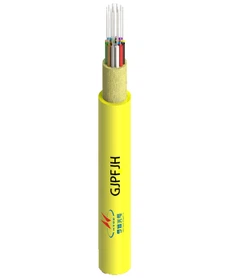
All-dry optical cable, also known as "gel-free", because of its safety, environmental protection and high connection efficiency, has become the preferred optical cable structure in developed countries such as the United States and Japan, accounting for 99% of the demand. Conventional dry water blocking materials include water blocking yarn and water blocking tape, and the second generation of all-dry optical cable uses SAP powder in the casing, eliminating the separation of yarn and yarn cutting operation, and becoming the most efficient optical cable.
With the rapid increase of optical fiber connection, the problems of optical fiber cleaning, coupling efficiency and environmental protection in the oil-filled optical cable are highlighted, and the all-dry optical cable comes into being.
Comparison of two ways of blocking water
First, when the oil-filled optical cable is installed vertically, due to the action of gravity, the oil paste will trickle vertically, resulting in the oil paste deposited at the lower end of the optical cable, and the upper section of the optical cable loses the water blocking effect due to the lack of oil paste protection.
Second, filling the water-blocking compound increases the weight of the optical cable, improving the difficulty and cost of optical cable transportation
Third, the oil-filled optical cable must be cleaned during the installation process, and the cable bundle core and optical fiber need to be cleaned with the help of cleaning agents, which brings a lot of additional processes and environmental pollution problems of cleaning agents/cleaning paper to the construction of the optical cable, greatly increasing the construction time and construction costs.
All-dry optical cable Due to the characteristics of water-blocking materials, when installed vertically, it will not be affected by gravity and cause the loss of water-blocking effect, as well as lower transportation difficulty and manufacturing costs, and then the efficiency of on-site construction and environmental protection issues, it is more advantageous than the traditional oil-filled optical cable