



Which fusion splicing method works best
Core alignment fusion splicing fiber optic cable delivers the best performance for single-mode applications, achieving typical splice losses of just 0.02dB-about 60% lower than cladding alignment methods (Source: fiberinstrumentsales.com, 2024). But calling it universally "best" oversimplifies the decision. The global fusion splicer market reached $765.96 million in 2024 and is projected to hit $1.22 billion by 2034 (Source: expertmarketresearch.com, 2024), with manufacturers constantly refining both core and cladding approaches to serve different deployment scenarios.
The answer depends on your fiber type, network criticality, budget constraints, and technician skill level. While core alignment reigns supreme for precision-critical telecommunications backbones and CATV installations, cladding alignment offers compelling advantages for FTTH deployments and field repairs where speed trumps perfection. Understanding the technical trade-offs between these methods can save thousands in equipment costs while ensuring your network performs to specification.
The Science Behind Fusion Splicing Fiber Optic Cable Alignment
Fusion splicing joins two optical fibers by heating their ends with an electric arc until they melt and fuse together. The critical variable is how the splicer aligns those fibers before fusion occurs.

Core Alignment: Precision Through Multi-Axis Control
Core alignment splicers use advanced imaging technology and light detection systems that actually "see" the fiber cores to measure and monitor core position during alignment (Source: ecdonline.com.au, 2021). This sophisticated approach involves:
Six-motor systems that adjust fiber position horizontally, vertically, and in/out to achieve core-to-core alignment. The cameras move through various focal positions, analyzing brightness intensity profiles to locate the fiber core with microscopic accuracy (Source: xhfiber.com, 2024).
Pre-focusing programs that identify fiber types automatically and optimize alignment parameters accordingly. Modern core alignment splicers like the SHINHO X-900 can distinguish between G.652, G.657, and specialty fibers without manual intervention (Source: xhfiber.com, 2024).
Active compensation for manufacturing defects including core-cladding eccentricity errors and cladding diameter variations. This makes core alignment essential when splicing new fiber to older legacy cable with inconsistent geometry (Source: fiberinstrumentsales.com, 2024).
The result? Typical splice loss of only 0.02dB for G.652 standard single-mode fiber when verified with OTDR testing (Source: xhfiber.com, 2024). For specialty fibers like G.653 dispersion-shifted or G.655 non-zero dispersion, losses remain under 0.04dB.
Cladding Alignment: Speed Through Simplification
Cladding alignment takes a fundamentally different approach by aligning the outer cladding layers instead of the fiber cores. The technique operates on the assumption that if claddings are properly aligned, cores will also align sufficiently (Source: thefo.com, 2023).
Fixed V-groove systems provide passive guides for fibers, with three-point contact restricting unwanted movement. The precision-cut ceramic V-grooves serve as controlled surfaces where fibers rest during alignment (Source: xhfiber.com, 2024).
Single-axis adjustment moves fibers inward and outward without the complex multi-directional positioning of core alignment. Internal cameras aid alignment, but with limited focal control compared to core systems (Source: cbmrep.com, 2024).
Fast splicing cycles make cladding alignment the speed champion. Typical splice times run 30-40% faster than core alignment, crucial for high-volume FTTH installations where crews must complete dozens of connections daily.
The trade-off appears in splice loss: cladding alignment produces typical losses of 0.05dB for single-mode fiber (Source: fiberinstrumentsales.com, 2024)-2.5 times higher than core alignment. For multimode fiber with larger cores (50-62.5 microns), this difference becomes less significant.
Active Cladding: The Hybrid Approach
An emerging category combines technologies. Active cladding alignment splicers use movable V-grooves that eliminate pre-splice misalignments caused by cladding diameter variations or contamination (Source: xhfiber.com, 2024).
The FITEL S154AC represents this evolution, offering core alignment-level camera visibility and motor adjustment in a handheld package with cladding-style simplicity (Source: cbmrep.com, 2024). These hybrid units target FTTH and enterprise applications where core alignment quality exceeds requirements but cladding speed falls short.
When Core Alignment Justifies the Investment
The fiber optic fusion splicer market was valued at $6.98 billion in 2023 and is estimated to reach $21.14 billion by 2030 at an 11.59% CAGR (Source: verifiedmarketreports.com, 2024). This explosive growth reflects telecommunications infrastructure expansion, but also reveals where precision matters most.
Long-Haul and Backbone Networks
Core alignment dominates submarine installations, intercontinental links, and metro backbone networks where signal travels hundreds or thousands of kilometers. At these distances, 0.02dB splice loss versus 0.05dB compounds dramatically.

Consider a 1,000km network with 50 splices. Core alignment produces 1dB total splice loss (50 × 0.02dB), while cladding alignment yields 2.5dB (50 × 0.05dB). That extra 1.5dB loss requires additional amplifiers or limits transmission distance, adding thousands in infrastructure costs (Source: community.fs.com, 2024).
The optical fiber cable length worldwide has surpassed 5 billion kilometers, fueling demand for fusion splicers that maintain low loss and high performance across these extensive networks (Source: expertmarketresearch.com, 2024).
CATV and Analog Video Distribution
Community Antenna Television networks demand exceptional splice quality because analog video signals degrade visibly with increased loss and reflection. Core alignment fusion splicers have long been the preferred method for CATV installations due to their high accuracy and reliability (Source: xhfiber.com, 2024).
Return loss below -60dB-achievable with core alignment-prevents signal reflections that create ghosting and interference in video feeds. Cladding alignment typically achieves -40 to -50dB, adequate for digital data but problematic for analog transmission.
Specialty Fiber Applications
Polarization-maintaining (PM) fiber, dispersion-compensating fiber, erbium-doped gain fiber, and large-diameter specialty fibers require core alignment for acceptable performance. These exotic fibers often have:
Core-cladding concentricity errors exceeding 1 micron
Non-circular cladding geometries
Multiple cores requiring individual alignment
Specialty coatings incompatible with standard fixtures
The SHINHO S-37 specialty fiber fusion splicer handles cladding diameters from 125 to 680 microns with multiple fiber holders and spare electrode sets (Source: xhfiber.com, 2024). Such applications justify core alignment's higher equipment costs through necessity rather than optimization.
Optical Component Manufacturing
Fabricating couplers, WDMs, isolators, and other passive components demands sub-0.01dB splice precision. Core alignment splicers achieve 0.01dB for multimode fiber and match this for G.651 standard fiber (Source: xhfiber.com, 2024).
Manufacturing environments also benefit from core alignment's advanced features: splice result storage (2,000+ records), programmable arc parameters (100+ splice modes), and automated fiber type recognition that ensures consistency across production runs.
Where Cladding Alignment Excels
Despite core alignment's technical superiority, cladding splicers claim the majority of global unit sales. The U.S. fusion splicer market was valued at $900 million in 2024 and expected to reach $1.5 billion by 2033 at a 6.5% CAGR (Source: verifiedmarketreports.com, 2025).
The U.S. is growing at 8.0% CAGR with around 9 million homes connected to fiber in 2023, rising to a predicted 12 million in 2024 (Source: expertmarketresearch.com, 2024). This fiber-to-the-home boom drives cladding alignment demand.
FTTH Last-Mile Deployments
Fiber-to-the-home projects involve thousands of subscriber drop connections, each requiring rapid, repeatable splicing under varied field conditions. Cladding alignment splicers deliver:
40-60% lower equipment costs than comparable core alignment units. Entry-level cladding splicers start around $3,000-$5,000, while core alignment begins at $8,000-$12,000 for equivalent features (Source: innoinstrument.com, 2024).
Faster technician training because simpler operation reduces the learning curve from weeks to days. Conexon launched a two-week certification program training six splicers every cycle for rural fiber projects, with graduates ready for immediate deployment (Source: conexon.us, 2024).
Adequate performance for subscriber connections under 1km where 0.05dB splice loss doesn't materially impact link budget. Most FTTH passive optical networks tolerate 25-28dB total loss, making individual splice precision less critical.
In rural FTTH buildouts, speed matters more than perfection. Conexon's personnel spliced more than 300,000 connections on networks across America in a single year (Source: conexon.us, 2024)-a volume impossible without fast, field-friendly equipment.
Emergency Repairs and Restoration
When fiber cuts occur-from construction accidents, natural disasters, or equipment failures-restoration time directly impacts revenue loss and customer satisfaction. Cladding alignment splicers offer:
Portable, battery-powered operation allowing technicians to work from bucket trucks or remote locations without generators. Typical battery life enables 330 splice/heat cycles per charge (Source: amazon.com, 2024).
Simplified setup that reduces on-site time by 30-50% compared to core alignment. For a service provider managing hundreds of route miles, this agility translates to faster mean time to repair (MTTR).
Environmental ruggedness with IP5X dustproof and IPX2 water-resistant ratings, plus 76cm drop-shock protection (Source: xhfiber.com, 2024). Core alignment splicers, with their delicate multi-camera systems, require more careful handling.
Genesis Fiber Optic Splicing handles emergency calls 24/7, with splicers praising equipment that delivers quick restoration during nighttime outages when core alignment setup might delay service recovery (Source: genesisfiberoptics.com, 2024).
Mass Ribbon Splicing
When splicing 12-fiber, 24-fiber, or even 144-fiber ribbon cables, cladding alignment (or active V-groove) splicers become the practical choice. Mass fusion splicers can simultaneously splice 1-12 fibers, achieving 65% savings on per-splice costs for high-fiber-count applications (Source: community.fs.com, 2024).
Ribbon splicing priorities speed and throughput over individual splice optimization. A single ribbon splice operation taking 30 seconds beats twelve individual core-aligned splices requiring 10 seconds each-8 minutes total versus 30 seconds.
The fiber optics industry is trending toward smaller, lighter cables with higher fiber counts, enabling more fibers in less space and boosting data transmission capabilities (Source: phonoscopefiber.com, 2024). This density favors ribbon technology and its associated splicing methods.
Cost-Benefit Analysis for Fusion Splicing Fiber Optic Cable
The global fusion splicer market reached $800 million in 2023 and is expected to hit $1.3 billion by 2032 at 5.2% CAGR, driven by rising demand for high-speed data services and government technical support (Source: imarcgroup.com, 2024).

Equipment Investment Comparison
Core Alignment Splicers:
Entry-level (handheld): $8,000-$12,000
Mid-range (advanced features): $15,000-$25,000
Premium (ribbon-capable, specialty fiber): $30,000-$50,000+
Electrode replacement: $400-$800 per set (4,000 splice lifespan)
Annual maintenance: $1,500-$3,000
Cladding Alignment Splicers:
Entry-level: $3,000-$5,000
Mid-range: $6,000-$10,000
Premium (active V-groove): $12,000-$18,000
Electrode replacement: $200-$400 per set (3,000 splice lifespan)
Annual maintenance: $800-$1,500
Labor and Training Costs
The shortage of skilled labor trained in fiber optic splicing techniques challenges market growth. The Bureau of Labor Statistics expects demand for skilled telecom workers to grow 5% from 2021 to 2031, with current skill gaps potentially hindering fusion splicer market expansion (Source: verifiedmarketreports.com, 2024).
Core alignment training requirements:
Initial certification: 3-4 weeks
Proficiency development: 6-12 months
Advanced techniques: 2-3 years
Hourly rate premium: $5-$10 above cladding technicians
Cladding alignment training:
Initial certification: 1-2 weeks
Proficiency development: 2-4 months
Hourly rate: Industry standard splice technician wage
AFL's investment of over $50 million to expand fiber optic cable manufacturing in South Carolina includes training programs to address this skills shortage (Source: imarcgroup.com, 2024).
Total Cost of Ownership Over 5 Years
For a telecommunications contractor performing 5,000 splices annually:
Core Alignment TCO:
Equipment: $20,000
Training: $8,000 (3 technicians × 4 weeks)
Maintenance/electrodes: $12,500 (5 years)
Labor premium: $50,000 (5 years at $2/hour premium)
Total: $90,500 ($3.62 per splice)
Cladding Alignment TCO:
Equipment: $8,000
Training: $3,000 (3 technicians × 1.5 weeks)
Maintenance/electrodes: $7,500 (5 years)
Labor: Standard wage (baseline)
Total: $18,500 ($0.74 per splice)
The equipment cost difference justifies itself only when splice quality directly impacts network economics-primarily in long-haul, high-value, or specialty applications.
Real-World Deployment Case Studies
E-Fiber Netherlands FTTH Rollout
E-Fiber, deploying fiber-to-the-home networks in Dutch rural areas, set an ambitious goal to connect 500,000 homes by 2025. Their Land van Cuijk project alone passes 40,000 addresses with 1 million meters of cable installation (Source: commscope.com, 2024).
The deployment uses a combination approach: core alignment for distribution network splicing where multiple subscribers branch from main lines, and cladding alignment for final drop connections. This hybrid strategy balances quality requirements against the economic reality of connecting rural subscribers where cost-per-home must remain competitive.
CommScope's integrated solution streamlined deployment speed, but the choice of splicing method for each network segment proved equally critical to meeting budget targets while ensuring 25-year network lifespan expectations.
AWS-Momentum Calgary Training Initiative
In July 2023, Amazon Web Services partnered with Momentum to offer free fiber optic fusion splicing training in Calgary, Canada (Source: imarcgroup.com, 2024). The program addresses the growing demand for qualified technicians as 5G infrastructure expands.
The curriculum focuses on core alignment techniques because AWS data centers and cloud infrastructure require enterprise-grade splicing quality. However, graduates also train on cladding alignment to serve the broader telecommunications market, recognizing that employment opportunities span multiple network types.
Conexon Rural Broadband Construction
Conexon launched Conexon Construct, a full-service splicing business training six splicers every two weeks specifically for rural fiber-to-the-home projects across America (Source: conexon.us, 2024). Lead instructor Jason Bell brings over 15 years of industry experience to the program.
The training emphasizes cladding and active V-groove alignment because rural electric cooperatives-Conexon's primary clients-require cost-effective solutions for connecting dispersed populations. Technicians receive all necessary tools and a equipped truck upon graduation, ready for immediate deployment to remote work sites where equipment portability matters.
The "Conexon way" methodology prioritizes safety, quality, and efficiency over absolute splice precision, reflecting the practical reality that 0.05dB splice loss versus 0.02dB has minimal impact on subscriber experience in FTTH applications under 2km.
Emerging Technologies Reshaping the Decision
The 5G network expansion significantly impacts fusion splicer demand. As countries implement 5G infrastructure to meet escalating data demands and support low-latency communication, high-performance fiber optic connections become imperative (Source: businessresearchinsights.com, 2024).
Automated Precision Alignment
Recent innovations enable fiber splicing that's faster and more precise than ever, with advanced tools using lasers and cameras for microscopic accuracy alignment (Source: amerifiber.com, 2024). These systems:
Reduce human error through AI-assisted core detection
Optimize arc parameters automatically based on real-time feedback
Store splice performance data for predictive maintenance
Connect to cloud-based management systems for fleet monitoring
INNO's View Pro Cloud Management System represents this evolution, allowing both technicians and managers to maximize asset utilization and achieve highest work efficiency through real-time operation monitoring (Source: aaatesters.com, 2024).
Splice-On Connector Integration
The fusion splicer market increasingly emphasizes compatibility with splice-on connectors (SOCs) that provide field-terminated connections comparable to factory-polished connectors. Modern core alignment splicers like the OFS-935C include SOC capability, delivering superior performance with reduced insertion loss and back reflection (Source: fiberoptics.com, 2024).
This development blurs distinctions between fusion splicing and mechanical termination, offering installers flexible options that combine fusion splice quality with connector convenience. Both core and cladding splicers now support SOC termination, though core alignment produces better results for single-mode applications.
Bend-Insensitive Fiber Compatibility
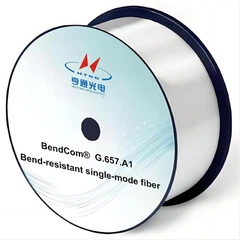
G.657 bend-insensitive fiber reduces signal degradation from sharp turns, simplifying deployment in crowded spaces without costly rerouting (Source: amerifiber.com, 2024). This fiber type is especially beneficial in urban FTTH installations where building pathways constrain routing.
Both core and cladding alignment splicers handle G.657 fiber, with core alignment achieving typical 0.02dB splice loss matching G.652 performance (Source: xhfiber.com, 2024). The availability of bend-insensitive fiber makes cladding alignment even more attractive for last-mile deployments where installation flexibility outweighs marginal splice quality differences.
Choosing the Right Method: A Decision Framework
Application-Based Selection Matrix
Choose Core Alignment When:
Single-mode fiber runs exceed 10km
Network requires <0.02dB average splice loss
Splicing specialty or PM fibers
Manufacturing optical components
Budget accommodates $15,000+ equipment investment
Technicians have advanced training (3+ weeks)
CATV or analog video transmission
Legacy fiber with geometry inconsistencies
Choose Cladding Alignment When:
FTTH subscriber drops under 2km
Budget constrains equipment to $3,000-$10,000
Rapid deployment matters more than optimization
Training time limited to 1-2 weeks
High-volume splicing (hundreds daily)
Emergency restoration scenarios
Multimode fiber applications
Mass ribbon splicing requirements
Consider Active V-Groove Alignment When:
Requiring compromise between core and cladding
FTTH with quality standards exceeding basic cladding
Budget allows $12,000-$18,000 equipment
Portability essential but precision important
Enterprise LAN installations
Moderate training timeline (2 weeks)
Risk Assessment Considerations
The initial cost of fiber optic installation can barrier small and medium-sized enterprises looking to adopt advanced communication technologies, with 98% of American businesses falling under the SME category and many hesitant to invest heavily due to financial constraints (Source: verifiedmarketreports.com, 2024).
Technical risks include:
Splice loss accumulation over distance
Return loss creating signal reflections
Environmental degradation from contamination
Equipment failure in harsh conditions
Technician skill variability
Financial risks encompass:
Equipment obsolescence (3-5 year technology cycles)
Training investment loss through employee turnover
Warranty and maintenance costs
Electrode and consumable expenses
Opportunity cost of slower deployment
Frequently Asked Questions
Is core alignment always better than cladding alignment?
No. Core alignment produces lower splice loss (0.02dB versus 0.05dB), but "better" depends on context (Source: fiberinstrumentsales.com, 2024). For long-haul networks where signal travels 100+ km, core alignment's precision justifies higher costs. For FTTH drops under 1km, cladding alignment's 0.03dB loss penalty barely affects link budget while offering faster installation and lower equipment investment.
How long does it take to learn each splicing method?
Core alignment requires 3-4 weeks initial training and 6-12 months to achieve proficiency with advanced features and specialty fibers (Source: verifiedmarketreports.com, 2024). Cladding alignment certification typically takes 1-2 weeks, with technicians reaching competency within 2-4 months. Conexon's program graduates cladding-trained splicers in two weeks ready for immediate rural FTTH deployment (Source: conexon.us, 2024).
Can one splicer do both core and cladding alignment?
No, these are distinct technologies requiring different optical and mechanical systems. Core alignment needs high-resolution cameras, multi-axis motors, and sophisticated light detection, while cladding uses simpler V-groove fixtures with limited camera systems (Source: xhfiber.com, 2024). Some manufacturers offer splicer families where technicians can operate both types, but individual units perform only one alignment method.
What splice loss is acceptable for different applications?
Telecommunications backbones target <0.02dB average splice loss; CATV networks require <0.025dB; FTTH access accepts <0.05dB; multimode LAN tolerates <0.1dB (Source: community.fs.com, 2024). Data centers and enterprise networks typically specify <0.03dB. The tighter your loss budget, the more core alignment becomes necessary rather than optional.
How do environmental conditions affect splicing method choice?
Cladding alignment splicers offer superior environmental ruggedness with drop-shock ratings (76cm), dust protection (IP5X), and water resistance (IPX2) suitable for field deployment (Source: xhfiber.com, 2024). Core alignment's delicate multi-camera systems require more controlled conditions, though premium models include environmental protections. For restoration work during storms or in harsh climates, cladding alignment's durability provides operational advantages.
Does splice method affect long-term fiber reliability?
Both methods produce mechanically strong splices when properly executed, typically withstanding 2N to 4.4N proof testing (Source: amazon.com, 2024). The long-term reliability difference lies in optical performance degradation: core-aligned splices maintain lower loss over decades because precise core alignment resists effects from fiber aging, temperature cycling, and mechanical stress. Cladding-aligned splices may experience slightly higher loss increase over 20+ year timeframes.
What's the typical electrode lifespan for each method?
Core alignment electrodes last approximately 4,000 splices before replacement at $400-$800 per set, while cladding alignment electrodes endure about 3,000 splices at $200-$400 replacement cost (Source: xhfiber.com, 2024). Actual lifespan varies with fiber types, arc optimization, and environmental conditions. Premium splicers with automatic arc calibration extend electrode life by 20-30% through intelligent power management.
How does splicing speed compare between methods?
Core alignment typically requires 9-12 seconds for standard single-mode splicing with quick modes achieving 6-7 seconds (Source: xhfiber.com, 2024). Cladding alignment completes splices in 6-8 seconds consistently. However, core alignment's additional time pays dividends through lower rework rates-improper cladding splices requiring recuts and re-splicing often negate initial speed advantages. The INNO View 8 Pro achieves 6-second splice time with core alignment precision, narrowing the performance gap (Source: aaatesters.com, 2024).
Making Your Investment Decision
The fusion splicer market was valued at $1.82 billion in 2022 and is expected to reach $2.8 billion by 2032 at 4.4% CAGR, driven by increasing demand for high-speed internet and reliable communication networks (Source: marketresearchfuture.com, 2024).
Your splicing method choice ultimately balances four variables:
Network requirements define minimum acceptable performance. Long-haul, specialty fiber, and CATV applications mandate core alignment. FTTH, enterprise, and emergency restoration scenarios accommodate cladding alignment.
Budget constraints influence equipment selection and training investment. Organizations with $20,000+ equipment budgets gain access to core alignment benefits; those limiting expenditure to $5,000-$10,000 maximize value with premium cladding or active V-groove models.
Deployment timeline affects technician availability and training duration. Projects requiring immediate staffing favor cladding alignment's faster certification. Those with longer ramp-up periods can invest in comprehensive core alignment training.
Future scalability matters for organizations growing from FTTH into backbone networks, or vice versa. Starting with cladding alignment for immediate FTTH revenue, then adding core alignment capability for backbone expansion, provides strategic flexibility.
The optical fiber cable length worldwide surpassing 5 billion kilometers creates demand for fusion splicers maintaining low loss and high performance (Source: expertmarketresearch.com, 2024). Both core and cladding alignment methods will continue evolving, with automation, AI assistance, and cloud connectivity making each progressively more capable.
There's no universal "best" method for fusion splicing fiber optic cable-only the best method for your specific application, budget, skill level, and network architecture. Core alignment remains the quality standard for precision-critical applications, while cladding alignment delivers pragmatic value for high-volume deployments where speed and cost matter most.