




Can FTTx Products Improve Connectivity?
10.3 million American homes got fiber in 2024 alone. That's roughly one new fiber connection every three seconds for an entire year-yet 30% of installations initially failed testing, forcing costly truck rolls and frustrated customers back to their old copper lines. The gap between fiber's theoretical promise and its messy reality defines the current connectivity revolution: we're racing to deploy a technology that works spectacularly well when implemented correctly, but stumbles badly when rushed.
FTTx (Fiber to the X) products represent more than incremental upgrades to existing networks. When a service provider replaces copper with fiber, downstream speeds don't just double or triple-they multiply by factors of 10 to 100. Upload speeds become symmetrical rather than throttled. Latency drops from double digits to single digits. Yet these improvements only materialize when the entire system-from headend equipment to the optical network terminal in someone's basement-functions as designed.
The question isn't whether FTTx products can improve connectivity. They demonstrably do, in ways that measurably transform how people work, learn, and access services. The actual question that network operators wrestle with is more specific: can they deploy FTTx products economically, at scale, without triggering the installation failures and operational headaches that have plagued early rollouts?
Why FTTx Products Deliver Superior Connectivity
FTTx products improve connectivity through fundamental physics rather than clever engineering tricks. Fiber optic cables transmit data as pulses of light through glass strands thinner than human hair. Unlike electrical signals traveling through copper, light doesn't degrade significantly over distance, doesn't suffer from electromagnetic interference, and can carry vastly more information simultaneously through different wavelengths.
The Speed Advantage
Modern FTTx networks using XGS-PON (10-Gigabit-capable Symmetric Passive Optical Network) technology deliver symmetrical 10 Gbps connections-sufficient bandwidth to download a full-length 4K movie in under 10 seconds. Contrast this with legacy ADSL connections maxing out around 24 Mbps, and even that threshold only achievable for customers living close to telephone exchange buildings. For customers further away, copper-based speeds plummet to single digits.
Fiber maintains gigabit speeds over distances exceeding 20 kilometers without active amplification. This distance-independence means rural customers connected via FTTH (Fiber to the Home) receive the same service quality as urban subscribers. CommScope's 2025 deployment data shows FTTH networks consistently delivering 1-10 Gbps to end users regardless of their distance from the central office, a capability impossible with copper infrastructure.
Latency Reduction
Gaming enthusiasts and remote workers understand latency viscerally-that frustrating lag between clicking and seeing results. FTTx products reduce latency to 1-5 milliseconds for local connections, compared to 20-50 milliseconds typical of cable networks during peak hours. This ten-fold improvement enables real-time applications that previously struggled: remote surgery robotics requiring instantaneous feedback, cloud gaming services streaming interactive content, and video conferencing systems that feel like in-person conversations rather than delayed transmissions.
The latency advantage stems partly from fiber's physics-light travels faster than electricity-but more significantly from FTTx network architecture. PON (Passive Optical Network) systems minimize the number of active components between users and services, reducing processing delays that accumulate in traditional networks built with multiple conversion stages.
Reliability and Future-Proofing
Fiber cables resist degradation that plague copper networks. They don't corrode, don't suffer from moisture intrusion (when properly installed), and aren't susceptible to electromagnetic interference from nearby power lines or radio transmitters. Verizon's 2024 network data shows fiber connections experiencing 60% fewer service interruptions compared to copper DSL connections in the same service areas.
The "future-proof" claim frequently made about fiber infrastructure has substance. A fiber strand installed today supports gradual equipment upgrades that multiply speeds without replacing the physical cable. The jump from GPON (2.5 Gbps) to XG-PON (10 Gbps) to the emerging 50G PON standard happens through terminal equipment changes, not trenching new fiber. By 2025, operators deploying 25GS-PON and planning 50G PON transitions are leveraging infrastructure installed a decade earlier.
The FTTx Product Ecosystem
Understanding FTTx's connectivity improvements requires examining the complete product ecosystem rather than individual components. A functional FTTx network integrates optical line terminals, passive optical splitters, optical network terminals, fiber cables, distribution cabinets, and management systems-each contributing to overall performance.
Optical Line Terminals (OLTs)
The OLT sits at the service provider's central office or headend, converting electrical signals from the provider's backbone network into optical signals transmitted across fiber. Modern OLTs like those from Huawei and ZTE support multiple PON standards simultaneously-GPON, XG-PON, and XGS-PON-allowing gradual customer migration without forklift upgrades. This "Combo PON" capability solves a critical deployment challenge: operators can begin serving customers immediately using existing GPON equipment while selectively upgrading high-bandwidth users to 10G connections.
OLT port capacity determines how many subscribers each chassis supports. A fully-loaded OLT might serve 20,000 homes from a single rack, with each port splitting to 32 or 64 customers through passive splitters. Port economics matter significantly-operators spreading infrastructure costs across more subscribers achieve better economics, but only if take rates (the percentage of passed homes that subscribe) justify the upfront investment.
Passive Optical Networks
The "passive" in PON refers to the optical distribution network's lack of active electronics between the OLT and customer premises. This architectural choice dramatically reduces operational costs since passive splitters don't require power, climate control, or routine maintenance. A typical 1x32 splitter mounted on a utility pole simply divides the downstream optical signal thirty-two ways, letting each connected home receive the same broadcast with individual addressing handled by the ONT.
Passive networks do introduce signal loss-each split halves the optical power-but modern splitters and sensitive receivers overcome this limitation. High-quality splitters from manufacturers like Corning and CommScope maintain specifications allowing 20 dB (100-fold) power loss while preserving reliable transmission, sufficient for most deployment scenarios.
Optical Network Terminals (ONTs)
The ONT installed at customer premises converts optical signals back to electrical, delivering connectivity through standard Ethernet ports, Wi-Fi radios, and sometimes legacy phone jacks. ONT sophistication varies dramatically by deployment type. Basic residential ONTs provide four Ethernet ports and dual-band Wi-Fi. Enterprise ONTs might include redundant power, battery backup, dozens of Ethernet ports, and advanced routing capabilities.
ONT placement affects user experience significantly. Optimal positioning near the home's center and main use areas improves Wi-Fi coverage. FTTR (Fiber to the Room) deployments take this further, installing multiple ONT-like devices connected by in-home fiber, eliminating Wi-Fi dead zones in larger properties. Early FTTR pilots show substantial satisfaction improvements, with ZTE's 2024 deployments reporting 40% fewer support calls compared to single-ONT installations.
Cable and Connectivity Solutions
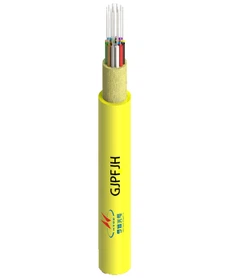
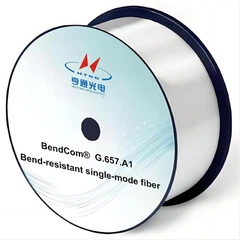
Not all fiber is equivalent. Single-mode fiber (SMF-28 standard) carries signals over longer distances using laser light sources. Multimode fiber uses LED sources for shorter runs, primarily in enterprise buildings rather than access networks. Modern deployments favor bend-insensitive fiber (ITU G.657 standard) that tolerates tight corners and small mounting enclosures without signal degradation-crucial for indoor installations where fiber must navigate existing spaces.
Cable protection varies by environment. Outdoor cables require moisture blocking, rodent protection, and sometimes armor for direct-burial applications. OFS's AllWave FLEX ZWP fiber products and Corning's ClearCurve solutions exemplify bend-optimized cables that simplified installation while maintaining optical performance. Indoor cables prioritize flame ratings and flexibility over environmental protection.
Pre-connectorized solutions like Corning's FlexNAP system accelerated FTTx deployment significantly. Rather than field-splicing individual fibers-a skilled, time-consuming task-installers pull pre-terminated cables with factory-installed connectors, reducing installation from days to hours. Douglas FastNet's Oregon deployment achieved customer-ready installations in one week using FlexNAP, compared to 6-8 weeks with traditional splicing.
Network Management Systems
FTTx networks generate massive amounts of operational data: optical power levels, error rates, bandwidth utilization, customer connection status. Advanced management systems leverage this data for proactive maintenance. AI-powered platforms predict failures before they occur, automatically rerouting traffic around degraded paths, and optimizing bandwidth allocation based on usage patterns.
The Telecom Infra Project documented measurable improvements from AI-based dynamic bandwidth allocation systems deployed in 2024. North American and European providers implementing these systems reported reduced latency, improved customer satisfaction scores, and notable energy efficiency gains through intelligent power management of network elements.

Evidence of Connectivity Improvements
Quantifying FTTx's connectivity improvements requires examining deployment outcomes across residential, enterprise, and rural contexts. Each segment demonstrates distinct benefits reflecting different baseline conditions and use cases.
Residential Transformation
The Fiber Broadband Association's 2024 survey documented 10.3 million new U.S. homes passed by fiber, bringing total coverage to 76 million unique homes-representing 56.5% of American households. Take rates increased to 45%, meaning nearly half of homes with fiber access subscribe to services. This adoption rate, achieved despite incumbent cable and wireless competition, suggests residential consumers recognize tangible connectivity improvements worth paying for.
Fiber's residential appeal stems from supporting bandwidth-intensive activities simultaneously. A household with multiple 4K video streams, cloud gaming sessions, video calls, and IoT device communications strains cable networks during peak evening hours but barely registers on fiber networks. AT&T's 2024-2025 network investments totaling $22 billion focus predominantly on fiber expansion, reflecting confidence that fiber's superior performance justifies infrastructure costs.
Real-world testing confirms the speed claims. Residential fiber connections routinely deliver 95%+ of their rated speeds even during peak usage, while cable connections often drop to 60-70% of advertised speeds when neighborhood bandwidth gets shared among active users. This consistency matters more than peak speeds for user experience-a connection that maintains 500 Mbps reliably beats one that claims gigabit but delivers erratically.
Enterprise and Business Impact
Enterprises transitioning from copper T1 lines or legacy Ethernet connections to FTTH/FTTB experience transformational changes. A typical small business upgrading from a 20 Mbps copper connection to 1 Gbps symmetrical fiber increases bandwidth by 50x while reducing latency by 70%. This enables practical cloud computing-moving applications and storage off-premises without performance penalties-and supports distributed workforces through stable video collaboration.
The symmetrical aspect proves crucial for businesses. Upload speeds matching downloads mean cloud backup completes in hours rather than days, video conferencing doesn't pixelate when multiple participants enable cameras, and sharing large files with clients or partners happens in real-time. Cable networks' asymmetrical profiles (fast down, slow up) evolved for residential consumption patterns but handicap business applications.
City of Fairlawn's fiber network deployment, completed in 12 months using pre-connectorized solutions, connected 3,000 homes, 300 multi-dwelling units, and 800 businesses to gigabit infrastructure. Local officials credited improved connectivity with retaining existing enterprises that might otherwise have relocated, attracting new businesses seeking reliable infrastructure, and supporting remote workers who previously struggled with inadequate home internet.
Rural and Underserved Areas
FTTx products arguably deliver the most dramatic improvements in rural and underserved locations where legacy infrastructure performs poorly or doesn't exist. Distance penalties that cripple copper DSL-speeds dropping from 20 Mbps to 1-2 Mbps for customers far from central offices-vanish with fiber. PON architecture supports customers 20+ kilometers from OLTs with identical service quality.
Guadalupe Valley Electric Cooperative (GVEC) leveraged their existing electrical infrastructure to deploy fiber reaching 80% of their underserved Texas market by 2023, two years ahead of their 2025 target. Customer testimonials emphasized life-changing improvements: students could participate in online learning, residents could work remotely in professional roles, and telemedicine became practical for elderly populations. These aren't marginal improvements measured in megabits-they represent step-function changes enabling activities previously impossible.
Federal programs recognize this transformative potential. The BEAD (Broadband Equity, Access, and Deployment) program allocated $42.45 billion specifically for deploying high-speed infrastructure to unserved and underserved areas. The funding explicitly prioritizes fiber solutions as the gold standard for future-proof connectivity, reflecting technical consensus that only fiber meets increasing bandwidth demands long-term.
Government statistics support FTTx's impact on bridging digital divides. India's 95% village connectivity with 3G/4G networks, backed by fiber backhaul infrastructure, demonstrates how FTTx products enable wireless connectivity in areas where direct fiber-to-home deployment remains uneconomical. The fiber network provides the high-capacity backbone enabling thousands of wireless connections.
Deployment Challenges Affecting Connectivity Delivery
FTTx products deliver superior connectivity when properly deployed, but implementation challenges frequently undermine potential benefits. The 30% initial failure rate in fiber installations reflects real obstacles operators face translating fiber's theoretical advantages into consistent customer experiences.
The Last-Mile Complexity
Industry analysis consistently identifies the last mile-the final connection from street-level infrastructure to customer premises-as the most expensive and problematic deployment phase. Costs range from $500 to $5,000 per home depending on installation method (aerial, buried, or bore), local geography, and regulatory requirements. Contractors report that despite increased funding and demand, "no simple way" exists to get fiber into every home, with each drop requiring bespoke solutions.
Urban deployments face congested underground ducts, crowded utility poles requiring expensive make-ready work, and coordination challenges with hundreds of other utilities competing for limited space. Pole attachment fees of $500-$5,000 per pole or $5-$6 per conduit foot can consume substantial portions of deployment budgets before any fiber gets installed.
Rural routes present opposite challenges: long distances between customers, difficult terrain, and environmental obstacles like rivers, rock formations, or protected wetlands. While rural cost-per-mile may be reasonable, cost-per-home-passed skyrockets when serving sparsely distributed populations. Survey data shows buried runs costing $1,600-$2,700 per home (25th-75th percentile) in rural contexts.
Installation Quality and Testing
The 30% initial failure rate stems from installation quality issues rather than equipment defects. Inadequate testing during construction creates latent problems that surface during service activation: contaminated connectors causing high loss, bent fibers exceeding loss budgets, or incorrect splitter configurations preventing specific homes from connecting. EXFO's network lifecycle testing data shows that rigorous testing during build phases reduces these failures dramatically, but time and cost pressures frequently incentivize rushed installations that defer testing until customer activation.
Manual data entry and siloed testing procedures compound problems. Field technicians using disparate systems record test results inconsistently, making it difficult for project managers to validate network quality, track construction progress, or ensure contractor compliance with specifications. Cloud-hosted solutions integrating test equipment, automation platforms, and project management systems have shown measurable improvements, but adoption remains incomplete across the industry.
Workforce and Skill Requirements
FTTx deployment requires skilled fiber splicers, trained installers familiar with optical equipment, and technicians capable of troubleshooting complex optical networks. The industry faces chronic shortages in all these categories. Pre-connectorized solutions and plug-and-play designs attempt to reduce skill requirements, making installation possible with shorter training periods and less specialized equipment. These innovations have helped, but quality installations still require competent execution even with simplified products.
Workforce dynamics complicate long-term operations. Contractors report constantly shifting workforces requiring repeated training and quality control efforts. This turnover creates inconsistent installation quality, with newly trained crews making mistakes that experienced technicians would avoid. The combination of high deployment volumes, workforce constraints, and pressure to minimize costs creates conditions where quality suffers.
Right-of-Way and Regulatory Barriers
Obtaining necessary permits, complying with environmental regulations, and navigating right-of-way access creates substantial delays and costs. Regulatory complexity varies dramatically by location-some jurisdictions have streamlined permitting with standardized processes and clear timelines, while others require months of bureaucratic navigation with uncertain outcomes.
Municipal approvals for trenching city streets, crossing railroad rights-of-way, or attaching to utility poles involve multiple agencies with different requirements, timelines, and fee structures. Unexpected delays caused by permit issues can idle construction crews, push projects past favorable weather windows, and increase costs substantially beyond initial estimates.
Private property access presents additional complications, particularly for multi-tenant buildings where landlords may resist installations, charge substantial fees, or demand specific installation methods. Each property negotiation consumes time and introduces unpredictability into deployment schedules.
FTTx Product Innovations Driving Better Outcomes
Recognition of deployment challenges has spurred product innovations specifically designed to improve implementation success rates, reduce costs, and accelerate timelines. These developments focus on simplifying installation, reducing skill requirements, and enabling faster deployment at scale.
Pre-Connectorized and Plug-and-Play Systems
Factory-terminated fiber cables with pre-installed connectors eliminate field splicing for distribution and drop cables. Systems like Corning's FlexNAP, CommScope's pushable fiber solutions, and OFS's InvisiLight products enable installations proceeding at tens of meters per minute compared to traditional splicing's much slower pace. Installation time compression isn't merely about labor cost-it reduces customer disruption, enables more homes passed per day, and accelerates time-to-revenue.
The reliability advantages prove equally significant. Factory terminations occur in controlled environments with automated quality testing, producing connectors with consistent performance and low defect rates. Field splicing in utility truck work platforms or customer crawl spaces can't match factory quality control. Pre-connectorized installations show markedly lower failure rates during service activation testing.
Bend-Insensitive and Compact Cables
Next-generation fiber products tolerate installation stresses that would damage earlier generations. Bend-insensitive fibers meeting ITU G.657 standards handle tight radius bends-around door frames, through small conduits, or stapled to baseboard-without optical performance degradation. This capability simplifies indoor installations dramatically, allowing fiber to follow existing wiring paths rather than requiring dedicated, carefully protected routes.
Micro-cables represent another size reduction approach. Smaller diameter cables require less duct space, allow multiple cables in constrained conduits, and reduce aesthetic impact for aerial installations. Some providers use air-assisted installation, blowing micro-cables through micro-ducts at high speeds-a technique particularly effective for long runs with multiple bends where traditional cable pulling becomes problematic.
Passive Optical Network Advances
PON technology evolution continues accelerating. The transition from GPON (2.5 Gbps) to 10G PON is well underway, with 25G PON commercializing in 2025 and 50G PON expected by 2026-2027. These speed increases don't necessarily require replacing existing fiber infrastructure-the optical distribution network supporting GPON can typically support future PON standards with OLT and ONT upgrades.
Combo PON solutions allowing multiple standards to coexist on the same network have proven essential for practical deployment. Operators can't economically replace every customer ONT simultaneously when upgrading OLTs to new PON standards. Multi-standard support allows gradual migration, upgrading customers based on bandwidth needs and equipment lifecycle rather than forced forklift transitions.
AI and Automation in Network Operations
Artificial intelligence applied to FTTx network management represents perhaps the most significant operational innovation. AI systems analyze optical power levels, error rates, and performance metrics across thousands of connections, identifying degraded links before they fail completely. Predictive maintenance prevents service disruptions rather than responding after they occur.
Dynamic bandwidth allocation optimized by machine learning adjusts network resources based on actual usage patterns rather than static configurations. During daytime hours when most residential users are away, business-heavy network segments receive additional bandwidth. Evening patterns reverse this allocation. These intelligent systems maximize infrastructure utilization while ensuring consistent customer experience.
The Telecom Infra Project documented tangible improvements from AI deployment in 2024: reduced latency through optimized routing, improved customer satisfaction from fewer outages, and measurable energy savings from intelligent power management. As more operators deploy AI-powered management systems, industry-wide connectivity metrics should improve beyond raw bandwidth increases.

The Economics of FTTx Connectivity Improvements
Whether FTTx products improve connectivity sufficiently to justify their costs represents the decisive economic question for operators and policymakers. Fiber deployment requires substantial upfront investment-industry analysis shows median construction costs of $1,000-$2,500 per home passed depending on density and geography. This capital intensity demands rigorous analysis of returns.
Operator Investment Patterns
Major carriers have committed enormous capital to fiber deployment. AT&T's $22 billion 2024-2025 spending includes significant fiber expansion. Verizon increased 2025 capital expenditures by roughly $1 billion, targeting 650,000 additional fiber passings. These commitments from large, publicly traded companies suggest executive confidence that fiber's superior connectivity commands pricing power and subscriber loyalty justifying investment.
Verizon's acquisition of Frontier Communications, specifically targeting Frontier's 2.2 million fiber subscribers and 7.2 million fiber locations, reinforces this strategic direction. The acquisition values fiber assets at substantial premiums compared to legacy copper networks, reflecting market belief that fiber connectivity improvements translate to durable competitive advantages.
Smaller operators and new market entrants have aggressively deployed fiber in recent years. Electric cooperatives leveraging existing infrastructure, private equity-funded altnet builders, and municipal networks have collectively passed millions of homes. The Fiber Broadband Association documented that "new players, like rural electric cooperatives" significantly contributed to the record 10.3 million homes passed in 2024.
Customer Willingness to Pay
Take rates exceeding 45% for fiber services, even in markets with existing cable competition, demonstrate customer recognition of connectivity improvements' value. Subscribers pay $50-$100+ monthly for fiber service, comparable to cable broadband pricing, but receive objectively superior technical performance. High take rates combined with low churn suggest customers maintain fiber subscriptions once they experience the connectivity difference.
Rural deployment economics differ markedly from suburban or urban contexts. Lower density and higher per-home costs challenge purely commercial business models. Federal and state subsidy programs recognize this reality, providing funding specifically for rural fiber deployment. The BEAD program's $42.45 billion explicitly prioritizes fiber, acknowledging that only fiber-class connectivity adequately addresses rural digital divides.
Total Cost of Ownership Considerations
While fiber infrastructure costs more initially than copper or hybrid fiber-coaxial alternatives, operating costs favor fiber over time. Passive optical networks require minimal maintenance between OLT and ONT-no powered components in distribution networks mean no equipment failures in the field, no climate-controlled cabinets, no utility power costs. Copper and HFC networks require active electronics every few thousand feet, each needing power, maintenance, and eventual replacement.
Fiber's longevity and upgrade path provide additional economic advantages. Copper networks installed in the 1960s-1990s now require replacement or extensive rehabilitation. Fiber installed today should support service requirements through 2050+ with terminal equipment upgrades but no cable replacement. This future-proofing amortizes initial costs over longer periods, improving lifecycle economics.
Service provider cost analyses increasingly favor fiber even without considering technology superiority. The combination of lower operational expenses, longer service life, and upgrade flexibility often produces better financial returns than alternatives, independent of connectivity performance improvements. That fiber also delivers objectively better connectivity makes the economic case more compelling.
Looking Forward: FTTx's Connectivity Future
Can FTTx products improve connectivity? The evidence overwhelmingly confirms yes-when properly implemented, fiber-based networks deliver speed, latency, reliability, and capacity improvements that fundamentally transform internet access. The more nuanced question involves how quickly and how universally these improvements reach users.
Near-Term Outlook (2025-2027)
The next several years will see continued aggressive fiber deployment. Market analysts project 50%+ increases in homes passed during 2025-2029, driven by a combination of private investment, public funding, and competitive pressure. The Fiber Broadband Association expects fiber to reach 70% of U.S. households by 2027, up from 56.5% in 2024.
Technology transitions will accelerate. XGS-PON deployments will expand as operators upgrade from GPON, providing subscribers with multi-gigabit capabilities. The first 25GS-PON commercial deployments in 2025 will pilot next-generation speed capabilities, with broader rollouts following as equipment costs decline and standards mature. By 2027, leading-edge deployments may begin field-testing 50G PON systems.
Deployment efficiency improvements should reduce failure rates and installation costs. Wider adoption of pre-connectorized systems, better training programs, and AI-powered quality control will combine to produce more successful installations requiring fewer truck rolls for fixes. Industry learning curves typically show cost and quality improvements over time as contractors and operators refine processes.
Medium-Term Evolution (2028-2032)
Looking further ahead, FTTx networks will increasingly support applications beyond traditional internet access. 5G and future 6G wireless networks require dense fiber backhaul-every cell site needs fiber connectivity to handle aggregate traffic from hundreds of mobile users. Smart city initiatives deploying distributed sensors, traffic management systems, and public safety networks all depend on ubiquitous fiber infrastructure.
The distinction between fixed and mobile connectivity will blur as technologies converge. Homes might use Fixed Wireless Access for backup connectivity, with fiber providing primary service. Seamless handoffs between home fiber Wi-Fi and mobile networks will make connectivity location-independent. FTTx products' connectivity improvements will enable this convergence by providing sufficient backhaul capacity for wireless access points.
Capacity demands will continue growing. Current 10G PON systems provide substantial headroom above typical usage, but 8K video, AR/VR applications, and real-time AI processing will consume available bandwidth. The transition to 25G and 50G PON systems will occur not because current speeds are inadequate, but because future applications will be designed assuming these higher capacities are available.
Long-Term Considerations
The fundamental question about FTTx products improving connectivity has been answered definitively through deployment experience and user outcomes. The remaining questions concern deployment pace, cost reduction, and ensuring equitable access. Technical capability exists to provide fiber connectivity to virtually every location in developed nations. Financial and logistical challenges remain the binding constraints.
Connectivity improvements enabled by FTTx products create network effects-the more locations with fiber, the more valuable fiber connectivity becomes to everyone. Applications developers target the lowest common denominator bandwidth; as fiber penetration increases, developers will create new services assuming gigabit-class connectivity is standard. This creates positive feedback encouraging broader deployment and utilization.
The shift from copper to fiber represents more than incremental improvement. It's a fundamental infrastructure transition comparable to electrification or highway system development-investments made today will shape connectivity and economic development patterns for decades to come. FTTx products don't just improve connectivity in the near term; they establish the foundation for future innovations we can't yet fully imagine.
Frequently Asked Questions
What specific connectivity improvements can residential users expect from FTTx?
Residential users transitioning from cable or DSL to FTTx typically experience 5-10x speed increases, with downloads jumping from 50-200 Mbps to 500-1000+ Mbps. Upload speeds show even more dramatic improvements, often increasing 10-20x as fiber provides symmetrical bandwidth. Beyond raw speed, latency drops by 50-75%, and reliability improves substantially with 60% fewer service interruptions reported. These improvements enable households to support multiple simultaneous bandwidth-intensive activities-4K streaming, cloud gaming, video conferencing, and smart home devices-without performance degradation.
How do FTTx products specifically address rural connectivity challenges?
FTTx products eliminate distance-dependent performance degradation that cripples copper networks. While DSL speeds drop dramatically for customers more than a few miles from central offices, fiber maintains multi-gigabit capacity over 20+ kilometers without active equipment. This distance-independence means rural customers receive identical service quality to urban subscribers. Passive optical network architecture reduces operational costs by eliminating powered equipment in the field, improving rural deployment economics. Federal programs like BEAD specifically prioritize fiber for rural areas precisely because it provides the only long-term viable solution for bridging rural-urban digital divides.
What distinguishes FTTx products from cable or hybrid fiber-coax networks?
FTTx uses fiber optic cables to customer premises, while HFC networks use fiber to neighborhood nodes with coaxial cable for the last connection. This architectural difference creates performance disparities: FTTx provides symmetrical bandwidth (equal upload and download speeds), while HFC remains asymmetrical. FTTx suffers less congestion because PON architecture provides dedicated bandwidth allocation, whereas cable networks share bandwidth among active neighborhood users. Upgrade paths differ significantly-FTTx supports multi-gigabit speed increases through terminal equipment changes, while HFC requires substantial infrastructure modification for equivalent capabilities.
Can existing fiber infrastructure support future bandwidth demands?
Yes, extensively. The fiber strand itself supports vastly more capacity than current equipment utilizes. PON technology evolution from GPON (2.5 Gbps) to XGS-PON (10 Gbps) to emerging 25G and 50G standards occurs through replacing terminal equipment while reusing the optical distribution network. This upgrade path, extending through 2030 and beyond, means fiber installed today should support bandwidth requirements for decades. Industry consensus describes fiber as "future-proof" precisely because the physical medium's capacity far exceeds foreseeable usage, with speed limitations residing in electronics rather than the fiber itself.
What role do FTTx products play in 5G network deployment?
FTTx products provide essential backhaul infrastructure for 5G cellular networks. Each 5G cell site requires fiber connectivity to aggregate traffic from potentially thousands of simultaneous users accessing multi-gigabit mobile speeds. The density of 5G small cells needed for coverage means operators must deploy fiber to many more locations than previous cellular generations required. FTTx networks deployed for residential and business connectivity can simultaneously serve as 5G backhaul, creating synergies where fiber deployment for one purpose supports multiple applications. Without ubiquitous fiber availability, 5G's promised capabilities remain largely theoretical rather than practical.
How do installation quality issues impact FTTx connectivity improvements?
Poor installation quality directly undermines FTTx's potential connectivity improvements. The 30% initial failure rate in fiber deployments stems from contaminated connectors, excessive bend radius, incorrect splitter configurations, and inadequate testing during construction. These defects cause intermittent service, reduced speeds, or complete connection failures. Even installations that initially pass may develop problems over time if not executed properly. Operators addressing quality issues through rigorous testing protocols, better workforce training, and adoption of pre-connectorized systems show markedly better outcomes. Installation quality represents the difference between fiber delivering its theoretical capabilities versus merely matching cable network performance.
What factors determine whether FTTx deployment is economically viable for a specific area?
Deployment viability depends on density, construction costs, competitive landscape, and regulatory environment. High-density areas with existing duct infrastructure can achieve costs under $1,000 per home passed, supporting commercial business models without subsidies. Low-density rural areas may require $2,000-$5,000+ per home, challenging commercial viability without public funding. Take rate assumptions prove critical-operators need 40-50% subscription rates to achieve acceptable returns. Regulatory factors like streamlined permitting, reasonable pole attachment fees, and access to rights-of-way significantly impact economics. Areas with these favorable conditions support commercial deployment, while others require public investment or creative approaches like utility cooperative models.
Conclusion
FTTx products demonstrably improve connectivity through superior speed, reduced latency, enhanced reliability, and substantial future capacity. The question has never been whether fiber works-laboratory physics and field deployments unambiguously confirm performance advantages over legacy copper and hybrid networks. The practical questions involve deployment economics, installation quality, and ensuring equitable access.
Evidence from millions of fiber installations shows that proper implementation delivers transformative connectivity improvements. Residential users gain bandwidth supporting modern digital lifestyles. Businesses access cloud capabilities enabling distributed operations. Rural communities receive connectivity comparable to urban centers for the first time. These improvements occur not someday but today, in communities where fiber has reached.
Challenges remain. Installation failures, deployment costs, workforce shortages, and regulatory barriers slow progress. Yet industry responses-innovative products simplifying installation, pre-connectorized systems reducing skill requirements, AI-powered management improving operations-show systematic problem-solving rather than insurmountable obstacles. The trajectory points toward continued expansion and improved implementation quality.
The 10.3 million American homes receiving fiber in 2024 represent meaningful progress, but 45 million households still lack fiber access. The connectivity improvements FTTx products deliver aren't theoretical possibilities but practical realities for families, businesses, and communities where fiber infrastructure exists. Extending these benefits universally remains the industry's challenge for the coming decade.