






Which fttx meaning applies to telecom?
In telecom, the fttx meaning refers to "Fiber to the X"-where X represents various termination points in fiber optic network architecture. The market for this technology reached $15.9 billion in 2024 and projects growth to $24.6 billion by 2033 (Source: businessresearchinsights.com, 2024). This isn't just technical jargon; it's the infrastructure decision that determines whether your business gets symmetrical 10 Gbps speeds or struggles with legacy copper limitations.
Understanding the Core FTTx Meaning: Architecture Types Explained
The "X" in FTTx defines where fiber cables terminate before connecting to end users. Each variant serves distinct deployment scenarios based on cost, performance requirements, and existing infrastructure.
FTTH: Fiber to the Home
FTTH delivers fiber directly to individual residences, providing the highest performance among FTTx variants. The global FTTH market was valued at $56.03 billion in 2024 and is expected to reach $110.44 billion by 2030, growing at 12.4% CAGR (Source: grandviewresearch.com, 2024). AT&T currently operates the largest FTTH network in the U.S., passing 27.8 million customer locations as of June 2024 (Source: telegeography.com, 2025).
This architecture eliminates copper entirely from the access network. Telecom operators like Verizon are expanding Fios fiber at 650,000 premises annually in 2025, with plans to scale to 1 million-plus passings after acquiring Frontier Communications (Source: lightwaveonline.com, 2024). Frontier's 7.2 million existing fiber locations plus 2.8 million additional builds by end-2026 will position Verizon to eventually reach 35-40 million homes.
FTTB: Fiber to the Building
FTTB terminates fiber at a building's communications room, then uses existing copper wiring for final distribution to individual units. This approach is cost-effective for multi-dwelling units and office complexes where retrofitting individual apartments would be prohibitively expensive.
The architecture works well for enterprise connectivity where businesses require high-speed internet for big data analytics, cloud computing, and remote storage solutions. Service providers can deploy a single fiber connection serving 50-200 units through internal copper infrastructure, dramatically reducing per-unit deployment costs.
FTTC: Fiber to the Curb/Cabinet
FTTC extends fiber to street cabinets within 1,000 feet of customer premises, with copper cables completing the last segment. While offering lower performance than FTTH, FTTC provided a migration path for legacy copper networks. However, this architecture is declining as full fiber deployments become economically viable.
The telecommunications industry is actively phasing out copper infrastructure. Verizon had only 254,000 DSL subscribers remaining by June 2024, compared to 7.442 million fiber subscribers and 3.815 million using fixed wireless (Source: telegeography.com, 2025). AT&T replaced more than 4.5 million copper circuits with fiber as of 2025 (Source: allconnect.com, 2025).
FTTN: Fiber to the Node
FTTN places fiber-fed nodes several miles from customers, serving as distribution hubs for copper connections. This represents the most economical initial deployment but delivers the lowest performance among FTTx variants. Typical distances range from 3,000 to 6,000 feet between node and premises.
Telecommunications providers are largely bypassing FTTN for new builds, favoring direct fiber architectures that eliminate copper's distance limitations and maintenance requirements.
The Technology Powering FTTx Networks
Passive Optical Network Technologies
Modern FTTx deployments rely on Passive Optical Network (PON) standards that determine bandwidth capacity. The global PON market was valued at $15.54 billion in 2024 and projects growth to $44.46 billion by 2032 at 14.1% CAGR (Source: fortunebusinessinsights.com, 2024).
GPON (Gigabit Passive Optical Network) delivers 2.4 Gbps downstream and 1.2 Gbps upstream. The GPON market reached $7.3 billion in 2024 and is growing at 9.4% CAGR through 2034 (Source: gminsights.com, 2024). This technology serves as the foundation for most residential fiber deployments globally.
XGS-PON (10 Gigabit Symmetrical PON) provides 10 Gbps symmetrical bandwidth, delivering 4x downstream and 8x upstream capacity compared to GPON (Source: dgtlinfra.com, 2024). North American fiber ISPs increasingly favor XGS-PON for its balanced performance. The technology supports up to 256 customers on a single fiber, compared to GPON's typical limit of 32-64 customers.
XGS-PON operates at downstream wavelength of 1577 nm and upstream wavelength of 1270 nm, allowing coexistence with GPON on the same fiber infrastructure through wavelength division multiplexing. This enables operators to upgrade incrementally-continuing GPON service for residential customers while deploying XGS-PON for high-bandwidth business users.
Next-Generation PON Evolution
50G-PON technology is entering commercial trials. In February 2024, Telecom Egypt and Huawei completed Africa's first 50G PON trial, offering speeds up to 50 Gbps (Source: gminsights.com, 2024). This technology supports split ratios of at least 1:256 depending on OLT configuration.
Broadcom launched the BCM68660 and BCM55050 in October 2024-the first merchant silicon 50G PON devices with embedded neural processing units for AI and machine learning at the network edge (Source: gminsights.com, 2024).
Why FTTx Meaning Matters for Telecom Investment Decisions
Market Drivers and Investment Trends
Fiber broadband deployments reached a record 10.3 million U.S. homes passed in 2024, bringing cumulative coverage to 76 million unique homes-representing 56.5% of U.S. households (Source: lightwaveonline.com, 2024). Service providers are achieving first 20% take rates faster than previous build cycles, with average take rates exceeding 45%.
Government initiatives are supercharging deployment. The U.S. Broadband Equity Access and Deployment (BEAD) program allocated $42.5 billion, with initial network construction projects starting in 2025 (Source: lightreading.com, 2024). The Rural Digital Opportunity Fund and other programs are targeting underserved areas where private investment alone proved insufficient.
Competitive Pressure from Cable
Cable operators are losing ground where fiber is available. Comcast shed 139,000 broadband subscribers in Q4 2024, while Charter lost 177,000. During the same period, AT&T added 307,000 fiber subscribers and Verizon added 51,000 (Source: lightwaveonline.com, 2024). Survey data shows 65% of consumers believe fiber is the best technology, driving rapid churn from cable to fiber in overlapping service areas.
5G Infrastructure Requirements
Mobile operators need fiber backhaul for 5G deployment. The rollout of 5G technology requires robust, high-speed backhaul networks achievable through FTTx architectures. Verizon plans to have more than 50% of its 4G and 5G cell sites on Verizon-owned fiber rather than third-party networks-a major infrastructure investment reducing operational costs while improving network control.
Real-World FTTx Meaning in Deployment Economics
Capital Investment Patterns
AT&T committed $22 billion in capital investment during 2024, maintaining the same level for 2025 to continue fiber expansion (Source: lightwaveonline.com, 2024). The company is on track to pass 30 million locations with fiber by end of 2025 and has identified an additional 10-15 million locations with similar economic characteristics for potential future expansion.
Verizon set 2025 business-as-usual capex at $17.5-$18.5 billion, excluding the Frontier acquisition (Source: lightreading.com, 2024). The company doubled its fixed wireless access subscriber target to 8-9 million by 2028, with 4.18 million subscribers already connected by Q3 2024.
Cost Reduction Through Innovation
Service providers are finding creative ways to reduce fiber deployment costs through three main approaches. First, partnerships with fiber cabling suppliers like Corning and CommScope are developing products that reduce fiber quantities needed per home and simplify installation techniques. Second, over two decades of system and tool improvements for network design and operation are reducing rework and increasing efficiency. Third, advanced deployment methods like micro-trenching produce minimal disturbance and accelerate installation timelines.
Pre-connectorized cable solutions are eliminating field splicing requirements. Factory-installed connectors and hardened plug-in drop cables enable installers to deploy fiber "like electrical wiring"-reducing skill requirements and labor costs (Source: adtek-fiber.com, 2025). These plug-and-play systems accelerate deployment while maintaining reliability.
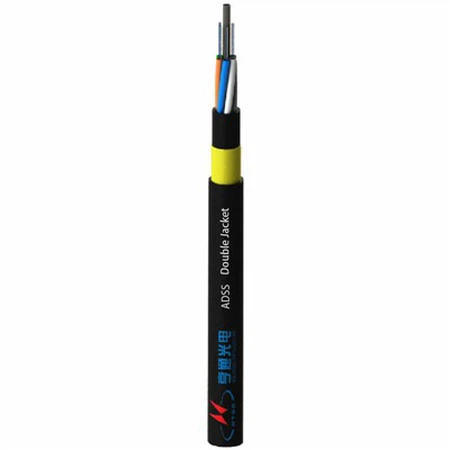
FTTx Application Scenarios Across Verticals
Telecommunications: Primary Market Driver
Telecommunications remains the largest FTTx user, employing fiber networks to provide high-speed internet and enable next-generation applications including VoIP and IPTV. Maintaining bandwidth-intensive applications fuels ongoing infrastructure investment. The sector accounted for the largest revenue share in 2024 across all FTTx market analyses.
Railway Systems
Railways utilize FTTx networks for reliable communication, signaling, and operational control systems. Fiber optics enable high-speed data transmission required for modern railway operations and passenger information systems. The deterministic latency and immunity to electromagnetic interference make fiber essential for safety-critical railway applications.
Energy and Power
The energy sector deploys FTTx networks to monitor and manage power grids and enable smart grid applications. Fiber connections provide reliable, high-speed data transmission between control centers and substations, enhancing grid reliability. Smart grid applications require real-time data exchange that only fiber infrastructure can reliably support at scale.
Emerging Verticals
Healthcare leverages FTTH for telemedicine services requiring high-quality video and real-time data exchange. Education sectors depend on fiber connectivity for e-learning platforms supporting simultaneous video streams and interactive content. Government services utilize FTTx for e-governance initiatives requiring secure, high-speed connections.
Technical Challenges in FTTx Deployment
Infrastructure Obstacles
Retrofitting existing buildings with fiber optic cables presents logistical challenges, especially in densely populated urban areas with complex underground infrastructure. Obtaining rights-of-way for laying fiber involves time-consuming negotiations with local authorities and utility providers. Trenching, pole attachments, and easements require approvals that can delay projects by months.
The high cost of initial deployment remains a significant barrier. Building fiber-optic networks involves substantial capital investments in underground cable laying, equipment purchases, and skilled labor deployment. These upfront costs make large-scale rollouts financially prohibitive without government subsidies or innovative financing models.
Regulatory and Coordination Issues
Certain regulatory policies and bureaucratic processes hinder rapid FTTx deployment. Obtaining permits and approvals for infrastructure installation requires navigating multiple jurisdictional requirements. Coordination with authorities and proper planning around existing subway and overhead infrastructure adds complexity to project timelines.
Legacy copper networks and geographic obstacles hamper fiber rollout in rural and remote locations. Service providers must balance the economics of serving low-density areas against the social imperative of universal broadband access.

The Business Case for FTTx Investment
Revenue Growth and Margin Expansion
Fiber delivers high-margin revenue growth for telecommunications providers. AT&T reports that fiber is more energy efficient, requires less maintenance, and customers retain service longer than copper or coaxial alternatives. As operators scale their fiber footprint, they drive continuous margin expansion through reduced operational costs and increased average revenue per user.
The convergence opportunity is substantial. AT&T's postpaid phone subscriber share is approximately 500 basis points (5%) higher in markets where the company offers fiber versus its average nationwide share (Source: about.att.com, 2024). About 40% of AT&T Fiber households choose AT&T wireless service, demonstrating the bundling advantage.
Competitive Positioning
Operators with extensive fiber footprints gain sustainable competitive advantages. AT&T is rated number one in customer satisfaction according to the 2024 American Customer Satisfaction Index, and AT&T Fiber ranks as America's fastest Internet with most reliable speeds according to Ookla (Source: about.att.com, 2024).
Customer surveys consistently show fiber preferred over cable and DSL technologies. Where fiber is unavailable, cable maintains market position, but fixed wireless has become the growth vehicle for locations beyond economic fiber reach.
Commercial Models Beyond Traditional Builds
Joint Ventures and Open Access
AT&T and BlackRock formed Gigapower in December 2022 to operate a commercial FTTH platform serving ISPs and businesses across the U.S. The joint venture initially targeted 1.5 million locations but expanded plans in September 2024 to pursue additional geographies beyond AT&T's traditional 21-state fixed voice/broadband footprint (Source: about.att.com, 2024).
T-Mobile, lacking legacy wired infrastructure, is pursuing anchor tenant agreements on FTTH networks built by regional operators. In August 2024, T-Mobile agreed to become an anchor tenant on SiFi Networks fiber builds in Wisconsin, Michigan, and California (Source: telegeography.com, 2025). In April 2024, T-Mobile and EQT entered a joint venture acquiring FTTH operator Lumos-T-Mobile's biggest fiber commitment to date.
Wholesale and Multi-Tenant Agreements
Commercial open-access models are enabling faster fiber deployment. AT&T signed four new agreements with commercial open-access providers in 2024, leveraging its proven fiber leadership to become the provider of choice for fiber builders seeking retail partners. This approach allows infrastructure companies to focus on network construction while established telecom brands handle customer acquisition and support.
Future Technology Roadmap
AI-Powered Network Automation
The FTTx market is shifting toward AI-powered fiber network automation providing self-optimizing, predictive maintenance features that lower operational expenses. In February 2024, the Telecom Infra Project reported that several North American and European telecom providers adopted AI-based dynamic bandwidth allocation systems in fiber networks, yielding measurable improvements in latency, customer satisfaction, and energy efficiency (Source: databridgemarketresearch.com, 2025).
AI systems proactively monitor network traffic, detect anomalies, and predict potential service disruptions before they occur-enabling operators to implement preventive measures and maintain consistent service quality. Predictive analytics optimize bandwidth allocation based on user behavior and regional demand patterns.
Emerging PON Standards
Work is progressing on 25 Gbps and 50 Gbps PON technologies to meet future bandwidth demands. The first demonstration of 100G-PON in a live network occurred in Australia in 2024, proving technical feasibility of next-generation standards (Source: wikipedia.org, 2024).
These advancements will support emerging applications including 8K video streaming, extended reality experiences, and industrial automation requiring guaranteed low-latency connectivity. The telecommunications industry is positioning fiber infrastructure as the foundation for decades of future service innovation.
FAQ: Understanding FTTx in Telecom Context
What does FTTx actually stand for in telecommunications?
FTTx stands for "Fiber to the X" where X represents various termination points in fiber optic network architecture. Common variants include FTTH (Home), FTTB (Building), FTTC (Curb), and FTTN (Node). The X indicates the final point where fiber cable ends before connecting to customers through either additional fiber or legacy copper infrastructure.
Which FTTx variant delivers the best performance?
FTTH (Fiber to the Home) delivers superior performance by extending fiber directly to individual premises, eliminating copper entirely from the access network. Using XGS-PON technology, FTTH can provide symmetrical 10 Gbps service-sufficient bandwidth for 8K video streaming, cloud gaming, and multiple simultaneous high-bandwidth applications without congestion.
How much does FTTx deployment cost per location?
Deployment costs vary significantly based on terrain, population density, and existing infrastructure. Industry reports indicate costs ranging from $500-$1,500 per passing in favorable suburban environments to $3,000+ per passing in challenging rural or dense urban areas. Government subsidies through programs like BEAD are reducing effective costs in underserved markets.
Can existing GPON networks upgrade to XGS-PON?
Yes, XGS-PON is designed as an overlay onto existing GPON networks through wavelength division multiplexing. Operators can continue serving GPON customers while deploying XGS-PON for high-bandwidth users on the same fiber infrastructure. The upgrade requires replacing OLT line cards and customer ONT devices but preserves the outside plant fiber investment.
What's driving the rapid acceleration in fiber deployment?
Multiple factors are converging: government funding programs allocating $42.5 billion through BEAD, competitive pressure from cable operators losing subscribers to fiber, 5G backhaul requirements, remote work driving residential bandwidth demands, and improving deployment economics through standardized components and installation techniques. The market grew by 10.3 million homes passed in 2024 alone.
How does FTTx support 5G wireless networks?
FTTx provides essential fiber backhaul connecting 5G cell sites to core networks. The high bandwidth, low latency, and reliability of fiber infrastructure enable 5G's promised performance. Mobile operators are prioritizing fiber ownership to reduce dependence on third-party networks and lower operational costs while improving network control.
What happens to existing copper infrastructure?
Telecommunications providers are systematically retiring copper networks as fiber reaches more locations. AT&T replaced more than 4.5 million copper circuits with fiber, while Verizon reduced DSL subscribers to just 254,000 by mid-2024. The industry is transitioning remaining copper-served areas to either fiber or fixed wireless access technologies.
Are there alternatives to traditional FTTx for broadband?
Fixed wireless access (FWA) using 5G technology serves areas where fiber economics are challenging. Verizon doubled its FWA subscriber target to 8-9 million by 2028. However, FWA typically delivers lower bandwidth and higher latency than fiber. For locations requiring guaranteed performance and unlimited data, fiber remains the gold standard technology.
Choosing the Right FTTx Strategy
The telecommunications industry has decisively answered which fttx meaning matters most: FTTH using GPON or XGS-PON technology. The market data is unambiguous-fiber deployments reached record levels in 2024, with major operators committing billions in capital investment to extend fiber to 30-40 million additional locations by decade's end.
For service providers evaluating deployment strategies, the economics now favor aggressive fiber builds in suburban and medium-density markets, with selective rural deployment supported by government subsidies. Understanding the precise fttx meaning-whether FTTH, FTTB, or FTTC-determines capital allocation, operational costs, and competitive positioning. The technology roadmap through XGS-PON and emerging 50G-PON standards ensures fiber infrastructure remains future-proof for decades. The competitive imperative is equally clear: operators with extensive fiber footprints are capturing disproportionate market share in both broadband and converged wireless services. As fiber availability reaches critical mass approaching 60% of households, grasping the correct fttx meaning becomes essential for establishing competitive positions in the narrowing market window.