




How does fttx equipment function?
When internet traffic hit 4.8 zettabytes in 2025-roughly 4,800 billion gigabytes-legacy copper networks started buckling. That's when telecom operators realized something had to change. The answer? FTTx equipment, projected to reach a market value of $8.2 billion by 2032, representing the infrastructure that's quietly rewiring how the world connects.
But here's what most articles won't tell you: FTTx isn't one technology. It's a family of solutions where the "X" represents a critical decision point-how close can you economically push fiber before switching to copper? That decision determines everything from deployment costs to whether you can stream 8K video without buffering.
This isn't just about faster internet. The global Passive Optical Network market-FTTx's backbone-grew from $15.54 billion in 2024 to a projected $44.46 billion by 2032. Behind those numbers are network engineers wrestling with a question that keeps them up at night: how do we build networks that won't be obsolete in five years?
The Equipment Ecosystem: More Than Just Cables
Walk into any FTTx headend facility, and you'll see rows of equipment that look deceptively simple. The reality? Each component is solving problems that didn't exist in the copper era.
OLT: The Traffic Controller
The Optical Line Terminal (OLT) sits at the ISP's facility, converting electronic signals into optical signals for transmission. Think of it as an air traffic controller, but instead of managing planes, it's orchestrating thousands of simultaneous data streams.
Here's where it gets interesting. For most FTTx applications, voice and data transmission from the OLT are produced at a downstream wavelength of 1490 nm, with Wavelength Division Multiplexing (WDM) enabling an upstream connection wavelength at 1310 nm. That means bidirectional communication over the same fiber-like having two-way streets on a single road.
But modern OLTs do more than convert signals. They're making real-time decisions about bandwidth allocation, quality of service, and security. When you're video conferencing while your kids are gaming and your spouse is uploading to the cloud, the OLT is the reason none of you notice the others.
ONT/ONU: The Last-Mile Translator
At the customer end sits either an Optical Network Terminal (ONT) or Optical Network Unit (ONU)-the terminology varies, but the function is similar. The ONU converts optical signals back into electronic signals, and needs to be installed at the user's premises.
What makes modern ONTs remarkable isn't just signal conversion. They're miniature data centers handling multiple services simultaneously: internet, voice, and TV. Using products like VSOL's New-gen CATV HGU ONT, users can benefit from high-speed Wi-Fi, CATV, POTS, and other services-all from a single device smaller than most textbooks.
The evolution here is staggering. Early ONTs could barely handle email. Today's models are managing smart home ecosystems with dozens of connected devices, often while supporting symmetrical gigabit speeds.
The Optical Distribution Network: Where Physics Meets Economics
Between the OLT and ONT lies the ODN-the physical fiber infrastructure that's both FTTx's greatest strength and biggest challenge. This isn't just cable; it's a carefully engineered system of splitters, connectors, and enclosures.
Splitters introduce the largest attenuation in FTTH PON networks. Here's the trade-off engineers face: splitters allow one fiber to serve multiple users (reducing costs), but each split weakens the signal. A 1:32 splitter, for instance, divides the optical power 32 ways. The math gets complex fast.
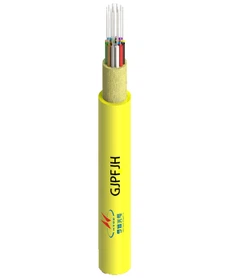
FTTx access networks, particularly FTTH-P2P type, require large volumes of optical fiber cabling, frequently installed in challenging conditions: in crowded underground ducts, in old buildings where laying cables is considered invasive. The solution? Microcables with outer diameters reduced to 1.5-9.6 mm, fitting into spaces where traditional cables couldn't go.

The Signal Journey: From Photons to Pixels
Understanding how FTTx equipment functions means following a data packet's journey. It's more complex than you'd think.
Downstream: Broadcasting Intelligence
When you request a webpage, here's what happens behind the scenes:
Step 1: Your OLT receives the request from the ISP's network. It converts this electronic signal into modulated light-specifically, at 1490 nm wavelength for data services.
Step 2: The light signal travels through the feeder cable to the first splitter. This is where physics gets interesting. Unlike electrical signals that can be amplified, optical signals in PON systems are purely passive-they just get divided.
Step 3: After multiple splits (typically 1:32 or 1:64), the now-weakened light signal arrives at your ONT. Here's the clever part: all ONTs receive all signals, but each only "listens" to packets addressed to it. Think of it as everyone receiving the same newspaper, but only reading their own horoscope.
Step 4: Your ONT converts the optical signal back to electronic, extracts your data, and sends it to your router via Ethernet.
Total travel time? Often under 2 milliseconds for local content.
Upstream: The Orchestrated Response
The return journey is trickier. Wavelength Division Multiplexing enables an upstream connection wavelength at 1310 nm, so upstream and downstream travel simultaneously without interference.
But there's a catch: multiple ONTs share the same fiber. If they all transmit simultaneously, signals collide and data is lost. The solution? Time Division Multiple Access (TDMA). The OLT assigns each ONT specific time slots to transmit-measured in microseconds. Your ONT waits for its turn, sends its data burst, then goes quiet again.
This happens so fast you never notice. It's like a perfectly choreographed conversation where everyone knows exactly when to speak.
Architecture Variations: Why "X" Changes Everything
The "X" in FTTx isn't just marketing speak-it's a fundamental design choice that affects performance, cost, and future capabilities.
FTTH: The Gold Standard
FTTH refers to a network architecture where fiber optic cables run directly from the ISP to individual residences, ensuring the highest level of speed and reliability, as there are no intermediate copper connections to degrade signal quality.
The numbers tell the story. According to the FTTH Council, 21 countries now report over 50% household FTTH/B penetration, with the global FTTH market projected to grow from about $25.1 billion (2023) to $54.7 billion by 2030.
Why the explosive growth? FTTH eliminates the fundamental bottleneck that's plagued every previous broadband technology: the last hundred meters. No copper means no signal degradation, no electromagnetic interference, and no practical speed limits (the fiber can handle it; equipment upgrades unlock more bandwidth).
FTTC/FTTN: The Pragmatic Middle Ground
In FTTC and FTTN configurations, fiber is terminated in a street cabinet, possibly miles away from the customer premises, with the final connections being copper. This hybrid approach dominated early deployments for good economic reasons.
FTTC is suitable for suburban and rural areas, achieving wide user coverage with minimal fiber deployment; for existing residential areas, it can provide fiber access services without significantly modifying the existing infrastructure.
The trade-off is speed. FTTC configurations using VDSL achieve downstream rates of 80 Mbit/s, but this falls extremely quickly when the distance exceeds 100 m (300 ft). That's why FTTC works well in dense areas where cabinets can be close to homes, but struggles in rural deployments.
FTTA: The 5G Enabler
Here's something most fiber discussions miss: The global 5G revolution is creating complementary demand for FTTx infrastructure, as fiber backhaul forms the foundation for 5G small cell deployments, with over 1.3 million 5G base stations expected to be deployed worldwide by 2025.
FTTA (Fiber to the Antenna) equipment differs significantly from residential FTTx. It needs to handle enormous data volumes-think thousands of simultaneous users per cell site-while fitting into space-constrained antenna cabinets. The ONTs used here often include additional environmental hardening and can operate in temperature extremes that would fry residential equipment.

The Testing Challenge: Why Installation is Make-or-Break
Although most components are factory-tested, the verification of splices and terminations in the field remains one of the most important elements of FTTx deployment. Incorrect splicing, contaminated connectors or microbends can lead to optical loss and decreased QoS.
Walk onto any FTTx construction site, and you'll see technicians spending as much time testing as installing. There's a reason for this paranoia.
The Contamination Problem
Because dirt is everywhere, there's a high chance that dirt will come into contact with connectors. If dirt gets on the surface of the connector (ferrule), attenuation and reflection can occur, sometimes leading to complete interruption of service or even damage to the connector's surface.
Here's what makes this insidious: a tiny particle-smaller than you can see-can cause massive signal loss. Contaminants on connectors can also cause BIP errors (Bit-Interleaved Parity) and irregular operation of ONTs (rogue ONT).
The industry response? Every connector gets inspected with microscopes before connecting. It sounds excessive until you calculate the cost of a service truck roll to fix a problem that could have been prevented with 30 seconds of inspection.
OTDR: Seeing Through Glass
By performing OTDR measurements in the downstream direction, we can observe a significant drop in optical power at splitter points. However, splitters have at least two outgoing branches, which creates major challenges in the analysis.
OTDR (Optical Time Domain Reflectometry) works by sending light pulses and measuring what bounces back. It's like sonar, but with light. The challenge? A problem with attenuation or reflection can occur on any branch, and technicians cannot see it precisely enough with this method alone. Therefore, measurements in both upstream and downstream directions are necessary.
This is why professional FTTx testing can take hours for a single building. Every fiber must be characterized, every splice verified, and the entire optical budget calculated to ensure signals will arrive with sufficient strength.
Emerging Technologies: What's Next for FTTx Equipment
Beyond 10G: The XGS-PON Revolution
XGSPON enables symmetrical downstream and upstream capacities of 10Gb/s and allows for a seamless overlay to existing GPON networks, presenting a more cost-effective option for network operators.
Symmetrical 10 gigabit service sounds impressive, but here's why it matters: With the rise of cloud computing and remote work, upload speeds have become as critical as download speeds. Traditional cable and DSL asymmetry (fast download, slow upload) breaks down when you're uploading 4K video to the cloud or hosting video conferences.
NG-PON2, developed in 2015, uses time and wavelength division multiplexing (TWDM) and can provide minimum capacities of 40Gb/s downstream and 10Gb/s upstream. However, it's not widely deployed as it requires investment in new, more advanced optical networking equipment.
The industry is at an inflection point. Operators want future capacity but need to justify costs today. The winning technologies will be those that upgrade existing infrastructure without requiring complete replacement.
AI-Powered Network Optimization
From 2025 to 2035, the market focus will be on AI-powered fiber network automation, which can provide self-optimizing, predictive maintenance features that lower operational expenses.
Here's what this looks like in practice: OLTs equipped with machine learning analyze traffic patterns in real-time, predicting congestion before users notice. When a specific ONT starts showing degraded optical power, the system automatically alerts technicians-often before customers experience issues.
This matters because the last mile remains the most expensive and time-consuming part of FTTx rollouts, with each fiber drop requiring bespoke work. AI can't eliminate site visits, but it can make each one count by identifying problems precisely.
Real-World Constraints: Why Theory Meets Reality
The Distance Limitation Puzzle
Every FTTx architecture has physical limits determined by optical power budgets. PON reference architecture allows network distance up to 20 kilometers from OLT to ONT, but real deployments often push these boundaries.
RFoG networks were designed initially to support 32 subscribers from a single fiber feed, with a maximum distance of 20 kilometers and a 25-decibel loss budget. When operators extended RFoG networks to large service groups in suburban and rural areas, they found themselves exceeding these limits, impacting network performance.
The solution involves careful splitter placement, high-quality connectors, and sometimes amplifiers-though that contradicts PON's passive nature. It's an engineering puzzle where every decibel matters.
The Optical Beat Interference Problem
In RFoG networks, when two or more optical transmitters with closely spaced or identical wavelengths transmit simultaneously, the upstream signal degrades at the receiver. This degradation damages the data being transmitted, causing packet loss and service interruptions.
This is quantum mechanics meeting network engineering. Light waves can interfere constructively or destructively. When multiple ONTs transmit upstream on the same wavelength, their signals can cancel each other out at certain points.
The industry response? OBI-free RFoG solutions eliminate optical beat interference, delivering the full potential of DOCSIS 3.0 and providing infrastructure for future transition to all-fiber, 10G PON networks. This requires more sophisticated equipment, but it's cheaper than rebuilding networks.

Deployment Economics: The Hidden Calculations
Last mile deployment costs make this segment the most expensive part of FTTx rollouts, with extensive planning and labor required. But what drives those costs?
The Labor Bottleneck
Skilled planning and engineering professionals trained in industry-recognized processes, tools and systems ensure networks are planned to meet projected customer demand by selecting the right elements and equipment required.
Here's the catch: There is often a shortage of skilled technicians capable of handling fiber installations and repairs. The industry is racing to train workers while networks are being built. Some operators have started using prefabricated components and plug-and-play connectors to reduce the skill level required.
The Regulatory Maze
Obtaining necessary permits and navigating regulatory requirements can be time-consuming and complex, potentially delaying FTTx projects. Different municipalities have different rules. Some require extensive environmental assessments; others fast-track fiber as critical infrastructure.
Obtaining civil and municipal permissions (way leaves) for laying fiber network infrastructure presents significant challenges. Operators spend months negotiating rights-of-way before a single meter of fiber gets installed.
Frequently Asked Questions
How does FTTx equipment handle power outages?
In FTTx networks, the termination installed at subscriber's premises (NT or ONT) is locally powered from the mains. Unlike traditional phone systems that received power through copper lines, FTTx ONTs need local electrical power. This creates acute problems during emergencies, as these devices usually consume 5-25 W and typically powered by 12 V DC from a mains adapter, requiring backup power for extended outages.
What's the lifespan of FTTx fiber infrastructure?
Today's singlemode fiber technology is already 40 years old and still going strong, even as network speeds have increased almost a million times. The fiber itself is remarkably durable-fiber is often said to be "future-proof" because the data rate of the connection is usually limited by the terminal equipment rather than the fiber, permitting substantial speed improvements by equipment upgrades before the fiber itself must be upgraded.
Can existing FTTx networks be upgraded to higher speeds?
Yes, through equipment replacement at endpoints. XGSPON allows for seamless overlay to existing GPON networks, meaning operators can upgrade to 10G speeds by replacing OLTs and ONTs while reusing the existing fiber infrastructure and splitters. This is why fiber deployment is considered a long-term investment.
How does weather affect FTTx equipment performance?
Fiber itself is largely unaffected by weather-unlike copper networks, fiber optics are immune to electromagnetic interference and environmental factors, ensuring stable and consistent performance. However, active equipment (OLTs, ONTs) can be temperature-sensitive. Outdoor enclosures need environmental controls, and extreme heat or cold can degrade electronics if not properly protected.
What's the difference between active and passive FTTx equipment?
Passive optical components include couplers, splitters, connectors, and enclosures-these require no power and simply manipulate light physically. Active equipment includes OLT and ONT devices that convert between optical and electronic signals, requiring electrical power. PON architecture is called "passive" because the middle portion (ODN) has no active components between OLT and ONT.
How do FTTx networks prioritize different types of traffic?
Advanced functionalities such as IGMP snooping, VLAN, and QoS are essential for delivering high-quality Triple Play services-comprising internet, video, and VoIP. The OLT actively manages traffic, giving priority to latency-sensitive applications like video calls while queuing less time-critical data like software updates.
What happens when a fiber cable gets damaged?
Special instruments or OTDRs with specialized software can provide a complete overview of the network, pinpointing breaks within meters. Modern FTTx networks often include redundant paths, allowing automatic rerouting around damaged sections. Repair involves splicing the broken fiber-a precise process requiring specialized equipment and training.
Making Sense of the FTTx Revolution
The global Passive Optical Network market is exhibiting a CAGR of 14.1% during the forecast period-numbers that reflect fundamental changes in how we communicate, work, and live.
FTTx equipment doesn't function in isolation. It's part of an ecosystem where internet traffic is projected to reach 4.8 zettabytes annually by 2025, driving unprecedented demand for high-bandwidth infrastructure. The OLTs, ONTs, splitters, and fiber working in concert are enabling video conferences that feel face-to-face, cloud applications that respond instantly, and smart homes that actually work.
The technology continues evolving. Advances in hollow-core optical fibers and quantum secure communication will drastically change data transfer capabilities in coming years. What seemed impossible a decade ago-symmetrical gigabit service to every home-is becoming mundane. Open-source fiber models coupled with standard singlemode fiber enable upgrades to terabit speeds, a thousand times faster than most current networks.
But perhaps the most remarkable aspect isn't the technology itself-it's how invisible it's become. When your video conference doesn't stutter, when your game latency stays low, when multiple 4K streams play simultaneously without buffering, that's FTTx equipment functioning exactly as designed. Silent, reliable, and increasingly indispensable to modern life.
Key Takeaways:
FTTx equipment uses wavelength division multiplexing to enable bidirectional communication over single fibers-1490 nm downstream, 1310 nm upstream for data
The OLT-ODN-ONT architecture supports up to 64 users per fiber through passive optical splitting, with each split reducing signal strength
Testing and contamination control are critical-microscopic dirt particles can cause complete service failure
XGS-PON enables symmetrical 10 Gbps service over existing fiber infrastructure through endpoint equipment upgrades
Market growth exceeding 14% CAGR reflects FTTx becoming essential infrastructure, not optional enhancement
Data Sources:
Fortune Business Insights - Passive Optical Network Market Analysis 2024
Future Market Insights - Fiber to the X Market Report 2025-2035
Newstrail - FTTX Active Equipment Market Forecast 2025-2032
ADTEK Fiber - Last Mile Deployment Analysis 2025
VIAVI Solutions - FTTx Network Design & Testing Documentation
EXFO - FTTx PON Technology and Testing Reference
Cyient - Meeting the Challenges of FTTx Deployment Whitepaper