




How does fttx work?
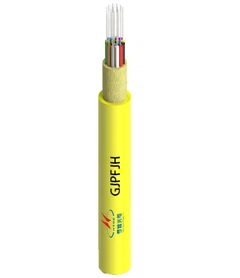
FTTx networks dominated the optical fiber connectivity market with a 31% share in 2024, yet many people still don't fully understand how this technology delivers internet speeds up to 100 times faster than traditional copper connections. At its core, FTTx (Fiber to the X) works by replacing copper telephone lines with optical fiber cables that transmit data using pulses of light rather than electrical signals. The "X" represents various endpoint locations-your home, building, curb, or node-where the fiber connection terminates. This shift from electrical to optical transmission eliminates the signal degradation that plagues copper networks, allowing data to travel at near-light speed across distances exceeding 20 kilometers without performance loss.
Breaking Down the FTTx Architecture: Three Critical Components
Every FTTx network relies on three fundamental building blocks that work together to deliver high-speed connectivity. Understanding these components reveals why fiber networks outperform legacy infrastructure.
The Optical Line Terminal (OLT): Your Network's Command Center
The OLT sits in your service provider's central office and serves as the gateway between the internet backbone and fiber access network. Think of it as a sophisticated traffic controller that manages data flow to thousands of users simultaneously. The OLT converts standard Ethernet signals into optical light pulses, broadcasts them downstream to all connected users, and receives upstream transmissions through time-division multiplexing. Modern XGS-PON systems transmit a downstream frame every 125 microseconds, ensuring minimal latency for time-sensitive applications.
Passive Optical Splitters: The Silent Distributors
Between the OLT and end users, passive optical splitters divide a single fiber strand into multiple connections-typically supporting split ratios from 1:8 up to 1:128. These splitters require no electrical power (hence "passive"), making them remarkably cost-effective to deploy and maintain. A PON with a 35 dB optical budget can span 25 kilometers and serve 128 subscribers, demonstrating the impressive reach these networks achieve without active components.
Optical Network Units (ONUs): Your Home Gateway
The ONU-sometimes called an Optical Network Terminal (ONT)-sits at your premises and converts optical signals back into electrical format for your devices. It provides standard interfaces like Ethernet ports, Wi-Fi, and phone jacks. The ONU also manages upstream transmission timing, ensuring your data packets don't collide with those from neighboring users sharing the same fiber strand.

Five Primary FTTx Deployment Models: Choosing the Right Approach
Service providers select specific FTTx architectures based on factors including population density, existing infrastructure, and budget constraints. Each model strikes a different balance between performance and deployment cost.
FTTH (Fiber to the Home): The Gold Standard
Nine million U.S. homes connected to fiber in 2023, surpassing the previous year's record of 8.3 million. FTTH extends fiber directly to individual residences, delivering symmetrical multi-gigabit speeds. AT&T claimed the largest FTTH network in the U.S. as of June 2024, with infrastructure passing 27.8 million customer locations.
This architecture eliminates all copper from the access network, providing future-proof bandwidth capacity. Users typically experience download and upload speeds between 100 Mbps to 10 Gbps depending on their service tier. The dedicated fiber connection ensures consistent performance regardless of neighborhood usage patterns.
FTTB (Fiber to the Building): Multi-Tenant Solution
FTTB brings fiber to a central point within apartment buildings or office complexes, then distributes connectivity via Ethernet cables to individual units. This approach reduces per-unit deployment costs in multi-dwelling units while still delivering gigabit-capable service. Property owners appreciate the simplified installation compared to running individual fiber lines to every apartment.
FTTC (Fiber to the Curb): The Hybrid Approach
FTTC extends fiber to street cabinets, typically within 300 meters of subscribers, then relies on existing copper phone lines for the final connection. While more affordable to deploy than FTTH, performance degrades based on copper distance-a 100-meter copper run might deliver 100 Mbps, while a 300-meter segment drops to 50 Mbps.
FTTO (Fiber to the Office): Enterprise-Grade Connectivity
Corporate environments use FTTO to establish dedicated fiber links directly to their offices. In FTTO architectures, the distance between the ONU and OLT is usually less than 20 kilometers, with typical spacing between ONU and business users between 0 and 50 meters. This configuration provides guaranteed bandwidth, low latency, and heightened security for mission-critical business applications.
FTTR (Fiber to the Room): Next-Generation Home Networking
The newest FTTx variant extends fiber to individual rooms within a building using a main ONU and distributed slave units. This eliminates Wi-Fi dead zones and provides true gigabit connectivity to every room through hardwired fiber connections, perfect for smart homes with dozens of connected devices.
The Science Behind Fiber Transmission: Light Versus Electricity
Understanding how fiber optics transmit data reveals why this technology delivers such dramatic performance improvements over copper.
Total Internal Reflection: Keeping Light Contained
Fiber optic cables consist of an ultra-pure glass or plastic core surrounded by cladding material with a lower refractive index. When light enters the fiber at a specific angle, it bounces continuously off the core-cladding boundary through total internal reflection. This phenomenon allows light signals to travel dozens of kilometers without escaping the fiber or losing significant strength.
Single-mode fiber uses a narrow 9-micron core optimized for long-distance transmission at 1310 nm or 1550 nm wavelengths. Single-mode fiber cables can carry signals at much greater speeds and over longer distances than multi-mode fibers. Multi-mode fiber features a 50 or 62.5-micron core suitable for shorter runs within buildings.
Wavelength Division Multiplexing: Multiple Conversations on One Strand
Modern FTTx networks use Wavelength Division Multiplexing (WDM) to transmit multiple optical signals simultaneously on different wavelengths. GPON utilizes an upstream wavelength of 1310 nm and downstream wavelength of 1490 nm, while 10G systems use upstream wavelengths of 1270 nm and downstream wavelengths of 1577 nm.
This wavelength separation allows service providers to broadcast video services, internet data, and voice calls on the same fiber strand without interference. It also enables smooth technology migrations-operators can deploy next-generation 10G PON services while existing GPON customers continue uninterrupted on their original wavelengths.
Time Division Multiple Access: Sharing Without Collision
In the upstream direction (from users to the OLT), Time Division Multiple Access (TDMA) prevents data collisions. The OLT assigns specific time slots to each ONU, ensuring only one device transmits at any given moment. Each ONU buffers its data and transmits in rapid bursts during its allocated windows, creating the illusion of continuous connectivity while efficiently sharing the available bandwidth among all users on the splitter.
PON Technology Evolution: From GPON to 10G and Beyond
The passive optical network standards powering FTTx have evolved dramatically to meet escalating bandwidth demands. Understanding these generations helps explain current deployment choices.
GPON: The Established Workhorse
Gigabit Passive Optical Network (GPON) technology, standardized in 2003, provides 2.488 Gbps downstream and 1.244 Gbps upstream speeds shared among up to 128 users. GPON makes more efficient use of physical fiber networks than point-to-point deployments by splitting connections to serve multiple end customers. This asymmetric bandwidth allocation matches typical residential usage patterns where downloading vastly exceeds uploading.
GPON's mature ecosystem, lower equipment costs, and proven reliability explain why it remains the dominant technology for residential fiber deployments globally. The split-ratio flexibility allows providers to balance per-subscriber bandwidth with network economics.
XGS-PON: Symmetrical 10-Gigabit Performance
XGS-PON, standardized in 2016, delivers symmetrical 10 Gbps data transfer in both upstream and downstream directions. This dramatic capacity increase supports emerging applications demanding high upload speeds-video conferencing, cloud backup, content creation, and remote work.
The introduction of 10 Gigabit Passive Optical Network (XGS-PON) technology as the industry standard in 2023 offers download and upload speeds of up to 10 Gbps. Service providers appreciate XGS-PON's backward compatibility, which allows seamless coexistence with legacy GPON installations on the same fiber infrastructure through WDM wavelength separation.
XG-PON: The Asymmetric Alternative
XG-PON provides 10 Gbps downstream but only 2.5 Gbps upstream, maintaining the asymmetric model appropriate for traditional residential internet usage. XG-PON significantly enhances downstream capacity while maintaining an upstream bandwidth of 2.5 Gbps, making it ideal for applications where downstream demand exceeds upstream traffic, such as content streaming.
NG-PON2: Future-Proofing Through Tunability
Next-Generation PON 2 (NG-PON2) employs Time and Wavelength Division Multiplexing across multiple tunable wavelengths, potentially delivering 40 Gbps aggregate capacity. This flexibility allows operators to allocate different wavelengths for residential, business, and mobile backhaul traffic, maximizing infrastructure efficiency. However, the complexity and cost have limited widespread deployment compared to XGS-PON.

Real-World FTTx Performance: What Users Actually Experience
Laboratory specifications tell only part of the story. Real-world performance depends on numerous factors from network design to customer equipment.
AT&T has identified an additional 10-15 million locations featuring the same economic characteristics as the 30 million locations currently planned for fiber deployment, potentially extending fiber coverage after reaching its 2025 target. This aggressive expansion reflects confidence in fiber's superior economics compared to upgrading copper infrastructure.
Verizon plans to expand its Fios fiber network to approximately 400,000 new locations annually, focusing on urban and suburban areas where density justifies the deployment investment. The company projects reaching between 4 million and 5 million fixed wireless access customers by 2025, complementing fiber where economics don't support direct connections.
Speed Tiers and Service Plans
Most providers offer tiered service ranging from 100 Mbps to 10 Gbps, though the physical infrastructure often supports even higher capabilities. More than 3 million AT&T Fiber subscribers were receiving 1-Gig speeds as of year-end 2020, with 90% of all broadband customers subscribing to speeds of 100 Mbps or more.
The gap between provisioned speeds and physical capacity provides headroom for future upgrades without requiring infrastructure changes. A GPON connection might deliver 100 Mbps today but can scale to 1 Gbps simply through service plan modifications.
Latency and Jitter Improvements
Beyond raw speed, fiber dramatically reduces latency (signal delay) and jitter (timing variation). Optical transmission typically adds only 1-2 milliseconds of latency compared to 15-30 milliseconds for cable systems and 50-100 milliseconds for DSL. This consistent low latency proves critical for real-time applications like video calls, online gaming, and remote desktop connections.
Symmetrical Bandwidth Benefits
While traditional cable and DSL provide asymmetric connections (fast downloads, slow uploads), modern fiber increasingly offers symmetrical speeds. This matters enormously for contemporary applications-uploading videos to YouTube, participating in HD video conferences, syncing files to cloud storage, and running home servers all depend on upload capacity.
FTTx Network Planning: Strategic Decisions That Shape Performance
Successful fiber deployments require careful planning across multiple dimensions. Poor decisions during the design phase can create limitations lasting decades.
Determining Optimal Split Ratios
Network planners must balance per-subscriber bandwidth with deployment economics. A 1:32 split ratio provides each user with roughly 78 Mbps of the 2.5 Gbps GPON downstream capacity (accounting for overhead), while a 1:64 split halves that to 39 Mbps. Dense urban areas often justify lower split ratios, while suburban and rural deployments lean toward higher splits to minimize per-home costs.
Laying fiber optic cables underground can cost up to $144,000 per mile in urban environments when factoring in trenching, permits, and restoration of existing infrastructure. This enormous expense forces operators to maximize the subscriber count served by each fiber strand.
Greenfield Versus Brownfield Deployments
Greenfield builds in new developments offer the easiest path-fiber goes in alongside other utilities before roads are paved. Brownfield deployments in existing neighborhoods require trenching or aerial installation through established rights-of-way, dramatically increasing complexity and cost.
Aerial deployments using existing utility poles cost 60-70% less than underground burial but face aesthetic objections and weather vulnerability. Underground conduit provides the most reliable long-term solution despite higher initial investment.
Scalability and Future-Proofing
Forward-thinking networks install dark fiber strands beyond immediate needs. The incremental cost of pulling additional fibers during construction proves trivial compared to later upgrades. Many operators deploy 144 or 288-fiber cables to central neighborhoods, then gradually light individual strands as demand grows.
Comparing FTTx to Alternative Technologies
Understanding fiber's advantages requires comparing it against competing broadband delivery methods.
FTTx Versus Cable (HFC)
Hybrid Fiber-Coaxial networks extend fiber to neighborhood nodes, then use coaxial cable for the final connection. Cable provides respectable speeds-typically 100-1000 Mbps downstream-but suffers from shared capacity. Peak usage hours see performance degradation as neighbors compete for bandwidth. Upload speeds remain severely limited, rarely exceeding 35 Mbps even on gigabit-tier plans.
Fiber's dedicated connection ensures consistent performance regardless of neighborhood activity. The symmetrical bandwidth supports modern upload-intensive workflows that strain cable networks.
FTTx Versus DSL/VDSL
Digital Subscriber Line technology uses existing phone lines but performance degrades rapidly with distance from the telephone exchange. DSL rarely exceeds 25 Mbps beyond 1 kilometer, while fiber maintains full speed across its entire 20+ kilometer reach. VDSL2 improves performance to 100 Mbps within 300 meters but still can't match fiber's consistency or scalability.
FTTx Versus Fixed Wireless (5G/FWA)
Fixed Wireless Access offers quick deployment without trenching but faces capacity limitations, weather interference, and line-of-sight requirements. 5G home internet typically delivers 100-300 Mbps with higher latency and less reliability than fiber. It serves as a viable option for areas where fiber economics don't work, but can't match fiber's performance ceiling or consistency.
Installation Process: From Street to Your Home
Understanding the installation workflow helps manage expectations and troubleshoot potential issues.
Outside Plant Construction
Fiber deployment begins with trunk routes connecting central offices to distribution points. Crews either trench underground conduit, attach cables to utility poles, or use micro-trenching that cuts narrow slots in pavement. Ribbon cable formats enable mass-fusion splicing that trims field installation time by as much as 80%, accelerating construction schedules.
Distribution cables branch from main trunks to neighborhood cabinets housing splitters. Drop cables extend from these cabinets to individual premises, typically following property lines or utility easements.
Premises Installation
Technicians drill an entry point through your exterior wall, routing fiber inside to the ONU location. Fiber cables require careful handling-sharp bends or excessive tension can cause signal loss or breakage. The technician tests signal strength at multiple points, ensuring transmitted power falls within specification.
After securing the fiber connection, the ONU is mounted, powered, and configured with your service credentials. Installation typically takes 2-4 hours including testing and customer orientation.
Troubleshooting Common Issues
Most fiber problems stem from physical damage rather than electronics. Bent cables, dirty connectors, or damaged splices create signal loss. Modern ONUs display light level indicators that help diagnose connection quality. Intermittent issues often trace to loose connectors or environmental factors affecting aerial cables.
Market Growth and Investment Trends
The fiber industry is experiencing unprecedented expansion driven by multiple factors.
Government Funding Programs
U.S. states are allocating $42.5 billion in Broadband Equity Access and Deployment (BEAD) money, with initial network construction projects expected to start in 2024-2025. This federal investment aims to close the digital divide, particularly in rural and underserved communities where private sector economics don't support deployment.
In March 2024, the European Commission announced a funding initiative under its "Digital Decade" strategy to extend fiber broadband coverage to 100% of households by 2030, demonstrating global commitment to fiber infrastructure.
Private Sector Investment
The global FTTx solutions market is estimated at $80 billion in 2025, exhibiting a 12% compound annual growth rate during the forecast period through 2033. This robust growth reflects both replacement of legacy infrastructure and expansion into previously unserved areas.
The overall FTTx market size was $11.3 billion in 2025 and is expected to reach $18.5 billion by 2035, driven by increasing demand for high-speed internet, rising adoption of fiber-optic networks, and growing investments in digital infrastructure.
Deployment Velocity
The Fiber Broadband Association predicts 12 million homes will be deployed with fiber in 2024, representing acceleration from previous years. Fiber now passes nearly 77.9 million U.S. homes, more than 50% of residences in the country.
AT&T's fiber was available to 20.7 million consumer and approximately 3.3 million business customer locations as of the third quarter of 2023, with the company penetrating markets faster than initially anticipated.

Key Equipment Manufacturers and Technology Leaders
The FTTx ecosystem depends on specialized vendors providing critical components.
Major OLT and ONU equipment suppliers include Huawei, ZTE, Nokia, Ericsson, and Adtran. These companies continuously innovate to reduce power consumption, increase port density, and improve management capabilities. Chinese manufacturers dominate global market share, though geopolitical concerns have prompted Western providers to diversify supply chains.
Fiber cable manufacturers like Corning, Prysmian, and Fujikura invest heavily in advanced cable designs. Corning and Lumen signed a deal in June 2024 reserving 10% of Corning's fiber output for two years, securing supply during a period of surging demand.
Passive component vendors produce the optical splitters, connectors, and patch panels essential for network construction. Quality variations in these "invisible" components significantly impact long-term reliability and maintenance costs.
FTTx in Action: Enterprise and Special Applications
While residential broadband captures headlines, fiber enables critical infrastructure across multiple sectors.
Mobile Network Backhaul
5G networks rely extensively on fiber backhaul from cell sites to core networks. Verizon plans to have more than 50% of its 4G and 5G cell sites on Verizon-owned fiber rather than third-party networks within three years, reducing operating costs and improving network control.
The massive bandwidth and low latency of fiber prove essential for dense urban 5G deployments where small cells require high-capacity connections. Operators increasingly view fiber infrastructure as competitive advantage.
Healthcare and Telemedicine
Medical facilities depend on fiber for transmitting high-resolution imaging, supporting real-time telemedicine consultations, and maintaining electronic health records. The reliability and security of fiber connections prove critical for HIPAA compliance and patient care continuity.
Smart City Infrastructure
Traffic management systems, surveillance networks, environmental sensors, and emergency services increasingly depend on fiber connectivity. The deterministic latency and reliability of fiber support real-time control systems that can't tolerate the variability of wireless connections.
Educational Institutions
Universities and K-12 schools leverage fiber to support distance learning, digital resources, and administrative systems. The COVID-19 pandemic demonstrated the critical importance of robust, high-capacity connections for remote education.
Environmental Considerations and Sustainability
Fiber networks offer surprising environmental advantages compared to copper alternatives.
Lower Energy Consumption
Passive optical networks eliminate power-hungry active equipment between the central office and customer premises. This reduces electricity consumption by 60-80% compared to active Ethernet architectures requiring powered switches at every distribution point.
The reduced cooling requirements in central offices due to fewer electronics further decrease energy usage. Over a network's 20-30 year lifespan, these savings offset the initial deployment energy investment.
Longevity and E-Waste Reduction
Properly installed fiber infrastructure lasts 30-40 years with minimal maintenance. An Optical Distribution Network being installed today will likely need to support four or more generations of PON technology over its expected 30-40 year life. This longevity reduces the electronic waste generated by frequent equipment replacements.
Electronics at the network edges require periodic upgrades, but the passive fiber and splitters remain unchanged. This modularity allows technology evolution without full infrastructure replacement.
Material Considerations
Glass fiber requires fewer raw materials than copper cables. A fiber strand thinner than a human hair replaces copper cables weighing hundreds of pounds per mile. The smaller physical size also reduces trenching requirements and associated environmental disruption.
Challenges and Limitations of FTTx Deployment
Despite fiber's advantages, several obstacles slow universal deployment.
Economic Viability in Low-Density Areas
Maintenance challenges such as repairing fiber breaks or addressing wear from environmental factors add to long-term costs, creating financial barriers that often dissuade small-scale service providers or delay rollout in underserved areas. Rural areas with homes separated by large distances struggle to justify the per-passing costs.
Innovative approaches like community networks, electric cooperative deployments, and government subsidies help bridge the gap, but challenging economics remain the primary barrier to universal fiber coverage.
Right-of-Way and Permitting
Securing permissions to install fiber through public rights-of-way and private property creates lengthy delays. Municipal permitting processes, utility coordination, and property owner negotiations extend deployment timelines by months or years.
Some jurisdictions streamline processes to encourage fiber deployment, recognizing broadband as essential infrastructure. Others maintain restrictive policies that impede progress.
Skilled Labor Shortages
Fiber installation requires specialized skills-fusion splicing, OTDR testing, and proper cable handling techniques differ significantly from traditional electrical work. The industry faces shortages of trained technicians, particularly as deployment accelerates. Training programs and certification standards help address the gap, but labor constraints continue limiting deployment velocity.
Competition for Capital
Fiber deployments require enormous upfront investment with payback periods extending 7-10 years. Alternative technologies like fixed wireless offer faster financial returns despite inferior long-term performance. Public companies face pressure for quarterly results that may prioritize shorter-term investments over fiber's long-term benefits.
Maintaining and Troubleshooting FTTx Networks
Proper maintenance ensures fiber networks deliver consistent performance across decades of service.
Proactive Monitoring
Modern OLTs continuously monitor signal levels from each ONU, detecting degradation before users experience problems. Automated alerts notify technicians when optical power drops below thresholds, enabling preventive maintenance.
Some operators implement remote fiber monitoring systems that inject test signals, measuring round-trip loss and identifying potential issues. This proactive approach minimizes outages and improves customer satisfaction.
Common Failure Modes
Physical damage causes most fiber outages-construction accidents, weather events, rodent damage, or vandalism. Unlike copper networks that degrade gradually, fiber typically fails completely when severed, making rapid identification and repair critical.
Connector contamination or degradation represents another common issue. Dust particles or moisture on connector end-faces scatter light, reducing signal strength. Regular cleaning and inspection prevent these problems.
Repair and Restoration
Fiber repairs require specialized equipment and training. Technicians use optical time-domain reflectometers (OTDRs) to precisely locate breaks, then access the cable, splice in replacement sections, and verify restored signal quality. In emergency situations, temporary above-ground routing restores service within hours while permanent underground repairs proceed.
Future Directions: What's Next for FTTx Technology
The fiber industry continues evolving to meet escalating bandwidth demands and emerging applications.
25G and 50G PON Standards
25G PON solutions have been commercialized; 50G PON has been standardized and is expected to be deployed for the first time in 2024 or 2025; research and development of 100G PON is in progress. These next-generation standards future-proof networks for 8K video, virtual reality, and yet-unimagined applications.
The upgrade path from 10G to 25G+ PON mirrors the GPON to XGS-PON transition-operators can deploy new technology on existing fiber infrastructure through wavelength separation, protecting investments while enabling progressive upgrades.
Coherent Access Technology
Coherent optical transmission techniques-previously used only in long-haul networks-are being adapted for access networks. These advanced modulation formats dramatically increase capacity on existing fiber, potentially delivering 100+ Gbps to individual premises without new cable installation.
AI-Driven Network Optimization
Machine learning algorithms increasingly optimize network performance, predicting maintenance needs, detecting anomalies, and dynamically allocating bandwidth. These intelligence layers extract maximum value from physical infrastructure.
Quantum Networking Potential
One exciting future technology is quantum networking, which can connect quantum devices like quantum computers or sensors over large distances using quantum bits that can be 0 and 1 simultaneously. While still in early research stages, quantum communication may eventually leverage fiber infrastructure for ultra-secure communications.
Frequently Asked Questions
What speed difference should I expect between FTTx and cable internet?
Fiber typically delivers 100-1000 Mbps residential service with symmetrical upload speeds, while cable provides 100-1000 Mbps downstream but only 10-35 Mbps upstream. More importantly, fiber maintains consistent speeds during peak usage periods while cable performance degrades when neighbors consume bandwidth. Latency averages 1-2 ms for fiber compared to 15-30 ms for cable, noticeably improving real-time applications like video conferencing and gaming.
Can weather affect fiber internet performance?
Fiber optic signals are immune to electromagnetic interference and weather conditions that disrupt copper or wireless connections. However, physical infrastructure remains vulnerable-severe storms can damage aerial cables, flooding can affect underground vaults, and extreme temperature variations may stress connections. Overall, fiber demonstrates superior reliability compared to alternative technologies, with typical availability exceeding 99.9%.
How long does FTTx installation take at my home?
Standard residential installation typically requires 2-4 hours. Technicians route fiber from the street to your home, drill an entry point, install the ONU, and verify connectivity. Complex installations requiring extensive interior routing or multiple connection points may extend to 4-6 hours. Scheduling delays-securing permits, coordinating utility locates, or adverse weather-can push installation dates by weeks or months despite the quick on-site work.
Will FTTx become obsolete with 5G wireless technology?
Fiber and 5G are complementary rather than competitive technologies. 5G cell sites require fiber backhaul to function-the wireless "last hundred feet" still depends on wired infrastructure. For home broadband, fiber provides superior performance, capacity, and reliability compared to any wireless alternative. 5G home internet serves areas where fiber economics don't justify deployment, but cannot match fiber's technical capabilities or future scalability.
What happens to my fiber internet during power outages?
The ONU requires electrical power, so fiber internet stops working during outages unless you have backup power. Many providers offer battery backup units providing 4-8 hours of continued connectivity. Unlike traditional phone lines that received power from the central office, fiber networks depend on customer-premises power. If phone service runs over your fiber connection, consider backup power solutions to maintain emergency calling capability.
Can I install FTTx myself or modify the installation?
Fiber installation requires specialized equipment and training-fusion splicers, OTDRs, and proper connectorization techniques. Attempting DIY installation risks cable damage and service problems. The delicate nature of fiber optic cables means improper handling causes permanent damage requiring professional repair. Once professionally installed, avoid moving or manipulating fiber cables. Contact your provider for any relocation or modification needs.
How much bandwidth does a typical household actually need?
Current usage patterns suggest 100-300 Mbps adequately supports most households with 4-6 devices streaming, video conferencing, and gaming simultaneously. However, bandwidth needs steadily increase as higher-resolution content emerges, device counts grow, and new applications appear. Many experts recommend provisioning 500-1000 Mbps to future-proof against usage growth over your service contract period. Work-from-home households with heavy video conferencing particularly benefit from fiber's symmetrical upload capacity.
What's the difference between FTTH and FTTP?
These terms are essentially interchangeable in residential contexts. Fiber to the Premises (FTTP) serves as an umbrella term encompassing any fiber connection directly to end-user locations-including both residential (FTTH – Fiber to the Home) and business (FTTO – Fiber to the Office) installations. Marketing materials may use either term, but technical specifications and service capabilities remain identical for direct fiber connections.
Taking Control of Your Connectivity Future
FTTx technology transforms internet access from a limiting factor into an enabling infrastructure. The combination of multi-gigabit capacity, symmetrical bandwidth, consistent performance, and 30-year longevity positions fiber as the definitive long-term broadband solution. While deployment challenges persist-particularly in low-density rural areas-ongoing infrastructure investment, government funding, and technological advancement continue expanding fiber availability.
Assuming deployments proceed as planned, fiber providers project reaching a combined 139 million total passings by the end of the decade, representing near-universal coverage in economically viable areas. For consumers evaluating broadband options, fiber consistently delivers superior value despite occasionally higher initial costs. For communities planning infrastructure investment, fiber provides the foundation for economic development, healthcare access, education delivery, and quality of life improvements that increasingly depend on robust, reliable connectivity.
The transition from copper to fiber parallels the century-ago transition from dirt roads to paved highways-infrastructure investment that enables economic and social transformation extending far beyond the initial deployment costs. As bandwidth demands continue their relentless growth, fiber's vast capacity headroom ensures networks deployed today will serve multiple technology generations without requiring fundamental reconstruction.