



Introduction
Fiber-to-the-Home (FTTH) networks represent the gold standard for delivering high-speed broadband services, enabling gigabit-level connectivity to residential and commercial users. As a senior optical cable engineer, I aim to outline the critical aspects of optical fiber cable design, deployment, and maintenance in FTTH ecosystems, focusing on technical requirements, challenges, and best practices.
1. Key Components of FTTH Optical Cables
FTTH networks rely on specialized fiber optic cables tailored for last-mile connectivity. Key components include:
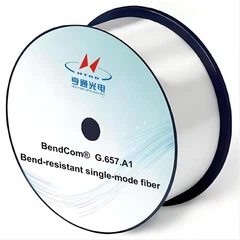
Single-Mode Fiber (SMF): ITU-T G.652.D (standard SMF) or G.657.A2 (bend-insensitive fiber) are preferred for low attenuation (<0.4 dB/km at 1310/1550 nm) and compatibility with PON (Passive Optical Network) architectures.
Cable Structure:
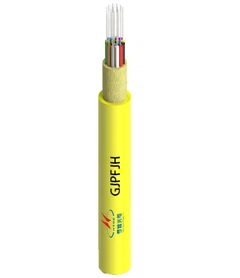
Central Tube Design: A single buffer tube housing multiple fibers, filled with gel or dry water-blocking materials.
Micro-Duct Cables: Miniaturized cables (e.g., 6–10 mm diameter) for blowing into pre-installed micro-ducts in dense urban areas.
Flat Drop Cables: Lightweight, flexible designs (e.g., 2–3 mm thickness) for aerial, underground, or indoor wall-mounted installations.
Strength Members: Aramid yarn (e.g., Kevlar) or glass-reinforced plastic (GRP) rods to withstand tensile loads during installation.
Jacket Materials: LSZH (Low Smoke Zero Halogen) for indoor safety or UV-resistant polyethylene for outdoor durability.
2. Design Considerations for FTTH Cables
2.1 Environmental Resilience
Temperature Range: Outdoor cables must endure -40°C to +70°C. Indoor cables require fire-retardant properties (IEC 60332-1-2).
Moisture Resistance: Gel-filled or dry core designs prevent water ingress in underground or aerial deployments.
Bend Tolerance: G.657.A2 fibers with a bend radius ≤7.5 mm are critical for tight spaces (e.g., building entry points or indoor cabling).
2.2 Splitting Strategies
Centralized Splitting: A single 1x32 or 1x64 splitter at the Optical Distribution Frame (ODF) simplifies maintenance but increases fiber count in feeder cables.
Distributed Splitting: Cascaded splitters (e.g., 1x4 + 1x8) reduce fiber density but require careful loss budget planning.
PLC vs. FBT Splitters: Planar Lightwave Circuit (PLC) splitters offer lower insertion loss and better uniformity compared to Fused Biconical Taper (FBT) variants.
2.3 Installation Techniques
Blown Fiber: Micro-cables installed via compressed air into pre-deployed ducts, minimizing civil works.
Direct Burial: Armored cables with corrugated steel tape (CST) for rodent protection in rural areas.
Aerial Deployment: ADSS (All-Dielectric Self-Supporting) cables for pole-mounted installations, avoiding metallic components to prevent lightning damage.
3. Challenges in FTTH Deployment
Fiber Density: High-count cables (e.g., 144–288 fibers) demand efficient splicing and termination practices.
Splice Loss Management: Fusion splicing (target loss <0.1 dB) and optimized cabinet design minimize signal degradation.
End-User Flexibility: Pre-connectorized solutions (e.g., SC/APC or LC connectors) reduce on-site termination time.
Regulatory Compliance: Adherence to local standards (e.g., ANSI/TIA-568 for the U.S., FTTH Council Europe guidelines).
4. Future Trends
High-Density Cables: 2000+ fiber cables using Space-Division Multiplexing (SDM) for scalable backbones.
Green Cables: Eco-friendly designs with reduced material waste and recyclable components.
Smart Fiber Monitoring: Embedded OTDR sensors for real-time fault detection and predictive maintenance.
Conclusion
FTTH networks are the backbone of next-generation digital infrastructure, and their success hinges on robust optical cable engineering. By prioritizing bend-insensitive fibers, compact designs, and advanced installation techniques, operators can future-proof their networks while meeting escalating bandwidth demands. As 5G, IoT, and 8K video drive consumption, FTTH will remain indispensable-and so will the innovation in optical cable technology.