



Background introduction
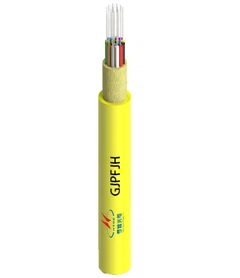
In today's highly digitized era, as an important carrier of information transmission, the stable and reliable operation of fiber optic cables is crucial. However, in practical applications, fiber optic cables often face challenges from various harsh environments.
Environmental challenges
High temperature environment is one of the common challenges. Excessive temperature may lead to a decrease in the material properties of fiber optic cables, affecting the quality and stability of signal transmission. In addition, high humidity environments can easily make fiber optic cables damp, increasing the risk of signal attenuation. Strong electromagnetic interference cannot be ignored. In places with complex electromagnetic environments, such as substations and communication base stations, electromagnetic interference may interfere with the optical signals in fiber optic cables, leading to transmission errors.
Solution
We can take a series of protective measures and solutions to address these performance issues. Firstly, in terms of material selection, high-quality materials that are resistant to high temperature and humidity should be selected to improve the self resistance of optical fiber cables. For high-temperature environments, special insulation materials can be used for wrapping, or wiring can be optimized to avoid direct exposure to high-temperature areas. When dealing with high humidity environments, strengthen the moisture-proof treatment of optical cables, such as adding waterproof coatings or using joints with better sealing properties. Shielding measures are an effective solution for strong electromagnetic interference. For example, using a metal shielding layer to reduce the impact of external electromagnetic fields. Meanwhile, planning the route reasonably and avoiding strong electromagnetic sources as much as possible can also reduce the risk of interference. In addition, regular inspection and maintenance are also key to ensuring the stable operation of fiber optic cables. Through professional testing equipment, potential problems are promptly identified and corresponding repair and improvement measures are taken.
Conclusion
In short, only by fully recognizing the performance issues of fiber optic cables in harsh environments and adopting effective protection and solutions can we ensure the stability and reliability of information transmission and promote the sustainable development of the communication industry.